

 Preview
 Send
Send Share
Share
 Details

 Download
 Similars
 X-Ray
X-Ray Diaporama
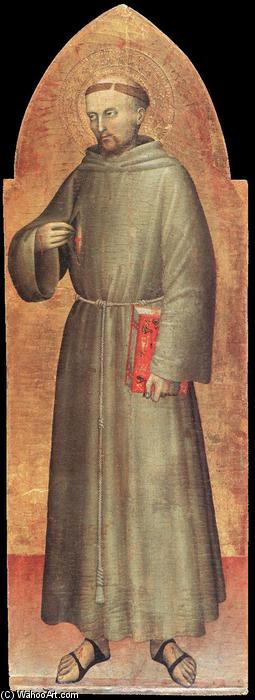
St Francis of Assisi
 Oil On Panel
- Proto-Renaissance
 1360
1360 113.0 x 39.0 cm
 The Louvre
 Read More
Purchase a high-resolution, enhanced digital image, far superior to the online preview.
Each file is meticulously prepared by our in-house specialists using advanced tools and expert manual retouching. We ensure every image has exceptional clarity, precise color accuracy, and fine detail.
The final file is delivered via email within 72 hours, optimized for immediate use in professional, editorial, and print environments. This is the same quality trusted by top-tier design studios, publishers, and galleries.
Digital Image
Download a high-resolution file for personal display, printing, and creative projects. ( Buy Print Buy Hand Made Painting)
Included in Every Digital Image Order
Expert Digital Delivery, Guaranteed
When you choose ArtsDot.com, you're not just getting an image - you're receiving a professionally enhanced digital artwork, crafted with precision and backed by a satisfaction guarantee. Here's everything that comes with your order, automatically:

Fast Email Delivery
Your high-resolution digital image file will be emailed to you within 72 hours of ordering - ready for immediate use.

AI-Enhanced Digital File
Your artwork is professionally optimized using advanced AI tools and manual editing, ensuring maximum detail, clarity, and color accuracy.

Free Lifetime Re-Delivery
Accidentally deleted or lost your file? No worries - we'll resend it to you anytime, free of charge.

No Import Fees - Ever
Enjoy your artwork instantly with zero customs, duties, or delivery fees - digital downloads are always tax-free.

Color Accuracy Guarantee
We ensure your digital image reflects the original colors as closely as possible using professional tools and color management.

60-Day Satisfaction Guarantee
If you're not satisfied with your digital image, we'll revise it or refund 100% within 60 days - no questions asked.

100% Money-Back Guarantee
Not satisfied? Get a full refund within 60 days of receiving your digital file - no questions asked.

Bulk Order Discounts
Buy 3 images, save 10% - Buy 5, save 15% - Buy 10+, save 20%. Great for creative projects, galleries, and agencies.
Collectible Description
A Moment of Serenity: Giovanni da Milano’s ‘St Francis of Assisi’
Giovanni da Milano's “St Francis of Assisi,” painted around 1360, isn’t merely a portrait; it’s a distillation of faith, humility, and the nascent spirit of the Renaissance. This captivating work, now residing within the hallowed halls of the Louvre Museum in Paris, offers a profound glimpse into the burgeoning artistic landscape of early Florence – a period where the rigid formality of Gothic painting was yielding to a more naturalistic and emotionally resonant style.
The image depicts St Francis in a strikingly vertical composition, immediately drawing the viewer’s eye. He occupies nearly the entire frame, creating an immediate sense of isolation and contemplative solitude. The palette is deliberately muted – dominated by earthy browns, greys, and subtle ochres – lending the scene a timeless quality, almost as if plucked from a medieval manuscript. This restrained use of color contributes to a feeling of solemnity and introspection, mirroring the saint’s own life dedicated to simplicity and spiritual devotion.
The Proto-Renaissance Style: Bridging Traditions
Giovanni da Milano stands as a pivotal figure in the transition between Gothic and Renaissance art. His style, often categorized as Proto-Renaissance, demonstrates a remarkable sensitivity to form and light, yet retains elements of the older tradition. Notice the smooth transitions between tones, reminiscent of Giotto’s groundbreaking work – a key influence on Giovanni's approach. The drapery, while not entirely realistic in its folds, possesses a graceful fluidity that avoids the stiff formality often found in earlier depictions.
The composition itself is carefully constructed. The arched headpiece above Francis’s head, a subtle nod to Byzantine iconography, suggests a connection to the divine. The placement of his hands – one holding a simple book, likely representing scripture or religious texts, and the other outstretched in a gesture of blessing – speaks volumes about his commitment to both intellectual and spiritual pursuits. The details, though understated, are meticulously rendered: the furrowed brow conveying a sense of deep thought, the pointed nose hinting at a noble lineage, and the carefully shaded beard adding depth and character to the figure.
Symbolism and Spiritual Resonance
Beyond its aesthetic qualities, “St Francis of Assisi” is rich in symbolic meaning. The red book held by the saint represents his dedication to the Gospels and his commitment to spreading Christ’s teachings through word and deed. The simple robe and sandals underscore his rejection of worldly possessions and his embrace of a life of poverty – a core tenet of his Franciscan spirituality.
Furthermore, the setting itself is imbued with significance. The muted background, devoid of detail, serves to isolate Francis as the central subject, emphasizing his spiritual journey. The overall atmosphere evokes a sense of quiet contemplation and reverence, inviting viewers to reflect on the saint’s life and message of compassion, humility, and service.
A Timeless Masterpiece: Reproduction Possibilities
Reproductions of Giovanni da Milano's “St Francis of Assisi” offer an exceptional opportunity to bring this powerful work into your home or office. ArtsDot.com offers meticulously crafted hand-painted reproductions that capture the essence of the original, utilizing high-quality oil paints on wood panel to faithfully recreate the artist’s nuanced techniques and evocative atmosphere. Whether you seek a stunning addition to your art collection or a meaningful piece for your interior décor, our reproductions provide an authentic and captivating representation of this timeless masterpiece.
Explore the details of this extraordinary artwork at Giovanni da Milano’s Wikipedia page or delve deeper into the life of St Francis himself via Wikipedia's entry on Francis of Assisi. For a visual comparison, consider visiting WikiArt’s page dedicated to the painting.
Related Artworks









Artist Biography
A Florentine Sojourn: The Life and Art of Giovanni da Milano
Giovanni da Milano, a name resonating softly within the annals of Proto-Renaissance art, represents a pivotal moment in Italian painting—a bridge between the graceful lyricism of the Gothic period and the burgeoning naturalism that would define the Renaissance. Born Giovanni di Jacopo di Guido da Caversaccio in Lombardy around 1346, his artistic journey unfolded primarily within the vibrant cultural landscape of Florence during a time of immense change and innovation. Though his life was tragically cut short by 1369, leaving behind a relatively small but profoundly influential body of work, Giovanni’s contribution to the evolution of Italian painting is undeniable. The earliest documented trace of his presence appears in Florentine records from October 17, 1346, where he is listed as Johannes Jacobi de Commo amongst foreign painters residing in Tuscany—a testament to the magnetic pull Florence exerted on artists seeking new opportunities and a flourishing artistic environment. This relocation suggests a deliberate pursuit of advancement, leaving behind his Lombard origins to immerse himself within the epicenter of artistic innovation.Echoes of Giotto: Style and Influences
Giovanni da Milano’s style is inextricably linked to that of Giotto di Bondone, the revolutionary artist who had already begun to dismantle the conventions of medieval painting decades prior. He wasn't merely a copyist, however; rather, he absorbed Giotto’s innovations—the emphasis on naturalistic representation, emotional expressiveness, and spatial depth—and filtered them through his own artistic sensibility. His paintings demonstrate a clear attempt to move beyond the stylized figures and flattened perspectives of Gothic art, striving instead for a greater degree of realism in depicting human forms and conveying genuine emotion through facial expressions and gestures. This pursuit is evident in the careful modeling of drapery, the subtle nuances of light and shadow, and the overall sense of weight and volume that characterizes his figures. He wasn’t working in isolation; Giovanni collaborated with other prominent artists of the time, including Giottino—Giotto's own son—and the sons of Taddeo Gaddi, further exposing him to cutting-edge artistic approaches and contributing to his stylistic development. These collaborations fostered a dynamic exchange of ideas that shaped his unique vision. While deeply indebted to Giotto, Giovanni also reveals hints of Sienese influence, particularly in his delicate use of color and refined details, suggesting a broader engagement with the diverse artistic currents circulating throughout Italy.Masterworks and Artistic Legacy
Though his career was brief, Giovanni da Milano left behind several significant works that showcase his evolving style and technical skill. The Ognissanti Polyptych, specifically its lateral panels, housed in the Galleria degli Uffizi in Florence, stands as a prime example of his mature work. The meticulous attention to detail within this religious context is striking, demonstrating his ability to imbue sacred subjects with a sense of human dignity and emotional resonance. Other notable works include the Madonna and Child with Donors, a stunning Early Renaissance masterpiece that exemplifies naturalism and devotional beauty in Milanese art, and the poignant St Francis of Assisi, characterized by its serene composition, earthy tones, and symbolic depth. The Coronation of the Virgin, an oil painting displaying intricate detail and symbolic beauty, further solidifies his place within the artistic landscape of the period. His frescoes in the Rinuccini Chapel of Santa Croce, Florence—particularly those depicting scenes from the lives of the Virgin Mary and Mary Magdalene—reveal a masterful command of narrative composition and expressive figuration.A Transitional Figure
Giovanni da Milano’s historical significance lies in his role as a crucial transitional figure within the Proto-Renaissance. He wasn't a revolutionary like Giotto, but he skillfully synthesized existing artistic traditions while subtly pushing boundaries towards greater naturalism and emotional depth. He helped pave the way for later Renaissance artists by demonstrating the power of observation, the importance of human emotion, and the potential of painting to convey complex narratives. His work embodies the evolving artistic landscape of 14th-century Italy—a period marked by a growing interest in classical antiquity, a renewed emphasis on humanism, and a gradual shift away from the rigid conventions of medieval art. Though his life was tragically short, Giovanni da Milano’s legacy endures as a testament to the power of artistic innovation and the enduring appeal of beauty, faith, and human expression. His paintings continue to captivate viewers with their delicate grace, emotional intensity, and profound spiritual resonance, offering a glimpse into a pivotal moment in the history of Western art.Further Exploration
- Museum San Giovanni in Siena: Houses an impressive collection including works by Giovanni da Milano alongside artists like Lorenzo Ghiberti and Domenico di Pace Beccafumi.
- The Metropolitan Museum of Art: Features the “Madonna and Child with Donors”, offering insight into his style and technique.
- Web Gallery of Art (WGA): Provides a comprehensive biography and access to digitized images of his artworks.
Giovanni da Milano
1346 - 1369 , Italy
Quick Facts
- Artistic Movement Or Style: Proto-Renaissance
- Artists Or Movements Influenced By This Artist: ['Renaissance artists']
- Artists Who Influenced This Artist: ['Giotto di Bondone']
- Date Of Birth: 1346
- Date Of Death: 1369
- Full Name: Giovanni da Milano
- Nationality: Italian
- Notable Artworks:
- Ognissanti Polyptych
- Madonna and Child
- St Francis of Assisi
- Coronation of Virgin
- Place Of Birth: Lombardy, Italy

