 Preview
 Send
Send Share
Share
 Details

 Download
 Similars
 X-Ray
X-Ray Diaporama
 Stats
StatsNativity and Adoration of the Magi (detail) (10)


 Read More
Hand Made Oil Reproduction
Hand-painted oil on canvas in your size and frame, made to order by our artists. ( Switch to Print Switch to Digital Image)




P118B $10

P118H $10

P118W $10

P438Z $10

P508JH $12

P508YH $12

P805H $10

P805Z $10

P919BZ $10

P919G $10

P919XJ $10

P959ZH $10

P968JZ $12

W106C $8

W218G $10

W218JH $8

W218Y $10

W307PJ $10

W316G $10

W316PJ $8

W316Y $10

W398PJ $8

W4111J $10

W500HY $15

W500JH $15

W692G $12

W849H $8

W940BG $15

W953PJ $8




Pick from our preset sizes that match the artwork's original proportions.

You may enter your own dimensions to fit a specific frame or space. If your selected size does not match the original image's proportions, we will either crop the artwork or extend the painting with additional hand-painted elements. A digital mockup will be sent for your approval before production begins.
Please note that the on-screen preview does not reflect the actual cropping or extension. Only the mockup will accurately show the final composition.
While custom sizes are available, we recommend selecting a dimension from the predefined list to preserve the original proportions.
After order, ArtsDot.com team will email client for instructions and provide a mockup preview
Worldwide Delivery () in 3/4 weeks instead of standard 5 weeks. (9 September). No compromise on quality.

Free Worldwide Express Shipping

High-Quality Linen Canvas

Full Shipping Insurance

Customs Tax Refund Guarantee

True Color Matching Guarantee

100-Day Return Policy (Defects Only)

100% Money-Back Guarantee

Bulk Discount Offer
 Glass option is only available in size under 110 CM

Nativity and Adoration of the Magi (detail) (10)
Reproduction Medium
Reproduction Size
-


Total Price
$ 263
A Moment of Reverent Majesty: Giovanni di Francesco’s Nativity
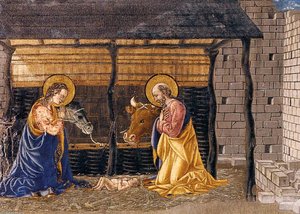
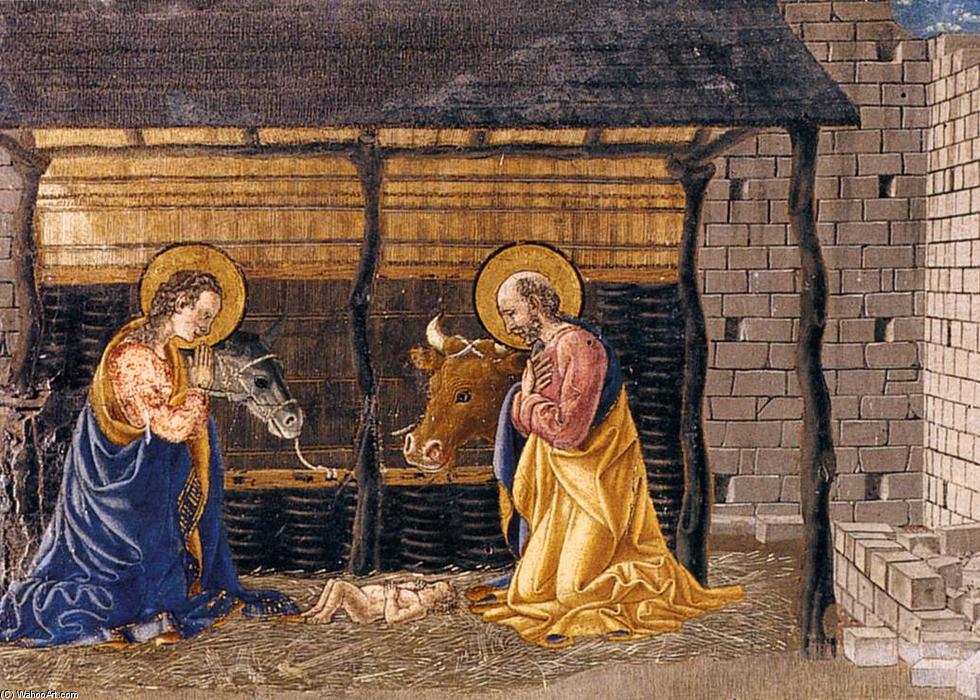
The painting “Nativity and Adoration of the Magi (detail) (10)” by Giovanni di Francesco del Cervelliera, a pivotal figure bridging the Gothic and Renaissance in 15th-century Florence, is more than just a depiction of a biblical scene; it’s a carefully constructed tableau brimming with symbolic weight and technical mastery. Created around 1457, this work offers a rare glimpse into the artistic sensibilities of a period poised on the brink of monumental change, showcasing a harmonious blend of established traditions and nascent innovations. The piece, currently housed in the Musée du Louvre in Paris, immediately draws the viewer into a scene of profound serenity and spiritual significance – a quiet miracle unfolding within the humble setting of a stable.

(Image: Nativity and Adoration of the Magi (detail) (10) by Giovanni di Francesco del Cervelliera)
The Language of Form and Color
Giovanni’s skill lies not merely in his ability to render figures, but in his masterful orchestration of form and color. The painting is executed in tempera on wood panels, a technique favored for its luminosity and rich hues – qualities that are particularly evident in the vibrant blues of Mary's cloak, immediately conveying her purity and grace. The use of contrasting warm tones—the reds of Joseph’s robe, the golden light bathing the scene—against cooler background shades creates a dynamic interplay of visual interest. Notice, too, the meticulous attention to detail: the folds of the fabrics, the textures of the animals, even the individual strands of hay in the manger – all rendered with a precision that speaks to Giovanni's rigorous training and artistic discipline. The architectural elements, particularly the brick wall behind the stable, are not simply decorative; they establish a sense of depth and spatial realism, anticipating the developments of linear perspective that would soon dominate Renaissance painting.
A Bridge Between Worlds: Artistic Influences
Giovanni di Francesco’s work represents a fascinating transitional phase in Florentine art. He was apprenticed to Niccolò di Pietro Gerini, a master known for managing large-scale projects rather than specializing in individual artistic mastery, an arrangement that provided Lorenzo with invaluable experience but limited his exposure to the most advanced techniques of the time. His early works retain echoes of the Gothic tradition – the stylized figures, the emphasis on decorative patterns—while simultaneously incorporating elements foreshadowing the Renaissance, such as a greater attention to naturalism and a more sophisticated understanding of spatial relationships. The influence of Fra Filippo Lippi is particularly noticeable in the composition’s dynamism and expressive gestures, while hints of Domenico Veneziano and Piero della Francesca can be discerned in his use of light and color.
Symbolic Layers: Figures and Their Meanings
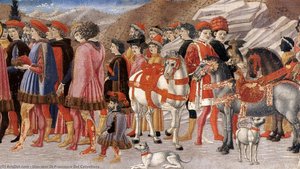
Beyond its technical brilliance, “Nativity and Adoration of the Magi” is rich in symbolic meaning. The presence of the three wise men, bearing gifts of gold, frankincense, and myrrh—traditional symbols of royalty, divinity, and incense—underscores the significance of Christ’s birth. Mary's serene expression and gentle gaze convey her role as the Virgin Mother, while Joseph’s posture reflects his humble acceptance of this divine mission. The animals – a cow or ox and a donkey – represent the earthly realm from which the Savior has emerged, grounding the miraculous event in a tangible reality. The scene itself is not simply a narrative depiction; it's an invitation to contemplate themes of faith, humility, and the enduring power of grace.
A Legacy of Beauty: Reproduction Possibilities
ArtsDot offers high-quality reproductions of this captivating masterpiece, allowing you to bring its beauty into your home or office. Whether you choose a standard size or commission a custom reproduction tailored to your specific needs, our skilled artisans meticulously recreate the painting’s intricate details and vibrant colors, ensuring that it captures the essence of Giovanni di Francesco's artistic vision. Explore our range of sizes and materials to find the perfect way to celebrate this timeless work of art.
Related Artworks
Artist Biography
Lorenzo di Niccolò: A Bridge Between Gothic and Renaissance Florence
Lorenzo di Niccolò, a name often overshadowed by the titans of the Florentine Renaissance, nevertheless represents a crucial transitional figure in the city’s artistic evolution. Born around 1374 – though the precise date remains elusive – Lorenzo’s life and work offer a fascinating glimpse into the shifting sensibilities of late Medieval Italy as it cautiously embraced the burgeoning ideals of the Early Renaissance. Active primarily between 1391 and 1412, his career was largely shaped by apprenticeship under the esteemed Niccolò di Pietro Gerini, a master known for managing large-scale projects rather than specializing in individual artistic mastery. This arrangement, while providing Lorenzo with invaluable experience, arguably limited his exposure to the most advanced techniques of the time, resulting in a style that retains echoes of the Gothic tradition alongside nascent Renaissance elements. Lorenzo’s early works predominantly featured religious scenes executed in tempera on gold backgrounds – a common practice reflecting the devotional fervor of the period. His paintings, such as *S. Giovanni and his enemy before the crucifix in Saint Miniato*, are characterized by a meticulous attention to detail and a formal elegance that speaks to his training. However, they also reveal a certain hesitancy, a reluctance to fully break free from the stylized figures and flattened perspectives of Gothic art. The drapery, while rendered with skill, lacks the dynamism and naturalism that would become hallmarks of later Renaissance painters. Despite this, Lorenzo’s work is not simply a derivative imitation; it demonstrates an understanding of perspective and composition, albeit applied within a framework still heavily influenced by medieval conventions. Lorenzo's artistic development was significantly shaped by his association with Spinello Aretino, a painter known for his expressive brushwork and imaginative compositions. Spinello’s large-scale frescos, particularly those in the Palazzo Vecchio, provided Lorenzo with a model of freedom and visual storytelling – a stark contrast to Gerini’s more structured approach. This influence is evident in Lorenzo's later works, which display a greater sense of spontaneity and emotional depth. Furthermore, Lorenzo seems to have drawn inspiration from other prominent artists of his time, including Lorenzo Monaco and Mariotto di Nardo, whose innovative techniques and compositional strategies undoubtedly informed his own artistic practice. His connection to the Medici e Speziali guild around 1408 and membership in the Compagnia di San Luca in 1410 further solidify his position within Florence’s vibrant artistic community.- Key Characteristics of Lorenzo's Style:
- Tempera on gold backgrounds
- Formal elegance and meticulous detail
- Echoes of Gothic style in figures and perspective
- Increasingly expressive compositions influenced by Spinello Aretino
The Influence of Gerini and the Bottega System
Lorenzo’s early training under Niccolò di Pietro Gerini profoundly shaped his artistic approach. Gerini operated a large workshop (bottega) where he oversaw numerous artists working on diverse projects, prioritizing organizational skills and efficient production over individual artistic development. This system, while providing Lorenzo with valuable experience in managing complex commissions and collaborating within a team, arguably limited his opportunities to hone his own unique style. Gerini’s focus was less on mastering the intricacies of painting techniques and more on coordinating the logistical aspects of large-scale projects – a pragmatic approach that contrasted sharply with the pursuit of artistic excellence championed by some of Florence's leading artists.- The Bottega System: A Focus on Production
- Gerini’s Role as Workshop Manager
- Limited Opportunities for Individual Artistic Development
Lorenzo’s Place in Florentine Art History
Lorenzo di Niccolò’s career coincided with a period of significant artistic ferment in Florence – the transition from the Gothic to the Renaissance. While he never achieved the fame or recognition of artists like Brunelleschi, Donatello, and Masaccio, his work offers a valuable record of this transitional phase. His paintings reflect the lingering influence of medieval aesthetics while simultaneously incorporating elements of emerging Renaissance principles, such as increased naturalism and a greater emphasis on perspective. Lorenzo’s contribution lies not in groundbreaking innovation but rather in his ability to synthesize diverse artistic influences and adapt them to the specific context of Florentine art during the early 15th century.Concluding Thoughts: A Quiet Master
Ultimately, Lorenzo di Niccolò remains a somewhat enigmatic figure in the history of Renaissance art. He was not a revolutionary artist, but rather a skilled craftsman who played a crucial role in shaping the artistic landscape of Florence during a period of profound transformation. His work serves as a reminder that the development of the Renaissance was not a sudden break from the past but a gradual and complex process – one marked by the contributions of countless artists working within diverse traditions. Further research continues to illuminate his place within the Florentine art world, solidifying his position as a significant, if often overlooked, figure in the early history of Italian painting.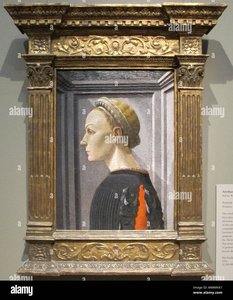
giovanni di francesco del cervelliera
1412 - 1459 , Italy
Quick Facts
- Artistic Movement Or Style:
- Trecento
- Early Renaissance
- Gothic influence
- Artists Or Movements Influenced By This Artist: ['Spinello Aretino']
- Artists Who Influenced This Artist:
- Niccolò di Pietro Gerini
- Lorenzo Monaco
- Mariotto di Nardo
- Andrea di Giusto
- Date Of Death: 1459
- Full Name: Lorenzo di Niccolò
- Nationality: Italian
- Notable Artworks: ['S. Giovanni and his enemy']
- Place Of Birth: Florence, Italy
Related Articles

The Enduring Legacy of Fresco: Technique, History & Artistic Expression Across Cultures
Explore the rich history & enduring legacy of fresco painting! Discover ancient techniques, Giotto's masterpieces, and modern applications. Expert insights for art lovers & professionals.

The Fresco as Family Legacy: Preserving Heritage Through Wall Art
Explore the rich history & enduring legacy of fresco painting. Discover how to preserve family heritage through stunning wall art. Expert insights & restoration guidance.

The Enduring Legacy of Fresco Painting: Techniques, History & Contemporary Relevance
Explore the rich history & enduring artistry of fresco painting – from Giotto to Michelangelo! Discover techniques, conservation efforts, & modern applications. Learn how ArtsDot brings this timeless art form to your home.

Art That Lives With You: The Emotional Power of a Custom Interior Fresco
Discover the emotional power & timeless beauty of custom interior frescoes. Explore history, design tips & expert guidance from – creating lasting legacies.
The Enduring Legacy of Fresco: Technique, History & Artistic Expression
Explore the rich history & enduring artistry of fresco painting. Discover techniques from Giotto to Michelangelo, conservation efforts, & modern applications. Learn how ArtsDot brings this timeless art form to your home.