 Preview
 Send
Send Share
Share
 Details

 Download
 Similars
 X-Ray
X-Ray Diaporama
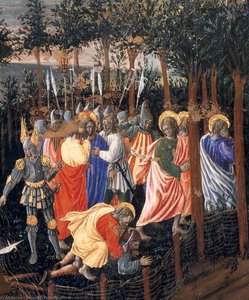
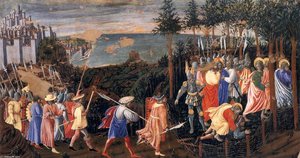
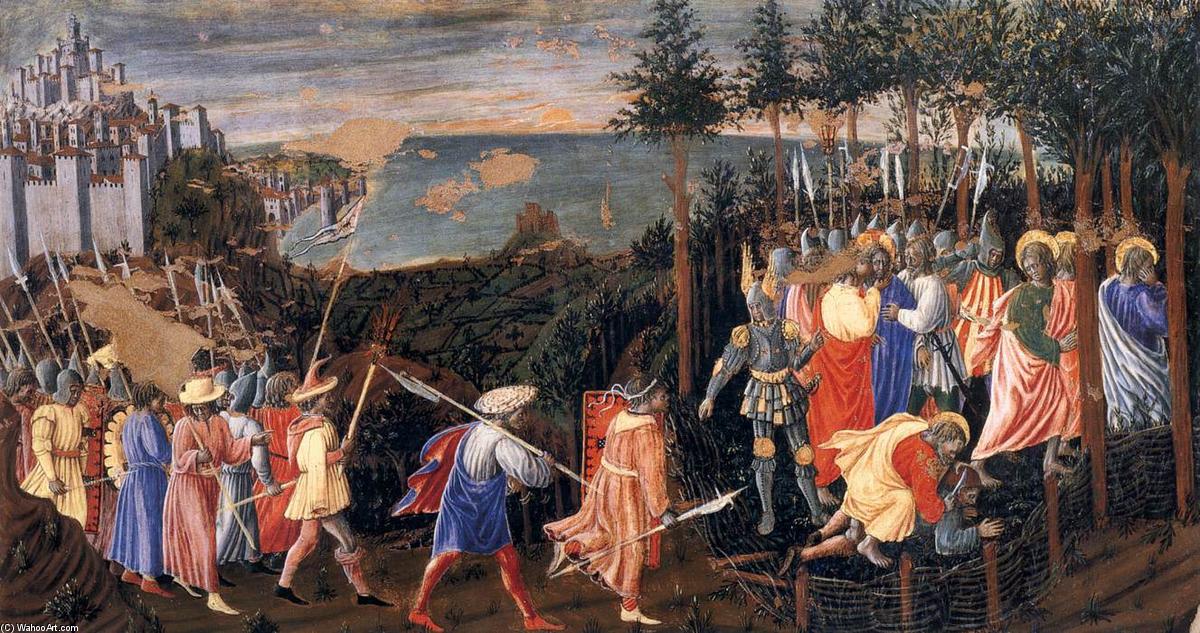
The Arrest of Christ
 1447
1447 40.0 x 66.0 cm
 Galleria Nazionale dell'Umbria
 Read More
Giclée / Art Print
Museum-quality giclée or canvas print with fast production and flexible finish options. ( Buy Hand Made Painting Buy Image)




































Pick from our preset sizes that match the artwork's original proportions.

You may enter your own dimensions to fit a specific frame or space. If your selected size does not match the original image's proportions, we will either crop the artwork or extend the image with a mirrored or solid-fill edge. A digital mockup will be sent for your approval before production begins.
Please note that the on-screen preview does not reflect the actual cropping or extension. Only the mockup will accurately show the final composition.
While custom sizes are available, we recommend selecting a dimension from the predefined list to preserve the original proportions.
Worldwide Delivery () in 2 weeks instead of standard 4/5 weeks. (28 August)

Free Worldwide Express Shipping

High-Quality Linen Canvas

Full Shipping Insurance

Customs Tax Refund Guarantee

True Color Matching Guarantee

60-Day Return Policy (Defects Only)

100% Money-Back Guarantee

Bulk Discount Offer
 Glass option is only available in size under 110 CM

The Arrest of Christ
Giclée / Art Print
Reproduction Size
-


Total Price
$ 63
Artistic Style and Composition
The painting depicts a scene from the Renaissance period, with a focus on the arrest of Christ. The central figure of Christ is surrounded by several individuals, including soldiers and guards, who are dressed in armor and helmets. The use of light and shadow in the painting creates a sense of depth and dimensionality, drawing the viewer's eye to the central scene. The artist's attention to detail is evident in the intricate facial expressions and clothing of the figures. Key Features of the painting include:- The use of tempera on panel, a common medium during the Renaissance
- The depiction of architectural elements, such as a castle or fortress, in the background
- The attention to detail in the facial expressions and clothing of the figures
Historical Significance
The The Arrest of Christ painting is significant not only for its artistic merit but also for its historical importance. It is one of several paintings created by Giovanni Di Piermatteo Boccati during the Renaissance period, and it provides valuable insight into the artistic and cultural trends of the time. For more information on the artist and his works, visit Giovanni Di Piermatteo Boccati: The Arrest of Christ.The Galleria Nazionale dell'Umbria is home to several other notable works of art, including the Perugia Altarpiece by Fra Angelico. To learn more about these paintings and others, visit Perugia Altarpiece on ArtsDot.com.
Related Artworks
Artist Biography
Giovanni Boccati: Umbrian Painter of Devotion and Detail
Giovanni di Piermatteo Boccati (c. 1420 – after 1487) stands as a significant figure in the Umbrian Renaissance, renowned for his meticulous frescoes and altarpieces that embody the artistic spirit of the period. Born in Camerino, Italy—a region steeped in medieval tradition yet embracing humanist ideals—Boccati’s career unfolded across several prominent cities including Perugia, Padua, and Urbino, cementing his reputation as a versatile artist deeply rooted in religious iconography.- Early Life & Training: Precise biographical details surrounding Boccati's formative years remain elusive. However, evidence suggests he honed his skills within the artistic milieu of Camerino, absorbing influences from masters like Fra Angelico and Filippo Lippi—artists who championed serene beauty and spiritual contemplation. His training likely involved studying classical principles alongside Byzantine traditions, shaping his distinctive approach to painting.
- Notable Works: Boccati’s artistic output is characterized by a remarkable sensitivity to color and texture. Among his most celebrated achievements are the frescoes adorning the Palazzo Ducale in Urbino—a testament to his ability to capture grandeur and elegance—and the altarpiece commissioned for Orvieto Cathedral, showcasing masterful composition and dramatic lighting. His “Madonna dell’Orchestra” (1447) exemplifies his dedication to portraying biblical narratives with profound emotional depth.
Technique & Artistic Style
Boccati's artistic style is defined by a meticulous attention to detail and an unwavering commitment to realism. He skillfully employed tempera paint on panel, achieving luminous colors and subtle gradations that convey the ethereal quality of religious subjects. His frescoes demonstrate a masterful understanding of perspective and spatial illusion—techniques borrowed from Florentine artists like Brunelleschi—creating immersive environments that engage the viewer’s senses. Furthermore, Boccati's use of glazing techniques—applying thin layers of translucent pigment over underlying colors—enhanced the vibrancy and luminosity of his paintings, resulting in works imbued with an unparalleled sense of atmosphere.- Frescoes in Urbino: The Palazzo Ducale frescoes represent Boccati’s pinnacle achievement. These monumental panels depict scenes from biblical history and heraldic emblems, demonstrating his mastery of color theory and compositional planning.
- The Orvieto Altarpiece: This ambitious project showcases Boccati's ability to convey emotion and narrative complexity through intricate iconography and dynamic drapery folds.
Influence & Legacy
Boccati’s artistic legacy extends beyond his individual masterpieces. He served as a teacher and mentor, fostering the talents of younger artists who would contribute to Umbrian art history. His work profoundly impacted subsequent generations of painters, establishing him as a pivotal figure in the dissemination of Renaissance ideals—particularly those concerning piety and artistic excellence. Today, Boccati’s paintings reside in prestigious institutions such as the Galleria Nazionale dell'Umbria and the Sinebrychoff Art Museum in Helsinki, ensuring that his contribution to Umbrian art continues to inspire admiration and scholarly study.Major Achievements
Boccati achieved considerable renown during his lifetime for his artistic skill and devotion. He was recognized as a respected artist and craftsman, securing commissions from influential patrons—including the Duke of Urbino—who valued his ability to elevate religious art through meticulous execution and expressive artistry. His enduring fame rests upon the preservation of his paintings and frescoes—remarkable achievements that stand as symbols of Umbrian Renaissance artistic prowess.
giovanni di piermatteo boccati
1420 - 1487 , Italy
Quick Facts
- Artistic Movement Or Style: Renaissance
- Artists Or Movements Influenced By This Artist: ['Early Renaissance']
- Artists Who Influenced This Artist:
- Fra Angelico
- Filippo Lippi
- Domenico Veneziano
- Date Of Birth: c. 1420
- Date Of Death: after 1487
- Full Name: Giovanni di Piermatteo Boccati
- Nationality: Italian
- Notable Artworks:
- Madonna del Pergolato
- Madonna dell’orchestra
- Pietà
- Virgin and Child Enthroned with Saints
- Adoration of the Magi
- Place Of Birth: Camerino, Italy