 Preview
 Send
Send Share
Share
 Details

 Download
 Similars
 X-Ray
X-Ray Diaporama
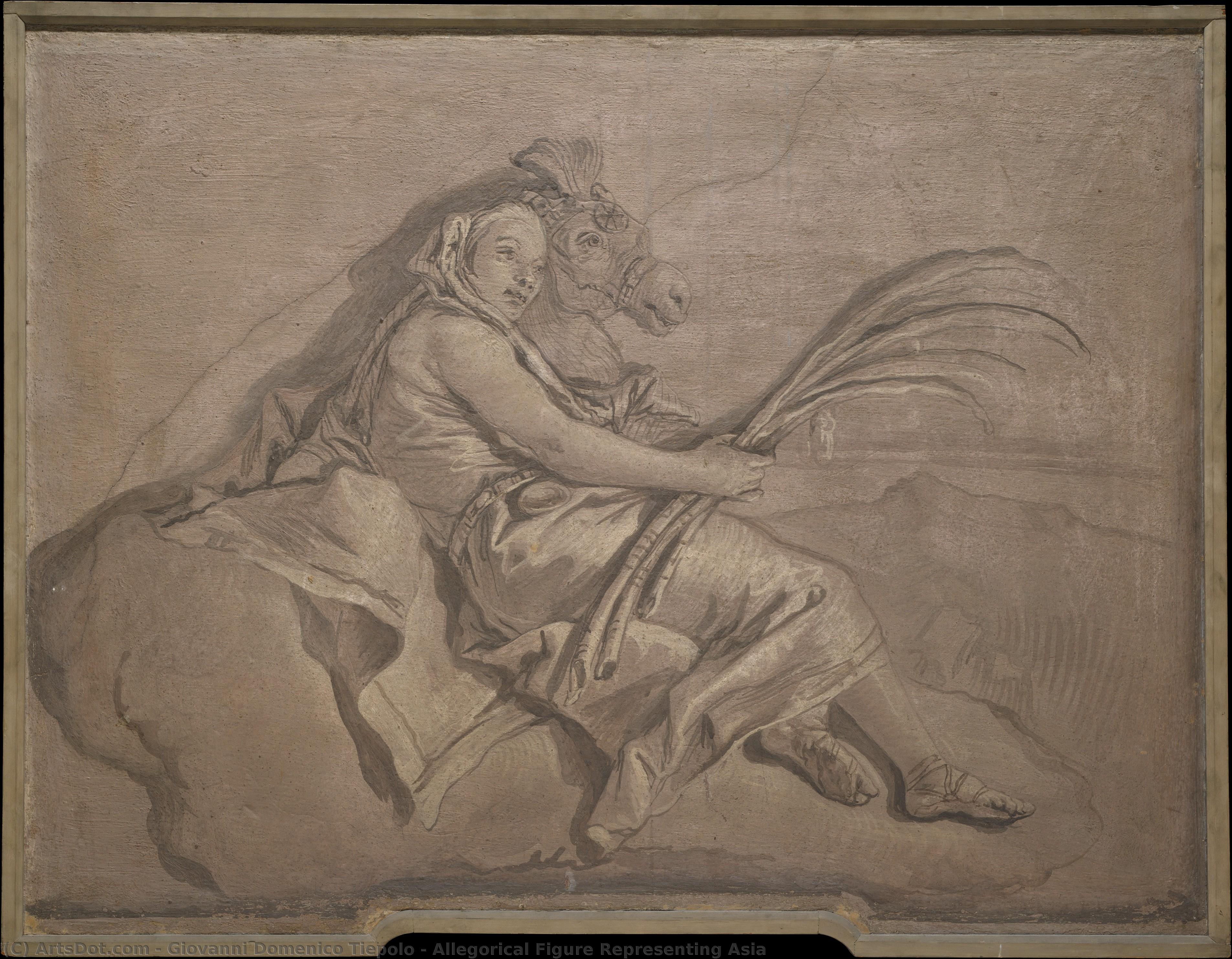
Allegorical Figure Representing Asia
 Painting
- Rococo
 Early Modern
 82.0 x 106.0 cm
 Read More
Giclée / Art Print
Museum-quality giclée or canvas print with fast production and flexible finish options. ( Buy Hand Made Painting Buy Image)




P118B $10

P118H $10

P118W $10

P438Z $10

P508JH $12

P508YH $12

P805H $10

P805Z $10

P919BZ $10

P919G $10

P919XJ $10

P959ZH $10

P968JZ $12

W106C $8

W218G $10

W218JH $8

W218Y $10

W307PJ $10

W316G $10

W316PJ $8

W316Y $10

W398PJ $8

W4111J $10

W500HY $15

W500JH $15

W692G $12

W849H $8

W940BG $15

W953PJ $8




Pick from our preset sizes that match the artwork's original proportions.

You may enter your own dimensions to fit a specific frame or space. If your selected size does not match the original image's proportions, we will either crop the artwork or extend the image with a mirrored or solid-fill edge. A digital mockup will be sent for your approval before production begins.
Please note that the on-screen preview does not reflect the actual cropping or extension. Only the mockup will accurately show the final composition.
While custom sizes are available, we recommend selecting a dimension from the predefined list to preserve the original proportions.
Worldwide Delivery () in 2 weeks instead of standard 4/5 weeks. (16 August)

Free Worldwide Express Shipping

High-Quality Linen Canvas

Full Shipping Insurance

Customs Tax Refund Guarantee

True Color Matching Guarantee

60-Day Return Policy (Defects Only)

100% Money-Back Guarantee

Bulk Discount Offer
 Glass option is only available in size under 110 CM

Allegorical Figure Representing Asia
Giclée / Art Print
Reproduction Size
-


Total Price
$ 63
Collectible Description
A Vision of the Orient: The Dreamlike Allegory of Asia
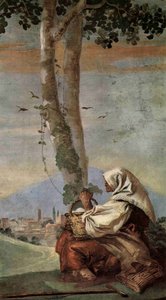
In the sweeping tradition of Venetian Rococo, Giovanni Domenico Tiepolo captures a moment of profound stillness within his Allegorical Figure Representing Asia. This evocative work presents a woman lost in a state of deep contemplation or perhaps a heavy, dream-filled slumber, her head resting gently upon her hand as she sits perched upon a rugged rock. The composition breathes with a quiet, melancholic grace, inviting the viewer to step into a world where the boundaries between reality and myth are beautifully blurred. Through his masterful use of light and form, Tiepolo transforms a singular figure into a window onto an entire continent's perceived essence, creating a piece that is as much about internal reflection as it is about external geography.
The painting’s atmosphere is enriched by subtle, almost ethereal details that dance around the central subject. In the soft expanse of the background, two birds glide through the air in close proximity, their movement providing a delicate counterpoint to the woman's motionless repose. Further adding to the complexity of this miniature landscape, a small horse can be glimpsed in the upper right corner, standing atop a rocky outcrop. These elements do more than merely decorate the scene; they build a sense of depth and narrative mystery, suggesting a vast, living world that continues to pulse even while its central figure remains caught in a moment of silent introspection.
Symbolism and the Language of the Rococo
To the eyes of an eighteenth-century audience, this painting was far more than a portrait; it was a coded message written in the language of Iconologia. Following the established artistic dictates of Cesare Ripa, Tiepolo utilized specific attributes to signal the identity of his subject. The presence of the palm branch and the camel—symbols deeply embedded in the historical imagination of the East—serves as the definitive signature of Asia. While these symbols were once used to communicate geographical identity through a shared cultural vocabulary, they also reflect the complex, often layered ways in which different cultures were perceived during the Rococo era.
The technique employed by Tiepolo reflects his lineage as the son and student of the great Giovanni Battista Tiepolo. His ability to manipulate color and light creates a luminous quality that is characteristic of the Venetian school, making the skin tones appear soft and the textures of the drapery feel tangible. For the collector or interior designer, this piece offers a sophisticated interplay of texture and tone, making it an ideal centerpiece for spaces that require a touch of classical elegance and intellectual depth. The work does not merely sit upon a wall; it commands the room with its historical weight and its ability to evoke a sense of timeless wonder.
An Essential Addition to the Refined Collection
Whether one is an art historian captivated by the evolution of allegorical painting or a decorator seeking to infuse a contemporary space with Old World grandeur, this reproduction of Tiepolo’s masterpiece offers unparalleled inspiration. The Allegorical Figure Representing Asia possesses a unique emotional resonance, striking a delicate balance between the monumental scale of its original fresco origins and the intimate, personal connection felt when viewing its quiet subject. It is a work that celebrates the beauty of thought, the mystery of the unknown, and the enduring power of the Rococo spirit.
Related Artworks
Artist Biography
Giovanni Domenico Tiepolo: A Master of Rococo Frescoes
Giovanni Domenico Tiepolo (August 30, 1727 – March 3, 1804) was a prominent Italian painter and printmaker from the Republic of Venice. He is recognized as a leading figure in the Rococo style, inheriting and expanding upon the legacy of his renowned father, Giovanni Battista Tiepolo. His career spanned several decades, leaving behind a rich body of work characterized by vibrant colors, dynamic compositions, and elegant depictions of mythological scenes, portraits, and landscapes.
Early Life and Training
Born into an artistic family, Giovanni Domenico’s early life was deeply intertwined with the world of art. His father, Giovanni Battista Tiepolo, a celebrated painter known for his monumental frescoes, served as his primary mentor. Giovanni Domenico received rigorous training under his father's guidance, learning the techniques and stylistic nuances that would shape his own artistic development. He also benefited from exposure to other notable artists of the time, including Sebastiano Ricci and Federico Bencovich, further broadening his artistic horizons. As a young man, he frequently assisted his father on large-scale projects, gaining invaluable practical experience in fresco painting.
Artistic Career and Style
Giovanni Domenico’s career flourished throughout the 18th century. He established himself as a skilled artist capable of producing both independent works and contributing to collaborative projects. While initially working closely with his father, he gradually developed his own distinct style, though retaining elements of the Rococo aesthetic prevalent in Venetian art at the time. His artistic output included frescoes, paintings on canvas, and etchings.
- Frescoes: Tiepolo was particularly renowned for his frescoes, decorating numerous locations throughout Italy with elaborate scenes. Notable examples include the frescoes at Ca' Dolfin on the Grand Canal in Venice and the ceiling of the Gesuati (Santa Maria del Rosario) church, also in Venice.
- Paintings: Beyond frescoes, he created a significant number of paintings on canvas, often depicting mythological subjects or portraits. Examples include "Perseus and Andromeda" (view here), “The Rape of Europa” (view here) and "Hunter with Deer" (view here).
- Etchings: Tiepolo also demonstrated his skill in etching, creating detailed and expressive prints such as "Die heiligen Augustinus, Ludwig von Frankreich, Johannes Evangelist und Magnus" (view here) and “Apotheosis of Hercules” (view here).
Historical Significance
Giovanni Domenico Tiepolo played a crucial role in the continuation and evolution of Venetian Rococo art. While overshadowed by his father’s fame during his lifetime, he is now recognized as a significant artist in his own right. His frescoes and paintings offer valuable insights into the artistic tastes and cultural values of 18th-century Venice and Italy. His ability to blend classical themes with contemporary sensibilities solidified his place within the Rococo movement, leaving behind a legacy of vibrant artistry that continues to captivate audiences today.
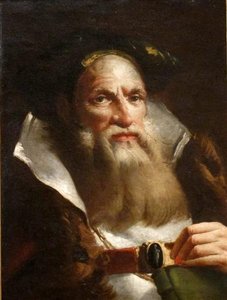
Giovanni Domenico Tiepolo
2007 - 1770 , Italy
Quick Facts
- Artistic Movement Or Style: Rococo
- Artists Who Influenced This Artist: ['Giovanni Battista Tiepolo']
- Date Of Birth: August 30, 1727
- Date Of Death: March 3, 1804
- Full Name: Giovanni Domenico Tiepolo
- Nationality: Italian
- Notable Artworks:
- Perseus and Andromeda
- The Rape of Europa
- Hunter with Deer
- Die heiligen Augustinus
- Apollo and Diana
- Apotheosis of Hercules
- Place Of Birth: Venice, Italy
Related Articles
Pietro Longhi's Venetian Scenes: A Study of Rococo Society & Domestic Life
Explore the captivating world of Pietro Longhi's Venetian scenes! Discover insightful analysis of his Rococo masterpieces & social commentary on 18th-century life. Learn about this 'Venetian Hogarth' and his lasting artistic legacy.

Rococo's Radiant Legacy: 10 Masterpieces for Your Home |
Indulge in the elegance of Rococo! Explore 10 masterpieces by Fragonard, Boucher & Watteau. Discover the stories behind these iconic paintings and bring timeless art to your home with museum-quality reproductions from .

The Rococo Aesthetic: Opulence, Rebellion & the Pursuit of Pleasure in 18th-Century Art
Explore the opulent world of Rococo art! Discover its origins, key artists like Watteau & Boucher, and lasting influence on design. Expert insights for collectors & enthusiasts.

Jacopo Tintoretto's Masterpieces: 25 Paintings That Define Venetian Drama | ArtsDot
Explore 25 breathtaking masterpieces by Jacopo Tintoretto, the Venetian master of drama and light. Discover the stories behind iconic Renaissance paintings & find museum-quality art reproductions to elevate your home decor on ArtsDot.com.
Francesco Guardi: Venetian Light, Atmospheric Perspective & the Rococo to Neoclassical Transition
Explore the captivating world of Francesco Guardi, master of Venetian light and atmosphere. Discover his transition from Rococo to Neoclassicism, influence on Impressionism & investment potential with ArtsDot.