 Preview
 Send
Send Share
Share
 Details

 Download
 Similars
 X-Ray
X-Ray Diaporama
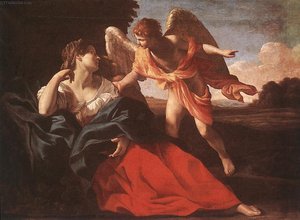
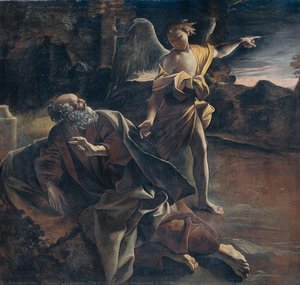
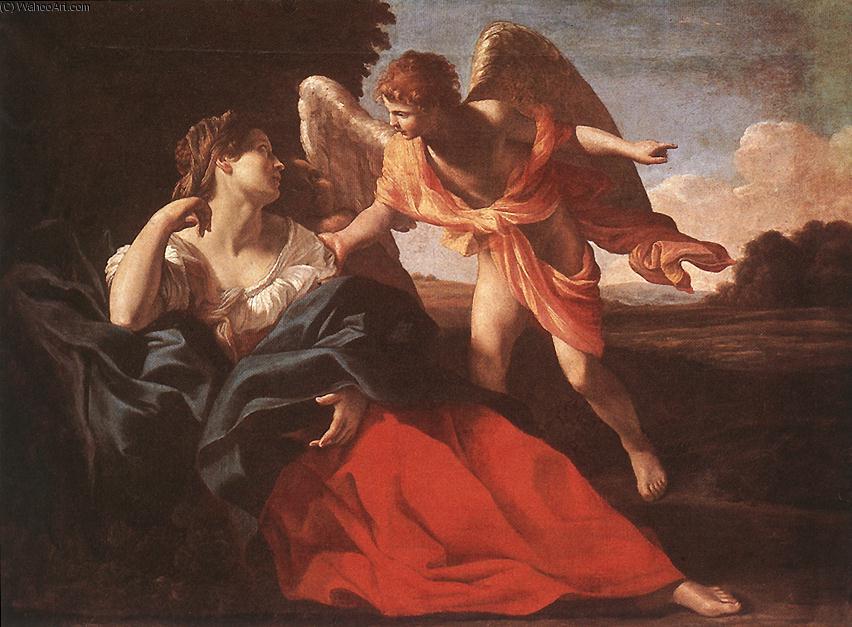
Hagar in the Wilderness
 Oil On Canvas
- WallArt
- Baroque Painting
 138.0 x 159.0 cm
 The Louvre
 Read More
Hand Made Oil Reproduction
Hand-painted oil on canvas in your size and frame, made to order by our artists. ( Buy Print Buy Image)




P118B $10

P118H $10

P118W $10

P438Z $10

P508JH $12

P508YH $12

P805H $10

P805Z $10

P919BZ $10

P919G $10

P919XJ $10

P959ZH $10

P968JZ $12

W106C $8

W218G $10

W218JH $8

W218Y $10

W307PJ $10

W316G $10

W316PJ $8

W316Y $10

W398PJ $8

W4111J $10

W500HY $15

W500JH $15

W692G $12

W849H $8

W940BG $15

W953PJ $8




Pick from our preset sizes that match the artwork's original proportions.

You may enter your own dimensions to fit a specific frame or space. If your selected size does not match the original image's proportions, we will either crop the artwork or extend the painting with additional hand-painted elements. A digital mockup will be sent for your approval before production begins.
Please note that the on-screen preview does not reflect the actual cropping or extension. Only the mockup will accurately show the final composition.
While custom sizes are available, we recommend selecting a dimension from the predefined list to preserve the original proportions.
After order, ArtsDot.com team will email client for instructions and provide a mockup preview
Worldwide Delivery () in 3/4 weeks instead of standard 5 weeks. (17 August). No compromise on quality.

Free Worldwide Express Shipping

High-Quality Linen Canvas

Full Shipping Insurance

Customs Tax Refund Guarantee

True Color Matching Guarantee

60-Day Return Policy (Defects Only)

100% Money-Back Guarantee

Bulk Discount Offer
 Glass option is only available in size under 110 CM

Hagar in the Wilderness
Reproduction Medium
Reproduction Size
-


Total Price
$ 263
Artwork Description
The Dramatic Landscape of Faith and Survival
Giovanni Lanfranco’s “Hagar in the Wilderness” is not merely a depiction of a biblical narrative; it's a profound exploration of maternal desperation, divine mercy, and the enduring human struggle for survival. Painted circa 1620-1630 during his time in Rome, this monumental work, now housed within the Louvre’s collection, immediately commands attention with its dramatic chiaroscuro – a masterful manipulation of light and shadow that plunges the scene into an atmosphere of intense emotionality. The composition is dominated by a vast, desolate landscape, rendered in muted browns and ochres, conveying a sense of utter isolation and impending doom. This isn’t a picturesque wilderness; it's a brutal, unforgiving environment designed to evoke feelings of vulnerability and despair.
- Subject Matter: The painting portrays Hagar, Abraham’s handmaiden and the mother of Ishmael, wandering in the arid desert after being cast out by Sarah.
- Historical Context: Lanfranco worked within the rich tradition of Bolognese Baroque painting, heavily influenced by Annibale Carracci's emphasis on classical composition and dramatic lighting. The period was marked by a renewed interest in religious themes and a desire to convey profound emotional experiences through art.
A Symphony of Color and Light: Lanfranco’s Baroque Technique
Lanfranco's skill lies not just in his dramatic setting, but also in the exquisite rendering of texture and form. The rough, uneven surface of Hagar’s cloak contrasts sharply with the smooth, almost ethereal quality of her skin. The angel’s garments are rendered in vibrant oranges and yellows, creating a striking visual counterpoint to the surrounding darkness – a beacon of hope amidst the bleakness. Notice how Lanfranco uses *sfumato*, a technique borrowed from Leonardo da Vinci, to soften edges and create a hazy atmosphere, further enhancing the sense of distance and isolation. The use of layered glazes builds up depth and luminosity, particularly in the angel’s wings and the folds of Hagar's drapery, demonstrating his mastery of oil painting techniques.
Lanfranco’s meticulous attention to detail—from the wrinkles on Hagar’s face to the subtle shading of the distant mountains—is a testament to his artistic skill and dedication.Symbolism: Motherhood, Faith, and Divine Intervention
Beyond the literal narrative, “Hagar in the Wilderness” is rich with symbolic meaning. Hagar herself represents resilience, maternal devotion, and the enduring spirit of faith. Her posture—head raised, eyes fixed on the approaching angel—conveys a sense of profound relief and gratitude. The angel, depicted as a figure of serene authority, embodies divine intervention and offers salvation to a woman in desperate need. The presence of Ishmael, partially obscured behind Hagar, symbolizes the future lineage promised by God – a testament to the enduring power of faith even in the face of adversity. The desert itself can be interpreted as a metaphor for spiritual aridity and the challenges faced on the path to salvation.
Emotional Resonance: A Timeless Image of Hope
“Hagar in the Wilderness” transcends its biblical subject matter to become a universal meditation on motherhood, faith, and the human condition. The painting’s emotional intensity—the palpable sense of despair juxtaposed with the promise of hope—resonates deeply with viewers centuries after its creation. It's a powerful reminder that even in our darkest moments, divine grace can intervene, offering solace and a renewed sense of purpose. The image continues to captivate audiences with its dramatic composition, masterful technique, and profound emotional depth, solidifying Lanfranco’s place as one of the most significant figures of the Baroque era.
Related Artworks
Artist Biography
Giovanni Lanfranco: A Leading Figure of Baroque Painting
- Born: Parma, Italy (1582)
- Died: 1647
Early Life and Training
Giovanni Gaspare Lanfranco was born in Parma in 1582, the third son of Stefano and Cornelia Lanfranchi. His artistic talent was recognized early on, leading to an apprenticeship with Agostino Carracci, brother of Annibale Carracci, a prominent Bolognese artist. He also worked alongside Sisto Badalocchio in the Farnese palaces of Parma. Lanfranco's training continued within Annibale Carracci’s large workshop in Rome, where he contributed to projects like the Galleria Farnese, including work on the panel of Polyphemus and Galatea. This period exposed him to a vibrant artistic environment and laid the foundation for his future career.
Development and Artistic Style
Following Annibale Carracci's death in 1609, Lanfranco briefly returned to Parma before re-establishing himself in Rome by 1612. He developed a distinctive style characterized by dynamic compositions, theatrical lighting, and a visionary approach particularly suited for ceiling frescoes. While influenced by the late works of Ludovico Carracci and possibly Caravaggio, he also demonstrated a strong affinity for Correggio’s decorative style. His early works show an eclectic range, incorporating elements from various masters while gradually forging his own path. A key aspect of his development was his ability to create illusionistic effects in fresco painting, contributing significantly to the Baroque aesthetic.
Major Achievements and Commissions
Lanfranco’s career flourished under Pope Paul V, who commissioned numerous works from him. Some of his most significant achievements include:
- Frescoes at Palazzo Mattei: Demonstrating his growing mastery of perspective and illusionism.
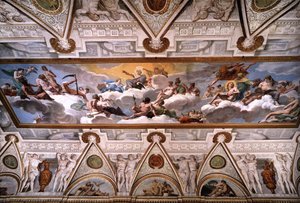
- Villa Borghese Ceiling (Gods of Olympus): A monumental work showcasing a complex narrative and dynamic figures.
- Sala de' Corazzieri and Sala Regia at the Quirinale Palace: Further establishing his reputation as a leading fresco artist in Rome.
- The Assumption of the Virgin at Sant’Andrea della Valle: Considered his masterpiece, this ambitious dome fresco is renowned for its dramatic lighting, crowded composition, and innovative use of perspective. It exemplifies the Baroque style's emphasis on grandeur and emotional impact.
Influence and Historical Significance
Giovanni Lanfranco played a crucial role in shaping the artistic landscape of 17th-century Rome. He rivaled Domenichino for major commissions, contributing to a period of intense competition among leading artists. His innovative approach to fresco painting, particularly his mastery of illusionistic techniques and dramatic compositions, influenced subsequent generations of artists. Lanfranco’s work reflects the broader trends of the Baroque era—a focus on dynamism, emotion, and grandeur—and cemented his place as one of the most important painters of his time. His influence can be seen in later works by Francesco Solimena and other Italian artists.
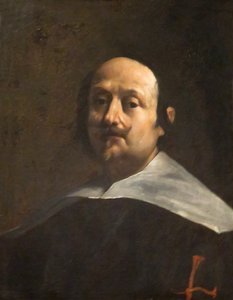
Giovanni Lanfranco
1582 - 1647 , Italy
Quick Facts
- Artistic Movement Or Style: Baroque painting
- Artists Or Movements Influenced By This Artist: ['Francesco Solimena']
- Artists Who Influenced This Artist:
- Correggio
- Annibale Carracci
- Ludovico Carracci
- Date Of Birth: January 26, 1582
- Date Of Death: November 30, 1647
- Full Name: Giovanni Lanfranco
- Nationality: Italian
- Notable Artworks:
- The Prophet Elijah Awakened
- Saint Luke
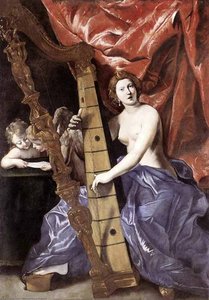
- Venus Playing the Harp
- Gods of Olympus fresco
- Place Of Birth (City And Country): Parma, Italy
Related Articles
Celestial Messengers: Angels in Painting – A Historical & Artistic Exploration
Explore the captivating history of angels in painting! Discover symbolism, iconic Renaissance & Byzantine masterpieces, and renowned artists. Expert insights for art lovers & collectors at ArtsDot.
Celestial Messengers: A Comprehensive Exploration of Angelic Representation in Art History
Explore the captivating history of angels in art! Discover symbolism, iconic Renaissance masterpieces & renowned artists. Expert insights for art lovers & collectors at ArtsDot.

Baroque Drama: Bringing Opulence & Emotion into Contemporary Interiors
Explore the opulent world of Baroque interior design! Discover key elements, modern applications & how to bring dramatic elegance into your home with 's authentic reproductions.

The Dramatic Flourish: Exploring the Baroque Movement's Enduring Legacy in Art History
Explore the dramatic world of Baroque art! Discover iconic artists like Caravaggio & Rubens, defining techniques, and its lasting impact on art history. Expert insights for collectors & enthusiasts at ArtsDot.

Baroque Masterpieces: 10 Paintings That Defined an Era |
Journey through the drama & grandeur of Baroque art! Explore 10 masterpieces by Caravaggio, Rembrandt, Rubens & more. Discover stunning oil paintings, rich colors & timeless stories. Find museum-quality reproductions at .