 Preview
 Send
Send Share
Share
 Details

 Download
 Similars
 X-Ray
X-Ray Diaporama
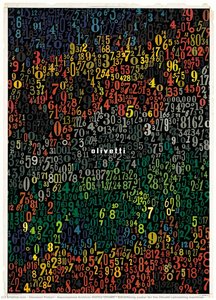
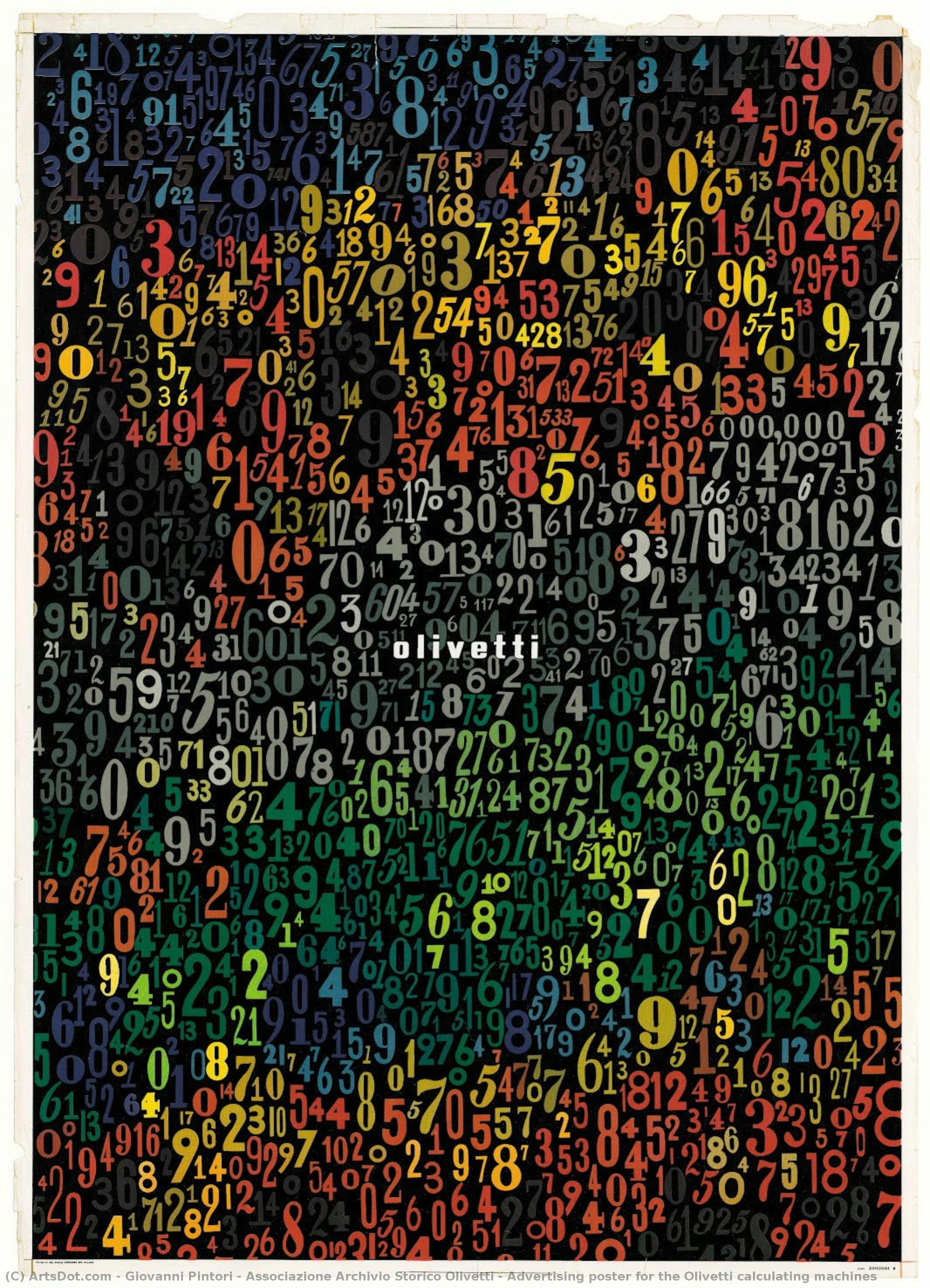
Associazione Archivio Storico Olivetti - Advertising poster for the Olivetti calculating machines


 Read More
Hand Made Oil Reproduction
Hand-painted oil on canvas in your size and frame, made to order by our artists. ( Buy Print Buy Image)




































Pick from our preset sizes that match the artwork's original proportions.

You may enter your own dimensions to fit a specific frame or space. If your selected size does not match the original image's proportions, we will either crop the artwork or extend the painting with additional hand-painted elements. A digital mockup will be sent for your approval before production begins.
Please note that the on-screen preview does not reflect the actual cropping or extension. Only the mockup will accurately show the final composition.
While custom sizes are available, we recommend selecting a dimension from the predefined list to preserve the original proportions.
After order, ArtsDot.com team will email client for instructions and provide a mockup preview
Worldwide Delivery () in 3/4 weeks instead of standard 5 weeks. (31 August). No compromise on quality.

Free Worldwide Express Shipping

High-Quality Linen Canvas

Full Shipping Insurance

Customs Tax Refund Guarantee

True Color Matching Guarantee

60-Day Return Policy (Defects Only)

100% Money-Back Guarantee

Bulk Discount Offer
 Glass option is only available in size under 110 CM

Associazione Archivio Storico Olivetti - Advertising poster for the Olivetti calculating machines
Reproduction Medium
Reproduction Size
-


Total Price
$ 263
Related Artworks


Artist Biography
Jackson Pollock: A Revolutionary of American Abstraction
Born in Cody, Wyoming, in 1912, Paul Jackson Pollock – as he was initially known – emerged from a transient childhood marked by frequent moves across the American West and Southwest. His family’s itinerant existence, rooted in Scotch-Irish heritage and shaped by his father's experiences in South Africa and later as a grain buyer, instilled within him a restless spirit and an acute awareness of movement and change. This early life, characterized by both instability and a deep connection to the land, would profoundly influence his artistic vision, shaping a career dedicated to capturing the dynamism of experience rather than representing fixed realities.
Pollock’s formal art training was limited; he briefly attended Manual Arts High School in Los Angeles but quickly abandoned traditional academic pursuits. It wasn't until the late 1940s that his distinctive style began to coalesce, fueled by a growing dissatisfaction with conventional painting and a desire to break free from representational constraints. Influenced by Surrealism’s emphasis on the subconscious and the burgeoning Abstract Expressionist movement in New York, Pollock developed his revolutionary “drip” technique – a method of applying paint directly onto canvases laid flat, often using sticks, brushes, and even his own body as instruments. This process, initially met with skepticism, became synonymous with his name and fundamentally altered the course of American art.
The Birth of Action Painting
Pollock’s approach to painting was radically different from anything that had come before. He eschewed meticulous planning and precise brushwork, instead embracing spontaneity and chance as integral components of the creative process. His canvases became vast fields of color, layered with seemingly random drips, splatters, and pools – a visual record of his physical engagement with the artwork. This “action painting,” as it was often described, wasn’t about creating a specific image but rather about conveying an emotional state or capturing the energy of the moment. Critics initially struggled to understand this approach, dismissing it as chaotic and lacking in control, yet it quickly gained recognition for its raw intensity and unprecedented freedom.
Key works from this period include “Number 1, 1950” (MoMA), a monumental canvas dominated by layers of black and gray paint, and “Mural,” created for the Dunlop Tire Company headquarters in Greenwich Village. These paintings demonstrate Pollock’s mastery of scale and his willingness to push the boundaries of traditional painting techniques. The drip technique wasn't simply about applying paint; it was about channeling energy, releasing inhibitions, and allowing the subconscious to guide the hand.
Collaboration and Influence
Pollock’s life was marked by both artistic success and personal struggles. He married Lee Krasner in 1945, a fellow Abstract Expressionist who became his champion and confidante. Krasner played a crucial role in supporting his career and providing critical feedback on his work. However, Pollock battled with alcoholism throughout much of his adult life, a condition that ultimately contributed to his untimely death in 1956 at the age of 44.
Despite his short career, Pollock’s impact on the art world is immeasurable. He paved the way for subsequent generations of abstract artists and profoundly influenced movements such as Pop Art and Minimalism. His emphasis on process over product, his rejection of traditional artistic conventions, and his willingness to embrace chance and spontaneity continue to resonate with artists today. His work remains a powerful testament to the transformative potential of art and the enduring legacy of an artist who dared to redefine the very nature of painting.
Major Works and Techniques
Pollock’s oeuvre is characterized by a remarkable diversity of styles and approaches, though certain recurring themes and techniques are consistently present. His “drip paintings,” as mentioned previously, remain his most iconic works. These canvases often feature large areas of color applied with minimal brushwork, creating a sense of depth and movement. He also experimented with various media, including silkscreen printing and etching, further expanding the possibilities of artistic expression.
- “Blue Poles” (1952): A large-scale canvas dominated by vibrant blue hues, this work exemplifies Pollock’s use of color to evoke emotion and capture a sense of dynamism. It was initially met with controversy but later became one of his most celebrated paintings.
- “Mural” (1950): Created for the Dunlop Tire Company headquarters, this monumental painting showcases Pollock’s ability to work on a large scale and his willingness to experiment with different techniques. The mural's complex layering of colors and textures reflects the energy and chaos of the artist’s creative process.
- Silkscreen Prints: In the late 1940s, Pollock began experimenting with silkscreen printing, creating images based on his drip paintings. This technique allowed him to explore new ways of manipulating color and texture, while also challenging traditional notions of authorship and originality.
Historical Significance
Jackson Pollock’s rise to prominence in the mid-20th century coincided with a period of profound social and cultural change. His work reflected the anxieties and uncertainties of the postwar era, as well as the growing desire for individual expression and artistic freedom. He challenged established conventions and pushed the boundaries of what was considered “art,” ultimately redefining the role of the artist in society. Pollock’s legacy extends far beyond his own lifetime, continuing to inspire artists and viewers alike with his bold vision and unwavering commitment to innovation.
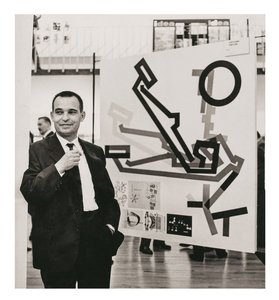
giovanni pintori
1912 - 1999 , Italy
Quick Facts
- Artistic Movement Or Style: Abstract Expressionism, Action painting
- Artists Or Movements Influenced By This Artist: ['Lee Krasner']
- Artists Who Influenced This Artist: ['Edward Gordon Craig']
- Date Of Birth: January 28, 1912
- Date Of Death: August 11, 1956
- Full Name: Paul Jackson Pollock
- Nationality: American
- Notable Artworks:
- Blue Poles
- Mural
- Place Of Birth: Cody, Wyoming, USA
Related Articles
Giovanni Fattori: Realism, Identity & the Tuscan Landscape – A Macchiaioli Master
Explore the life & art of Giovanni Fattori, a leading figure of the Macchiaioli movement. Discover his revolutionary realism, captivating Tuscan landscapes, and lasting impact on Italian painting. Learn more at ArtsDot.

The Canvas of Consent: Navigating Data Privacy & Artistic Expression in the Digital Age
Explore the complex intersection of data privacy, artistic expression & surveillance capitalism. Expert analysis on ethical considerations for artists, legal frameworks, and building a future of responsible digital art.
Giovanni Giacometti: Sculpting Existentialism – A Study of Form, Space, and the Human Condition
Explore the profound artistic journey of Giovanni Giacometti, father to Alberto. Discover his unique transition from Surrealism to Existentialist sculpture and painting – a compelling study for elite collectors and art enthusiasts.
Mario Sironi: A Poetic of Modern Italian Identity Through Symbolism & Social Commentary
Explore the profound works of Mario Sironi, a key figure in Italian Modernism. Discover his evolution from Futurism to Metaphysical painting and his powerful social commentary. Learn about his legacy at ArtsDot.
F.A.Q.: Poster Prints – Durability, Comparison to Canvas, & Sizes for Elite Collectors
provides elite collectors with detailed insights into our poster print quality, comparing durability & materials to canvas. Explore sizing options and discover museum-quality art reproductions for lasting investment value.