 Preview
 Send
Send Share
Share
 Details

 Download
 Similars
 X-Ray
X-Ray Diaporama
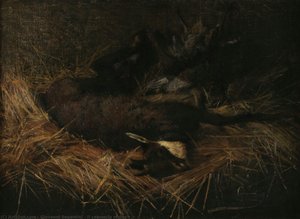
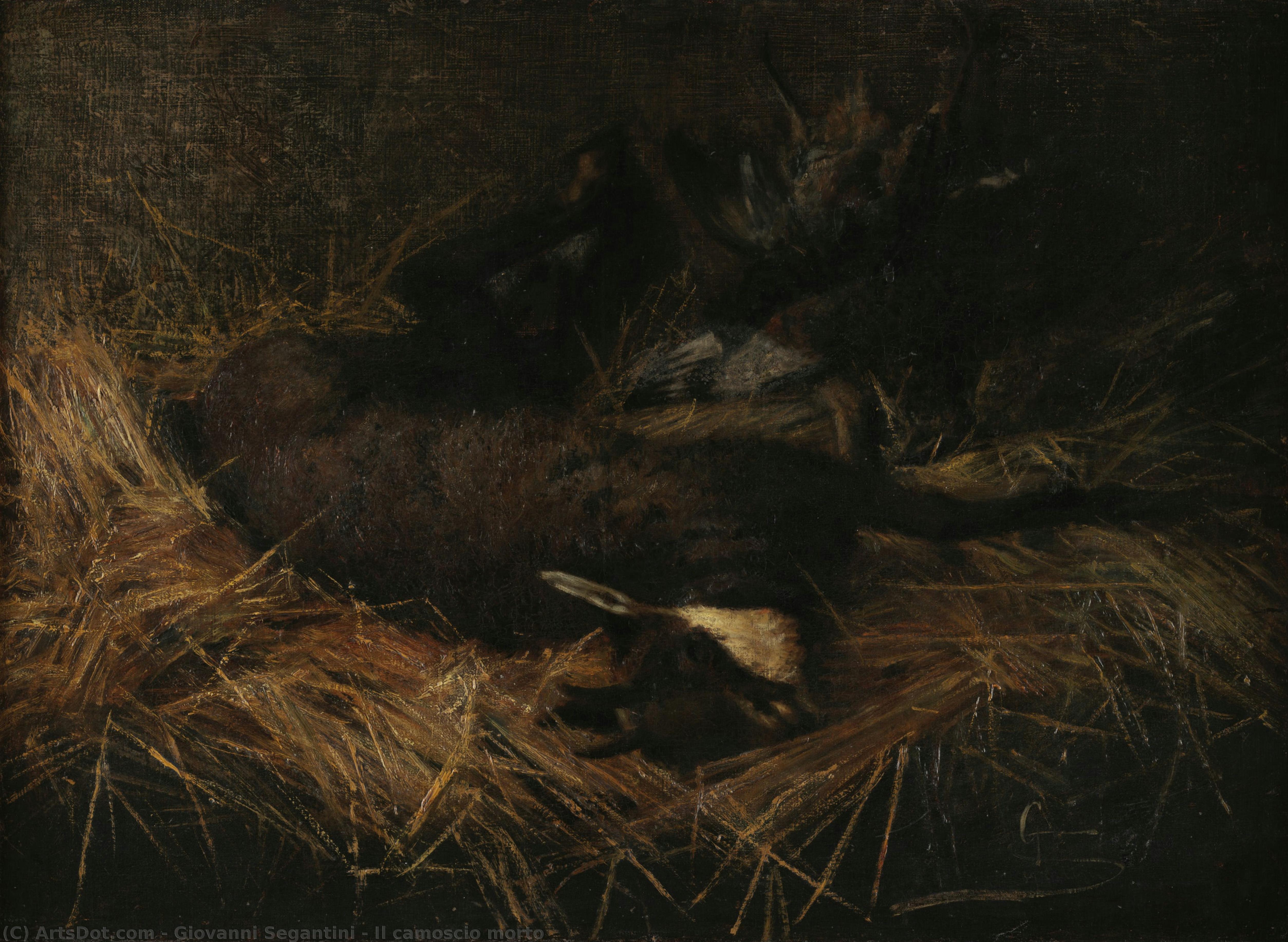
Il camoscio morto
 Oil On Canvas
- WallArt
- Divisionist Symbolism Landscape
 19th Century
 101.0 x 75.0 cm
 Galleria d'Arte Moderna
 Read More
Hand Made Oil Reproduction
Hand-painted oil on canvas in your size and frame, made to order by our artists. ( Buy Print Buy Image)




P118B $10

P118H $10

P118W $10

P438Z $10

P508JH $12

P508YH $12

P805H $10

P805Z $10

P919BZ $10

P919G $10

P919XJ $10

P959ZH $10

P968JZ $12

W106C $8

W218G $10

W218JH $8

W218Y $10

W307PJ $10

W316G $10

W316PJ $8

W316Y $10

W398PJ $8

W4111J $10

W500HY $15

W500JH $15

W692G $12

W849H $8

W940BG $15

W953PJ $8




Pick from our preset sizes that match the artwork's original proportions.

You may enter your own dimensions to fit a specific frame or space. If your selected size does not match the original image's proportions, we will either crop the artwork or extend the painting with additional hand-painted elements. A digital mockup will be sent for your approval before production begins.
Please note that the on-screen preview does not reflect the actual cropping or extension. Only the mockup will accurately show the final composition.
While custom sizes are available, we recommend selecting a dimension from the predefined list to preserve the original proportions.
After order, ArtsDot.com team will email client for instructions and provide a mockup preview
Worldwide Delivery () in 3/4 weeks instead of standard 5 weeks. (17 August). No compromise on quality.

Free Worldwide Express Shipping

High-Quality Linen Canvas

Full Shipping Insurance

Customs Tax Refund Guarantee

True Color Matching Guarantee

60-Day Return Policy (Defects Only)

100% Money-Back Guarantee

Bulk Discount Offer
 Glass option is only available in size under 110 CM

Il camoscio morto
Reproduction Medium
Reproduction Size
-


Total Price
$ 263
Artwork Description
Giovanni Segantini’s ‘Il Camoscio Morto’: A Study in Alpine Melancholy
Giovanni Segantini's “Il Camoscio Morto” – "The Dead Chamois" – is a profoundly moving work that transcends the simple depiction of a deceased animal. Painted around 1890, this black and white masterpiece captures a moment of stark beauty within the dramatic landscape of the Italian Alps, revealing Segantini’s unique artistic vision and his deep connection to the natural world. Measuring 101 x 75 cm, the painting immediately draws the viewer into a scene of quiet contemplation, dominated by the slumped form of a chamois – a wild goat native to the region – resting peacefully in a bed of hay.
Divisionism and the Spirit of the Alps
Segantini’s style is inextricably linked to Divisionism, a technique pioneered by artists like Tomás y Bernardez and நிறுவित by William De Morgan. Rather than blending colors on the palette, Divisionists meticulously applied tiny dots or strokes of pure color – achieved through layering multiple glazes – allowing the viewer's eye to optically blend them. This method creates an ethereal luminosity and a remarkable sense of depth and texture, particularly evident in the rendering of the hay, the chamois’s fur, and the distant mountain peaks. Segantini’s approach wasn’t merely about technical skill; it was a deeply spiritual one, reflecting his belief that nature possessed a divine quality. He sought to capture not just what he saw, but how light itself interacted with the landscape – a pursuit central to Divisionist philosophy.
Symbolism of Loss and Resilience
The image of the dead chamois is laden with symbolic weight. The animal’s stillness suggests vulnerability and mortality, yet it's presented within a scene of remarkable serenity. Birds are scattered throughout the composition – some perched on the hay, others taking flight – representing both mourning and renewal. This juxtaposition speaks to the cyclical nature of life and death, a recurring theme in Segantini’s work. The chamois itself, a symbol of strength and agility in its natural habitat, now lies vulnerable, prompting reflection on the fragility of existence. The setting, a remote alpine pasture, further emphasizes this sense of isolation and the raw power of nature.
A Painter's Journey: Segantini’s Biography
Giovanni Segantini’s life story is as compelling as his art. Born in Graz, Austria, in 1858, he spent his formative years battling poverty and hardship, including a period of institutionalization following his mother’s death. This challenging upbringing instilled in him an unwavering determination and a profound respect for the simple beauty of the natural world. His self-taught artistic journey, fueled by a deep passion and a meticulous approach to technique, ultimately led to his recognition as one of Italy's most important landscape painters. “Il Camoscio Morto” stands as a testament to his resilience and his ability to transform personal struggles into enduring works of art.
Related Artworks

Artist Biography
Giovanni Segantini: A Life Dedicated to the Alps
- Born: January 15, 1858, Arco, Trentino (then Austria-Hungary)
- Died: August 10, 1899, Schiavi di Abbemaggiore, near Sondrio, Italy
Giovanni Segantini was an Italian painter renowned for his large-scale pastoral landscapes of the Alps. His life story is one marked by hardship and eventual artistic triumph, culminating in a unique style that blended Divisionism with Symbolist imagery.
Early Life and Struggles
- Difficult Beginnings: Segantini's early years were characterized by poverty. His father was a traveling tradesman, leaving his mother to raise him largely alone.
- Orphanhood and Reformatory: Following his mother’s death, he ran away from home and ended up in a Milanese reformatory. It was here that a chaplain recognized his artistic talent and encouraged its development.
- Self-Education: Despite limited formal education, Segantini taught himself to read and write later in life, demonstrating remarkable determination.
- Early Career: He initially worked as a photographer's assistant before pursuing painting seriously.
Artistic Development and Influences
- Training at the Brera Academy: Segantini attended classes at the prestigious Brera Academy in Milan, where he encountered influential figures of the Scapigliatura movement. This group championed a rejection of artistic conventions and an embrace of life's raw realities.
- Key Influences: His work was significantly influenced by Anton Mauve and Jean-François Millet, introduced to him through Vittorio Grubicy de Dragon, who became his advisor and dealer. These artists emphasized realism and depictions of rural life.
- Divisionism: Segantini adopted a Divisionist painting approach, which involved applying small dots or strokes of pure color side by side on the canvas. This technique aimed to create optical mixing in the viewer's eye, producing vibrant and luminous effects.
- Symbolism: Alongside Divisionism, Segantini incorporated Symbolist elements into his work, imbuing his landscapes with deeper meanings and allegorical representations of life, death, and spirituality.
Major Works and Themes
- Early Success: His painting "The Chancel of Sant'Antonio" gained recognition for its powerful quality and was acquired by Milan’s Società per le Belle Arti.
- Alpine Landscapes: Segantini is best known for his depictions of the Alps, capturing their grandeur and serenity. He sought to portray not just the physical beauty but also the spiritual essence of these landscapes.
- Notable Paintings: Some of his most celebrated works include:
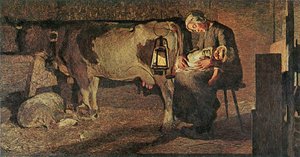
- The Two Mothers (Le due Madri) - A poignant depiction of motherhood and rural life.
- Life (La Vita) – Captures the essence of Alpine beauty and human connection.
- Donna alla fonte (also known as Alpenlandschaft mit Frau am Brunnen) – A serene scene of a woman by a fountain in the Alps.
- Ragazza che fa la calza - A beautiful Symbolist painting featuring a woman and sheep.
- Il castigo delle lussuriose – A haunting depiction exploring themes of morality and nature.
- Later Years: He spent his final years in Switzerland, where he created some of his most significant works, including "Capriolo morto" (Dead Roe Deer), a deeply moving portrayal of mortality.
Legacy and Historical Significance
- Unique Artistic Style: Segantini’s fusion of Divisionism and Symbolism resulted in a distinctive style that set him apart from his contemporaries.
- Capturing the Spirit of the Alps: He is remembered as one of the most important painters of Alpine landscapes, successfully conveying their beauty and spiritual significance.
- Influence on Later Artists: His innovative use of color and light influenced subsequent generations of artists.
- Continued Appreciation: Today, Segantini’s works are exhibited in major museums worldwide, and his legacy as a master painter continues to inspire art lovers.
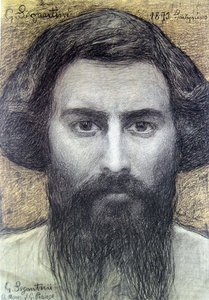
Giovanni Segantini
1858 - 1899 , Austria
Quick Facts
- Artistic Movement Or Style: Symbolism, Divisionism
- Artists Who Influenced This Artist:
- Anton Mauve
- Jean-François Millet
- Date Of Birth: January 15, 1858
- Date Of Death: 1899
- Full Name: Giovanni Segantini
- Nationality: Italian
- Notable Artworks:
- The Chancel of Sant Antonio
- Lavandaia
- Life (La Vita)
- Donna alla fonte
- Ragazza che fa la calza
- Taking a Drink
- Il castigo delle lussuriose
- Capriolo morto
- L.amore alla fonte della vita
- Place Of Birth: Arco, Austria-Hungary
Related Articles

White on Canvas: 10 Masterpieces & Timeless Elegance for Your Home Decor
Explore 10 iconic white paintings by Monet, Whistler & Rothko! Discover the stories behind these serene masterpieces and their impact on art history. Find museum-quality reproductions for your home decor at .

Dark Masterpieces: 10 Iconic Paintings Dominated by Black Tones |
Explore 10 iconic paintings dominated by black tones, from Rembrandt’s chiaroscuro to Goya's dark expressions. Discover the stories behind these masterpieces & find museum-quality art reproductions for your home at .
Giovanni Segantini: Capturing Alpine Light & Symbolist Visions
Explore the captivating world of Giovanni Segantini, master of Alpine landscapes & Symbolist art. Discover his innovative techniques, allegorical masterpieces like 'La Vita,' and enduring legacy. Learn about this pivotal 19th-century Italian painter.

Monochrome Visions: Exploring the Aesthetic & Historical Significance of Black & White Photography
Explore the rich history & artistic power of black and white photography. From early techniques to iconic masters like Ansel Adams, discover why monochrome continues to captivate art lovers today. Expert insights for collectors.

The Subtleties of White: Exploring Absence, Light & Symbolism in Art History
Explore the profound symbolism & history of white in art! From ancient purity to modern abstraction, discover how artists have used absence & light. Expert insights from ArtsDot.