 Preview
 Send
Send Share
Share
 Details

 Download
 Similars
 X-Ray
X-Ray Diaporama
Pentecost
 Tempera
- Early Renaissance
 1460
1460- Renaissance
 201.0 x 128.0 cm
 J. Paul Getty Museum
 Read More
Hand Made Oil Reproduction
Hand-painted oil on canvas in your size and frame, made to order by our artists. ( Buy Print Buy Image)




P118B $10

P118H $10

P118W $10

P438Z $10

P508JH $12

P508YH $12

P805H $10

P805Z $10

P919BZ $10

P919G $10

P919XJ $10

P959ZH $10

P968JZ $12

W106C $8

W218G $10

W218JH $8

W218Y $10

W307PJ $10

W316G $10

W316PJ $8

W316Y $10

W398PJ $8

W4111J $10

W500HY $15

W500JH $15

W692G $12

W849H $8

W940BG $15

W953PJ $8




Pick from our preset sizes that match the artwork's original proportions.

You may enter your own dimensions to fit a specific frame or space. If your selected size does not match the original image's proportions, we will either crop the artwork or extend the painting with additional hand-painted elements. A digital mockup will be sent for your approval before production begins.
Please note that the on-screen preview does not reflect the actual cropping or extension. Only the mockup will accurately show the final composition.
While custom sizes are available, we recommend selecting a dimension from the predefined list to preserve the original proportions.
After order, ArtsDot.com team will email client for instructions and provide a mockup preview
Worldwide Delivery () in 3/4 weeks instead of standard 5 weeks. (20 August). No compromise on quality.

Free Worldwide Express Shipping

High-Quality Linen Canvas

Full Shipping Insurance

Customs Tax Refund Guarantee

True Color Matching Guarantee

60-Day Return Policy (Defects Only)

100% Money-Back Guarantee

Bulk Discount Offer
 Glass option is only available in size under 110 CM

Pentecost
Reproduction Medium
Reproduction Size
-


Total Price
$ 263
Artwork Description
The Divine Radiance of Pentecost
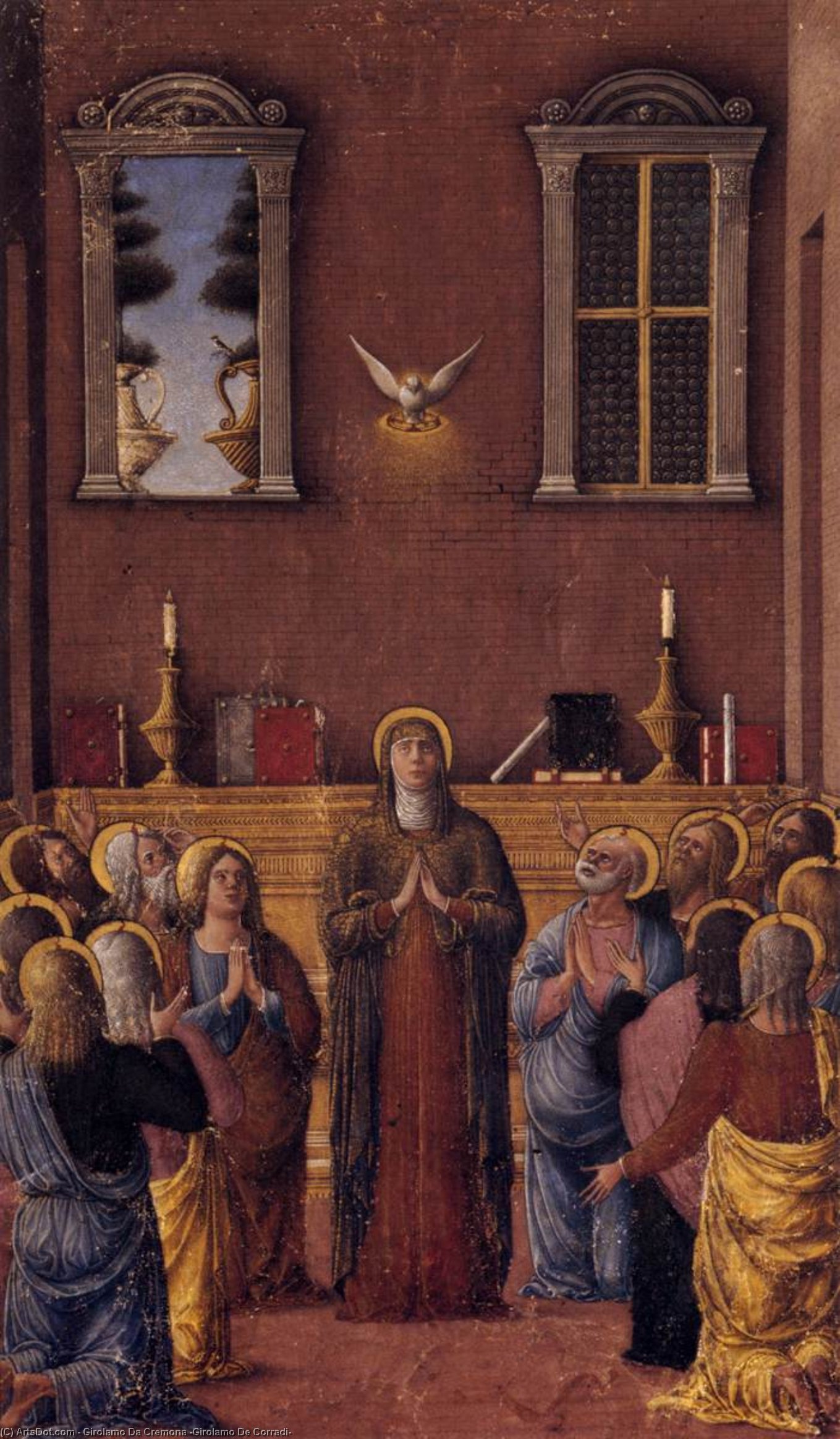
To stand before Girolamo Da Cremona's depiction of the Pentecost is to be enveloped in a palpable wave of divine energy. This masterpiece from the heart of the Early Renaissance does not merely illustrate a biblical event; it captures the very moment spiritual revelation descends upon humanity. The composition itself sings with an almost mathematical harmony, a testament to da Cremona’s genius for structure and balance. One feels immediately drawn into the sacred space depicted, where earthly concerns dissolve under the weight of divine presence. The central grouping of figures, arrayed with such careful symmetry, seems poised on the threshold between the mundane world and the sublime.
Mastery in Tempera and Light
Technically, the work is a breathtaking display of 15th-century Italian craftsmanship, executed in tempera on vellum. The richness and luminosity inherent in this medium allow da Cremona to achieve tones that are both vibrant and deeply resonant. Observe how the light does not simply fall upon the figures; it seems to emanate from them, particularly emanating from the celestial dove overhead. This masterful handling of chiaroscuro—the dramatic interplay of light and shadow—lends an incredible sense of volume and three-dimensionality to every fold of drapery and every upturned face. The artist’s meticulous attention is evident in the intricate patterns adorning the garments, suggesting not just wealth, but a sacred order woven into the very fabric of existence.
Symbolism Woven into Form
The symbolism within Pentecost is profound and multi-layered. At its core lies the descent of the Holy Spirit, symbolized by that ethereal dove descending from the upper reaches of the canvas. This moment marks the empowerment of the apostles, transforming them from disciples into evangelists. The arrangement of the figures—the Virgin Mary at the nexus, flanked by those awaiting divine instruction—creates a visual narrative of reception and awakening. It is a meditation on inspiration itself; the quiet awe etched upon their faces speaks volumes about the transformative power of belief.
A Timeless Echo for Modern Spaces
For the collector or designer seeking an anchor piece imbued with history and profound meaning, this reproduction offers more than mere decoration. It brings the intellectual rigor of Renaissance humanism and the emotional fervor of religious devotion into a contemporary setting. The blend of classical architectural elements in the background grounds the spiritual drama within a recognizable, stately framework. Owning a piece inspired by da Cremona’s Pentecost is to invite a sense of enduring grace and elevated contemplation into your home or gallery, allowing the viewer to feel, once more, the weight and wonder of divine inspiration.
Related Artworks

Artist Biography
Girolamo da Cremona: A Renaissance Master of Emotion
Girolamo da Cremona, born around 1470 in Cremona, Lombardy (modern Italy), stands as a cornerstone figure within the Early Renaissance artistic landscape. His prolific output—primarily religious paintings and portraits—demonstrates an unparalleled ability to convey profound emotion through meticulous observation and masterful technique. Unlike many of his contemporaries who adhered to strict stylistic conventions dictated by papal patronage, da Cremona cultivated a distinctive visual language characterized by dramatic chiaroscuro (light and shadow), expressive gestures, and psychologically nuanced depictions of human subjects.Early Life and Artistic Training
Little is known definitively about Girolamo’s formative years. He apprenticed under Andrea del Sarto in Florence, absorbing the humanist ideals prevalent during that period—a focus on classical antiquity and a belief in human potential—which profoundly shaped his artistic sensibilities. The influence of Leonardo da Vinci is palpable in his compositional choices and anatomical accuracy, particularly evident in works like “The Descent from the Cross,” where Leonardo’s meticulous attention to detail informs the depiction of Christ's suffering. However, Girolamo swiftly established himself as an independent artist with a singular vision.Notable Paintings: Expressions of Faith and Human Dignity
Da Cremona’s artistic reputation soared during his tenure in Bologna, where he served as court painter for Cardinal Cesare Borgia. This patronage afforded him access to ambitious projects—including monumental altarpieces—that showcased his technical prowess and emotional depth. “Pentecost,” housed in the Basilica of San Petronio, exemplifies his masterful use of chiaroscuro to illuminate the divine presence amidst the fervent fervor of the apostles. The painting’s dynamic composition captures the palpable energy of the event, conveying a sense of awe and spiritual ecstasy. Similarly, "The Triumph of Petrarch" portrays the celebrated poet in an idealized manner—a testament to da Cremona's ability to elevate human subjects into symbols of intellectual achievement and moral virtue.Technique and Artistic Innovation
Girolamo’s artistic innovations centered around his groundbreaking application of sfumato – a technique pioneered by Leonardo da Vinci – which involved subtly blending colors and tones to create soft, hazy contours that blurred the boundaries between light and shadow. This method achieved an unprecedented level of realism, rendering figures with remarkable subtlety and capturing fleeting expressions of emotion. His meticulous anatomical studies—informed by dissection—were revolutionary for their time, contributing significantly to the advancement of humanist scholarship and artistic representation. He was a true pioneer in conveying psychological complexity within his artwork.Legacy and Historical Significance
Girolamo da Cremona’s influence extended far beyond his immediate contemporaries. His work served as inspiration for subsequent generations of artists—particularly those working in Emilia-Romagna—who embraced his expressive style and technical innovations. He remains a celebrated exemplar of Early Renaissance art, embodying the humanist spirit of the era and demonstrating an unwavering commitment to capturing the essence of human experience through visual artistry. His paintings continue to resonate with audiences today, offering glimpses into the profound emotional landscape of fifteenth-century Italy and cementing his place as one of the most emotionally compelling painters of his time.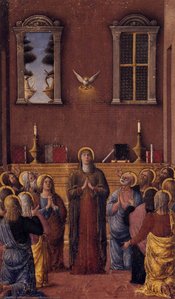
girolamo da cremona (girolamo de corradi)
1483 , Italy
Quick Facts
- Artistic Movement Or Style: Early Renaissance
- Artists Or Movements Influenced By This Artist: ['Leonardo da Vinci']
- Artists Who Influenced This Artist: ['Andrea Mantegna']
- Date Of Death: 1483
- Full Name: Girolamo da Cremona (Girolamo de Corradi)
- Nationality: Italian
- Notable Artworks:
- Pentecost
- Descent from the Cross
- The Triumphs of Petrarch
- Place Of Birth: Cremona, Lombardy
Related Articles

Giclée Prints: Archival Quality & Aesthetic Nuances for the Discerning Collector
Explore the world of giclée prints with ArtsDot. Learn about archival quality, aesthetic nuances & investment potential. Expert guidance for discerning art collectors seeking museum-quality reproductions and lasting value.

Echoes of Time: Exploring the Enduring Appeal & Historical Context of Vintage Art Prints
Explore the captivating world of vintage art prints! Discover their history, collecting tips & enduring appeal. Expert insights on chromolithography and building a legacy collection with ArtsDot.

The Enduring Legacy of Fine Art Prints: Technique, History & Aesthetic Impact
Explore the rich history & techniques of fine art prints. Discover investment potential, assess authenticity, and learn how to preserve your collection with expert guidance. Trusted insights for discerning collectors.

The Enduring Legacy of Printmaking: Techniques, Themes & Artistic Innovation Across Centuries
Explore the rich history of printmaking with ArtsDot. Discover techniques from intaglio to lithography, learn about collecting valuable prints & find museum-quality reproductions. Expert insights for art enthusiasts and collectors.

The Enduring Legacy of Woodblock Printmaking: Technique, History & Artistic Expression
Explore the rich history of woodblock printmaking – from ancient techniques to Ukiyo-e masterpieces. Discover expert insights on collecting, preserving & appreciating this enduring art form.