

 Preview
 Send
Send Share
Share
 Details

 Download
 Similars
 X-Ray
X-Ray Diaporama
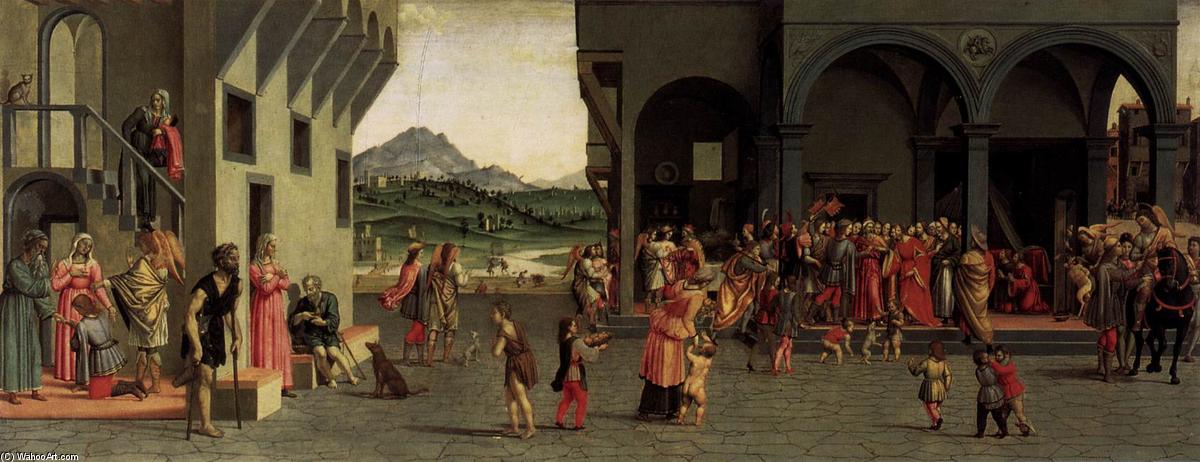
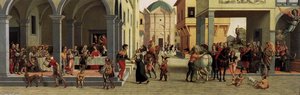
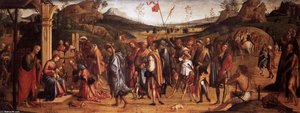
Scenes from the Story of Tobias
 Early Renaissance
 1500
1500- Renaissance
 60.0 x 159.0 cm
 Staatliche Museen
 Read More
Purchase a high-resolution, enhanced digital image, far superior to the online preview.
Each file is meticulously prepared by our in-house specialists using advanced tools and expert manual retouching. We ensure every image has exceptional clarity, precise color accuracy, and fine detail.
The final file is delivered via email within 72 hours, optimized for immediate use in professional, editorial, and print environments. This is the same quality trusted by top-tier design studios, publishers, and galleries.
Digital Image
Download a high-resolution file for personal display, printing, and creative projects. ( Buy Print Buy Hand Made Painting)
Included in Every Digital Image Order
Expert Digital Delivery, Guaranteed
When you choose ArtsDot.com, you're not just getting an image - you're receiving a professionally enhanced digital artwork, crafted with precision and backed by a satisfaction guarantee. Here's everything that comes with your order, automatically:

Fast Email Delivery
Your high-resolution digital image file will be emailed to you within 72 hours of ordering - ready for immediate use.

AI-Enhanced Digital File
Your artwork is professionally optimized using advanced AI tools and manual editing, ensuring maximum detail, clarity, and color accuracy.

Free Lifetime Re-Delivery
Accidentally deleted or lost your file? No worries - we'll resend it to you anytime, free of charge.

No Import Fees - Ever
Enjoy your artwork instantly with zero customs, duties, or delivery fees - digital downloads are always tax-free.

Color Accuracy Guarantee
We ensure your digital image reflects the original colors as closely as possible using professional tools and color management.

60-Day Satisfaction Guarantee
If you're not satisfied with your digital image, we'll revise it or refund 100% within 60 days - no questions asked.

100% Money-Back Guarantee
Not satisfied? Get a full refund within 60 days of receiving your digital file - no questions asked.

Bulk Order Discounts
Buy 3 images, save 10% - Buy 5, save 15% - Buy 10+, save 20%. Great for creative projects, galleries, and agencies.
Collectible Description
A Window into Renaissance Faith and Human Drama
Giuliano Bugiardini's "Scenes from the Story of Tobias," painted in 1500, isn’t merely a depiction of a biblical narrative; it’s a vibrant tableau brimming with the spirit of the High Renaissance. Housed within the esteemed Staatliche Museen zu Berlin, this oil-on-wood masterpiece invites us into a bustling world where faith, social interaction, and human drama converge. The painting immediately captivates with its scale – measuring 60 x 159 cm – allowing for an immersive experience that draws the viewer deep into the heart of the scene.
The Narrative Unfolds: A Moment from the Book of Tobias
The painting recounts a pivotal moment from the biblical story of Tobias, a tale of divine intervention and courageous journeys. Guided by the angel Raphael, Tobias embarks on a perilous quest to recover stolen treasure, a symbol of wealth and prosperity entrusted to his father. Bugiardini masterfully translates this complex narrative into a visual language accessible to all. We witness not just the events themselves but also the emotional resonance – the hope, the anxiety, and ultimately, the gratitude that permeate the scene. The figures are engaged in a lively procession, suggesting a public celebration or perhaps a civic duty connected to the recovery of the treasure.
Renaissance Realism and Artistic Technique
Bugiardini’s style is firmly rooted in the Renaissance tradition, yet possesses a unique dynamism. He demonstrates an exceptional command of realism, meticulously rendering the textures of clothing, the folds of drapery, and the expressions on the faces of his subjects. The use of oil paint allows for subtle gradations of color and light, creating a sense of depth and volume that was revolutionary at the time. Note the careful layering of paint – visible in the brushstrokes – which contributes to the painting’s rich texture and atmospheric quality. The flattened perspective, characteristic of Renaissance art, directs our gaze through the composition, leading us along the central pathway and emphasizing the importance of the unfolding events.
Symbolism and a Tapestry of Detail
Beyond the immediate narrative, “Scenes from the Story of Tobias” is laden with symbolic meaning. The clothing worn by the figures – rich fabrics, elaborate headdresses – speaks to their social status and wealth. The gestures and expressions convey a range of emotions, from solemn piety to joyful celebration. The architectural elements framing the scene—a building facade and doorway—represent stability and order, anchoring the chaotic energy of the procession within a framework of civic pride. Even the animals present contribute to the symbolic richness, potentially representing divine messengers or embodiments of virtues.
A Legacy Preserved: The Painting’s Enduring Appeal
“Scenes from the Story of Tobias” stands as a testament to Bugiardini's artistic skill and his ability to capture the essence of Renaissance humanism. Its vibrant colors, intricate details, and compelling narrative continue to resonate with viewers today. Reproductions of this iconic work offer an opportunity to bring its beauty and depth into any setting, serving as both a decorative element and a window into a pivotal moment in art history. For those seeking a deeper understanding of the painting, we encourage you to explore the Staatliche Museen zu Berlin’s website: https://www.smb.museum/en/collection/objects/1273865. High-quality reproductions are available for purchase at /art/list/?Filter=8Y3UTL-Giuliano-Bugiardini-Scenes-from-the-Story-of-Tobias.
Related Artworks


Artist Biography
Michelangelo Buonarroti: A Titan of the Renaissance
Michelangelo di Lodovico Buonarroti Simoni, a name synonymous with artistic genius, stands as arguably the most influential figure in Western art history. Born in Caprese in 1475, he was not simply an artist; he was a sculptor, painter, architect, draughtsman, and poet—a true Renaissance man who embodied the era’s ideals of human potential and creative exploration. His life, marked by both extraordinary achievement and personal struggles, continues to fascinate and inspire centuries later. From his humble beginnings as the son of a Florentine magistrate, Michelangelo rose to become the dominant force in Italian art during the High Renaissance, leaving behind a legacy that fundamentally shaped Western artistic traditions.
Early Life and Artistic Training
Michelangelo’s early life was steeped in family pride and a desire for social advancement. His father, Lodovico Buonarroti, a member of the Florentine government, sought to elevate his lineage by claiming descent from the great Renaissance artist Leonardo da Vinci. Despite this ambition, Michelangelo's artistic talent quickly became apparent, leading him to be apprenticed to Domenico Ghirlandaio, a prominent painter in Florence, at the age of 13. This initial training provided him with foundational skills in fresco painting and drawing, but it was his subsequent mentorship under Lorenzo de’ Medici that truly ignited his creative fire. The Medici family, powerful patrons of the arts, offered Michelangelo access to their vast collection of classical sculptures—a pivotal moment that profoundly influenced his artistic sensibilities. He studied the works of ancient Greek and Roman sculptors, absorbing their ideals of beauty, proportion, and anatomical accuracy. This exposure to antiquity would become a defining characteristic of his work, shaping his approach to both sculpture and painting.
Sculptural Masterpieces: Form and Emotion
Michelangelo’s sculptural achievements are legendary, representing the pinnacle of Renaissance artistry. His early works, such as the *Bacchus* (1496-7) and the *Pietà* (1498-9), demonstrated his mastery of marble carving and his ability to imbue inanimate stone with profound emotional depth. The *Pietà*, depicting Mary cradling the dead Christ, is particularly renowned for its exquisite realism, serene beauty, and poignant expression of grief—a testament to Michelangelo’s understanding of human anatomy and his capacity to convey complex emotions through form alone. The *David* (1501-4), a colossal marble statue of the biblical hero David before his battle with Goliath, solidified Michelangelo's reputation as a genius. This iconic sculpture embodies the Renaissance ideal of the heroic male figure—strong, confident, and imbued with an inner strength that transcends mere physical prowess. The sheer scale of *David*, combined with its dynamic pose and meticulous detail, was revolutionary for its time.
Painting: The Sistine Chapel Ceiling and Beyond
While Michelangelo considered himself primarily a sculptor, his work as a painter is equally significant. His most celebrated achievement in this realm is undoubtedly the ceiling frescoes of the Sistine Chapel in Vatican City (1508-1512). Commissioned by Pope Julius II, this monumental undertaking demanded immense physical and artistic effort—Michelangelo spent four years lying on his back to paint hundreds of figures depicting scenes from Genesis. The *Creation of Adam*, arguably the most famous image within the frescoes, captures a moment of divine inspiration with breathtaking power and dynamism. Beyond the Sistine Chapel, Michelangelo painted several other significant works, including *The Last Judgment* (1536-1541) on the altar wall of the same chapel—a dramatic depiction of the apocalypse that reflects the artist’s increasingly tormented state of mind. His work in the Laurentian Library at Florence, particularly the panels depicting the prophets and sibyls, showcases his innovative use of color and his mastery of perspective.
Architectural Contributions and Lasting Legacy
Michelangelo’s influence extended beyond sculpture and painting into the realm of architecture. He served as the architect for St Peter's Basilica in Rome, overseeing significant structural changes and contributing to the design of its iconic dome. His work on the Medici Chapel in Florence is another notable example of his architectural vision—a lavishly decorated mausoleum that exemplifies Mannerist style. Throughout his long career, Michelangelo’s artistic innovations—his emphasis on anatomical accuracy, his dramatic use of light and shadow, and his profound understanding of human emotion—influenced generations of artists. He remains a towering figure in the history of art, whose works continue to captivate audiences worldwide and serve as enduring symbols of Renaissance creativity and human potential.
giuliano bugiardini
1475 - 1555 , Italy
Quick Facts
- Artistic Movement Or Style: High Renaissance, Mannerism
- Artists Or Movements Influenced By This Artist:
- Renaissance artists
- Mannerist architecture
- Artists Who Influenced This Artist:
- Classical antiquity
- Leonardo da Vinci
- Date Of Birth: 6 March 1475
- Date Of Death: 18 February 1564
- Full Name: Michelangelo di Lodovico Buonarroti Simoni
- Nationality: Italian
- Notable Artworks:
- Pietà
- David
- Sistine Chapel ceiling
- The Creation of Adam
- Moses
- The Last Judgment
- Place Of Birth: Caprese, Italy

