 Preview
 Send
Send Share
Share
 Details

 Download
 Similars
 X-Ray
X-Ray Diaporama
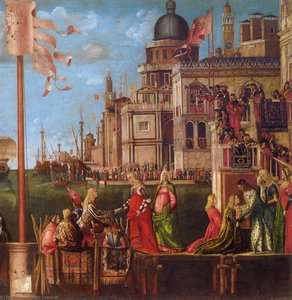
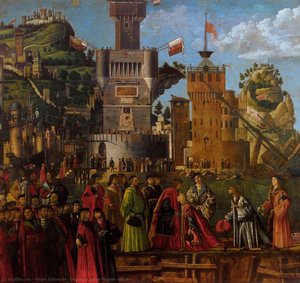
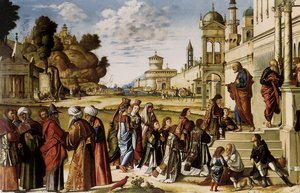
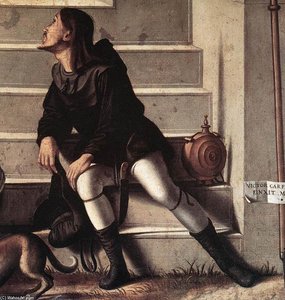
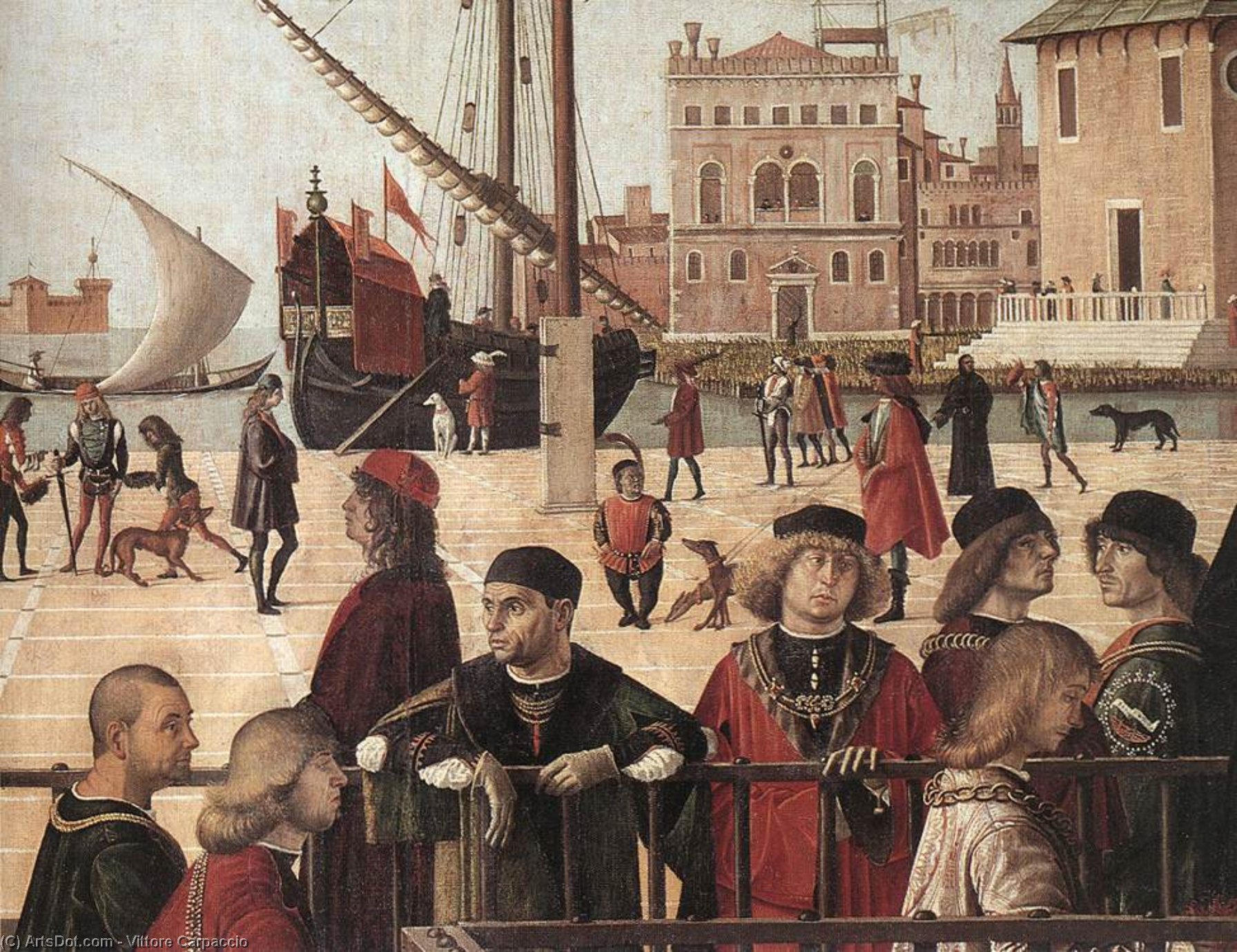
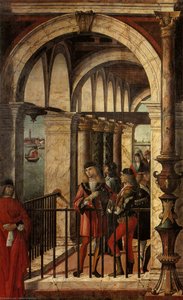
Arrival of the English Ambassadors (detail) (12)


 Read More
Hand Made Oil Reproduction
Hand-painted oil on canvas in your size and frame, made to order by our artists. ( Buy Print Buy Image)




P118B $10

P118H $10

P118W $10

P438Z $10

P508JH $12

P508YH $12

P805H $10

P805Z $10

P919BZ $10

P919G $10

P919XJ $10

P959ZH $10

P968JZ $12

W106C $8

W218G $10

W218JH $8

W218Y $10

W307PJ $10

W316G $10

W316PJ $8

W316Y $10

W398PJ $8

W4111J $10

W500HY $15

W500JH $15

W692G $12

W849H $8

W940BG $15

W953PJ $8




Pick from our preset sizes that match the artwork's original proportions.

You may enter your own dimensions to fit a specific frame or space. If your selected size does not match the original image's proportions, we will either crop the artwork or extend the painting with additional hand-painted elements. A digital mockup will be sent for your approval before production begins.
Please note that the on-screen preview does not reflect the actual cropping or extension. Only the mockup will accurately show the final composition.
While custom sizes are available, we recommend selecting a dimension from the predefined list to preserve the original proportions.
After order, ArtsDot.com team will email client for instructions and provide a mockup preview
Worldwide Delivery () in 3/4 weeks instead of standard 5 weeks. (16 August). No compromise on quality.

Free Worldwide Express Shipping

High-Quality Linen Canvas

Full Shipping Insurance

Customs Tax Refund Guarantee

True Color Matching Guarantee

60-Day Return Policy (Defects Only)

100% Money-Back Guarantee

Bulk Discount Offer
 Glass option is only available in size under 110 CM

Arrival of the English Ambassadors (detail) (12)
Reproduction Medium
Reproduction Size
-


Total Price
$ 263
Artwork Description
Arrival of the English Ambassadors (Detail): A Venetian Tableau of Diplomacy
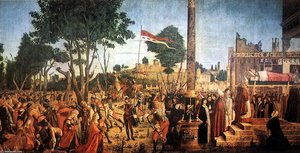
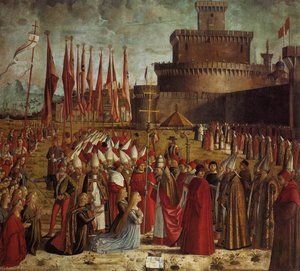
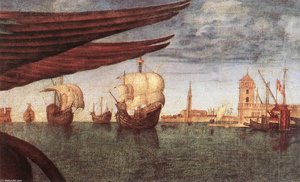
Vittore Carpaccio’s “Arrival of the English Ambassadors (detail)” – specifically this exquisite panel from his monumental cycle depicting the life of Saint Ursula – isn't merely a painting; it’s a meticulously crafted stage set, a vibrant snapshot of 15th-century Venetian diplomacy and courtly ritual. Completed around 1495-1500, during a period of intense political maneuvering between Venice and its European neighbors, the work offers a rare glimpse into the elaborate protocols governing diplomatic exchanges. The panel, now housed within the Gallerie dell’Accademia in Venice, captures a pivotal moment – the arrival of ambassadors bearing important news to King Maurus of Brittany, a key ally for the Venetian Republic. Carpaccio's genius lies not just in his technical skill but in his ability to infuse narrative with palpable atmosphere and psychological depth. He eschews the idealized formality often associated with Renaissance portraiture, instead presenting a scene brimming with life, movement, and subtle gestures. The composition is brilliantly divided: on one side, the imposing figures of the English ambassadors and King Maurus engage in formal discourse, their postures conveying deference and respect. On the other, Ursula herself, radiating wisdom and authority, listens intently to the unfolding events. Notice how Carpaccio masterfully uses light – streaming from a window on the left – to illuminate key elements within the scene, drawing our eye to the intricate details of the clothing, the expressions on the faces, and the opulent setting. The use of perspective, though not entirely linear as would later develop in Renaissance art, creates a convincing sense of depth and space, anchoring the viewer within this bustling Venetian square. The painting’s technical brilliance is further enhanced by Carpaccio's masterful handling of color and texture. He employs a rich palette – deep reds, vibrant blues, and shimmering golds – to create a visually arresting effect. The fabrics are rendered with astonishing realism, each fold and drape meticulously depicted. Observe the subtle variations in tone that suggest the sheen of silk and velvet, or the rough texture of woolen garments. This attention to detail extends to the architectural setting, which is not simply a backdrop but an integral part of the narrative. The Venetian buildings, though somewhat idealized, are instantly recognizable, reflecting the city’s status as a major trading center and a hub of artistic innovation. The inclusion of elements like the domed temple-like structure in the background hints at the influence of Perugino and foreshadows later developments in Venetian architecture. Beyond its historical and artistic significance, “Arrival of the English Ambassadors” resonates with profound symbolic meaning. The painting speaks to themes of power, diplomacy, and the delicate balance between tradition and innovation. The ambassadors represent not just political authority but also the exchange of ideas and cultural influences. Ursula’s role as a wise counselor underscores the importance of female leadership and intellectual engagement. Even the seemingly minor details – the young boy with the feather, the nurse listening attentively – contribute to the painting's layered narrative complexity. It is a scene brimming with human interaction, reflecting the intricate web of relationships that shaped 15th-century Venice.- Historical Context: The painting was created during a period of significant political and economic change in Europe. Venice was a powerful maritime republic, engaged in extensive trade relations with countries across the Mediterranean and beyond. Diplomatic exchanges were crucial for maintaining these alliances and securing Venetian interests.
- Carpaccio’s Style: Carpaccio's style is characterized by its conservative nature, influenced by early Netherlandish art and the works of Antonello da Messina. He favored narrative cycles over individual portraits, meticulously depicting scenes from biblical stories and historical events.
- Symbolism & Details: The painting’s details – the elaborate clothing, the architectural setting, the gestures of the figures – are laden with symbolic meaning, reflecting the complex social and political dynamics of the time.
Resources for Further Exploration
For a deeper dive into this captivating artwork, we recommend exploring these valuable resources:- Arrival of the English Ambassadors (detail) (9): Explore Vittore Carpaccio’s masterpiece ‘Arrival of the English Ambassadors,’ a detailed Venetian painting from 1495 depicting diplomats and their attendants within a grand palace setting.
- Arrival of the English Ambassadors (detail) (12):A detailed image and information about this panel from the Gallerie dell’Accademia.
- Vittore Carpaccio: Discover the captivating Venetian Renaissance paintings of Vittore Carpaccio (1465-1526). Known for narrative cycles like ‘The Legend of St. Ursula,’ his work blends early Netherlandish & Italian styles with a unique orientalist flair.
- Web Gallery of Art:A comprehensive online resource for exploring Carpaccio’s work, including high-resolution images and scholarly essays.
- 1st Art Gallery:Explore high quality reproductions of this masterpiece.
Related Artworks

Artist Biography
early life and training
vittore carpaccio, a prominent italian painter, was born in venice around 1465. he studied under the tutelage of gentile bellini, a renowned artist of the venetian school. this apprenticeship laid the foundation for carpaccio's future success.artistic style and influences
carpaccio's style was characterized by its conservative nature, showing minimal influence from the humanist trends that transformed italian renaissance painting during his lifetime. his work was influenced by antonello da messina's style and early netherlandish art. this unique blend of styles resulted in a distinctive approach to venetian painting.notable works
- the legend of saint ursula, a cycle of nine paintings, is carpaccio's most famous work. this series, now housed in the gallerie dell'accademia, showcases his mastery of narrative painting.
- glory of st. ursula altarpiece (1491) demonstrates carpaccio's skill in capturing light and color, reminiscent of giovanni bellini's style.
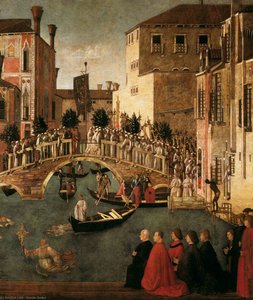
- miracle of the relic of the cross at the ponte di rialto (1494) highlights carpaccio's ability to balance composition and narrative.
career highlights and legacy
- carpaccio's principal works were executed between 1490 and 1519, ranking him among the early masters of the venetian renaissance.
- his orientalist style, as seen in st. george baptizing the selenites, reflects a new fascination with the levant.
- carpaccio's work has been somewhat overlooked in comparison to his contemporaries, such as giovanni bellini or giorgione.
references and further reading
discover more about vittore carpaccio and the venetian school on ArtsDot.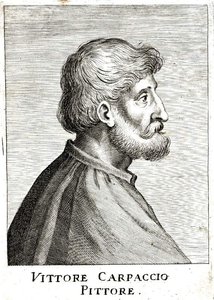
Vittore Carpaccio
1465 - 1526 , Italy
Quick Facts
- Artistic Movement Or Style: Early Venetian Renaissance
- Artists Or Movements Influenced By This Artist: ['Early Netherlandish Painting']
- Artists Who Influenced This Artist:
- Antonello da Messina
- Gentile Bellini
- Date Of Birth: Venice, Italy (c. 1465)
- Date Of Death: 1526
- Full Name: Vittore Carpaccio
- Nationality: Italian
- Notable Artworks:
- The Legend of Saint Ursula
- Glory of St. Ursula Altarpiece
- Miracle of the Relic of the Cross at the Ponte di Rialto
- Place Of Birth: Venice
Related Articles
Vittore Carpaccio: Venetian Renaissance Narrative & the Poetics of Detail
Explore the captivating world of Vittore Carpaccio, a master storyteller of the Venetian Renaissance. Discover his intricate details, narrative cycles like 'The Legend of St. Ursula,' and unique artistic style.
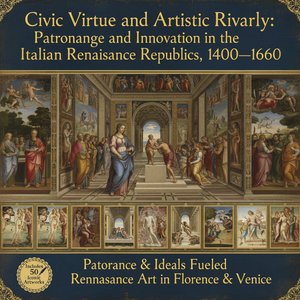
Civic Virtue and Artistic Rivalry: Patronage and Innovation in the Italian Renaissance Republics, 1400–1600
Explore the Italian Renaissance! Discover how competitive patronage & humanist ideals fueled artistic innovation in republics like Florence & Venice. Expert insights for art lovers and collectors.
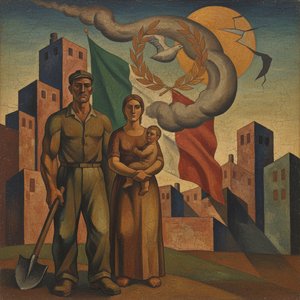
Mario Sironi: A Poetic of Modern Italian Identity Through Symbolism & Social Commentary
Explore the profound works of Mario Sironi, a key figure in Italian Modernism. Discover his evolution from Futurism to Metaphysical painting and his powerful social commentary. Learn about his legacy at ArtsDot.
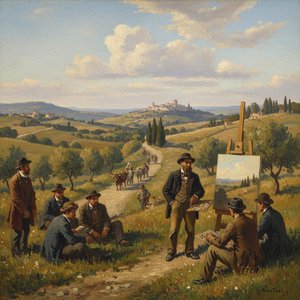
Giovanni Fattori: Realism, Identity & the Tuscan Landscape – A Macchiaioli Master
Explore the life & art of Giovanni Fattori, a leading figure of the Macchiaioli movement. Discover his revolutionary realism, captivating Tuscan landscapes, and lasting impact on Italian painting. Learn more at ArtsDot.
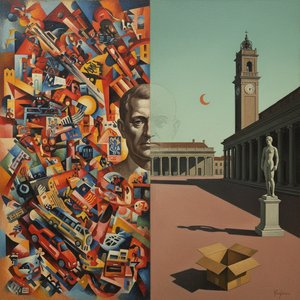
Carlo Carrà: Futurist Visions & Metaphysical Transformations in Early 20th-Century Italian Painting
Explore the artistic journey of Carlo Carrà, a pivotal figure in Italian Futurism & Metaphysical painting. Discover his dynamic compositions, collaborations with de Chirico, and lasting influence on modern art history.