 Preview
 Send
Send Share
Share
 Details

 Download
 Similars
 X-Ray
X-Ray Diaporama
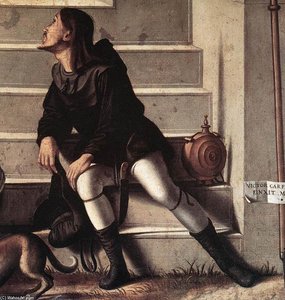
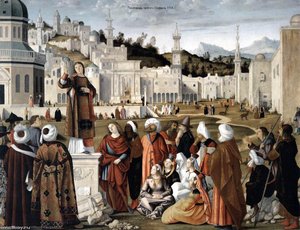
St Stephen is Consecrated Deacon
 Acrylic On Canvas
- WallArt
- Venetian Renaissance
 1511
1511 148.0 x 231.0 cm
 Staatliche Museen
 Read More
Hand Made Oil Reproduction
Hand-painted oil on canvas in your size and frame, made to order by our artists. ( Buy Print Buy Image)




P118B $10

P118H $10

P118W $10

P438Z $10

P508JH $12

P508YH $12

P805H $10

P805Z $10

P919BZ $10

P919G $10

P919XJ $10

P959ZH $10

P968JZ $12

W106C $8

W218G $10

W218JH $8

W218Y $10

W307PJ $10

W316G $10

W316PJ $8

W316Y $10

W398PJ $8

W4111J $10

W500HY $15

W500JH $15

W692G $12

W849H $8

W940BG $15

W953PJ $8




Pick from our preset sizes that match the artwork's original proportions.

You may enter your own dimensions to fit a specific frame or space. If your selected size does not match the original image's proportions, we will either crop the artwork or extend the painting with additional hand-painted elements. A digital mockup will be sent for your approval before production begins.
Please note that the on-screen preview does not reflect the actual cropping or extension. Only the mockup will accurately show the final composition.
While custom sizes are available, we recommend selecting a dimension from the predefined list to preserve the original proportions.
After order, ArtsDot.com team will email client for instructions and provide a mockup preview
Worldwide Delivery () in 3/4 weeks instead of standard 5 weeks. (16 August). No compromise on quality.

Free Worldwide Express Shipping

High-Quality Linen Canvas

Full Shipping Insurance

Customs Tax Refund Guarantee

True Color Matching Guarantee

60-Day Return Policy (Defects Only)

100% Money-Back Guarantee

Bulk Discount Offer
 Glass option is only available in size under 110 CM

St Stephen is Consecrated Deacon
Reproduction Medium
Reproduction Size
-


Total Price
$ 263
Artwork Description
The Sacred Narrative of Vittore Carpaccio’s “St Stephen is Consecrated Deacon”
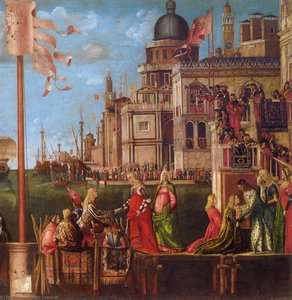
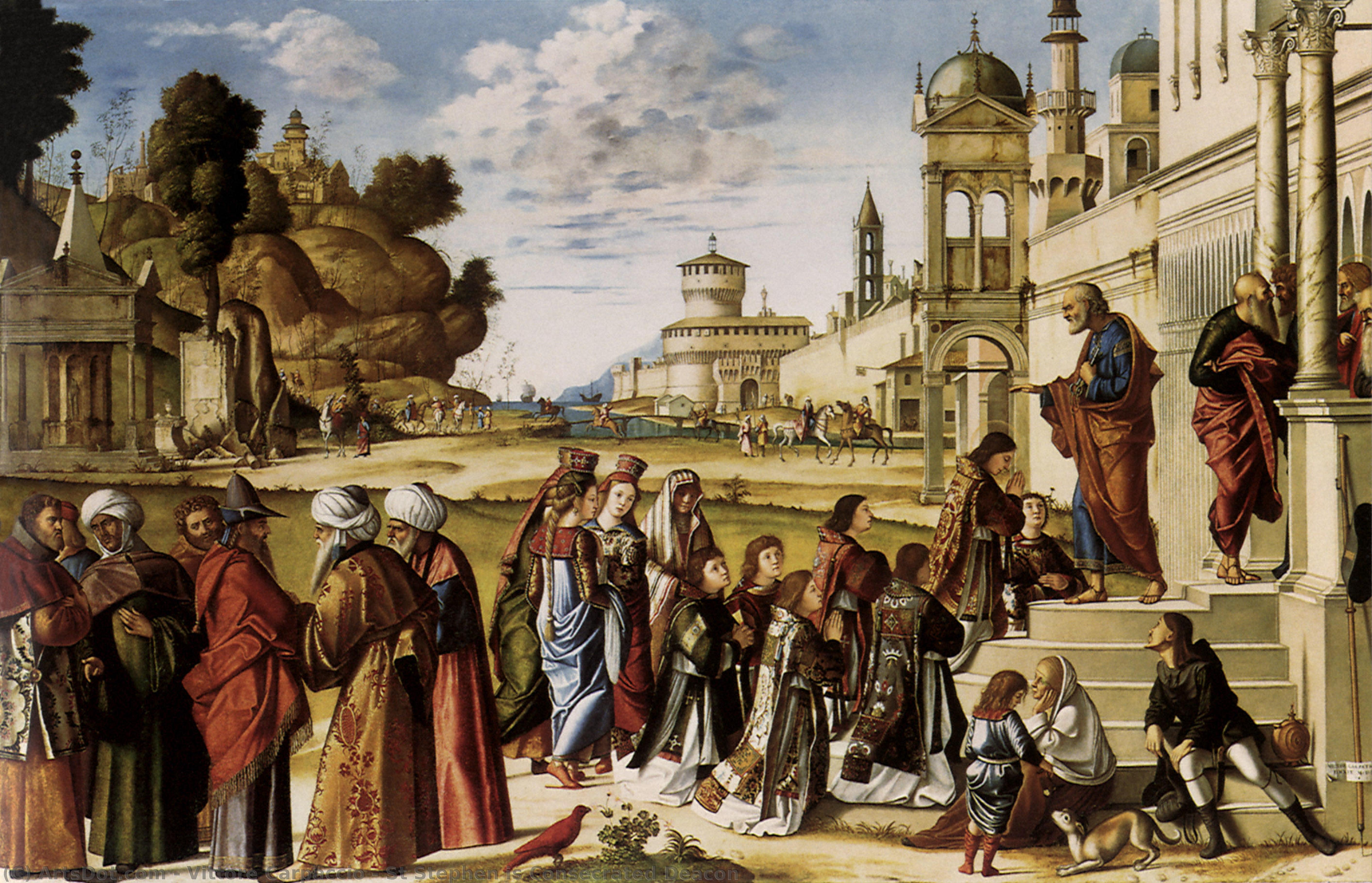
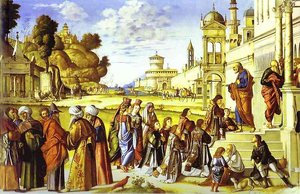
Vittore Carpaccio's "St Stephen is Consecrated Deacon," painted in 1511, isn’t merely a depiction of a biblical event; it’s a vibrant tableau brimming with Venetian artistry and profound spiritual resonance. This tempera on panel masterpiece, now residing within the Staatliche Museen in Berlin, transports us to a bustling Roman street scene, meticulously rendered with an almost photographic realism that was revolutionary for its time. Carpaccio, deeply influenced by the early Italian Renaissance – particularly Antonello da Messina’s mastery of perspective and detail – eschewed the prevailing humanist trends, instead embracing a more conservative style rooted in Byzantine iconography and the meticulous observation of the world around him. The painting captures not just a moment in St Stephen's life, but also the very essence of Venetian civic pride and religious fervor.A Scene of Ceremony and Community
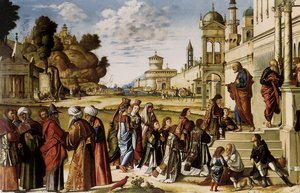
The heart of the composition is undoubtedly St. Stephen himself, kneeling before St. Peter, who bestows upon him the sacred mantle of deacon. Carpaccio masterfully orchestrates a complex arrangement of figures – at least fourteen individuals are visible within the frame – creating a dynamic sense of movement and engagement. The scene unfolds against a backdrop of an identifiable Roman street, complete with architectural details that hint at the grandeur of the city. A striking horse stands to the left, adding a touch of theatricality and emphasizing the importance of this momentous occasion. The crowd is diverse, reflecting the cosmopolitan nature of Venice itself – merchants in their finery mingle with ordinary citizens, all drawn together by the spectacle unfolding before them. Carpaccio’s skill lies not just in depicting individual faces but in conveying the collective energy of a community witnessing a pivotal religious event.Technique and Symbolism: A Venetian Masterpiece
Carpaccio's technique is characterized by its meticulous detail and rich, layered colors. The tempera medium allowed for incredible luminosity and depth, particularly evident in the rendering of fabrics, textures, and architectural elements. Notice the subtle gradations of color used to depict the folds of clothing, the sheen of metal, and the varied surfaces of the buildings. The painting’s composition is carefully balanced, drawing the eye from St. Stephen's kneeling posture towards St. Peter and then outwards to encompass the entire scene. The use of perspective, though not entirely groundbreaking for its time, is remarkably sophisticated, creating a convincing illusion of depth and space. Symbolically, the painting is rich with meaning. The presence of the horse could represent Christ’s sacrifice, while the diverse crowd symbolizes the universal appeal of St. Stephen's message. The act of consecration itself signifies a transition – from earthly concerns to divine service – a central theme in Christian theology.Historical Context and Artistic Legacy
“St Stephen is Consecrated Deacon” was created during a period of significant artistic innovation in Venice, where the influence of Northern European painting—particularly the meticulous detail and realism of Flemish artists—was increasingly felt. Carpaccio skillfully blended these influences with his own distinctive style, creating a unique and compelling visual language. The painting’s subject matter – a biblical narrative – was also highly popular during this period, reflecting the growing importance of religious imagery in Venetian society. It's fascinating to consider that Carpaccio painted this work shortly before the completion of his monumental “Legend of St. Ursula,” demonstrating his continued engagement with large-scale narrative cycles. The painting’s enduring appeal lies not only in its technical brilliance but also in its ability to evoke a sense of immediacy and emotional connection, transporting us back to a vibrant moment in Christian history.A Timeless Reflection on Faith and Community
Ultimately, “St Stephen is Consecrated Deacon” transcends the boundaries of mere historical documentation. It’s a powerful meditation on faith, community, and the transformative power of belief. The painting's enduring legacy lies in its ability to capture the spirit of a pivotal moment – the consecration of St. Stephen as a deacon – with remarkable clarity and emotional depth. Reproductions of this masterpiece offer an opportunity to bring this extraordinary work into any setting, allowing viewers to experience firsthand the artistry and spiritual resonance that have captivated audiences for centuries.Related Artworks
Artist Biography
early life and training
vittore carpaccio, a prominent italian painter, was born in venice around 1465. he studied under the tutelage of gentile bellini, a renowned artist of the venetian school. this apprenticeship laid the foundation for carpaccio's future success.artistic style and influences
carpaccio's style was characterized by its conservative nature, showing minimal influence from the humanist trends that transformed italian renaissance painting during his lifetime. his work was influenced by antonello da messina's style and early netherlandish art. this unique blend of styles resulted in a distinctive approach to venetian painting.notable works
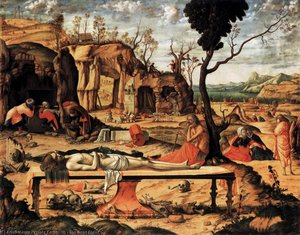
- the legend of saint ursula, a cycle of nine paintings, is carpaccio's most famous work. this series, now housed in the gallerie dell'accademia, showcases his mastery of narrative painting.
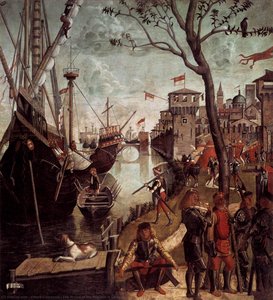
- glory of st. ursula altarpiece (1491) demonstrates carpaccio's skill in capturing light and color, reminiscent of giovanni bellini's style.
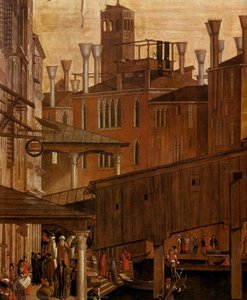
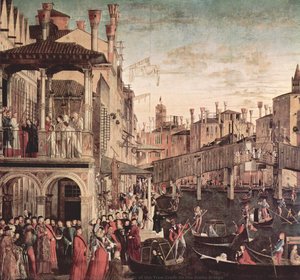
- miracle of the relic of the cross at the ponte di rialto (1494) highlights carpaccio's ability to balance composition and narrative.
career highlights and legacy
- carpaccio's principal works were executed between 1490 and 1519, ranking him among the early masters of the venetian renaissance.
- his orientalist style, as seen in st. george baptizing the selenites, reflects a new fascination with the levant.
- carpaccio's work has been somewhat overlooked in comparison to his contemporaries, such as giovanni bellini or giorgione.
references and further reading
discover more about vittore carpaccio and the venetian school on ArtsDot.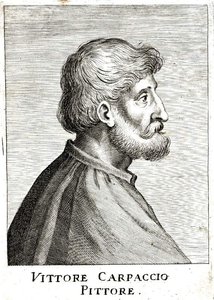
Vittore Carpaccio
1465 - 1526 , Italy
Quick Facts
- Artistic Movement Or Style: Early Venetian Renaissance
- Artists Or Movements Influenced By This Artist: ['Early Netherlandish Painting']
- Artists Who Influenced This Artist:
- Antonello da Messina
- Gentile Bellini
- Date Of Birth: Venice, Italy (c. 1465)
- Date Of Death: 1526
- Full Name: Vittore Carpaccio
- Nationality: Italian
- Notable Artworks:
- The Legend of Saint Ursula
- Glory of St. Ursula Altarpiece
- Miracle of the Relic of the Cross at the Ponte di Rialto
- Place Of Birth: Venice
Related Articles
Vittore Carpaccio: Venetian Renaissance Narrative & the Poetics of Detail
Explore the captivating world of Vittore Carpaccio, a master storyteller of the Venetian Renaissance. Discover his intricate details, narrative cycles like 'The Legend of St. Ursula,' and unique artistic style.
El Greco's Masterpieces: Explore 25 Iconic Paintings & Spiritual Visions | ArtsDot
Journey through El Greco's 25 most iconic paintings! Explore the spiritual depth & dramatic beauty of this Spanish Renaissance master. Discover art history, techniques & find museum-quality reproductions for your home at ArtsDot.com.
Illuminating Surfaces: A Comprehensive Exploration of Tempera on Panel Painting Techniques & Historical Significance
Explore the rich history & techniques of tempera painting! Discover Renaissance masters like Botticelli & Fra Angelico, conservation insights, and the enduring legacy of this captivating art form. Learn more now!
Illuminating History: A Comprehensive Exploration of Tempera Painting Techniques & Artistic Legacy
Explore the rich history & techniques of tempera painting! Discover Renaissance masters like Botticelli & Fra Angelico, conservation insights, and the enduring legacy of this captivating art form.
Giotto's Masterpieces: 25 Renaissance Artworks for Your Home | ArtsDot
Explore 25 breathtaking artworks by Giotto di Bondone, a Renaissance master. Discover the stories behind iconic frescoes & paintings like the Scrovegni Chapel cycle. Find museum-quality Giotto reproductions and elevate your home decor with ArtsDot.com.