 Preview
 Send
Send Share
Share
 Details

 Download
 Similars
 X-Ray
X-Ray Diaporama
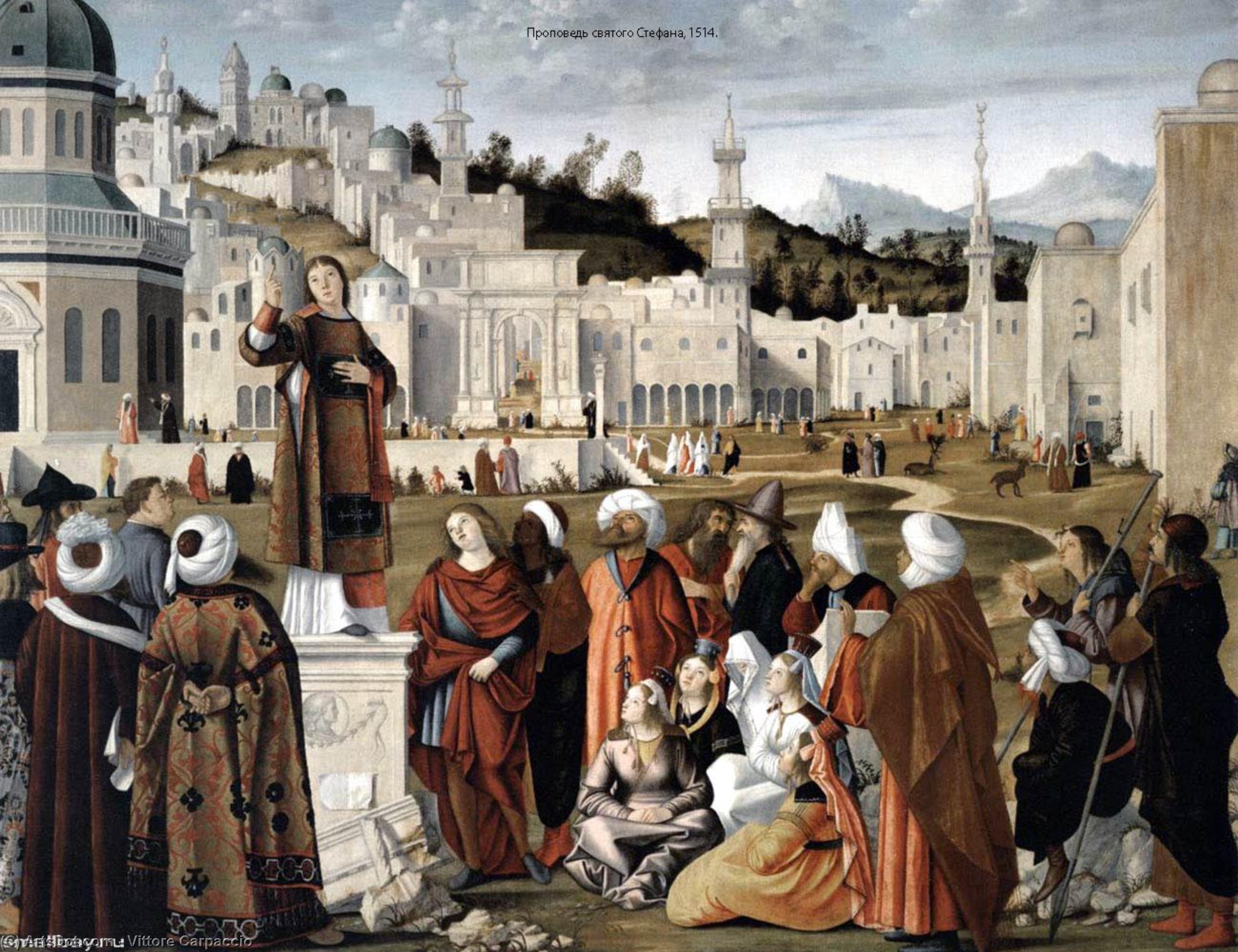
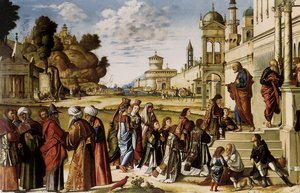
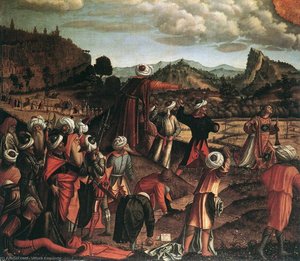
The Sermon of St Stephen
 Venetian Renaissance
 1514
1514 152.0 x 195.0 cm
 The Louvre
 Read More
Hand Made Oil Reproduction
Hand-painted oil on canvas in your size and frame, made to order by our artists. ( Buy Print Buy Image)




P118B $10

P118H $10

P118W $10

P438Z $10

P508JH $12

P508YH $12

P805H $10

P805Z $10

P919BZ $10

P919G $10

P919XJ $10

P959ZH $10

P968JZ $12

W106C $8

W218G $10

W218JH $8

W218Y $10

W307PJ $10

W316G $10

W316PJ $8

W316Y $10

W398PJ $8

W4111J $10

W500HY $15

W500JH $15

W692G $12

W849H $8

W940BG $15

W953PJ $8




Pick from our preset sizes that match the artwork's original proportions.

You may enter your own dimensions to fit a specific frame or space. If your selected size does not match the original image's proportions, we will either crop the artwork or extend the painting with additional hand-painted elements. A digital mockup will be sent for your approval before production begins.
Please note that the on-screen preview does not reflect the actual cropping or extension. Only the mockup will accurately show the final composition.
While custom sizes are available, we recommend selecting a dimension from the predefined list to preserve the original proportions.
After order, ArtsDot.com team will email client for instructions and provide a mockup preview
Worldwide Delivery () in 3/4 weeks instead of standard 5 weeks. (16 August). No compromise on quality.

Free Worldwide Express Shipping

High-Quality Linen Canvas

Full Shipping Insurance

Customs Tax Refund Guarantee

True Color Matching Guarantee

60-Day Return Policy (Defects Only)

100% Money-Back Guarantee

Bulk Discount Offer
 Glass option is only available in size under 110 CM

The Sermon of St Stephen
Reproduction Medium
Reproduction Size
-


Total Price
$ 263
Artwork Description
The Sermon of St. Stephen: A Venetian Tapestry of Faith and Narrative
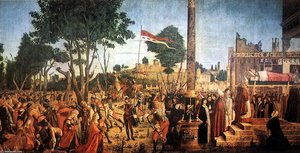
Vittore Carpaccio’s “The Sermon of St. Stephen,” painted in 1514, isn't merely a depiction of a biblical event; it’s a vibrant window into the heart of Renaissance Venice – a city brimming with cultural exchange, religious fervor, and burgeoning artistic innovation. This monumental oil-on-canvas work, now residing within the hallowed halls of the Louvre, transcends its historical subject matter to become a compelling study in human interaction, faith, and the intricate beauty of Venetian art. Carpaccio, deeply influenced by the early Italian Renaissance masters like Antonello da Messina and drawing inspiration from the meticulous detail of Early Netherlandish painting, masterfully weaves together elements of religious narrative with a distinctly Venetian sensibility.
The scene unfolds within a meticulously rendered landscape – a stylized vista reminiscent of Jerusalem, yet imbued with the recognizable architecture and bustling atmosphere of Venice. The composition is dominated by St. Stephen himself, standing on an elevated platform, his posture radiating authority and conviction as he delivers his sermon to a diverse crowd. Carpaccio’s genius lies not just in capturing the physical likeness of the figures but also in conveying their emotional states – the rapt attention of some, the skeptical questioning of others, and the palpable tension within the scene. The artist's use of *sfumato*, a technique perfected by Leonardo da Vinci, softens the edges and creates an atmospheric haze, lending the painting a dreamlike quality that invites prolonged contemplation.
A Mosaic of Cultures: Symbolism and Venetian Identity
Beyond its religious subject matter, “The Sermon of St. Stephen” is a rich tapestry of symbolic representation reflecting the cosmopolitan nature of Venice at the time. The crowd itself is a remarkable testament to this – a carefully assembled group comprised not only of Venetians but also individuals from diverse ethnic backgrounds: Syrians, Egyptians, Nubians, and even figures reminiscent of Turks, all gathered together as witnesses to St. Stephen’s powerful message. This deliberate inclusion speaks volumes about Venice's role as a crossroads of cultures, a vibrant hub where East met West, and where the exchange of ideas and traditions flourished. The presence of turbans and distinctive clothing styles underscores this multiculturalism, offering a rare glimpse into the social fabric of 16th-century Venice.
Furthermore, the architectural elements within the painting – the towering buildings, the intricate details of the cityscape – are not simply decorative; they serve as visual anchors, grounding the scene in a specific time and place. The inclusion of familiar Venetian landmarks, such as the Ponte di Rialto, subtly reinforces Carpaccio’s Venetian identity while simultaneously transporting the viewer to a distant land. The overall effect is one of immersive storytelling, inviting us to step into the heart of this pivotal religious event and witness it unfold within a dynamic and multifaceted setting.
Technique and Legacy: A Masterpiece of Narrative Painting
Carpaccio’s technical skill is evident in every brushstroke. His meticulous attention to detail – from the folds of the robes to the expressions on the faces – creates a remarkable sense of realism and immediacy. The use of color is particularly noteworthy, with Carpaccio employing a rich palette of reds, blues, and golds to create a visually arresting composition. He skillfully utilizes light and shadow to sculpt the figures and define their forms, adding depth and drama to the scene. This masterful control over technique, combined with his narrative prowess, firmly establishes “The Sermon of St. Stephen” as a cornerstone of Venetian Renaissance painting.
The work’s significance extends beyond its artistic merit; it represents one of Carpaccio's most celebrated cycles, alongside "The Legend of Saint Ursula." This series, originally intended for the Scuola dei Lanieri in Venice, demonstrates his ability to transform complex biblical narratives into compelling visual stories. “The Sermon of St. Stephen” stands as a testament to Carpaccio’s enduring legacy – a painter who seamlessly blended religious devotion with artistic innovation and captured the spirit of his time with unparalleled skill and sensitivity. Reproductions of this captivating artwork offer a remarkable opportunity to experience the richness and complexity of Venetian Renaissance art firsthand.
Related Artworks
Artist Biography
early life and training
vittore carpaccio, a prominent italian painter, was born in venice around 1465. he studied under the tutelage of gentile bellini, a renowned artist of the venetian school. this apprenticeship laid the foundation for carpaccio's future success.artistic style and influences
carpaccio's style was characterized by its conservative nature, showing minimal influence from the humanist trends that transformed italian renaissance painting during his lifetime. his work was influenced by antonello da messina's style and early netherlandish art. this unique blend of styles resulted in a distinctive approach to venetian painting.notable works
- the legend of saint ursula, a cycle of nine paintings, is carpaccio's most famous work. this series, now housed in the gallerie dell'accademia, showcases his mastery of narrative painting.
- glory of st. ursula altarpiece (1491) demonstrates carpaccio's skill in capturing light and color, reminiscent of giovanni bellini's style.
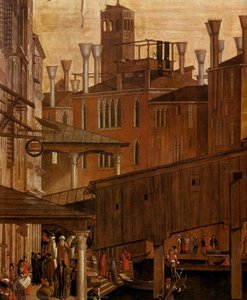
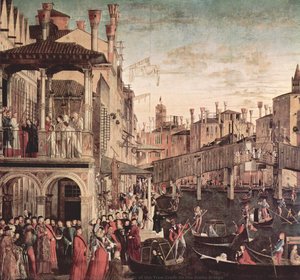
- miracle of the relic of the cross at the ponte di rialto (1494) highlights carpaccio's ability to balance composition and narrative.
career highlights and legacy
- carpaccio's principal works were executed between 1490 and 1519, ranking him among the early masters of the venetian renaissance.
- his orientalist style, as seen in st. george baptizing the selenites, reflects a new fascination with the levant.
- carpaccio's work has been somewhat overlooked in comparison to his contemporaries, such as giovanni bellini or giorgione.
references and further reading
discover more about vittore carpaccio and the venetian school on ArtsDot.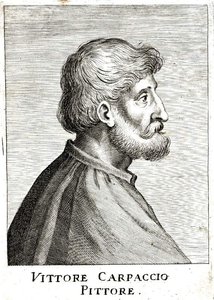
Vittore Carpaccio
1465 - 1526 , Italy
Quick Facts
- Artistic Movement Or Style: Early Venetian Renaissance
- Artists Or Movements Influenced By This Artist: ['Early Netherlandish Painting']
- Artists Who Influenced This Artist:
- Antonello da Messina
- Gentile Bellini
- Date Of Birth: Venice, Italy (c. 1465)
- Date Of Death: 1526
- Full Name: Vittore Carpaccio
- Nationality: Italian
- Notable Artworks:
- The Legend of Saint Ursula
- Glory of St. Ursula Altarpiece
- Miracle of the Relic of the Cross at the Ponte di Rialto
- Place Of Birth: Venice
Related Articles
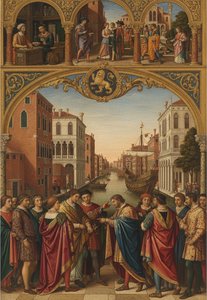
Vittore Carpaccio: Venetian Renaissance Narrative & the Poetics of Detail
Explore the captivating world of Vittore Carpaccio, a master storyteller of the Venetian Renaissance. Discover his intricate details, narrative cycles like 'The Legend of St. Ursula,' and unique artistic style.
Stephen Bone: A Reassessment of Colour, Form & the British Neo-Romantic Landscape Tradition
Explore the vibrant world of Stephen Bone (1904-1958), a key figure in British Neo-Romanticism. Discover his captivating landscapes, impactful war art & unique artistic style. Learn about his life, influences & legacy.

Johan Christian Dahl: Pioneering Norwegian Romantic Landscape Painting
Explore the life & art of Johan Christian Dahl, Norway's first great Romantic painter. Discover his iconic landscapes, cultural impact, and lasting legacy with ArtsDot.

Stephen Chaplin: A Study in Light, Form & Emotional Space in Contemporary Landscape Painting
Explore the captivating landscape paintings of Stephen Chaplin, renowned for his 'Treatment in Minors' series & unique blend of Pop Art and historical realism. Discover his artistic journey & emotional depth.
Christian Krohg: A Pioneer of Norwegian Realism & Psychological Portraiture
Explore the life & work of Christian Krohg, a pivotal figure in Norwegian realism. Discover his social commentary, Skagen influences, and lasting impact on Scandinavian art history. Learn more at ArtsDot.