 Preview
 Send
Send Share
Share
 Details

 Download
 Similars
 X-Ray
X-Ray Diaporama
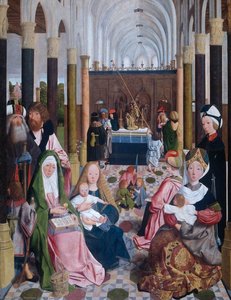
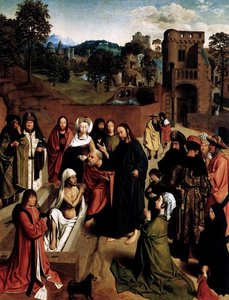
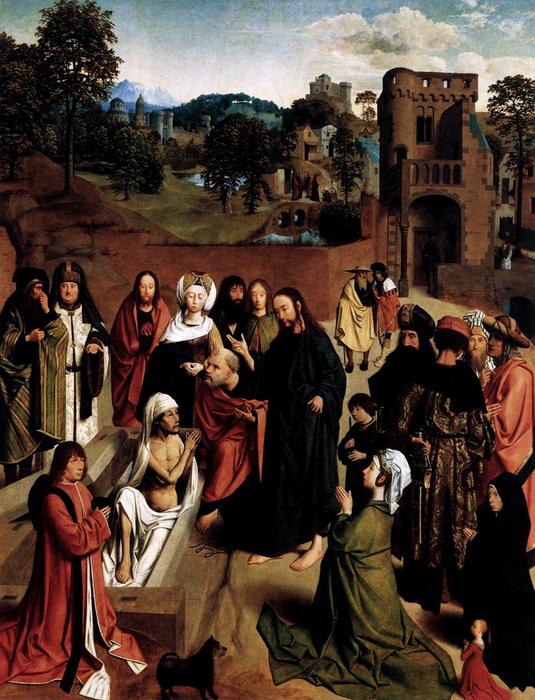
The Raising of Lazarus
 Oil On Panel
- Early Netherlandish Painting
 1480
1480- Renaissance
 127.0 x 97.0 cm
 The Louvre
 Read More
Hand Made Oil Reproduction
Hand-painted oil on canvas in your size and frame, made to order by our artists. ( Buy Print Buy Image)




P118B $10

P118H $10

P118W $10

P438Z $10

P508JH $12

P508YH $12

P805H $10

P805Z $10

P919BZ $10

P919G $10

P919XJ $10

P959ZH $10

P968JZ $12

W106C $8

W218G $10

W218JH $8

W218Y $10

W307PJ $10

W316G $10

W316PJ $8

W316Y $10

W398PJ $8

W4111J $10

W500HY $15

W500JH $15

W692G $12

W849H $8

W940BG $15

W953PJ $8




Pick from our preset sizes that match the artwork's original proportions.

You may enter your own dimensions to fit a specific frame or space. If your selected size does not match the original image's proportions, we will either crop the artwork or extend the painting with additional hand-painted elements. A digital mockup will be sent for your approval before production begins.
Please note that the on-screen preview does not reflect the actual cropping or extension. Only the mockup will accurately show the final composition.
While custom sizes are available, we recommend selecting a dimension from the predefined list to preserve the original proportions.
After order, ArtsDot.com team will email client for instructions and provide a mockup preview
Worldwide Delivery () in 3/4 weeks instead of standard 5 weeks. (16 August). No compromise on quality.

Free Worldwide Express Shipping

High-Quality Linen Canvas

Full Shipping Insurance

Customs Tax Refund Guarantee

True Color Matching Guarantee

60-Day Return Policy (Defects Only)

100% Money-Back Guarantee

Bulk Discount Offer
 Glass option is only available in size under 110 CM

The Raising of Lazarus
Reproduction Medium
Reproduction Size
-


Total Price
$ 263
Artwork Description
A Moment Frozen in Faith: Geertgen tot Sint Jans’s Resurrection
Geertgen tot Sint Jans, a figure shrouded in mystery within the annals of Early Netherlandish painting, remains an artist whose life is pieced together primarily through the writings of Karel van Mander—a Dutch art historian writing over a century after his death. Van Mander suggests a connection to the Knights Hospitaller of Saint John in Haarlem, lending the artist his distinctive surname, meaning “little Gerard of Saint John.” Whether he was a lay brother within the order or simply affiliated with them remains uncertain, yet this association profoundly shaped his artistic output. The scant documentary evidence surrounding Geertgen’s life contributes to an aura of mystique, allowing us to focus intently on the remarkable quality and spiritual depth of his surviving masterpieces—works that continue to resonate with viewers centuries later.The Scene: A Miracle Revisited
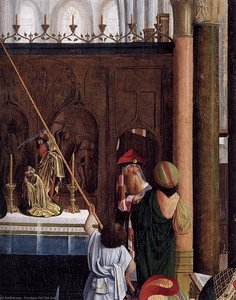
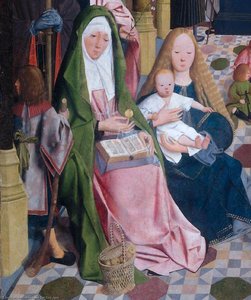
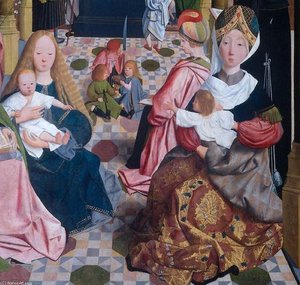
“The Raising of Lazarus,” painted circa 1480, depicts a pivotal biblical narrative – Jesus miraculously reviving Lazarus from death. The composition centers around Jesus himself, positioned prominently in the middle of the canvas, his arms outstretched in an act of divine compassion and power. Surrounding him are figures embodying grief and awe: Mary Magdalene, visibly distraught, alongside others who witness this extraordinary event. Adding to the realism is the inclusion of two dogs—one on the left side of the image and another closer to the right—a detail that speaks to the artist’s meticulous observation of nature and imbues the scene with a palpable sense of life.Style and Technique: Northern Renaissance Serenity
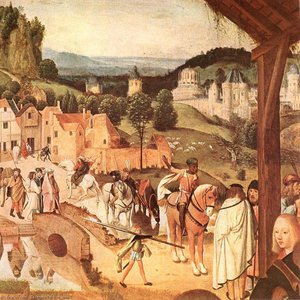
Geertgen tot Sint Jans exemplifies the hallmarks of Northern Renaissance painting, prioritizing serene contemplation and symbolic representation over flamboyant ornamentation. Executed in oil on panel—a technique favored during this period—the artwork showcases a masterful blending of realism and idealism. The artist’s meticulous attention to detail is evident in the rendering of textures – from the folds of Mary Magdalene's robe to the fur coats worn by the donors—creating an immersive experience for the viewer. Furthermore, the landscape backdrop—a stylized depiction of hills and trees—contributes to a sense of tranquility and reinforces the spiritual significance of the scene.Symbolism: Resurrection Hope Amidst Sorrow
Beyond its visual beauty, “The Raising of Lazarus” is laden with symbolic meaning. The resurrection itself represents divine redemption and eternal life—a central theme within Christian theology. Jesus’ outstretched arms symbolize compassion and grace, offering solace to those grieving for their loved one. The dogs are often interpreted as emblems of faithfulness and vigilance, guarding the sacred space where God's miracle unfolds. The muted palette—dominated by earthy tones—underscores the solemnity of the occasion and reinforces the painting’s contemplative mood.Legacy and Influence
“The Raising of Lazarus” stands as a testament to Geertgen tot Sint Jans’s artistic genius and his enduring contribution to Northern Renaissance art history. Its influence can be seen in subsequent depictions of biblical narratives, demonstrating the artist's ability to convey profound spiritual truths through masterful technique and evocative imagery. Today, reproductions of this iconic artwork continue to inspire collectors and interior designers alike—a testament to its timeless beauty and universal appeal.Related Artworks
Artist Biography
A Life Shrouded in Mystery: Unveiling Geertgen tot Sint Jans
The name Geertgen tot Sint Jans resonates softly within the annals of Early Netherlandish painting, a whisper of brilliance from an artist whose life remains frustratingly obscure. Flourishing in Haarlem during the latter half of the 15th century—roughly between 1460 and 1490—Geertgen’s existence is pieced together primarily through the writings of Karel van Mander, a Dutch art historian writing over a century after his death. Van Mander suggests a connection to the Knights Hospitaller of Saint John in Haarlem, lending the artist his distinctive surname, meaning “little Gerard of Saint John.” Whether he was a lay brother within the order or simply affiliated with them remains uncertain, yet this association profoundly shaped his artistic output. The scant documentary evidence surrounding Geertgen’s life contributes to an aura of mystique, allowing us to focus intently on the remarkable quality and spiritual depth of his surviving works. It is believed that he may have been a student of Albert van Ouwater, a pivotal figure in the development of painting within Haarlem, though concrete proof remains elusive.The Fragmentary Legacy: Surviving Masterpieces
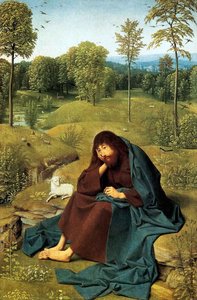
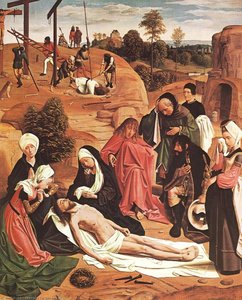
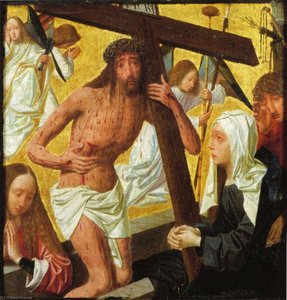
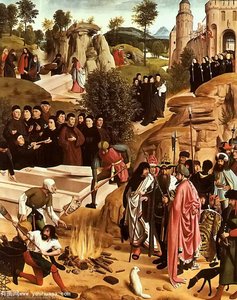
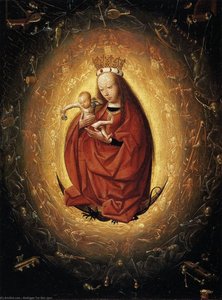
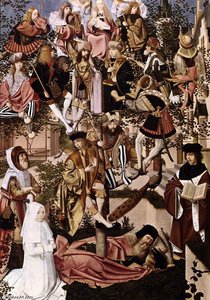
Tragically, much of Geertgen’s oeuvre has been lost to time and circumstance. The tumultuous history of Haarlem, particularly the siege of 1573 during the Eighty Years' War, resulted in the destruction of numerous artworks, including a significant portion of his production. What remains offers tantalizing glimpses into an exceptional talent. The most celebrated surviving pieces are fragments of a large triptych originally created for the altar of the Knights of Saint John. These panels—The Legend of Saint John the Baptist and The Lamentation of Christ—now reside in Vienna’s Kunsthistorisches Museum, their separation from the original structure a poignant reminder of art's vulnerability to historical forces. The Lamentation, particularly, is renowned for its serene emotionality and innovative landscape, foreshadowing developments that would characterize Dutch painting in the centuries to come. Other attributed works include John the Baptist in the Wilderness, a contemplative depiction of spiritual isolation, and Man of Sorrows, a powerfully moving portrayal of Christ’s suffering. Each surviving panel is a testament to Geertgen's mastery of oil painting techniques, his delicate handling of light, and his ability to imbue religious scenes with profound psychological resonance.Innovation in Landscape and Spirituality
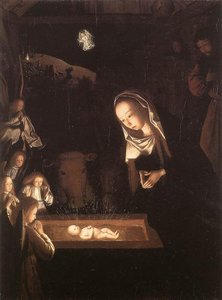
Geertgen tot Sint Jans distinguished himself through several key artistic innovations. He possessed an exceptional sensitivity to landscape, integrating it seamlessly into the narrative structure of his paintings. Unlike many of his contemporaries who used landscapes merely as backdrops, Geertgen’s settings are imbued with symbolic meaning and contribute significantly to the overall emotional impact of the work. His landscapes aren't simply realistic depictions; they evoke a sense of spiritual tranquility and reflect the inner state of the figures within them. Furthermore, Geertgen demonstrated a remarkable ability to convey emotion through subtle gestures and facial expressions. His figures are not grand or theatrical but possess an intimate humanity that draws the viewer into their world of faith and sorrow. The use of chiaroscuro—the dramatic interplay of light and shadow—is also notable, enhancing the emotional intensity of his scenes and creating a sense of depth and realism. This technique is particularly evident in The Nativity at Night, where darkness envelops the scene, punctuated by the radiant glow emanating from the infant Christ.A Lasting Influence: Geertgen’s Place in Art History
Despite the limited number of securely attributed works, Geertgen tot Sint Jans occupies a significant position within the history of Early Netherlandish art. His influence can be detected in the work of later Dutch masters, particularly those associated with the Haarlem school. His innovative approach to landscape and his sensitive portrayal of human emotion paved the way for developments that would define Dutch painting in the 17th century. The impact of The Lamentation, as evidenced by Jacob Matham’s engraving and accompanying poetry, demonstrates the profound effect Geertgen's work had on his contemporaries. While overshadowed by more prolific artists like Jan van Eyck or Rogier van der Weyden during his lifetime, modern scholarship has increasingly recognized Geertgen’s unique contributions to the Northern Renaissance. He represents a crucial link between the International Gothic style and the burgeoning realism of the 16th century, embodying a delicate balance between spiritual devotion and artistic innovation. His legacy endures not only through his surviving masterpieces but also through the enduring mystery that surrounds his life—a testament to the power of art to transcend the limitations of historical knowledge.Rediscovering a Master
- Early Netherlandish Painting: Geertgen’s work is firmly rooted in the traditions of Early Netherlandish painting, characterized by meticulous detail, realistic depictions, and a focus on religious themes.
- Haarlem School: He played a key role in establishing the Haarlem school of painting, influencing subsequent generations of artists working in the region.
- Spiritual Depth: His paintings are notable for their profound spiritual depth and emotional resonance, inviting viewers to contemplate themes of faith, suffering, and redemption.
- Landscape Innovation: Geertgen’s innovative use of landscape as an integral part of the narrative structure set him apart from many of his contemporaries.
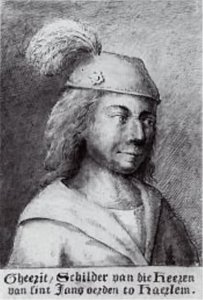
Geertgen tot Sint Jans
1460 - 1490 , Netherlands
Quick Facts
- Artistic Movement Or Style: Early Netherlandish painting
- Artists Or Movements Influenced By This Artist:
- Rembrandt
- Frans Hals
- Artists Who Influenced This Artist: ['Albert van Ouwater']
- Date Of Birth: 1460
- Date Of Death: 1490
- Full Name: Geertgen tot Sint Jans
- Nationality: Dutch
- Notable Artworks:
- Lamentation of Christ
- The Legend of St. John
- John the Baptist in Wilderness
- Man of Sorrows
- Place Of Birth: Leiden, Netherlands
Related Articles
Northern Renaissance Masters: 10 Artworks That Shaped History |
Journey through the Northern Renaissance! Explore 10 iconic paintings by Jan van Eyck, Dürer & Bosch. Discover their stories, techniques & lasting impact. Find museum-quality art reproductions & elevate your home decor on .
Jan Gossart: Bridging Netherlandish Realism & Renaissance Humanism – A Comprehensive Exploration
Explore the captivating world of Jan Gossart, a pivotal figure bridging Netherlandish realism & Renaissance humanism. Discover his masterpieces, patronage, and lasting influence – an essential guide for discerning art collectors.
Jan Gossaert (Mabuse): Pioneering Renaissance Style & the Birth of Netherlandish Antiquity
Explore the groundbreaking art of Jan Gossaert (Mabuse), a pioneer of Renaissance painting in the Low Countries. Discover his Romanist style, stunning portraits, and influence on Northern European art history.
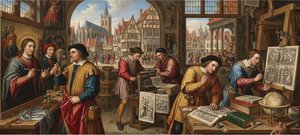
The Northern Renaissance: A Flourishing of Realism, Religious Reform & Artistic Innovation
Explore the Northern Renaissance! Discover Jan van Eyck's innovations, religious shifts, & key artists of this influential period. Expert analysis and insights into Early Netherlandish painting at ArtsDot.
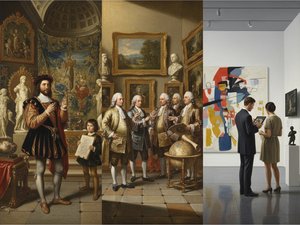
The Patron's Gaze: Art Collectors in Western Painting – A Renaissance to Modern History
Explore the fascinating history of art collectors in Western painting, from Renaissance patrons to modern museum founders. Discover how portraits revealed status, shaped artistic movements & built lasting legacies. Expert insights at ArtsDot.