 Preview
 Send
Send Share
Share
 Details

 Download
 Similars
 X-Ray
X-Ray Diaporama
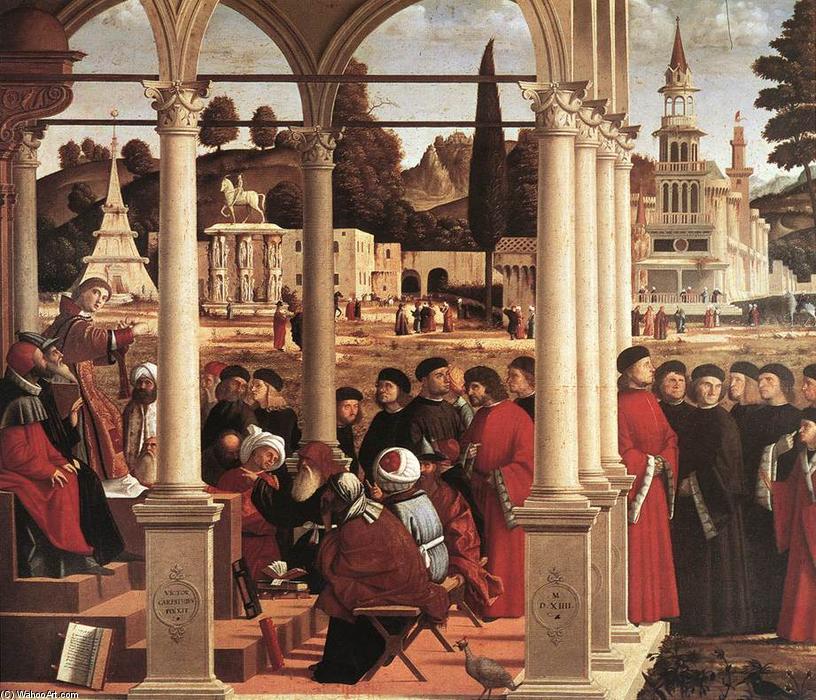
Disputation of St Stephen
 Acrylic On Canvas
- WallArt
- Venetian Renaissance
 1514
1514 147.0 x 172.0 cm
 Pinacoteca di Brera
 Read More
Hand Made Oil Reproduction
Hand-painted oil on canvas in your size and frame, made to order by our artists. ( Buy Print Buy Image)




P118B $10

P118H $10

P118W $10

P438Z $10

P508JH $12

P508YH $12

P805H $10

P805Z $10

P919BZ $10

P919G $10

P919XJ $10

P959ZH $10

P968JZ $12

W106C $8

W218G $10

W218JH $8

W218Y $10

W307PJ $10

W316G $10

W316PJ $8

W316Y $10

W398PJ $8

W4111J $10

W500HY $15

W500JH $15

W692G $12

W849H $8

W940BG $15

W953PJ $8




Pick from our preset sizes that match the artwork's original proportions.

You may enter your own dimensions to fit a specific frame or space. If your selected size does not match the original image's proportions, we will either crop the artwork or extend the painting with additional hand-painted elements. A digital mockup will be sent for your approval before production begins.
Please note that the on-screen preview does not reflect the actual cropping or extension. Only the mockup will accurately show the final composition.
While custom sizes are available, we recommend selecting a dimension from the predefined list to preserve the original proportions.
After order, ArtsDot.com team will email client for instructions and provide a mockup preview
Worldwide Delivery () in 3/4 weeks instead of standard 5 weeks. (16 August). No compromise on quality.

Free Worldwide Express Shipping

High-Quality Linen Canvas

Full Shipping Insurance

Customs Tax Refund Guarantee

True Color Matching Guarantee

60-Day Return Policy (Defects Only)

100% Money-Back Guarantee

Bulk Discount Offer
 Glass option is only available in size under 110 CM

Disputation of St Stephen
Reproduction Medium
Reproduction Size
-


Total Price
$ 263
Artwork Description
The Disputation of St Stephen: A Venetian Echo of Faith and Conflict
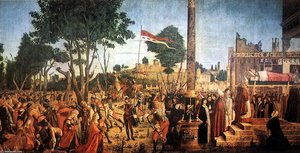
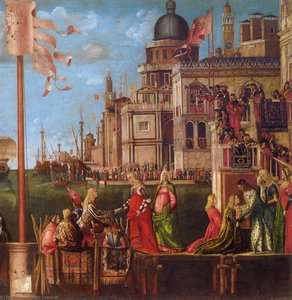
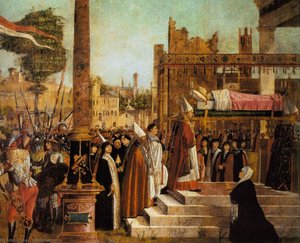
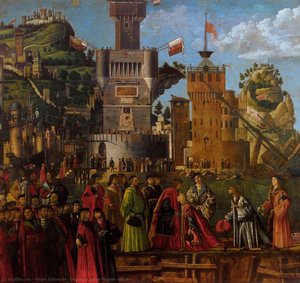
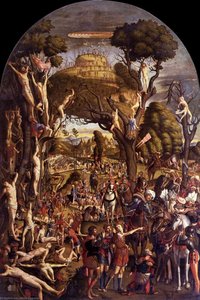
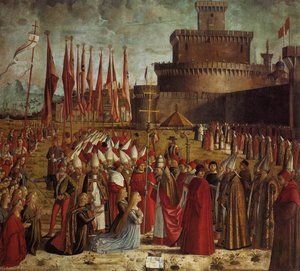
Vittore Carpaccio’s “Disputation of St Stephen,” painted in 1514, isn't merely a depiction of a biblical event; it’s a meticulously crafted tableau brimming with the anxieties and aspirations of Renaissance Venice. This monumental work, now residing within the Pinacoteca di Brera in Milan, offers a rare glimpse into the complex interplay between religious fervor, civic duty, and burgeoning humanist thought. The scene unfolds within a remarkably detailed courtyard – a space that feels both familiar Venetian and subtly otherworldly, hinting at the drama about to unfold. Carpaccio masterfully captures the palpable tension: the expectant faces of the assembled crowd, the solemnity radiating from St Stephen himself, and the simmering anger in the eyes of those poised to deliver judgment. The painting’s power lies not just in its narrative clarity but also in its ability to evoke a profound sense of human vulnerability and the inescapable consequences of transgression.
A Venetian Master at Work: Style and Technique
Carpaccio, a pivotal figure in Venetian art, forged his distinctive style by drawing inspiration from both the early Italian Renaissance masters – particularly Antonello da Messina – and the more restrained aesthetic of Early Netherlandish painting. This synthesis results in an image that is simultaneously vibrant and controlled. The color palette is rich and luminous, dominated by deep reds, blues, and golds, reflecting the opulent atmosphere of Venice at the time. Carpaccio’s meticulous attention to detail is immediately apparent; every fold of clothing, every expression on a face, every stone in the courtyard has been rendered with painstaking precision. He employs a technique known as “disputation,” a common approach in Venetian painting during this period, which involves presenting a complex narrative through a series of interconnected scenes. Here, he utilizes a shallow perspective and carefully arranged figures to draw the viewer into the heart of the drama, creating an immersive experience that mirrors the immediacy of the event itself.
Symbolism and Context: Jerusalem’s Shadow in Venice
The “Disputation of St Stephen” is deeply rooted in the biblical account of the saint's brutal murder by a mob in Jerusalem. However, Carpaccio imbues this familiar story with layers of symbolic meaning. The setting itself – a courtyard reminiscent of Jerusalem’s streets – subtly evokes the historical context and the weight of religious tradition. The diverse crowd, representing various ethnicities and social classes, underscores the universality of sin and judgment. Notice the subtle gestures: the hand raised in accusation, the averted gaze, the mournful expression on St Stephen's face. These details invite contemplation about the nature of faith, justice, and the human condition. The presence of a bird perched near the right side of the painting adds an element of foreboding, perhaps hinting at the inevitable outcome of violence and injustice. Interestingly, scholars have suggested that Carpaccio may have drawn inspiration from depictions of the “Bern Disputation,” a pivotal theological debate in Bern, Switzerland, which mirrored the tensions between faith and reason prevalent throughout Europe during this era.
Emotional Resonance: A Meditation on Mortality and Faith
Beyond its historical and artistic significance, "Disputation of St Stephen" resonates deeply with viewers due to its profound emotional impact. The painting doesn’t simply depict a violent act; it explores the complex emotions associated with it – grief, anger, fear, and ultimately, acceptance. St Stephen's serene countenance in the face of death speaks volumes about his unwavering faith. The collective reaction of the crowd reveals their struggle to reconcile their own beliefs with the brutal reality of injustice. Carpaccio’s masterful use of light and shadow further enhances the painting’s emotional intensity, creating a sense of drama and immediacy that draws the viewer into the scene. It is a work that invites reflection on themes of mortality, faith, and the enduring struggle between good and evil – timeless subjects that continue to captivate audiences centuries after its creation.
Related Artworks

Artist Biography
early life and training
vittore carpaccio, a prominent italian painter, was born in venice around 1465. he studied under the tutelage of gentile bellini, a renowned artist of the venetian school. this apprenticeship laid the foundation for carpaccio's future success.artistic style and influences
carpaccio's style was characterized by its conservative nature, showing minimal influence from the humanist trends that transformed italian renaissance painting during his lifetime. his work was influenced by antonello da messina's style and early netherlandish art. this unique blend of styles resulted in a distinctive approach to venetian painting.notable works
- the legend of saint ursula, a cycle of nine paintings, is carpaccio's most famous work. this series, now housed in the gallerie dell'accademia, showcases his mastery of narrative painting.
- glory of st. ursula altarpiece (1491) demonstrates carpaccio's skill in capturing light and color, reminiscent of giovanni bellini's style.
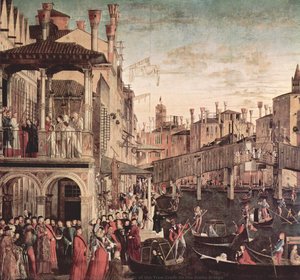
- miracle of the relic of the cross at the ponte di rialto (1494) highlights carpaccio's ability to balance composition and narrative.
career highlights and legacy
- carpaccio's principal works were executed between 1490 and 1519, ranking him among the early masters of the venetian renaissance.
- his orientalist style, as seen in st. george baptizing the selenites, reflects a new fascination with the levant.
- carpaccio's work has been somewhat overlooked in comparison to his contemporaries, such as giovanni bellini or giorgione.
references and further reading
discover more about vittore carpaccio and the venetian school on ArtsDot.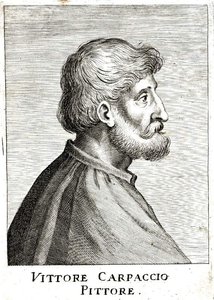
Vittore Carpaccio
1465 - 1526 , Italy
Quick Facts
- Artistic Movement Or Style: Early Venetian Renaissance
- Artists Or Movements Influenced By This Artist: ['Early Netherlandish Painting']
- Artists Who Influenced This Artist:
- Antonello da Messina
- Gentile Bellini
- Date Of Birth: Venice, Italy (c. 1465)
- Date Of Death: 1526
- Full Name: Vittore Carpaccio
- Nationality: Italian
- Notable Artworks:
- The Legend of Saint Ursula
- Glory of St. Ursula Altarpiece
- Miracle of the Relic of the Cross at the Ponte di Rialto
- Place Of Birth: Venice
Related Articles
Vittore Carpaccio: Venetian Renaissance Narrative & the Poetics of Detail
Explore the captivating world of Vittore Carpaccio, a master storyteller of the Venetian Renaissance. Discover his intricate details, narrative cycles like 'The Legend of St. Ursula,' and unique artistic style.

Jacopo Tintoretto's Masterpieces: 25 Paintings That Define Venetian Drama | ArtsDot
Explore 25 breathtaking masterpieces by Jacopo Tintoretto, the Venetian master of drama and light. Discover the stories behind iconic Renaissance paintings & find museum-quality art reproductions to elevate your home decor on ArtsDot.com.
El Greco's Masterpieces: Explore 25 Iconic Paintings & Spiritual Visions | ArtsDot
Journey through El Greco's 25 most iconic paintings! Explore the spiritual depth & dramatic beauty of this Spanish Renaissance master. Discover art history, techniques & find museum-quality reproductions for your home at ArtsDot.com.

Jacopo Palma il Giovane: A Venetian Master's Poetic Evolution
Explore the captivating world of Jacopo Palma il Giovane, a pivotal Venetian Renaissance master. Discover his unique style, influenced by Titian & Tintoretto, and learn about key works perfect for discerning collectors.
The Golden Light of Innovation: Exploring the Venetian Renaissance Art Movement (1430–1580)
Explore the Golden Age of Venetian art (1430–1580). Discover Giorgione, Titian & Tintoretto's techniques, the 'colorito' revolution, and lasting influence. Expert insights for collectors & enthusiasts.