 Preview
 Send
Send Share
Share
 Details

 Download
 Similars
 X-Ray
X-Ray Diaporama
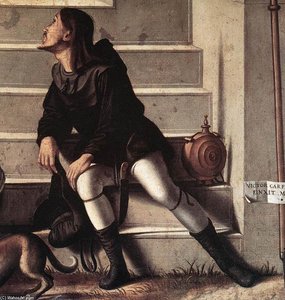
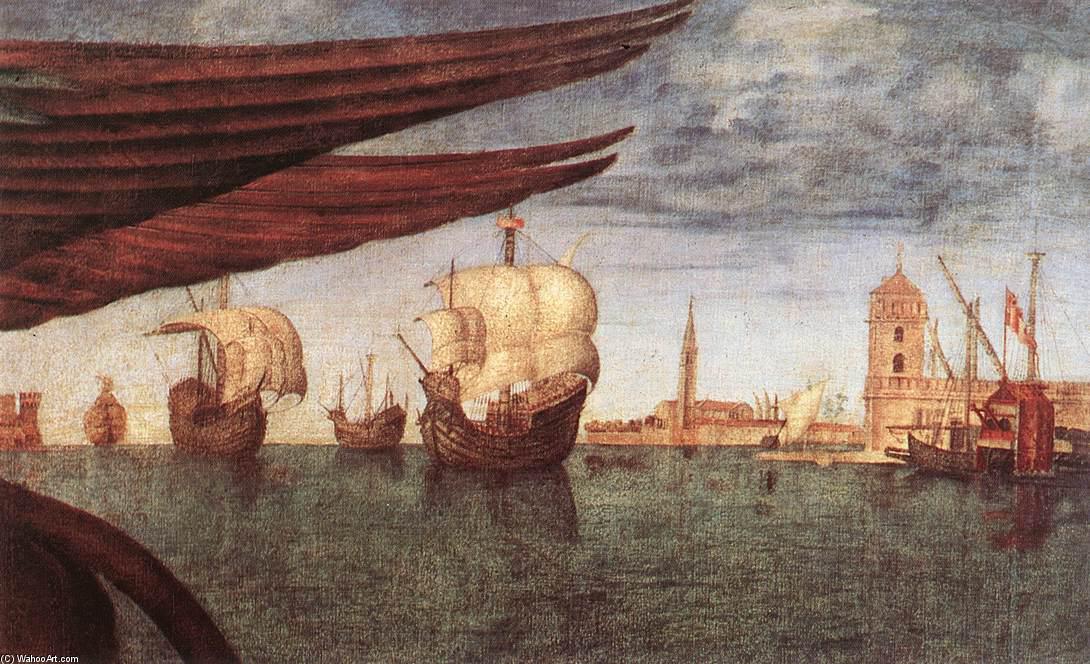
The Lion of St Mark (detail)


 Read More
Hand Made Oil Reproduction
Hand-painted oil on canvas in your size and frame, made to order by our artists. ( Buy Print Buy Image)




P118B $10

P118H $10

P118W $10

P438Z $10

P508JH $12

P508YH $12

P805H $10

P805Z $10

P919BZ $10

P919G $10

P919XJ $10

P959ZH $10

P968JZ $12

W106C $8

W218G $10

W218JH $8

W218Y $10

W307PJ $10

W316G $10

W316PJ $8

W316Y $10

W398PJ $8

W4111J $10

W500HY $15

W500JH $15

W692G $12

W849H $8

W940BG $15

W953PJ $8




Pick from our preset sizes that match the artwork's original proportions.

You may enter your own dimensions to fit a specific frame or space. If your selected size does not match the original image's proportions, we will either crop the artwork or extend the painting with additional hand-painted elements. A digital mockup will be sent for your approval before production begins.
Please note that the on-screen preview does not reflect the actual cropping or extension. Only the mockup will accurately show the final composition.
While custom sizes are available, we recommend selecting a dimension from the predefined list to preserve the original proportions.
After order, ArtsDot.com team will email client for instructions and provide a mockup preview
Worldwide Delivery () in 3/4 weeks instead of standard 5 weeks. (16 August). No compromise on quality.

Free Worldwide Express Shipping

High-Quality Linen Canvas

Full Shipping Insurance

Customs Tax Refund Guarantee

True Color Matching Guarantee

60-Day Return Policy (Defects Only)

100% Money-Back Guarantee

Bulk Discount Offer
 Glass option is only available in size under 110 CM

The Lion of St Mark (detail)
Reproduction Medium
Reproduction Size
-


Total Price
$ 263
Artwork Description
The Lion of St Mark: A Venetian Icon
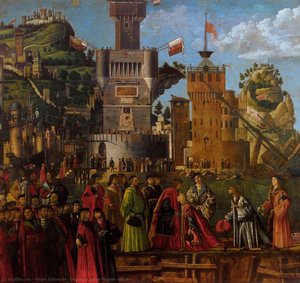
Vittore Carpaccio’s “The Lion of St Mark,” completed in 1516, stands as a cornerstone of Venetian Renaissance art—a testament to meticulous observation and profound symbolic representation. Housed within the Palazzo Ducale in Venice, Italy, this tempera on wood panel painting transcends mere visual beauty; it embodies the spirit of a republic at its zenith.
Artistic Style and Composition
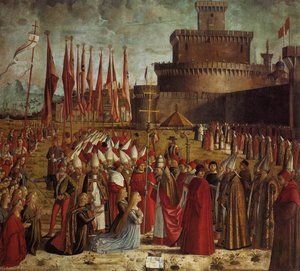
Carpaccio’s approach distinguishes itself from the humanist fervor sweeping across Europe during his time. Rather than embracing intellectual treatises or idealized forms, he adhered to the stylistic conventions established by Antonello da Messina and early Netherlandish painters—a deliberate choice that resulted in a remarkably textured surface and an unwavering focus on detail. The composition is strikingly balanced, mirroring the grandeur of Venice itself. Carpaccio skillfully employs perspective to create depth, guiding the viewer’s eye across the scene from left to right.
Technique: Tempera and Impasto
Carpaccio's mastery lies in his masterful use of tempera—a pigment bound with egg yolk—which lends the painting an unparalleled luminosity and durability. The technique involves layering thin glazes over a prepared ground, resulting in a characteristic impasto effect—thickly applied paint that retains its sculptural quality. This meticulous process captures the subtle nuances of light and shadow, imbuing the artwork with palpable atmosphere.
Historical Significance: Venice’s Dominance
"The Lion of St Mark" isn't simply a beautiful painting; it’s a chronicle of Venetian power during the Renaissance. The depiction of Saint Mark holding a book symbolizes the evangelist’s role as protector of the city and its maritime dominion—a visual declaration of Venice’s ambition to rule the Mediterranean Sea. Furthermore, the inclusion of prominent figures like Doge Leonardo Loredan underscores the importance of aristocratic patronage in shaping artistic production.
Symbolism: The Lion's Message
The lion itself is a potent emblem—representing St. Mark and, by extension, Saint Augustine—and its posture conveys confidence and authority. Its gaze directs towards the viewer, inviting contemplation and reinforcing the painting’s overarching message of stability and prosperity. The careful arrangement of elements within the scene—the Basilica of San Marco, the Palazzo Ducale, and the Clock Tower—further emphasizes Venice's position as a center of culture and commerce.
Emotional Impact: A Window to Another Era
"The Lion of St Mark" continues to captivate audiences today with its serene beauty and evocative depiction of Venetian life. Its textured surface invites tactile engagement, transporting viewers back to the fifteenth century—a period marked by artistic innovation and political ambition. This masterpiece serves as a poignant reminder of Venice’s illustrious past and its enduring legacy in the history of art.
Related Artworks



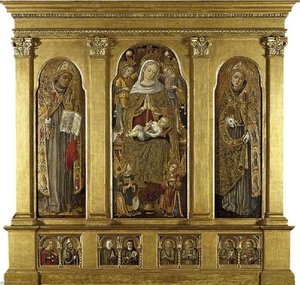
Artist Biography
early life and training
vittore carpaccio, a prominent italian painter, was born in venice around 1465. he studied under the tutelage of gentile bellini, a renowned artist of the venetian school. this apprenticeship laid the foundation for carpaccio's future success.artistic style and influences
carpaccio's style was characterized by its conservative nature, showing minimal influence from the humanist trends that transformed italian renaissance painting during his lifetime. his work was influenced by antonello da messina's style and early netherlandish art. this unique blend of styles resulted in a distinctive approach to venetian painting.notable works
- the legend of saint ursula, a cycle of nine paintings, is carpaccio's most famous work. this series, now housed in the gallerie dell'accademia, showcases his mastery of narrative painting.
- glory of st. ursula altarpiece (1491) demonstrates carpaccio's skill in capturing light and color, reminiscent of giovanni bellini's style.
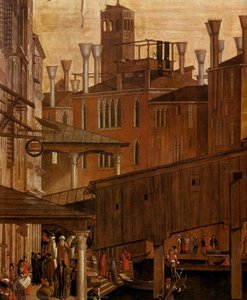
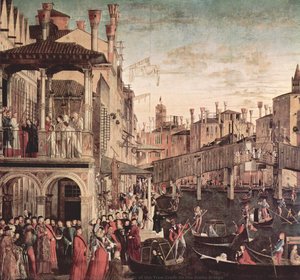
- miracle of the relic of the cross at the ponte di rialto (1494) highlights carpaccio's ability to balance composition and narrative.
career highlights and legacy
- carpaccio's principal works were executed between 1490 and 1519, ranking him among the early masters of the venetian renaissance.
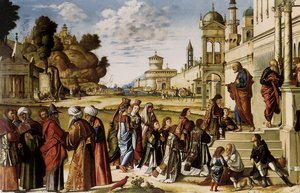
- his orientalist style, as seen in st. george baptizing the selenites, reflects a new fascination with the levant.
- carpaccio's work has been somewhat overlooked in comparison to his contemporaries, such as giovanni bellini or giorgione.
references and further reading
discover more about vittore carpaccio and the venetian school on ArtsDot.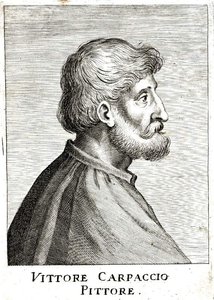
Vittore Carpaccio
1465 - 1526 , Italy
Quick Facts
- Artistic Movement Or Style: Early Venetian Renaissance
- Artists Or Movements Influenced By This Artist: ['Early Netherlandish Painting']
- Artists Who Influenced This Artist:
- Antonello da Messina
- Gentile Bellini
- Date Of Birth: Venice, Italy (c. 1465)
- Date Of Death: 1526
- Full Name: Vittore Carpaccio
- Nationality: Italian
- Notable Artworks:
- The Legend of Saint Ursula
- Glory of St. Ursula Altarpiece
- Miracle of the Relic of the Cross at the Ponte di Rialto
- Place Of Birth: Venice
Related Articles
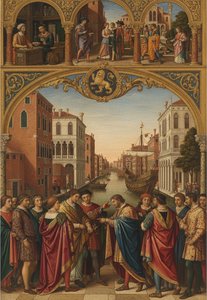
Vittore Carpaccio: Venetian Renaissance Narrative & the Poetics of Detail
Explore the captivating world of Vittore Carpaccio, a master storyteller of the Venetian Renaissance. Discover his intricate details, narrative cycles like 'The Legend of St. Ursula,' and unique artistic style.

Jacopo Tintoretto's Masterpieces: 25 Paintings That Define Venetian Drama | ArtsDot
Explore 25 breathtaking masterpieces by Jacopo Tintoretto, the Venetian master of drama and light. Discover the stories behind iconic Renaissance paintings & find museum-quality art reproductions to elevate your home decor on ArtsDot.com.

Mark Rothko's Masterpieces: 25 Paintings That Define Abstract Expressionism | ArtsDot
Explore 25 iconic Mark Rothko paintings that define Abstract Expressionism. Discover the stories, colors & emotions behind these masterpieces. Find museum-quality art reproductions and curated decor ideas at ArtsDot.com.
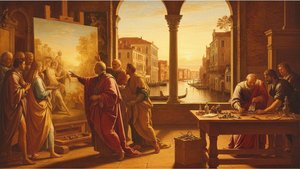
The Golden Light of Innovation: Exploring the Venetian Renaissance Art Movement (1430–1580)
Explore the Golden Age of Venetian art (1430–1580). Discover Giorgione, Titian & Tintoretto's techniques, the 'colorito' revolution, and lasting influence. Expert insights for collectors & enthusiasts.

Jacopo Palma il Giovane: A Venetian Master's Poetic Evolution
Explore the captivating world of Jacopo Palma il Giovane, a pivotal Venetian Renaissance master. Discover his unique style, influenced by Titian & Tintoretto, and learn about key works perfect for discerning collectors.