

 Preview
 Send
Send Share
Share
 Details

 Download
 Similars
 X-Ray
X-Ray Diaporama
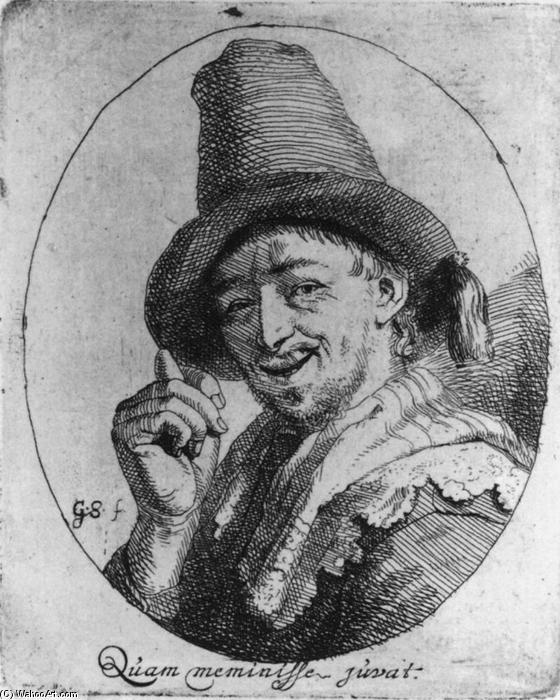
Man Making an Obscene Gesture


 Read More
Purchase a high-resolution, enhanced digital image, far superior to the online preview.
Each file is meticulously prepared by our in-house specialists using advanced tools and expert manual retouching. We ensure every image has exceptional clarity, precise color accuracy, and fine detail.
The final file is delivered via email within 72 hours, optimized for immediate use in professional, editorial, and print environments. This is the same quality trusted by top-tier design studios, publishers, and galleries.
Digital Image
Download a high-resolution file for personal display, printing, and creative projects. ( Buy Print Buy Hand Made Painting)
Included in Every Digital Image Order
Expert Digital Delivery, Guaranteed
When you choose ArtsDot.com, you're not just getting an image - you're receiving a professionally enhanced digital artwork, crafted with precision and backed by a satisfaction guarantee. Here's everything that comes with your order, automatically:

Fast Email Delivery
Your high-resolution digital image file will be emailed to you within 72 hours of ordering - ready for immediate use.

AI-Enhanced Digital File
Your artwork is professionally optimized using advanced AI tools and manual editing, ensuring maximum detail, clarity, and color accuracy.

Free Lifetime Re-Delivery
Accidentally deleted or lost your file? No worries - we'll resend it to you anytime, free of charge.

No Import Fees - Ever
Enjoy your artwork instantly with zero customs, duties, or delivery fees - digital downloads are always tax-free.

Color Accuracy Guarantee
We ensure your digital image reflects the original colors as closely as possible using professional tools and color management.

60-Day Satisfaction Guarantee
If you're not satisfied with your digital image, we'll revise it or refund 100% within 60 days - no questions asked.

100% Money-Back Guarantee
Not satisfied? Get a full refund within 60 days of receiving your digital file - no questions asked.

Bulk Order Discounts
Buy 3 images, save 10% - Buy 5, save 15% - Buy 10+, save 20%. Great for creative projects, galleries, and agencies.
Collectible Description
A Glimpse of Dutch Refinement: Godfried Schalcken’s “Man Making an Obscene Gesture”
Godfried Schalcken's "Man Making an Obscene Gesture," a captivating etching or engraving executed around 1670, offers a rare and arresting intersection of formal portraiture and subversive expression. More than just a depiction of a single moment, the work embodies the complex social dynamics and burgeoning individualism that characterized the late Dutch Golden Age. It’s a piece that invites contemplation on power, defiance, and the subtle tensions simmering beneath the veneer of societal decorum – a testament to Schalcken's mastery in capturing both the outward appearance and the unspoken emotions of his subjects.
The scene unfolds within an oval frame, a deliberate choice reminiscent of 17th-century portraiture, lending the image a dignified formality. Yet, the man’s posture – head tilted slightly, gaze direct and mischievous – immediately disrupts this composure. He is positioned not as a subject to be admired, but as an active participant in his own narrative, boldly gesturing with a hand that clearly defies convention. The details of his attire—a ruffled collar and waistcoat—further emphasize the contrast between outward appearance and inner turmoil. This deliberate juxtaposition is key to understanding the work’s enduring power; it's not merely about a single act of impropriety, but about challenging established norms.
The Language of Light: Technique and Style
Schalcken’s skill as an engraver is immediately apparent in the meticulous rendering of form and texture. The image is dominated by fine lines, expertly crafted to build up tonal values and create a remarkable illusion of depth. Hatching and cross-hatching techniques are employed with precision, suggesting the weight of fabric, the contours of flesh, and the subtle play of light and shadow. Notice how the artist uses these linear elements not just to define shapes, but also to evoke a sense of tactile reality – you can almost feel the roughness of the man’s clothing or the smoothness of his skin.
The monochromatic palette—a carefully orchestrated range of grays from near black to white—further enhances the dramatic effect. The lighting, originating from the upper left, casts strong shadows on the right side of the man's face and body, creating a sense of volume and drawing attention to his defiant gesture. This strategic use of light is characteristic of Schalcken’s style, mirroring the techniques employed by Rembrandt and other masters of chiaroscuro – a deliberate manipulation of light and shadow to heighten emotional impact.
A Portrait of an Era: Context and Symbolism
“Man Making an Obscene Gesture” must be understood within the context of 17th-century Dutch society, a period marked by both immense wealth and rigid social hierarchies. While outward appearances were carefully cultivated, beneath the surface lay currents of dissent and questioning. The act of making an obscene gesture—a direct challenge to societal expectations—became a potent symbol of rebellion and individual expression. It’s a subtle but significant commentary on the constraints placed upon individuals by established norms.
The man's expression is particularly revealing. His mischievous gaze suggests a playful defiance, almost as if he relishes in his transgression. This isn’t simply an act of rudeness; it’s a deliberate assertion of agency—a refusal to be defined solely by societal expectations. The portrait becomes a visual representation of the internal struggle between conformity and individuality, a theme that resonated deeply within the intellectual circles of the time.
Echoes of Schalcken: A Master of Candlelight
Godfried Schalcken’s legacy rests largely on his ability to capture the evocative quality of candlelight. His works are renowned for their atmospheric realism and the way he rendered the subtle nuances of light and shadow, creating a sense of intimacy and drama. This skill is particularly evident in “Man Making an Obscene Gesture,” where the carefully placed shadows not only define form but also contribute to the overall mood of intrigue and defiance. Schalcken’s work stands as a testament to his artistic vision and technical mastery, securing his place as one of the most polished artists of the Dutch Golden Age.
Related Artworks
Artist Biography
Godfried Schalcken: Master of Candlelight and Dutch Refinement
Godfried Schalcken (1643 – 1706) stands as a quietly significant figure in the history of Dutch painting, a master whose meticulous technique and evocative lighting earned him recognition within the esteemed circle of Leiden *fijnschilders*. Often overshadowed by the towering reputations of Rembrandt and Vermeer, Schalcken’s legacy lies in his exquisite genre scenes and portraits, particularly his remarkable ability to capture the subtle drama of candlelight – a skill that cemented his place as one of the most polished artists of his era. His life unfolded against the backdrop of a rapidly changing Dutch Republic, a period marked by both artistic innovation and political upheaval, shaping the trajectory of his career and ultimately contributing to his somewhat isolated existence.
Born in Dordrecht, the son of Cornelis Schalcken and Aletta Lydius, Godfried’s early life was steeped in the world of art. His father, a respected Latin school rector, provided an environment conducive to artistic development. He received his initial training under Samuel van Hoogstraten in Dordrecht, absorbing the principles of *disegno*, the emphasis on drawing and careful observation that characterized Dutch painting at the time. This foundational education proved crucial as he later sought out the tutelage of Gerard Dou (1613–1675), one of Rembrandt’s most celebrated pupils, in Leiden. Dou's influence is profoundly evident in Schalcken’s early works – a meticulous attention to detail, a restrained palette, and a masterful manipulation of light that immediately echoed the master’s signature style. These initial genre paintings closely mirrored Dou’s approach, demonstrating a clear apprenticeship and a deep respect for his teacher’s techniques.
Schalcken's career progressed through several key periods. He spent considerable time in Leiden until approximately 1675, honing his skills and developing his distinctive style. His work during this period is characterized by a refined elegance and an almost photographic realism – a hallmark of the Leiden *fijnschilders*. However, he soon returned to Dordrecht (1675-1691) before settling in The Hague around 1691, where he continued his artistic practice until his death in 1706. A notable detour occurred between 1692 and 1697 when he traveled to England, a journey that proved largely unsuccessful due to his notoriously difficult temperament and poor manners, alienating him from the English art world.
The Art of Candlelight
Schalcken’s most celebrated achievement lies in his unparalleled command of light. He possessed an extraordinary ability to render the subtle nuances of candlelight – its flickering intensity, its warm glow, and its dramatic shadows – with breathtaking accuracy. This wasn't merely a technical skill; it was a deeply felt aesthetic sensibility. He understood that candlelight wasn’t simply illumination; it was a source of atmosphere, emotion, and narrative depth. His paintings frequently depict intimate scenes bathed in this ethereal light, creating a sense of quiet drama and psychological insight.
This fascination with candlelight is evident in numerous works, including portraits where the soft glow illuminates the subject’s face, revealing their character and emotions. His ability to capture the play of light on surfaces – fabrics, metal, and skin – was truly remarkable. He frequently employed a technique known as *chiaroscuro*, using stark contrasts between light and dark to heighten the drama and create a sense of three-dimensionality. This skill set him apart from many of his contemporaries, establishing him as a leading figure in the Dutch tradition of luminous painting.
Notable Works and Influences
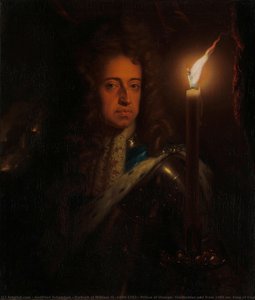
Among Schalcken’s most significant works are several portraits that showcase his technical brilliance and artistic sensitivity. The half-length portrait of William III of England, now housed in the Rijksmuseum in Amsterdam, is a prime example of his refined style – a meticulously rendered depiction of the King's countenance, bathed in the warm glow of candlelight. His paintings also reside in prestigious collections such as Buckingham Palace, the Louvre, Vienna, and Dresden, testament to their enduring appeal.
Schalcken’s artistic development was profoundly influenced by Gerard Dou, but he also drew inspiration from other masters, including Rembrandt himself. While initially mirroring Dou's style, Schalcken gradually developed his own unique voice, incorporating elements of Caravaggism – the dramatic use of light and shadow championed by Caravaggio – into his compositions. This synthesis of influences resulted in a distinctive artistic style that was both elegant and emotionally resonant.
Legacy and Historical Context
Godfried Schalcken’s career unfolded during a period of significant artistic and social change in the Dutch Republic. The rise of the *fijnschilders*, a group of artists who emphasized refinement, precision, and meticulous technique, reflected a broader cultural shift towards greater sophistication and elegance. Schalcken's commitment to these values solidified his position within this influential circle.
Despite his technical mastery and artistic achievements, Schalcken’s legacy has often been overshadowed by the brilliance of Rembrandt and Vermeer. However, recent scholarship has begun to recognize the unique contributions of artists like Schalcken, highlighting his remarkable skill in capturing the subtleties of light and his significant role in shaping the development of Dutch painting. His paintings continue to captivate viewers with their quiet beauty, technical precision, and evocative atmosphere – a testament to the enduring power of candlelight and the artistry of Godfried Schalcken.
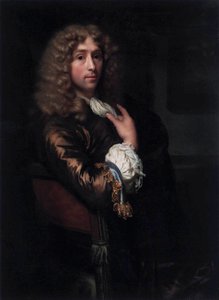
Godfried Schalcken
1643 - 1706 , Netherlands
Quick Facts
- Artistic Movement Or Style: Leiden fijnschilders
- Artists Or Movements Influenced By This Artist: ['Rembrandt']
- Artists Who Influenced This Artist: ['Gerard Dou']
- Date Of Birth: 1643-10-08
- Date Of Death: 1706-11-16
- Full Name: Godfried van Schalcken
- Nationality: Dutch
- Notable Artworks:
- Lady, Come into the Garden
- Old Woman Scouring a Pan
- Place Of Birth: Dordrecht, Netherlands

