Preview
 Send
Send Share
Share
 Details

 Download
 Similars
 X-Ray
X-Ray Diaporama
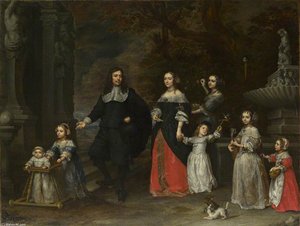
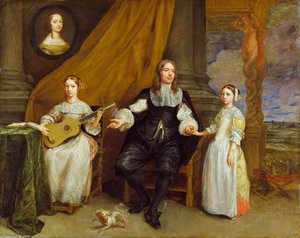
Family Portrait
 Acrylic On Canvas
- WallArt
- Dutch Golden Age
 1650
1650 65.0 x 89.0 cm
 Szépmûvészeti Múzeum
 Read More
Hand Made Oil Reproduction
Hand-painted oil on canvas in your size and frame, made to order by our artists. ( Buy Print Buy Image)




P118B $10

P118H $10

P118W $10

P438Z $10

P508JH $12

P508YH $12

P805H $10

P805Z $10

P919BZ $10

P919G $10

P919XJ $10

P959ZH $10

P968JZ $12

W106C $8

W218G $10

W218JH $8

W218Y $10

W307PJ $10

W316G $10

W316PJ $8

W316Y $10

W398PJ $8

W4111J $10

W500HY $15

W500JH $15

W692G $12

W849H $8

W940BG $15

W953PJ $8




Pick from our preset sizes that match the artwork's original proportions.

You may enter your own dimensions to fit a specific frame or space. If your selected size does not match the original image's proportions, we will either crop the artwork or extend the painting with additional hand-painted elements. A digital mockup will be sent for your approval before production begins.
Please note that the on-screen preview does not reflect the actual cropping or extension. Only the mockup will accurately show the final composition.
While custom sizes are available, we recommend selecting a dimension from the predefined list to preserve the original proportions.
After order, ArtsDot.com team will email client for instructions and provide a mockup preview
Worldwide Delivery () in 3/4 weeks instead of standard 5 weeks. (17 August). No compromise on quality.

Free Worldwide Express Shipping

High-Quality Linen Canvas

Full Shipping Insurance

Customs Tax Refund Guarantee

True Color Matching Guarantee

60-Day Return Policy (Defects Only)

100% Money-Back Guarantee

Bulk Discount Offer
 Glass option is only available in size under 110 CM

Family Portrait
Reproduction Medium
Reproduction Size
-


Total Price
$ 263
Artwork Description
A Portrait Steeped in Tradition: Exploring Gonzales Coques’ “Family Portrait”
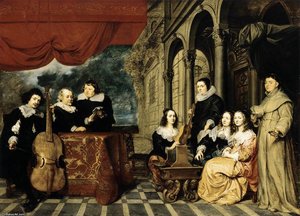
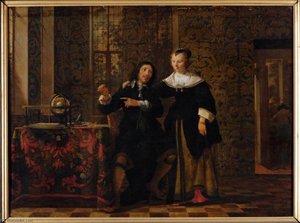
The Szépmûvészeti Múzeum in Budapest houses a painting that whispers tales of aristocratic life and artistic ambition – Gonzales Coques’ “Family Portrait,” completed in 1650. More than just a depiction of a familial gathering, this oil on panel masterpiece embodies the spirit of the Dutch Golden Age, demonstrating Coques' profound understanding of both visual artistry and psychological realism. It stands as a testament to a period defined by opulent patronage and an unwavering devotion to capturing human emotion with breathtaking precision.The Artist’s Imitation: Echoes of Van Dyck
Gonzales Coques earned his enduring reputation as “the little Van Dyck” not through groundbreaking innovation but through meticulous emulation of Anthony van Dyck's celebrated style. Like van Dyck, Coques prioritized capturing the sitter’s personality—a feat achieved through subtle gestures and nuanced facial expressions—rather than merely presenting a formal likeness. This stylistic kinship is evident throughout “Family Portrait,” where the central figure exudes confidence and grace, mirroring van Dyck’s characteristic approach to portraiture. The artist skillfully employed chiaroscuro – dramatic contrasts between light and shadow – to sculpt the forms of his subjects, creating an illusionistic depth that would have captivated audiences accustomed to theatrical visual experiences.Composition & Technique: Earth Tones and Illusionistic Depth
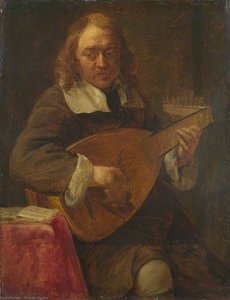
The painting's composition is deliberately balanced, featuring a group of individuals arranged around a central musician playing a lute or guitar. This arrangement isn’t merely aesthetically pleasing; it reflects the social conventions of the time, portraying a family engaged in an activity deemed respectable and refined. Coques’ masterful technique—characterized by meticulous layering of paint and painstaking attention to detail—is particularly remarkable in his rendering of fabrics and clothing textures. The artist achieved this illusionistic depth through careful blending and glazing techniques, resulting in surfaces that appear remarkably tactile. Dominating the palette are earthy hues – reds, browns, and greens – which contribute to an atmosphere of warmth and intimacy. These colors wouldn’t have been chosen arbitrarily; they aligned with prevailing artistic tastes and served to convey a sense of groundedness amidst the grandeur of aristocratic interiors.Symbolism Within Domestic Harmony
Beyond its technical brilliance, “Family Portrait” is laden with symbolic significance. The musical performance itself represents harmony and social cohesion—values highly prized during the Baroque era. Furthermore, the elaborate costumes and jewelry worn by the figures underscore their status and wealth, reinforcing the visual narrative of aristocratic privilege. The inclusion of instruments like the lute and viola da gamba speaks to the artistic sensibilities of the period, demonstrating Coques’ awareness of prevailing cultural trends. Even the architectural setting—likely a room within a palace or stately manor – contributes to the painting's overall impression of grandeur and refinement.A Window into Baroque Emotion
Ultimately, “Family Portrait” transcends its formal description as a historical artwork; it offers a glimpse into the emotional landscape of 17th-century aristocratic society. Coques’ ability to convey psychological depth—evident in the expressions and postures of his subjects—is a hallmark of Baroque art. The painting invites contemplation on themes of family, tradition, and social status, prompting viewers to consider the values that shaped this era. It remains an enduring symbol of artistic excellence and a captivating reminder of the power of visual storytelling.Related Artworks
Artist Biography
The Little Van Dyck: The Elegant Legacy of Gonzales Coques
In the vibrant, bustling heart of seventeenth-century Antwerp, a painter emerged whose brushwork whispered the elegance of royalty and the intimacy of domestic grace. Gonzales Coques, often affectionately known by his contemporaries as "the little Van Dyck," occupied a unique space in the Flemish Baroque movement. While his namesake, Anthony van Dyck, captured the grand, sweeping majesty of the English court, Coques mastered the art of the cabinet portrait—intimate, meticulously detailed works that brought a sense of refined nobility to the burgeoning middle class of the Low Countries. His life, beginning with his christening in Antwerp on December 8, 1614, was deeply intertwined with the artistic pulse of his home city, a place where tradition and innovation danced in every studio.
The foundations of Coques’s mastery were laid during his formative years under the guidance of legendary masters. His early training saw him apprenticed to Pieter Brueghel the Younger (or perhaps his son, Pieter Brueghel III), a lineage that undoubtedly gifted him with an eye for narrative detail and the subtle textures of the natural world. This education was further refined through his time in the studio of David Ryckaert, providing him with the technical rigor required to navigate the complex demands of portraiture. By 1640/41, Coques had achieved the prestigious status of master within the Antwerp Guild of Saint Luke, a milestone that signaled his arrival as a significant force in the Flemish art scene.
A Symbiosis of Style and Spirit
The defining characteristic of Coques’s oeuvre was his profound, almost spiritual, connection to the aesthetic of Anthony van Dyck. This was not merely a matter of imitation, but a sophisticated dialogue with style. Following Van Dyck’s return from England, Coques absorbed the master's use of dramatic chiaroscuro and the ability to capture fleeting, psychological nuances within a single gaze. There is a compelling historical suggestion that Coques may have even traveled to England alongside Van Dyck during the latter's final years, an experience that likely deepened his grasp of the aristocratic poise and fluid brushwork that would become his hallmark.
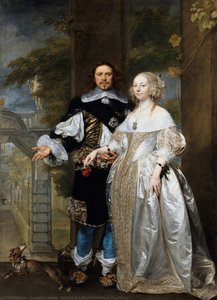
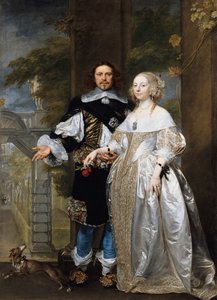
Unlike many of his contemporaries who drifted toward genre scenes or boisterous "merry companies," Coques carved out a niche for narrative portraits. He specialized in small-scale, cabinet-sized compositions that often featured family groups viewed from a slightly low perspective, lending an air of dignity to even the most private settings. His works, such as the evocative Portrait of a Married Couple in the Park, showcase a remarkable ability to balance the opulence of Baroque wealth with a palpable sense of domestic intimacy. Through his use of light and texture, he could render the shimmer of silk, the softness of lace, and the warmth of human connection with equal virtuosity.
Artistry, Commerce, and Lasting Influence
Beyond the easel, Coques was a man of significant social and professional standing. His life was marked by both personal stability and professional expansion; he married the daughter of David Ryckaert, Catharina, and later entered into a second marriage with Catharina Rysheuvel. His influence extended far beyond the borders of Antwerp, as he traveled to The Hague, where he served not only as a portraitist for the House of Orange—working on commissions for figures such as Frederick Hendrik—but also as a shrewd and successful art dealer. This dual role allowed him to remain at the very center of the European art market, shaping the tastes of the era.
The historical significance of Gonzales Coques lies in his ability to democratize the grandeur of the Baroque. He took the lofty, larger-than-life language of courtly portraiture and distilled it into a format that was accessible, collectible, and deeply personal. His legacy is found in:
- The Mastery of Scale: His ability to translate monumental emotions into delicate, cabinet-sized masterpieces.
- Narrative Depth: The creation of portraits that tell stories of lineage, wealth, and familial affection.
- Stylistic Continuity: Preserving and evolving the sophisticated Flemish Baroque tradition for a new generation of collectors.
When he passed away in 1684, Coques left behind a body of work that remains a testament to the enduring power of elegance. He did not merely follow in the footsteps of Van Dyck; he walked alongside him, creating a parallel world of beauty that continues to captivate the modern eye with its luminous light and timeless grace.
Gonzales Coques
1614 - 1684 , Belgium
Quick Facts
- Artistic Movement Or Style: Baroque
- Artists Or Movements Influenced By This Artist: ['Van Dyck']
- Artists Who Influenced This Artist: ['Anthony van Dyck']
- Date Of Death: 1684
- Full Name: Gonzales Coques
- Nationality: Flemish
- Notable Artworks: ['Portrait of a Married Couple in the Park']
- Place Of Birth: Antwerp, Belgium
Related Articles

Golden Age Reflections: Dutch Baroque Painting & Cultural Innovation
Explore the Dutch Golden Age of painting! Discover key artists like Vermeer & ter Borch, their innovative techniques, and the rich cultural context behind these Baroque masterpieces. Learn about collecting & appreciating this iconic art period.

Dutch Masters: 10 Golden Age Paintings That Still Inspire |
Journey into the Dutch Golden Age! Explore 10 iconic paintings by Rembrandt, Vermeer & Hals. Discover the stories behind these Baroque masterpieces and find museum-quality art reproductions to elevate your home decor on .

Dutch Baroque Masters: 10 Paintings That Shaped an Era | ArtsDot
Journey through the Golden Age with our guide to the Top 10 Dutch Baroque masterpieces! Explore iconic paintings by Rembrandt, Vermeer & Frans Hals. Find museum-quality art reproductions and elevate your home decor at ArtsDot.com.

Illuminating Innovation: Exploring the Dutch Golden Age of Painting
Explore the Dutch Golden Age of painting with ArtsDot. Discover Rembrandt, Vermeer & other Masters. Learn about key characteristics, iconic artworks, and lasting influence. Expert insights for collectors & enthusiasts.

Illuminating Realism: Exploring the Dutch Golden Age of Painting (1600-1700)
Explore the Dutch Golden Age of painting (1600-1700) with ArtsDot. Discover Rembrandt, Vermeer & other masters. Learn about techniques, history & find museum-quality reproductions.