 Preview
 Send
Send Share
Share
 Details

 Download
 Similars
 X-Ray
X-Ray Diaporama
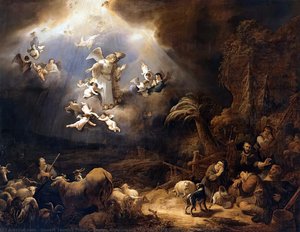
Angels Announcing The Birth Of Christ To The Shepherds


 Read More
Hand Made Oil Reproduction
Hand-painted oil on canvas in your size and frame, made to order by our artists. ( Buy Print Buy Image)




P118B $10

P118H $10

P118W $10

P438Z $10

P508JH $12

P508YH $12

P805H $10

P805Z $10

P919BZ $10

P919G $10

P919XJ $10

P959ZH $10

P968JZ $12

W106C $8

W218G $10

W218JH $8

W218Y $10

W307PJ $10

W316G $10

W316PJ $8

W316Y $10

W398PJ $8

W4111J $10

W500HY $15

W500JH $15

W692G $12

W849H $8

W940BG $15

W953PJ $8




Pick from our preset sizes that match the artwork's original proportions.

You may enter your own dimensions to fit a specific frame or space. If your selected size does not match the original image's proportions, we will either crop the artwork or extend the painting with additional hand-painted elements. A digital mockup will be sent for your approval before production begins.
Please note that the on-screen preview does not reflect the actual cropping or extension. Only the mockup will accurately show the final composition.
While custom sizes are available, we recommend selecting a dimension from the predefined list to preserve the original proportions.
After order, ArtsDot.com team will email client for instructions and provide a mockup preview
Worldwide Delivery () in 3/4 weeks instead of standard 5 weeks. (16 August). No compromise on quality.

Free Worldwide Express Shipping

High-Quality Linen Canvas

Full Shipping Insurance

Customs Tax Refund Guarantee

True Color Matching Guarantee

60-Day Return Policy (Defects Only)

100% Money-Back Guarantee

Bulk Discount Offer
 Glass option is only available in size under 110 CM

Angels Announcing The Birth Of Christ To The Shepherds
Reproduction Medium
Reproduction Size
-


Total Price
$ 263
Artwork Description
A Divine Revelation: The Annunciation to the Shepherds
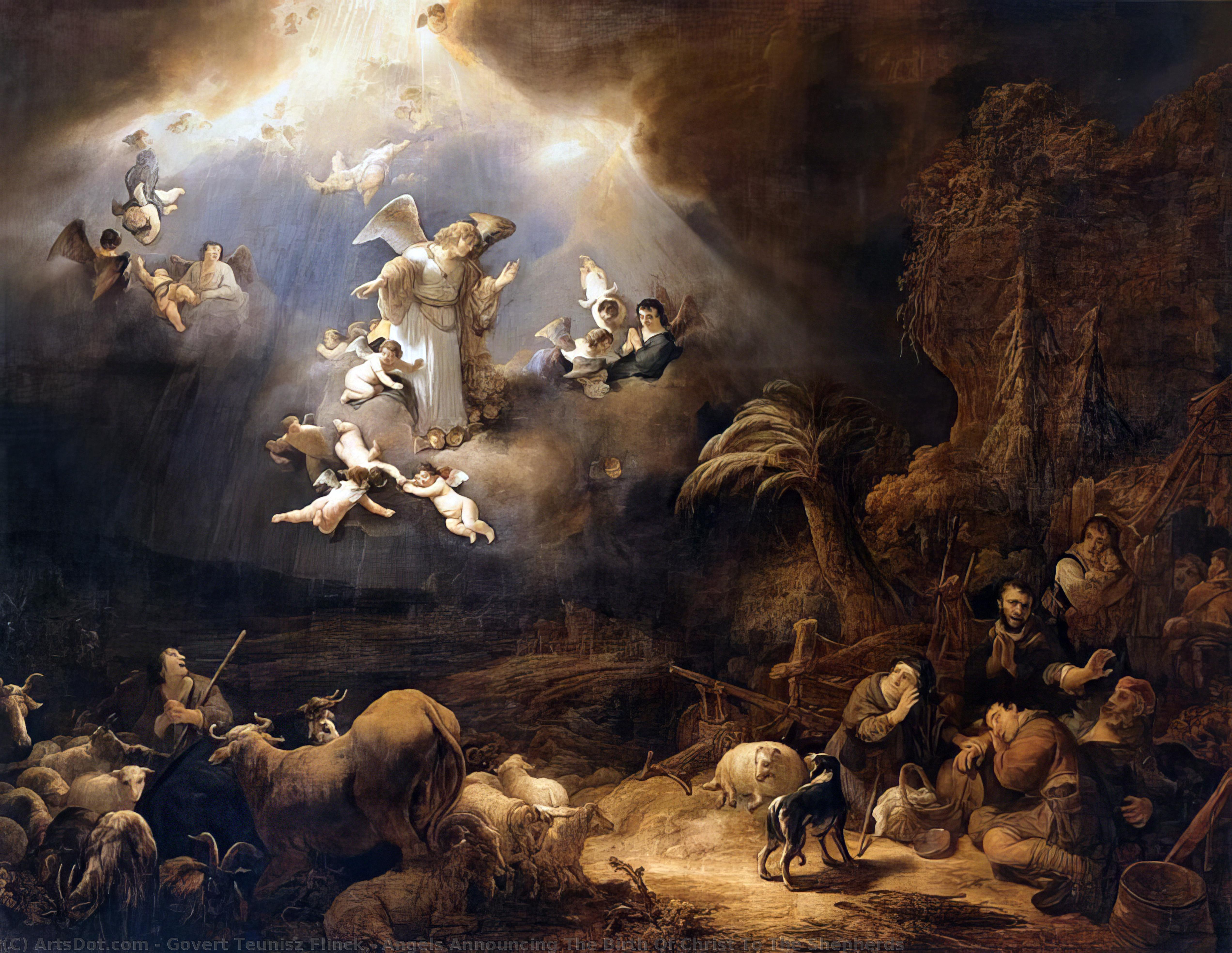
Govert Teunisz Flinck’s 1639 painting captures a pivotal moment in Christian narrative – the announcement of Christ's birth to the humble shepherds. This large-scale work is not merely a depiction of a biblical event, but a powerful exploration of faith, awe, and divine intervention rendered with the dramatic flair characteristic of the Dutch Golden Age.
Baroque Drama & Artistic Influences
Flinck’s style firmly places him within the Baroque tradition, though distinctly influenced by his contemporary, Rembrandt van Rijn. The painting showcases a masterful command of chiaroscuro – the dramatic interplay of light and shadow – creating an intensely emotional atmosphere. Note how the radiant light descends from heaven, illuminating the central angel and cascading down upon the astonished shepherds, while leaving much of the earthly landscape shrouded in darkness. This technique isn’t simply aesthetic; it symbolizes the arrival of divine grace into a world awaiting salvation.
Technique & Materials: A Painterly Approach
Executed in oil on canvas, the artwork demonstrates Flinck's skillful handling of paint. He employs layered brushwork and subtle glazing to achieve remarkable depth and texture. Observe the impasto – the thick application of paint – particularly noticeable in the angels’ robes and the shepherds’ garments, lending a tactile quality to these figures. The landscape is rendered with a rougher texture, contrasting beautifully with the smoother surfaces of the human forms.
Historical Context & Dutch Golden Age Sensibilities
The 17th century Netherlands witnessed an unprecedented flourishing of artistic talent – the Dutch Golden Age. While known for portraits and landscapes, artists like Flinck also excelled in historical and religious subjects. This painting reflects a period of both profound faith and burgeoning scientific inquiry. The realistic depiction of the shepherds, their animals (including a remarkably expressive dog), and the pastoral setting grounds the divine event in everyday life, making it relatable to contemporary viewers.
Symbolism & Emotional Resonance
Beyond its narrative content, the painting is rich in symbolism. The sheep represent Christ’s followers and humanity's vulnerability. The darkness symbolizes the world before Christ’s arrival, while the light embodies divine hope and grace. Flinck expertly captures a range of human emotions – from prayerful reverence to startled surprise – mirroring the profound impact of this miraculous announcement. The dynamic composition, with its diagonal axis directing the eye upwards towards the heavenly realm, reinforces the sense of spiritual upliftment.
A Statement Piece for Discerning Collectors
“Angels Announcing The Birth Of Christ To The Shepherds” is more than just a beautiful painting; it’s a powerful statement piece. Its dramatic composition, rich symbolism, and masterful technique make it an ideal addition to any collection or interior space. Whether you are seeking a focal point for a living room, library, or chapel, this artwork will undoubtedly inspire contemplation and evoke a sense of wonder.
Related Artworks

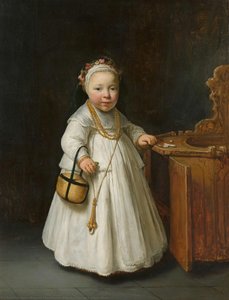
Artist Biography
A Life Painted in Light and Shadow: The Story of Govert Teunisz Flinck
Govert Teunisz Flinck, a name that resonates with the golden age of Dutch painting, was more than just a portraitist; he was a conduit between Rembrandt’s revolutionary style and the burgeoning artistic landscape of 17th-century Amsterdam. Born in Kleve, Germany, in 1615 – a city steeped in both German and Dutch influences – Flinck's early life hinted at a path far removed from the world of art. His father, a prosperous cloth merchant, envisioned a future for his son within the trade, but fate intervened with the unexpected guidance of Lambert Jacobsz, a prominent Mennonite preacher and painter who recognized the young man’s innate artistic talent. This pivotal encounter steered Flinck towards Leeuwarden, where he began his formal training under Jacobsz, laying the foundation for a career that would ultimately eclipse his initial aspirations.
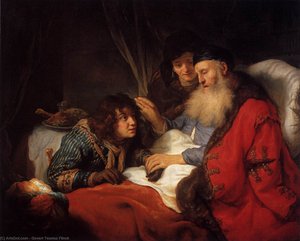
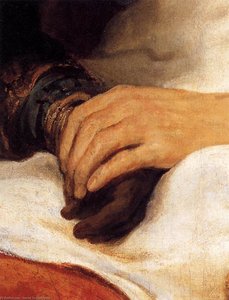
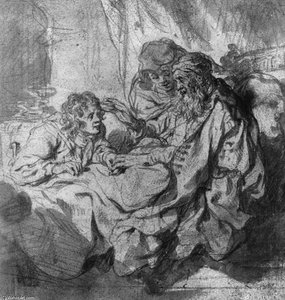
The move to Amsterdam in 1633 marked a turning point. There, Flinck entered the studio of Rembrandt van Rijn, a relationship that profoundly shaped his artistic development. Rembrandt’s influence is undeniably present throughout Flinck's oeuvre – particularly in his early works – characterized by dramatic lighting, nuanced expressions, and a masterful manipulation of chiaroscuro. However, unlike Rembrandt, who often embraced theatricality, Flinck gradually developed a more refined and elegant style, incorporating elements of Rubensian dynamism and a heightened sense of realism. This evolution is strikingly evident in pieces like “Isaac Blessing Jacob” (1638), where the composition’s balance and the figures' emotional depth demonstrate a clear departure from Rembrandt’s immediate influence.
The Portraiture of Power and Prestige
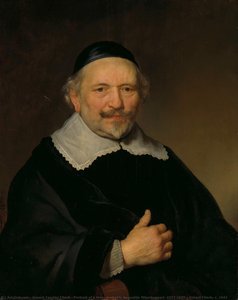
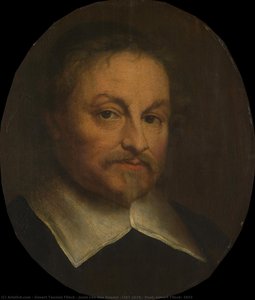
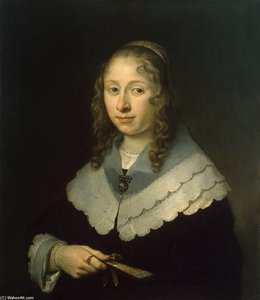
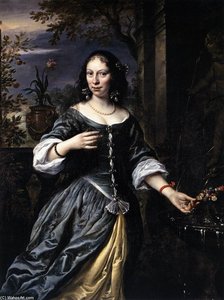
Flinck quickly established himself as one of Amsterdam’s most sought-after portraitists, catering to a clientele that included wealthy merchants, civic officials, and prominent members of the Mennonite community. His portraits weren't merely representations of likeness; they were carefully constructed narratives, imbued with social commentary and reflecting the status and aspirations of his subjects. The “Portrait of a Man, probably Augustijn Wtenbogaert (1577-1655)” exemplifies this approach, showcasing an aged sitter rendered with remarkable sensitivity and capturing not only his physical appearance but also the weight of experience etched upon his face. The use of rich fabrics, intricate details in the background, and subtle gestures all contribute to a portrait that transcends simple likeness, offering a glimpse into the subject’s life and character.
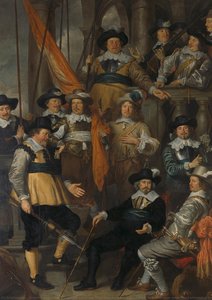
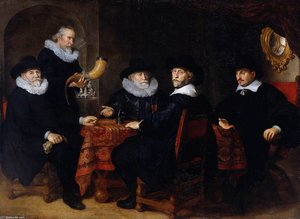
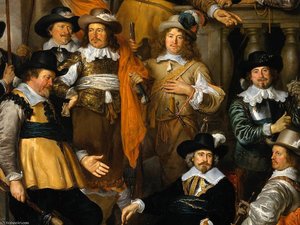
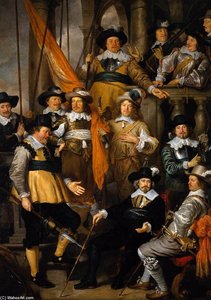
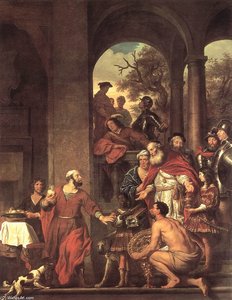
His commissions for civic guardsmen – as seen in “Officers and Other Civic Guardsmen of District XVIII in Amsterdam…” – further cemented his reputation. These works are not simply depictions of military personnel; they are vibrant celebrations of civic pride, meticulously rendered with attention to detail and a keen awareness of the social dynamics at play. The influence of Rembrandt is palpable here, particularly in the dynamic composition and the use of light and shadow to create a sense of movement and drama. The painting captures not just the appearance of the guardsmen but also their role as protectors of Amsterdam’s prosperity and stability.
Beyond the Portrait: Genre Scenes and Religious Narratives
While renowned for his portraits, Flinck's artistic range extended beyond the confines of formal representations. He produced a series of compelling genre scenes – intimate depictions of everyday life – that offered a window into the domestic sphere of 17th-century Amsterdam. These works are characterized by their realism and their ability to capture the nuances of human interaction, revealing both the joys and challenges of daily existence. His religious paintings, such as “Angels Announcing the Birth of Christ to the Shepherds,” demonstrate a masterful command of composition, color, and symbolism, creating scenes that are both visually stunning and emotionally resonant.
Legacy and Influence
Govert Teunisz Flinck’s career spanned nearly four decades, during which he produced an impressive body of work that continues to captivate viewers today. His artistic development—from his early apprenticeship under Rembrandt to the refinement of his own distinctive style—reflects the dynamic artistic climate of the Dutch Golden Age. He left a lasting legacy as one of the most accomplished portraitists and genre painters of his time, influencing generations of artists who followed in his footsteps. His works are now housed in prestigious collections around the world, including the Rijksmuseum in Amsterdam, testament to his enduring contribution to the history of art.
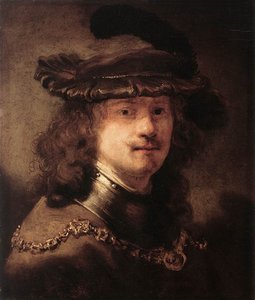
govert teunisz flinck
1615 - 1660 , Germany
Quick Facts
- Artistic Movement Or Style: Baroque
- Artists Or Movements Influenced By This Artist: ['Peter Paul Rubens']
- Artists Who Influenced This Artist: ['Rembrandt']
- Date Of Birth: January 25, 1615
- Date Of Death: February 2, 1660
- Full Name: Govert Teunisz Flinck
- Nationality: Dutch
- Notable Artworks:
- Angels Announcing Christ
- Portrait of a Man
- Officers Civic Guardsmen
- Place Of Birth: Kleve, Germany
Related Articles

Dutch Masters: 10 Golden Age Paintings That Still Inspire |
Journey into the Dutch Golden Age! Explore 10 iconic paintings by Rembrandt, Vermeer & Hals. Discover the stories behind these Baroque masterpieces and find museum-quality art reproductions to elevate your home decor on .

Golden Age Reflections: Dutch Baroque Painting & Cultural Innovation
Explore the Dutch Golden Age of painting! Discover key artists like Vermeer & ter Borch, their innovative techniques, and the rich cultural context behind these Baroque masterpieces. Learn about collecting & appreciating this iconic art period.

Illuminating Innovation: Exploring the Dutch Golden Age of Painting
Explore the Dutch Golden Age of painting with ArtsDot. Discover Rembrandt, Vermeer & other Masters. Learn about key characteristics, iconic artworks, and lasting influence. Expert insights for collectors & enthusiasts.
Illuminating Realism: Exploring the Dutch Golden Age of Painting (1600-1700)
Explore the Dutch Golden Age of painting (1600-1700) with ArtsDot. Discover Rembrandt, Vermeer & other masters. Learn about techniques, history & find museum-quality reproductions.
Charles Leickert: Capturing the Dutch Golden Age Light – A Comprehensive Study of Technique, Context, and Legacy
Explore the captivating winter landscapes of Charles Leickert, a master of Dutch Golden Age light & atmosphere. Discover his techniques, symbolism, and lasting legacy – a comprehensive study for art enthusiasts and collectors.