 Preview
 Send
Send Share
Share
 Details

 Download
 Similars
 X-Ray
X-Ray Diaporama
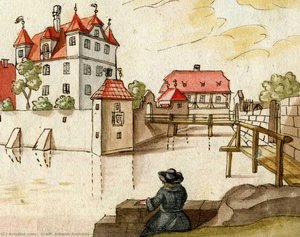
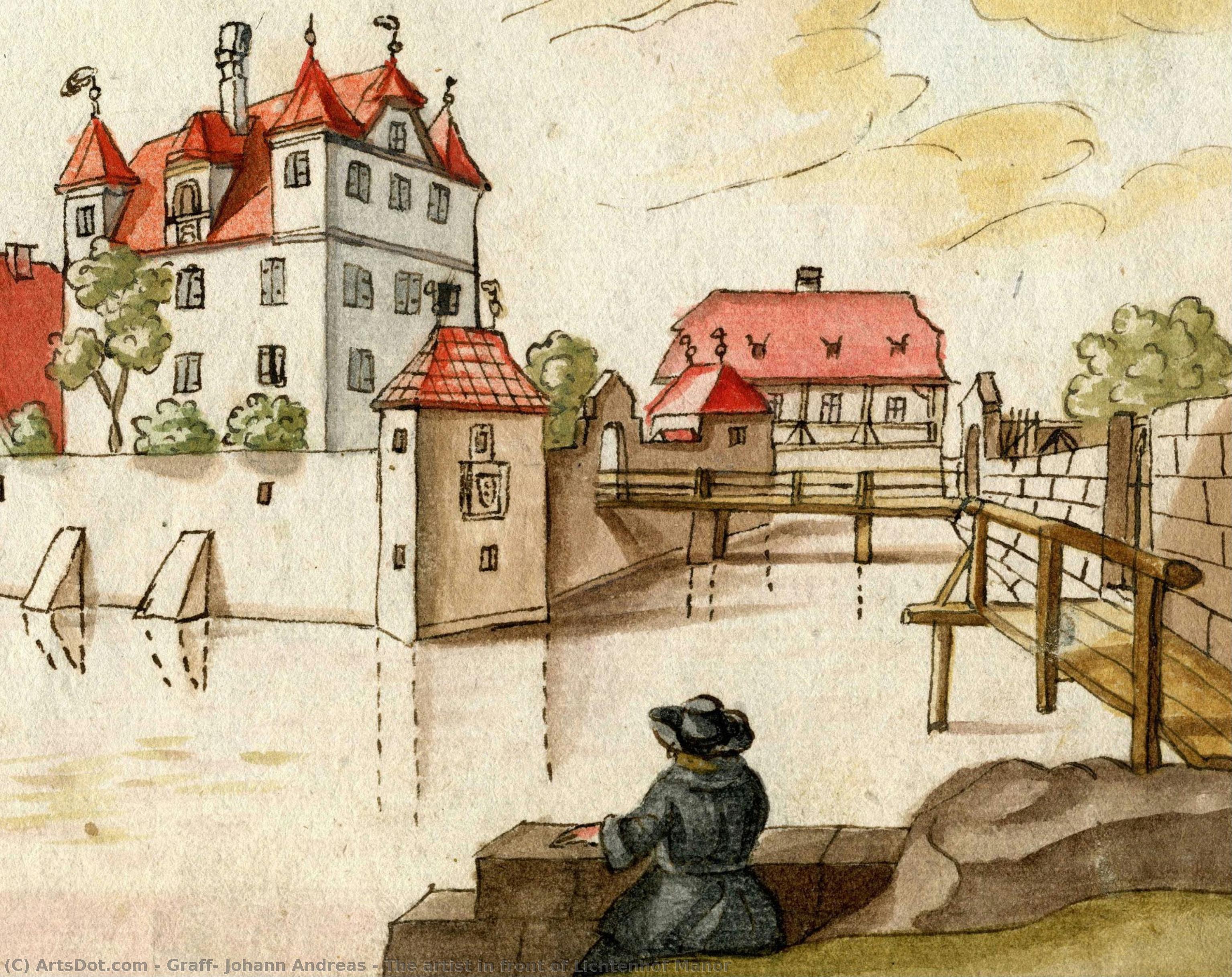
The artist in front of Lichtenhof Manor


 Read More
Hand Made Oil Reproduction
Hand-painted oil on canvas in your size and frame, made to order by our artists. ( Buy Print Buy Image)




P118B $10

P118H $10

P118W $10

P438Z $10

P508JH $12

P508YH $12

P805H $10

P805Z $10

P919BZ $10

P919G $10

P919XJ $10

P959ZH $10

P968JZ $12

W106C $8

W218G $10

W218JH $8

W218Y $10

W307PJ $10

W316G $10

W316PJ $8

W316Y $10

W398PJ $8

W4111J $10

W500HY $15

W500JH $15

W692G $12

W849H $8

W940BG $15

W953PJ $8




Pick from our preset sizes that match the artwork's original proportions.

You may enter your own dimensions to fit a specific frame or space. If your selected size does not match the original image's proportions, we will either crop the artwork or extend the painting with additional hand-painted elements. A digital mockup will be sent for your approval before production begins.
Please note that the on-screen preview does not reflect the actual cropping or extension. Only the mockup will accurately show the final composition.
While custom sizes are available, we recommend selecting a dimension from the predefined list to preserve the original proportions.
After order, ArtsDot.com team will email client for instructions and provide a mockup preview
Worldwide Delivery () in 3/4 weeks instead of standard 5 weeks. (31 August). No compromise on quality.

Free Worldwide Express Shipping

High-Quality Linen Canvas

Full Shipping Insurance

Customs Tax Refund Guarantee

True Color Matching Guarantee

60-Day Return Policy (Defects Only)

100% Money-Back Guarantee

Bulk Discount Offer
 Glass option is only available in size under 110 CM

The artist in front of Lichtenhof Manor
Reproduction Medium
Reproduction Size
-


Total Price
$ 263
A Glimpse into 17th Century Life at Lichtenhof
Imagine stepping back into the quiet rhythm of the late seventeenth century, where life unfolded against the imposing, yet serene backdrop of fortified stone architecture. This evocative drawing, a detail from a watercolor sketch intended for an engraving of the Lichtenhof Estate, transports us directly to that moment. The composition centers on a woman seated upon a sturdy stone wall, her posture suggesting quiet contemplation as she gazes out over the scene. She is accompanied by other figures scattered throughout the frame—some intimate enough to feel almost within arm's reach, others receding into the hazy distance.
The genius of this piece lies in its ability to capture not just a location, but an atmosphere: one of peaceful, observed domesticity set against the permanence of man-made defense. The castle structure itself, with its corner towers and surrounding wall, speaks volumes about the era's need for both security and structured beauty.
The Artistry of Documentation: Technique and Style
What immediately strikes the viewer is the drawing’s remarkable clarity. Executed in a style characterized by rather austere, clear, simple lines, it possesses the delicate precision typical of preparatory sketches for engravings. This was not intended as a finished masterpiece for grand display, but rather as a meticulous record—a visual document. The artist, working with watercolor and pencil techniques that lend themselves to fine detail, has managed to imbue what is essentially an architectural study with profound human presence.
The inclusion of elements like the visible benches suggests moments paused in time; places where conversation might have drifted or thoughts might have settled. It speaks to a sophisticated understanding of composition, balancing the rigid geometry of the stone structure against the soft, ephemeral grouping of people enjoying the open air.
Historical Echoes: Life Under Graff's Gaze
This work connects us tangentially to the masterful hand of Johann Andreas Graff. While this specific sketch captures a moment at Lichtenhof, it shares the spirit of documentation that defined Graff’s career in Nuremberg. Graff was renowned for his detailed engravings that served as historical chronicles—a visual diary of civic life. To own a reproduction inspired by such preparatory works is to connect with an artistic tradition dedicated to preserving the memory of place and people before they changed.
The date, 1685, places us firmly in a period of significant architectural stability following periods of upheaval, allowing for this kind of detailed civic recording. It offers us a window into how life was lived within the embrace of formidable, yet beautiful, fortifications.
Symbolism and Emotional Resonance
The contrast between the enduring stone—the symbol of history and permanence—and the transient figures enjoying the day creates a subtle, poignant tension. The woman in the foreground, with her folded hands beneath her hat, embodies quiet introspection; she is an observer within her own scene. This piece invites us to pause our modern rush and consider what we are observing, and more importantly, what we ourselves might be contemplating while seated on a stone wall, looking out over a world that has changed immeasurably since the seventeenth century.
For collectors and designers alike, this drawing offers an unparalleled depth of character. It is not merely a picture of a castle; it is a meditation on time, community, and the enduring beauty found in simple, observed moments.
Related Artworks
Artist Biography
Johann Andreas Graff: A Nuremberg Chronicle in Copper
Born in the heart of Nuremberg in 1636, Johann Andreas Graff emerged as a pivotal figure in 17th-century German art – not merely as a painter, but as a meticulous recorder and interpreter of his city’s identity. His legacy isn't defined by grand, sweeping canvases, but rather by an astonishingly detailed body of work: large-format copper engravings that offer an intimate, almost voyeuristic glimpse into the daily life, architecture, and civic pride of Nuremberg during a period of significant transformation. Graff’s career unfolded against the backdrop of a burgeoning printmaking industry and a growing desire to document and preserve the visual memory of European cities – a trend he masterfully embodied.
Graff's artistic journey began under the tutelage of Jacob Marrell, a respected Nuremberg artist whose workshop provided a solid foundation in drawing and engraving. However, his life took an extraordinary turn with his marriage to Maria Sibylla Merian, the renowned entomologist and scientific illustrator. This union profoundly influenced Graff’s work, imbuing it with a keen observational eye and a fascination for detail – qualities that would become hallmarks of his engravings. Merian's expertise in natural history undoubtedly shaped his approach to depicting urban scenes, encouraging him to capture not just the buildings but also the people, activities, and textures that defined Nuremberg’s vibrant existence.
The Architect of Copper: Graff’s Engravings
Graff is most celebrated for his monumental copper engravings of Nuremberg. These weren't simply topographical surveys; they were meticulously researched studies of the city’s physical fabric, capturing its churches, guildhalls, market squares, and residential buildings with remarkable precision. His subjects included the imposing Barfüsserkirche (Church of the Barefoot Clerics), the formidable Fechthaus (a fortified building used for justice and public spectacles), and the Jakobskirche (St. James’ Church). These engravings weren't created from mere sketches; Graff undertook extensive on-site measurements, often employing a surveyor’s tools to ensure accuracy. The resulting prints are astonishingly detailed, revealing intricate architectural features, decorative elements, and even the subtle nuances of light and shadow.
Notable amongst his works is “The Artist in Front of Lichtenhof Manor,” a captivating portrait that simultaneously showcases Graff's artistic skill and his personal connection to Nuremberg. Another significant piece is "Drawing in the Varget Family," an etching demonstrating his mastery of capturing human figures within a domestic setting, revealing a sensitivity to gesture and expression. These engravings weren’t just technical exercises; they were imbued with a sense of civic pride and a desire to preserve the city's heritage for posterity.
A City Captured: Key Engravings
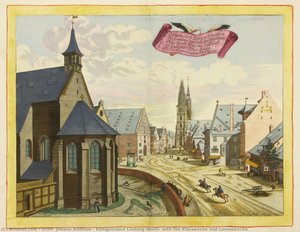
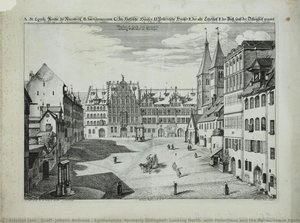
- Egidienplatz (formerly Dillinghof) Looking North, with Pellerhaus and the Romanesque Egidienkirche: This 1682 engraving offers a stunning architectural study of Nuremberg’s central square, showcasing Baroque precision and capturing the city's bustling public life. The inclusion of the Romanesque Egidienkirche adds layers of historical context to the scene.
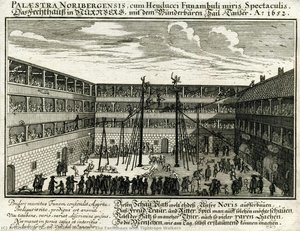
- The Fechthaus with Tightrope Walkers: A dramatic depiction of a public spectacle within Nuremberg’s Fechthaus, highlighting the building’s function as a center for justice and entertainment. The inclusion of tightrope walkers adds an element of visual interest and reflects the city's vibrant culture.
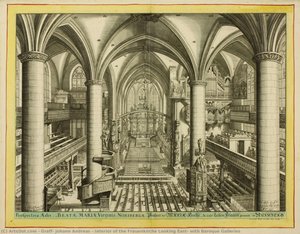
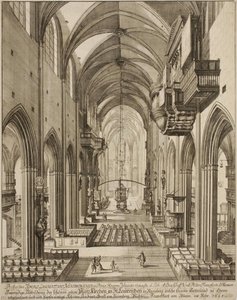
- Graff’s meticulous renderings of Nuremberg’s churches: These engravings provide invaluable insights into the architectural styles and decorative elements prevalent in the city during the 17th century. They serve as a vital historical record, offering a tangible connection to the past.
Influence and Legacy
Graff's work had a lasting impact on the art world, influencing subsequent generations of engravers and artists. His large-format prints set a new standard for topographical accuracy and detail, inspiring others to document their own cities and landscapes. His dedication to capturing the essence of Nuremberg’s architecture and civic life demonstrated the power of printmaking as a tool for historical preservation and artistic expression. The British Museum, the Nuremberg Museum, and the Städel Museum all hold significant examples of his work, testament to his enduring legacy.
Furthermore, Graff's career coincided with the rise of scientific illustration, mirroring Merian’s own achievements. His meticulous attention to detail and ability to render complex subjects – both architectural and human – reflected a broader trend in 17th-century art towards observation, documentation, and a desire to understand the world around us. He stands as a remarkable example of an artist whose work seamlessly blended artistic skill with historical awareness, leaving behind a rich visual record of Nuremberg’s golden age.
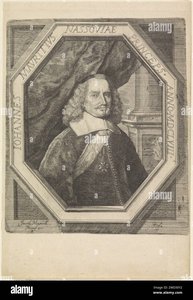
graff, johann andreas
1636 - 1701 , Germany
Quick Facts
- Artistic Movement Or Style: Copperplate engraving
- Artists Or Movements Influenced By This Artist: Later artists
- Artists Who Influenced This Artist: Jacob Marrell
- Date Of Birth: May 1636, Nuremberg
- Date Of Death: December 6, 1701
- Full Name: Johann Andreas Graff
- Nationality: German
- Notable Artworks:
- Lichtenhof Manor
- Varget Family
- Fechthaus Tightrope
- Place Of Birth: Nuremberg, Germany
Related Articles

The Eloquent Line: Exploring the Artistic Significance of Sketches Across Movements and Media
Explore the profound artistic significance of sketches throughout history. From Renaissance masters to modern innovators like Van Gogh & Guston, discover how these foundational works reveal technique, emotion, and vision. Learn more at ArtsDot.

Giclée Prints: Archival Quality & Aesthetic Nuances for the Discerning Collector
Explore the world of giclée prints with ArtsDot. Learn about archival quality, aesthetic nuances & investment potential. Expert guidance for discerning art collectors seeking museum-quality reproductions and lasting value.

The Enduring Legacy of Fine Art Prints: Technique, History & Aesthetic Impact
Explore the rich history & techniques of fine art prints. Discover investment potential, assess authenticity, and learn how to preserve your collection with expert guidance. Trusted insights for discerning collectors.

Echoes of Time: Exploring the Enduring Appeal & Historical Context of Vintage Art Prints
Explore the captivating world of vintage art prints! Discover their history, collecting tips & enduring appeal. Expert insights on chromolithography and building a legacy collection with ArtsDot.
The Enduring Legacy of Printmaking: Techniques, Themes & Artistic Innovation Across Centuries
Explore the rich history of printmaking with ArtsDot. Discover techniques from intaglio to lithography, learn about collecting valuable prints & find museum-quality reproductions. Expert insights for art enthusiasts and collectors.