 Preview
 Send
Send Share
Share
 Details

 Download
 Similars
 X-Ray
X-Ray Diaporama
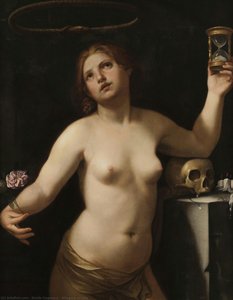
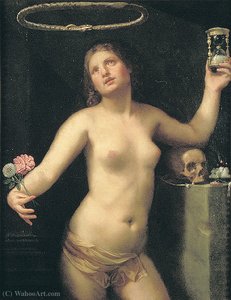
Allegory of Life
 Oil On Canvas
- WallArt
- Baroque
 Early Modern
 105.0 x 83.0 cm
 Crocker Art Museum
 Read More
Hand Made Oil Reproduction
Hand-painted oil on canvas in your size and frame, made to order by our artists. ( Buy Print Buy Image)




P118B $10

P118H $10

P118W $10

P438Z $10

P508JH $12

P508YH $12

P805H $10

P805Z $10

P919BZ $10

P919G $10

P919XJ $10

P959ZH $10

P968JZ $12

W106C $8

W218G $10

W218JH $8

W218Y $10

W307PJ $10

W316G $10

W316PJ $8

W316Y $10

W398PJ $8

W4111J $10

W500HY $15

W500JH $15

W692G $12

W849H $8

W940BG $15

W953PJ $8




Pick from our preset sizes that match the artwork's original proportions.

You may enter your own dimensions to fit a specific frame or space. If your selected size does not match the original image's proportions, we will either crop the artwork or extend the painting with additional hand-painted elements. A digital mockup will be sent for your approval before production begins.
Please note that the on-screen preview does not reflect the actual cropping or extension. Only the mockup will accurately show the final composition.
While custom sizes are available, we recommend selecting a dimension from the predefined list to preserve the original proportions.
After order, ArtsDot.com team will email client for instructions and provide a mockup preview
Worldwide Delivery () in 3/4 weeks instead of standard 5 weeks. (17 August). No compromise on quality.

Free Worldwide Express Shipping

High-Quality Linen Canvas

Full Shipping Insurance

Customs Tax Refund Guarantee

True Color Matching Guarantee

60-Day Return Policy (Defects Only)

100% Money-Back Guarantee

Bulk Discount Offer
 Glass option is only available in size under 110 CM

Allegory of Life
Reproduction Medium
Reproduction Size
-


Total Price
$ 263
Artwork Description
The Weight of Time: An Allegory in Oil
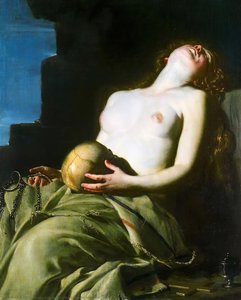
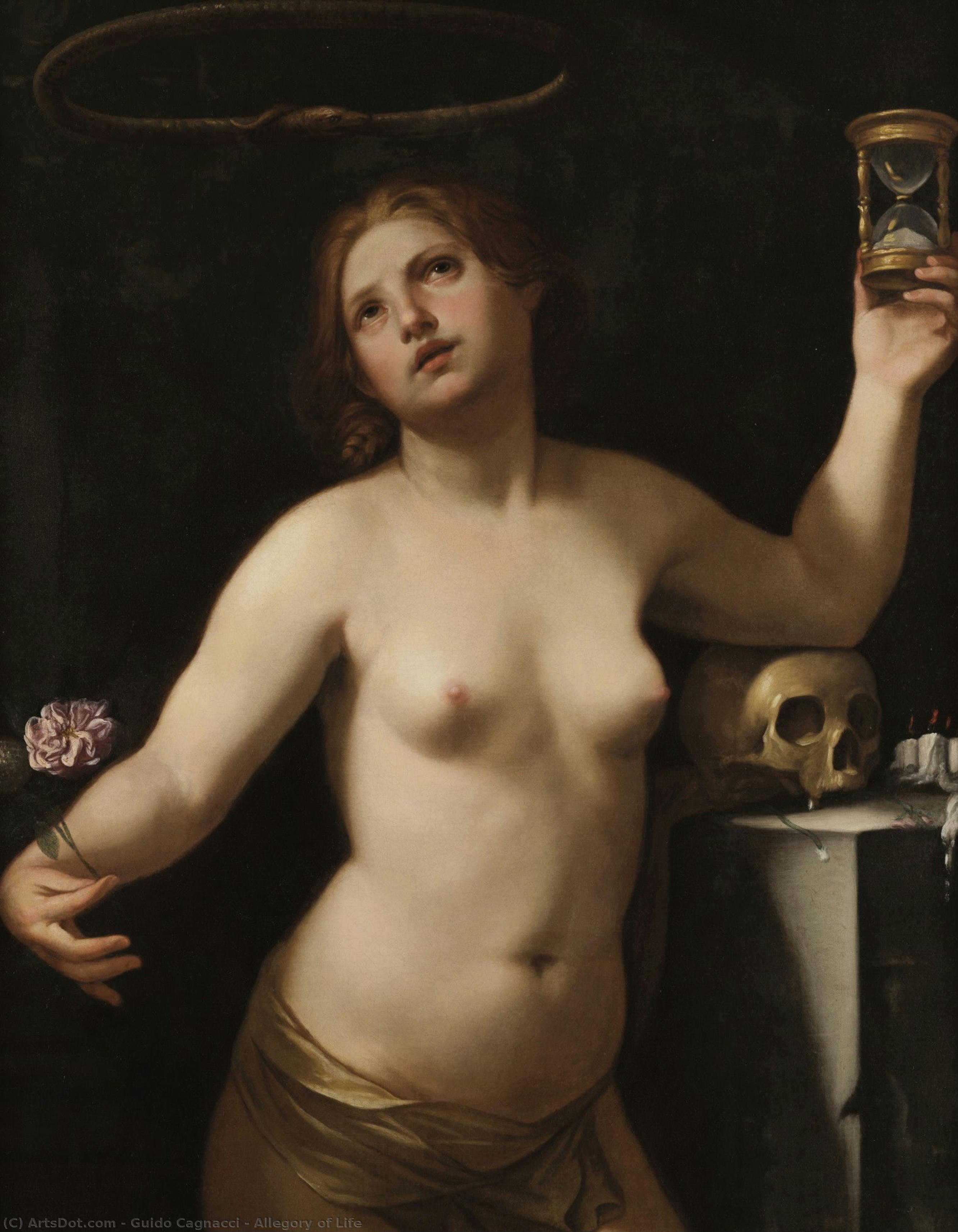
To stand before this depiction of Allegory of Life is to be drawn into a profound meditation on existence itself. The scene unfolds with the quiet drama characteristic of the Baroque period, centering upon a nude female figure whose very posture seems imbued with contemplation. She is not merely presented; she is caught in a moment of deep reckoning. The artist, Guido Cagnacci, masterfully employs the human form as a vessel for philosophical inquiry. Notice how the light does not simply illuminate; it sculpts, carving out volumes from the surrounding shadows through a technique that speaks to the dramatic flair of Roman and Bolognese painting traditions.
Symbolism Woven into Flesh and Form
The genius of this work lies in its rich tapestry of symbolism. The woman gazes outward, perhaps toward an unseen horizon, while her immediate surroundings whisper secrets about mortality. Here, the hourglass, a universal emblem of time's relentless passage, rests near her hand, its sands already begun to fall. Nearby, the stark presence of the skull serves as a chilling memento mori, a constant reminder of life’s finite nature. Yet, this contemplation is not purely despairing. Observe the mesmerizing inclusion of the ouroboros, that serpent consuming its own tail—a potent and ancient symbol representing eternity, cyclical renewal, and the endless cycle of being. These contrasting elements—the fleeting bloom of the rose against the permanence suggested by the snake—create a visual dialectic that invites endless interpretation.
Mastery in Technique and Light
Technically, this piece is a testament to Cagnacci’s skill as an oil painter. The chiaroscuro is breathtaking; the dramatic interplay between deep shadow and brilliant highlight gives the entire composition a palpable sense of depth and drama. The smooth application of the oil paint allows for exquisite modeling, giving the skin a lifelike softness that contrasts beautifully with the harder edges of the symbolic objects. While the overall impression suggests the meticulous hand of a master workshop, the execution speaks to an individual vision—a careful balance between academic structure and emotional spontaneity.
A Touch of Baroque Introspection for Your Space
For the discerning collector or designer seeking art that transcends mere decoration, this reproduction offers profound intellectual resonance. It is not simply a beautiful nude study; it is a philosophical anchor for any room. The melancholic yet accepting mood evoked by the piece lends itself perfectly to libraries, studies, or drawing rooms where deep thought is encouraged. Owning an interpretation of Allegory of Life means bringing home more than just pigment on canvas; it means inviting a timeless conversation about beauty, decay, and the enduring mystery of renewal into your daily life.
Related Artworks
Artist Biography
Early Life and Artistic Beginnings
Guido Cagnacci, born on January 19, 1601, in the modest city of Sant'Angelo in Romagna, emerged from a family of artisans—his father, Matteo Cagnacci, was a tanner and furrier. While his origins remain somewhat shrouded in mystery, with speculation pointing to possible roots in Castel Durante or Rimini, it is clear that young Guido possessed an innate artistic talent. Unlike many artists of the era who underwent rigorous formal apprenticeships from childhood, Cagnacci appears largely self-taught, described by eighteenth-century biographer Giovan Battista Costa as having been “given such marvelous talent from nature” that he embarked on his artistic journey with minimal guidance. This precocious ability led his father to seek more structured training for him, initially in Bologna around 1618 and subsequently with two sojourns in Rome. Though the precise identity of his mentors remains debated, it is widely believed that Ludovico Carracci and Guido Reni profoundly influenced his early development within the Bolognese School. These formative experiences laid the groundwork for a style that would eventually distinguish him as a unique voice within the Baroque landscape.A Developing Style: Bologna, Rome, and Regional Influences
Cagnacci’s artistic education was not confined to a single studio or city. His time in Bologna exposed him to the classical ideals and polished techniques of the Carracci family, while his travels to Rome brought him into contact with the dramatic intensity of Guercino and the refined elegance of Guido Reni. He also encountered the French painter Simon Vouet during his Roman periods, further broadening his stylistic horizons. This confluence of influences is evident in his early works, which often feature devotional subjects executed with a growing mastery of chiaroscuro—the dramatic interplay of light and shadow that became a hallmark of Baroque painting. However, Cagnacci wasn’t merely an imitator; he began to infuse his compositions with a distinctive sensuality and psychological depth. After periods in Bologna and Rome, he established himself as a working artist in Rimini from 1627 to 1642, before relocating to Forlì. His time in Forlì proved particularly significant, allowing him to study the works of Melozzo da Forlì, whose innovative use of perspective and dynamic compositions further shaped his artistic vision.Mature Works: Sensuality, Drama, and Controversy
The mature phase of Cagnacci’s career, spanning roughly from the 1640s until his death in 1663, is characterized by a bold exploration of sensual subjects and an increasingly sophisticated use of chiaroscuro. He became renowned for his depictions of *Mary Magdalene*, often portrayed as a beautiful, repentant woman lost in ecstatic contemplation, and his interpretations of classical myths, particularly those featuring *Cleopatra*. These paintings are not simply exercises in technical skill; they possess a remarkable psychological intensity and an almost unsettling realism. Cagnacci’s figures are imbued with a palpable physicality and emotional vulnerability that captivated—and sometimes scandalized—his contemporaries. His work often pushed the boundaries of acceptable decorum, leading to accusations of indecency and challenging prevailing artistic conventions. The artist's intimate portraits also gained recognition for their ability to capture not only physical likeness but also the inner life of his sitters.Rediscovery and Historical Significance
Despite achieving considerable success during his lifetime—he enjoyed patronage from prominent noble families in Romagna and beyond—Guido Cagnacci’s reputation waned after his death. His works fell into relative obscurity for centuries, largely forgotten by art historians and the wider public. It wasn't until the 20th century that a concerted effort was made to rediscover and re-evaluate his oeuvre. Scholars began to recognize the unique qualities of his style—the masterful chiaroscuro, the sensual realism, and the psychological depth—and to appreciate his contribution to the Baroque tradition. Today, Cagnacci is celebrated as an important figure in Italian Baroque painting, a bridge between the classical ideals of the Bolognese School and the more dramatic, emotionally charged styles that emerged later in the century. His paintings offer a fascinating glimpse into the artistic sensibilities of his time, challenging us to reconsider our understanding of beauty, sensuality, and the power of representation. His legacy lies not only in his technical virtuosity but also in his willingness to explore complex themes and push the boundaries of artistic expression. Cagnacci’s work continues to resonate with contemporary audiences, reminding us of the enduring power of art to provoke, inspire, and challenge our perceptions.
guido cagnacci
1601 - 1663 , Italy
Quick Facts
- Artistic Movement Or Style: Baroque
- Artists Who Influenced This Artist:
- Ludovico Carracci
- Guido Reni
- Guercino
- Date Of Birth: January 19, 1601
- Date Of Death: 1663
- Full Name: Guido Cagnacci
- Nationality: Italian
- Notable Artworks:
- Mary Magdalene
- Cleopatra paintings
- Place Of Birth: Santarcangelo di Romagna, Italy
Related Articles

Baroque Drama: Bringing Opulence & Emotion into Contemporary Interiors
Explore the opulent world of Baroque interior design! Discover key elements, modern applications & how to bring dramatic elegance into your home with 's authentic reproductions.

The Dramatic Flourish: Exploring the Baroque Movement's Enduring Legacy in Art History
Explore the dramatic world of Baroque art! Discover iconic artists like Caravaggio & Rubens, defining techniques, and its lasting impact on art history. Expert insights for collectors & enthusiasts at ArtsDot.

Baroque Masterpieces: 10 Paintings That Defined an Era |
Journey through the drama & grandeur of Baroque art! Explore 10 masterpieces by Caravaggio, Rembrandt, Rubens & more. Discover stunning oil paintings, rich colors & timeless stories. Find museum-quality reproductions at .

The Visceral Stage: Exploring Dramatic Narratives & Emotional Intensity in Baroque Art
Explore the dramatic world of Baroque art! Discover iconic masters like Caravaggio & Rembrandt, their techniques, and the movement's lasting impact. Expert insights for collectors & enthusiasts at ArtsDot.
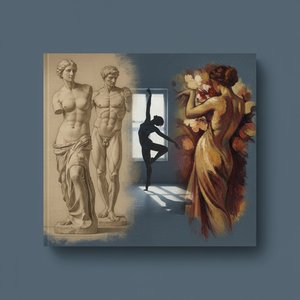
The Enduring Allure of the Nude: A Historical & Artistic Exploration of the Human Form
Explore the captivating history of nude art! Discover iconic paintings & artists from classical to modern eras. Uncover symbolism, techniques & find museum-quality reproductions at ArtsDot.