 Preview
 Send
Send Share
Share
 Details

 Download
 Similars
 X-Ray
X-Ray Diaporama
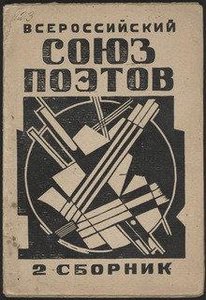
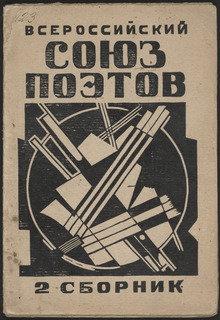
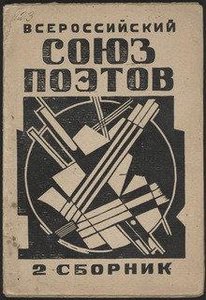
Vserossiiskii soiuz poetov. Vtoroi sbornik stikhov
 Constructivism
 1922
1922 18.0 x 12.0 cm
 Read More
Hand Made Oil Reproduction
Hand-painted oil on canvas in your size and frame, made to order by our artists. ( Buy Print Buy Image)




P118B $10

P118H $10

P118W $10

P438Z $10

P508JH $12

P508YH $12

P805H $10

P805Z $10

P919BZ $10

P919G $10

P919XJ $10

P959ZH $10

P968JZ $12

W106C $8

W218G $10

W218JH $8

W218Y $10

W307PJ $10

W316G $10

W316PJ $8

W316Y $10

W398PJ $8

W4111J $10

W500HY $15

W500JH $15

W692G $12

W849H $8

W940BG $15

W953PJ $8




Pick from our preset sizes that match the artwork's original proportions.

You may enter your own dimensions to fit a specific frame or space. If your selected size does not match the original image's proportions, we will either crop the artwork or extend the painting with additional hand-painted elements. A digital mockup will be sent for your approval before production begins.
Please note that the on-screen preview does not reflect the actual cropping or extension. Only the mockup will accurately show the final composition.
While custom sizes are available, we recommend selecting a dimension from the predefined list to preserve the original proportions.
After order, ArtsDot.com team will email client for instructions and provide a mockup preview
Worldwide Delivery () in 3/4 weeks instead of standard 5 weeks. (22 August). No compromise on quality.

Free Worldwide Express Shipping

High-Quality Linen Canvas

Full Shipping Insurance

Customs Tax Refund Guarantee

True Color Matching Guarantee

60-Day Return Policy (Defects Only)

100% Money-Back Guarantee

Bulk Discount Offer
 Glass option is only available in size under 110 CM

Vserossiiskii soiuz poetov. Vtoroi sbornik stikhov
Reproduction Medium
Reproduction Size
-


Total Price
$ 263
Related Artworks
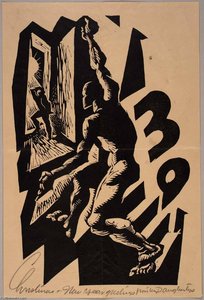
Artist Biography
Gustav Klutsis: A Pioneer of Soviet Photomontage and Constructivist Vision
Gustav Klutsis (January 4, 1895 – February 26, 1938) stands as a singular figure in Latvian art history—a trailblazing photographer who simultaneously championed the avant-garde spirit of Constructivism and became instrumental in shaping Soviet propaganda during its formative years. Born in Koni parish, near Rūjiena, Latvia, Klutsis’s artistic journey began with formal training in Riga in 1912, establishing him firmly within the burgeoning cultural landscape of Tsarist Russia.
- Early Influences & Artistic Training: Klutsis's formative years were marked by exposure to European avant-garde movements. He studied under Kazimir Malevich and Antoine Peyvner in Moscow from 1915, immersing himself in the radical ideas of Suprematism and Cubo Futurism – influences that would profoundly shape his artistic sensibilities.
- The Bolshevik Embrace & Marriage: Joining the Communist Party in 1917 solidified Klutsis’s commitment to revolutionary ideals. He quickly found companionship with Valentina Kulagina, whom he married shortly thereafter, forging a creative partnership that would endure throughout their lives and become synonymous with Soviet artistic experimentation.
- Vkhutemas & Theoretical Foundations: Klutsis's formal education continued at VKhUTEMAS (Higher Art School), Moscow’s experimental art institution, where he honed his understanding of color theory and further developed his conceptual approach to visual communication. He served as a professor there until its closure in 1930, disseminating Constructivist principles amongst aspiring artists.
Klutsis's artistic output was characterized by an unwavering dedication to political art—a commitment that intensified during the turbulent 1920s and 1930s as Soviet ideology gained prominence. Alongside Kulagina, he spearheaded ambitious multimedia projects aimed at disseminating revolutionary propaganda, notably the “Radio-Orators” kiosks in Moscow – innovative installations blending radio broadcasts, film screens, and newsprint displays to celebrate the Fifth Anniversary of the October Revolution.
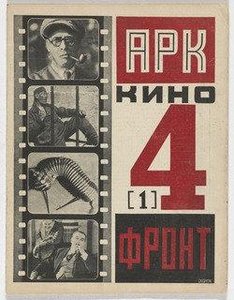
- Photomontage Mastery: Klutsis’s signature technique was photomontage—a method he skillfully employed to synthesize disparate images into powerful visual narratives. His work exemplifies Constructivist principles' emphasis on geometric abstraction and purposeful manipulation of photographic elements to convey ideological messages. Notable examples include “Kino Front Organ” and “Vserossiiskii soiuz poetov,” which powerfully communicate the fervor of the revolution.
- The Stalinist Era & Cult of Personality: As Soviet political climate deteriorated, Klutsis’s artistic endeavors increasingly catered to Joseph Stalin's desire for a monumental portrayal of his leadership. By 1935, his photomontages became overtly devoted to glorifying Stalin and reinforcing the cult of personality—a shift reflecting the broader pressures exerted upon artists during this period.
- Tragic Fate & Legacy: Klutsis’s artistic career tragically ended in January 1938 when he was arrested amidst escalating political repression. Shortly thereafter, he was executed by Stalin's order – a devastating loss for Latvian art and a poignant reminder of the perils faced by artists operating within totalitarian regimes. Despite his untimely demise, Klutsis’s pioneering contributions to photomontage and Constructivism continue to resonate today, securing his place as an enduring symbol of artistic innovation and unwavering ideological conviction.
His work gained international recognition through exhibitions in New York City during the World's Fair of 1938. Today, Gustav Klutsis’s legacy resides primarily in museums like Musée Gustave Moreau and Musée national Gustave Moreau where his art continues to inspire admiration for its boldness and conceptual depth.
gustav klutsis
1895 - 1938
Quick Facts
- Artistic Movement Or Style: Constructivism
- Artists Or Movements Influenced By This Artist: ['Soviet Propaganda']
- Artists Who Influenced This Artist:
- Kazimir Malevich
- Antoine Peyvner
- Date Of Birth: January 4, 1895
- Date Of Death: February 26, 1938
- Full Name: Gustav Klutsis
- Nationality: Latvian
- Notable Artworks:
- Vserossiiskii soiuz poetov.
- Kino front organ
- Place Of Birth: Koni parish, Latvia
Related Articles

25 Klimt Masterpieces: A Journey Through Iconic Art & Decor
Delve into the world of Gustav Klimt with our top 25 masterpieces! Explore his iconic paintings – 'The Kiss,' 'Portrait of Adele,' and more. Discover museum-quality reproductions & curated decor ideas. Explore the full collection online at ArtsDot.com.
Ivan Bilibin: A Synthesis of Folklore, Modernism & National Identity in Russian Illustration
Explore the enchanting world of Ivan Bilibin, a master Russian illustrator who synthesized folklore, Art Nouveau & national identity. Discover his iconic fairy tale illustrations and legacy with ArtsDot.
Victor Vasnetsov: Myth, Nationalism & the Revival of Russian Fairy Tale Painting
Explore the captivating world of Victor Vasnetsov, a co-founder of Russian folklorist painting. Discover his iconic works, influence on national identity, and lasting legacy in this expert guide.
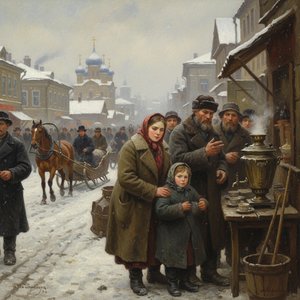
Vladimir Makovsky: Realism, Social Commentary & Russian Life in Late 19th-Century Painting
Explore the captivating world of Vladimir Makovsky, a leading Russian realist painter. Discover his insightful depictions of 19th-century life, social commentary & legacy with ArtsDot.
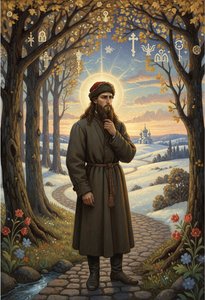
Mikhail Nesterov: Spiritual Quests & Symbolic Landscapes of Russian Symbolism
Explore the captivating world of Mikhail Nesterov, a pioneer of Russian Symbolism. Discover his spiritual themes, iconic paintings like 'The Hermit,' and lasting influence on Russian art history. Learn more at ArtsDot.