 Preview
 Send
Send Share
Share
 Details

 Download
 Similars
 X-Ray
X-Ray Diaporama
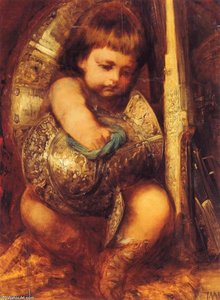
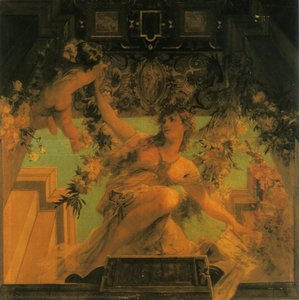
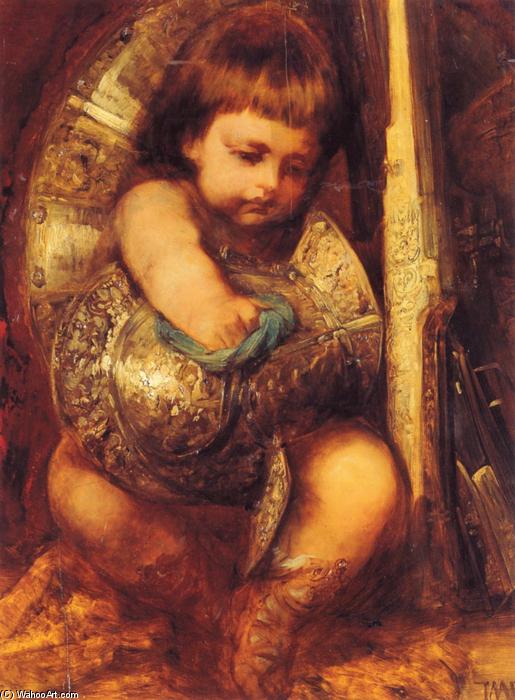
Ein Putto reinigt die Waffen des Mars
 Acrylic On Canvas
- WallArt
- Baroque
 1870
1870 76.0 x 57.0 cm
 Austrian Gallery Belvedere
 Read More
Hand Made Oil Reproduction
Hand-painted oil on canvas in your size and frame, made to order by our artists. ( Buy Print Buy Image)




P118B $10

P118H $10

P118W $10

P438Z $10

P508JH $12

P508YH $12

P805H $10

P805Z $10

P919BZ $10

P919G $10

P919XJ $10

P959ZH $10

P968JZ $12

W106C $8

W218G $10

W218JH $8

W218Y $10

W307PJ $10

W316G $10

W316PJ $8

W316Y $10

W398PJ $8

W4111J $10

W500HY $15

W500JH $15

W692G $12

W849H $8

W940BG $15

W953PJ $8




Pick from our preset sizes that match the artwork's original proportions.

You may enter your own dimensions to fit a specific frame or space. If your selected size does not match the original image's proportions, we will either crop the artwork or extend the painting with additional hand-painted elements. A digital mockup will be sent for your approval before production begins.
Please note that the on-screen preview does not reflect the actual cropping or extension. Only the mockup will accurately show the final composition.
While custom sizes are available, we recommend selecting a dimension from the predefined list to preserve the original proportions.
After order, ArtsDot.com team will email client for instructions and provide a mockup preview
Worldwide Delivery () in 3/4 weeks instead of standard 5 weeks. (16 August). No compromise on quality.

Free Worldwide Express Shipping

High-Quality Linen Canvas

Full Shipping Insurance

Customs Tax Refund Guarantee

True Color Matching Guarantee

60-Day Return Policy (Defects Only)

100% Money-Back Guarantee

Bulk Discount Offer
 Glass option is only available in size under 110 CM

Ein Putto reinigt die Waffen des Mars
Reproduction Medium
Reproduction Size
-


Total Price
$ 263
Artwork Description
Ein Putto reinigt die Waffen des Mars
Hans Makart’s “Ein Putto reinigt die Waffen des Mars” (Putto Cleanses the Weapons of Mars) stands as an emblem of Viennese Academic Art and a testament to Makart's singular vision—a fusion of mythological grandeur with meticulous realism that continues to captivate audiences today. Painted in 1870, this monumental oil on panel measuring 76 x 57 cm resides prominently within the Österreichische Galerie Belvedere in Vienna, Austria, cementing its place as a cornerstone of Austrian artistic heritage. ### Composition and Symbolism: A Dialogue Between Innocence and Power The painting’s central figure is undeniably arresting: a young boy, clad in gleaming armor, diligently scrubbing away at weapons—specifically swords—held by a colossal Mars (Mars). This juxtaposition immediately establishes a profound symbolic tension. The child embodies purity and vulnerability, representing nascent humanity untouched by the brutality of warfare. Yet, he undertakes this task with unwavering determination, wielding his sword as if to defend against the encroaching darkness symbolized by Mars’s arsenal. The cross positioned subtly in the background serves as a poignant reminder of Christian morality confronting pagan might—a recurring motif throughout Makart's oeuvre and reflecting the anxieties of the era regarding societal values. ### Artistic Style and Technique: Mastering Light and Texture Makart’s masterful technique exemplifies the “Makartstil,” characterized by an obsessive attention to detail and a deliberate manipulation of light and shadow. He employed thick impasto—heavy application of paint—to sculpt the textures of armor, drapery, and Mars's muscular physique, conveying palpable physicality. The artist skillfully utilized chiaroscuro – dramatic contrasts between light and dark – to illuminate the boy’s face and torso, drawing the viewer’s gaze directly to his expression of resolute concentration. This technique wasn’t merely decorative; it served to imbue the scene with emotional depth and psychological realism—a departure from earlier idealized depictions of mythological subjects. The rich palette—dominated by reds, golds, and browns—further enhances the painting's visual impact, mirroring the grandeur and solemnity of classical art traditions. ### Context and Significance: Vienna’s Artistic Renaissance “Ein Putto reinigt die Waffen des Mars” emerged during Vienna’s artistic renaissance—a period marked by a fervent revival of Classical ideals and a celebration of heroic narratives. Makart's work directly responded to the prevailing intellectual climate, which championed reason and morality alongside aesthetic beauty. He consciously sought inspiration from Michelangelo and Raphael, artists who had perfected the art of portraying human form with anatomical precision and conveying profound spiritual contemplation. The painting’s commission by Emperor Franz Joseph I underscored its importance as a symbol of imperial patronage and contributed to establishing Makart's reputation as Vienna’s foremost artistic innovator. Its enduring presence in the Belvedere Gallery ensures that “Ein Putto reinigt die Waffen des Mars” continues to inspire admiration for its technical brilliance and its evocative exploration of timeless themes—a masterpiece that encapsulates the spirit of a bygone era. ### Relevance to Modern Art Enthusiasts: A Legacy of Beauty and Bold Vision For discerning collectors and interior designers seeking pieces that transcend temporal boundaries, “Ein Putto reinigt die Waffen des Mars” offers an unparalleled opportunity to engage with the legacy of Academic Art. Its monumental scale commands attention, while its intricate detail invites prolonged contemplation—a reminder that true artistic achievement resides in capturing both intellectual rigor and emotional resonance. Reproductions of this iconic artwork provide a captivating glimpse into Makart’s visionary aesthetic and serve as a testament to his enduring influence on subsequent generations of artists.Related Artworks
Artist Biography
Hans Makart: A Life in Opulence and Influence
- Born: May 28, 1840, Salzburg, Austria
- Died: October 3, 1884, Vienna, Austria
- Nationality: Austrian
- Movement: Academic Art, Makartstil
Early Life and Training
- Hans Makart's artistic journey began in Salzburg, where he was born into a family with connections to the Habsburg court. Initially showing promise, he enrolled at the Vienna Academy between 1850 and 1851. However, his struggles with draughtsmanship led to his departure from the academy.
- Recognizing his passion for color, Makart studied under Karl Theodor von Piloty in Munich from 1861 to 1865. This period was crucial in shaping his artistic style and developing his distinctive use of vibrant hues.
- Further travels to London, Paris, and Rome broadened his exposure to European art movements and techniques, enriching his artistic perspective.
Artistic Style and Major Works
- Makartstil: Makart's signature style, known as "Makartstil," was characterized by opulent decoration, vibrant colors, and a theatrical flair. It significantly influenced the visual arts in Austria-Hungary and beyond.
- Early Recognition: His early works like Lavoisier in Prison demonstrated his emerging sense of color, while The Knight and the Water Nymphs showcased his decorative talents.
- Rise to Fame: Paintings such as Modern Amoretti and The Plague in Florence solidified his reputation as a leading artist. The purchase of Romeo and Juliet by the Austrian Emperor for the Vienna Museum further cemented his status.
- Notable Works:
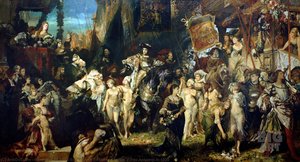
- The Entrance of Emperor Charles V into Antwerp in 1520
- Modern Amoretti
- The Plague in Florence
- Romeo and Juliet
Influence, Legacy, and the Makart Parade
- Influences: Makart drew inspiration from Karl Theodor von Piloty, European art movements (including Symbolism and Art Nouveau), and masters like Peter Paul Rubens.
- Social Figure: His luxurious studio in Vienna became a prominent social hub, attracting royalty, politicians, artists, and writers.
- The Makart Parade: A defining moment in his career was the design of the pageant for the silver wedding anniversary of Emperor Franz Joseph I and Empress Elisabeth of Bavaria (Sisi) in 1879. This elaborate spectacle, known as the "Makart Parade," showcased his talent for costume and set design and captivated the public.
- Professor at the Vienna Academy: In 1879, Makart was appointed a professor at the Vienna Academy, solidifying his position within the artistic establishment.
- Influence on Klimt: He profoundly influenced Gustav Klimt, who would later become a leading figure in the Vienna Secession movement and Art Nouveau.
Later Life and Historical Significance
- Makart's untimely death in 1884 at the age of 44 marked the end of an era. His extensive collection of antiques and art was auctioned off, dispersing his legacy across various collections.
- Despite criticisms from some academic circles regarding historical accuracy, Makart’s impact on Viennese culture and artistic trends remains undeniable. He embodied a period of opulent grandeur and aesthetic innovation.
- His work continues to be appreciated for its vibrant colors, decorative richness, and the unique atmosphere he created, solidifying his place as a significant figure in 19th-century Austrian art.
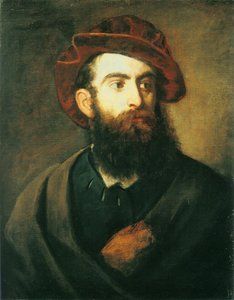
Hans Makart
1840 - 1884 , Austria
Quick Facts
- Artistic Movement Or Style: Academic history painting
- Artists Or Movements Influenced By This Artist:
- Gustav Klimt
- Art Nouveau
- Artists Who Influenced This Artist:
- Karl Theodor von Piloty
- Johann Fischbach
- Date Of Birth: May 28, 1840
- Date Of Death: October 3, 1884
- Full Name: Hans Makart
- Nationality: Austrian
- Notable Artworks:
- Lavoisier in Prison
- Modern Amoretti
- The Plague in Florence
- Romeo and Juliet
- Place Of Birth: Salzburg, Austria
Related Articles

From Canvas to Legacy: A Detailed Examination of Handmade Oil Reproduction Techniques for Galleries and Hospitality Environments
Discover exquisite handmade oil painting reproductions & custom portraits crafted by skilled artists. Elevate your space with museum-quality art – affordable luxury, guaranteed authenticity & expert consultation.

From Initial Sketch to Enduring Legacy: A Comprehensive Exploration of the Oil Painting Reproduction Process
Discover the art of museum-quality oil painting reproduction. Explore our expert process, skilled artists & authentic replicas. Elevate your home with timeless beauty – handcrafted and customized to your vision.
The Digital Portrait Renaissance: Transforming Personal Photography into Timeless Oil Paintings Through Artistic Reproduction
Transform your cherished photos into timeless oil paintings with ArtsDot's expert artists. Museum-quality reproductions & custom portraits, crafted to last a lifetime. Discover the art of personal legacy.
Reproducing Artistry: A Guide to Oil, Canvas & Paper Reproduction Mediums
Explore the world of art reproduction! Learn about oil, canvas & paper options with our expert guide. Discover museum-quality reproductions for your home or collection.
Neo-Classicism's Greatest Hits: 10 Masterpieces for Your Home |
Journey through Neo-Classicism's finest! Explore 10 iconic masterpieces by David, Ingres & Canova. Discover art history, techniques & timeless beauty – perfect for inspiring your home decor. Find museum-quality reproductions at