 Preview
 Send
Send Share
Share
 Details

 Download
 Similars
 X-Ray
X-Ray Diaporama
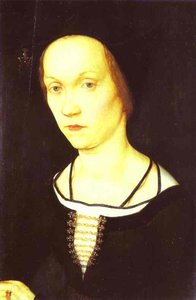
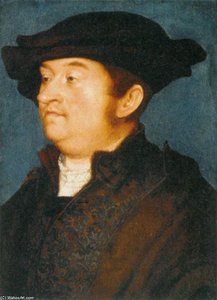
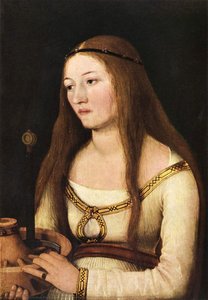
Portrait of a Woman
 Oil On Panel
- WallArt
- Northern Renaissance
 1518
1518- Renaissance
 24.0 x 17.0 cm
 Thyssen-Bornemisza Museum
 Read More
Hand Made Oil Reproduction
Hand-painted oil on canvas in your size and frame, made to order by our artists. ( Buy Print Buy Image)




P118B $10

P118H $10

P118W $10

P438Z $10

P508JH $12

P508YH $12

P805H $10

P805Z $10

P919BZ $10

P919G $10

P919XJ $10

P959ZH $10

P968JZ $12

W106C $8

W218G $10

W218JH $8

W218Y $10

W307PJ $10

W316G $10

W316PJ $8

W316Y $10

W398PJ $8

W4111J $10

W500HY $15

W500JH $15

W692G $12

W849H $8

W940BG $15

W953PJ $8




Pick from our preset sizes that match the artwork's original proportions.

You may enter your own dimensions to fit a specific frame or space. If your selected size does not match the original image's proportions, we will either crop the artwork or extend the painting with additional hand-painted elements. A digital mockup will be sent for your approval before production begins.
Please note that the on-screen preview does not reflect the actual cropping or extension. Only the mockup will accurately show the final composition.
While custom sizes are available, we recommend selecting a dimension from the predefined list to preserve the original proportions.
After order, ArtsDot.com team will email client for instructions and provide a mockup preview
Worldwide Delivery () in 3/4 weeks instead of standard 5 weeks. (25 August). No compromise on quality.

Free Worldwide Express Shipping

High-Quality Linen Canvas

Full Shipping Insurance

Customs Tax Refund Guarantee

True Color Matching Guarantee

60-Day Return Policy (Defects Only)

100% Money-Back Guarantee

Bulk Discount Offer
 Glass option is only available in size under 110 CM

Portrait of a Woman
Reproduction Medium
Reproduction Size
-


Total Price
$ 263
Artwork Description
A Window Into Renaissance Dignity
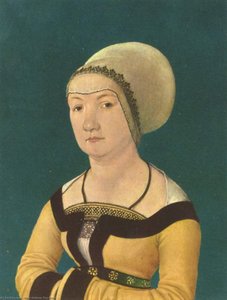
In the quiet corridors of the Thyssen-Bornemisza Museum in Madrid, there exists a portal to another era—a moment frozen in 1518 through the masterful hand of Hans Holbein the Elder. His Portrait of a Woman is far more than a mere likeness; it is an enduring emblem of Northern Renaissance achievement, capturing a profound psychological depth that transcends the boundaries of time. As one gazes upon this oil on panel masterpiece, the subject does not merely exist within the frame; she engages in a silent, eternal dialogue with the viewer. The painting serves as a testament to Holbein’s unparalleled ability to distill complex human emotions into a single, breathtakingly still composition, offering a sense of dignity that feels both intimate and monumental.
The subject herself emerges from a dark, atmospheric background, her presence commanding the space through a delicate balance of strength and grace. Adorned with a regal crown and a luminous pearl necklace that catches the light, she embodies the aristocratic elegance of the early 16th century. Her attire, a deep black dress, provides a stark, sophisticated contrast to the warmth of her skin, while her gaze—directed slightly to the side yet possessing an undeniable weight—suggests a contemplative spirit. This subtle redirection of the eyes invites the observer to wonder about the thoughts behind that steady expression, creating an emotional resonance that is as haunting as it is beautiful.
Technical Brilliance and the Northern Tradition
The brilliance of this work lies in Holbein’s revolutionary utilization of oil paint on panel. During this pivotal era, the transition from the flatter, more opaque qualities of tempera to the translucent, layered depths of oil allowed for a new level of realism. Holbein utilized this medium to achieve an almost tactile precision, rendering the subtle textures of fabric, the soft glow of skin, and the iridescent sheen of pearls with unparalleled virtuosity. This technique was not merely about imitation but about capturing the very essence of light and shadow, a skill that would define the Northern Renaissance style.
Born in the vibrant artistic hub of Augsburg, Germany, Holbein the Elder drew inspiration from the meticulous traditions of his homeland, absorbing the influences of masters like Albrecht Dürer while forging a path of his own. His work bridges the gap between the intricate, symbolic language of the late Gothic period and the burgeoning humanism of the Renaissance. In this portrait, we see the culmination of that evolution: a style characterized by unflinching realism and a subtle psychological nuance that avoids the theatrical in favor of the profound.
An Inspiration for the Modern Collector
For the discerning art lover or interior designer, a reproduction of this masterpiece offers more than just decoration; it provides a focal point of historical gravity and intellectual sophistication. The monochromatic tones and classical composition make it an incredibly versatile piece, capable of anchoring a contemporary minimalist space with a sense of heritage, or adding a layer of Old World charm to a traditional study. It is a work that invites conversation, prompting guests to linger on the details of its craftsmanship and the mystery of its subject.
Owning a high-quality hand-painted reproduction of Holbein’s Portrait of a Woman is an opportunity to bring a piece of the Northern Renaissance into the modern home. It is an investment in atmosphere, a way to surround oneself with the quiet dignity and technical mastery that have captivated scholars and admirers for over five centuries. Whether placed in a sunlit gallery or a moody, private library, this painting remains a timeless window into the soul of the Renaissance.
Related Artworks
Artist Biography
The Augsburg Master: Hans Holbein the Elder and the Dawn of Renaissance Realism
Born around 1497 in the vibrant artistic hub of Augsburg, Germany—a correction to earlier attributions placing his origins in Italy—Hans Holbein the Elder emerged as a pivotal figure bridging the late Gothic tradition with the burgeoning innovations of the Northern Renaissance. His life unfolded during a period of immense religious and political upheaval, a context that subtly yet profoundly informed his artistic vision. Unlike many artists who gravitated towards the Italian peninsula for their training, Holbein honed his skills within the German artistic landscape, absorbing influences from masters like Albrecht Dürer while simultaneously developing a uniquely personal style. His early career blossomed in Basel, Switzerland, where he quickly established himself as a sought-after creator of religious imagery, intricate murals adorning public and private spaces, and beautifully detailed book illustrations. However, it was his burgeoning talent for portraiture that would ultimately define his legacy, capturing not merely likenesses but the very essence of his sitters.A Synthesis of Styles: Gothic Detail and Renaissance Humanism
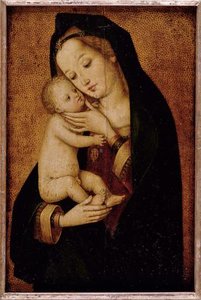
Holbein’s artistic approach wasn't one of radical departure, but rather a masterful synthesis. He didn’t abandon the meticulous detail and precise draftsmanship characteristic of the late Gothic period; instead, he infused it with the humanist ideals sweeping across Europe from Italy. The influence of Leonardo da Vinci and Sandro Botticelli is discernible in his work—not through direct imitation, but through an adoption of their emphasis on naturalism, psychological depth, and a refined understanding of anatomy. This fusion resulted in portraits that were remarkably lifelike, imbued with a sense of presence rarely seen before. He possessed an extraordinary ability to render textures – the sheen of silk, the weight of velvet, the subtle imperfections of skin – with breathtaking accuracy. Maria, das Kind liebkosend, created in 1499 and now residing at the Kunsthistorisches Museum in Vienna, exemplifies this early mastery; it’s a tender depiction brimming with emotional resonance achieved through delicate brushwork and an acute observation of human form. His title plate with St. Peter and St. Paul further demonstrates his skill, showcasing not only technical prowess but also a developing narrative sensibility within his compositions.Beyond Likeness: Capturing Character and Context
Holbein’s portraits weren't simply exercises in visual accuracy; they were insightful studies of character and social standing. He understood that clothing, jewelry, and even posture could reveal volumes about a person’s identity and position within society. He wasn’t merely painting *what* people looked like, but *who* they were—their ambitions, their anxieties, their place in the world. This ability to capture psychological depth set him apart from many of his contemporaries. While he produced religious works throughout his career, it was this focus on portraiture that cemented his reputation and ensured his lasting influence. His work provides invaluable glimpses into the lives of individuals during a period of significant transformation, offering historians and art enthusiasts alike a window into the 16th century’s complex social fabric.A Lasting Legacy: Influence and Rediscovery
Though overshadowed in some respects by his more famous son, Hans Holbein the Younger, the Elder's impact on art history is undeniable. His innovative blend of genres, coupled with his meticulous attention to detail and psychological insight, paved the way for future generations of portrait artists. Art historian Ellis Waterhouse rightly points out that even the portraits created by his son owe a debt to the foundational skills and aesthetic sensibilities instilled during his early training under his father’s guidance. Today, reproductions of Holbein's works—available through platforms like ArtsDot.com—allow art lovers worldwide to appreciate his genius. The opportunity to own a handmade oil painting reproduction of masterpieces such as Ambassadors (by the Younger Holbein) alongside explorations of the Elder’s contributions provides a richer understanding of the artistic lineage and the evolution of Renaissance portraiture. His legacy continues to be celebrated, reminding us of the power of art to not only reflect but also illuminate the human condition.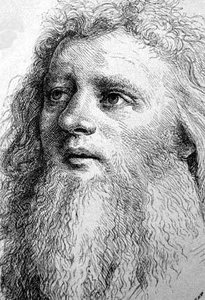
hans the elder holbein
1497 - 1543 , Italy
Quick Facts
- Artistic Movement Or Style: Northern Renaissance
- Artists Or Movements Influenced By This Artist: Northern Renaissance artists
- Artists Who Influenced This Artist:
- Leonardo da Vinci
- Sandro Botticelli
- Date Of Birth: c. 1497
- Date Of Death: 1543
- Full Name: Hans Holbein the Elder
- Nationality: German
- Notable Artworks:
- Maria, das Kind liebkosend
- Title plate with St. Peter & Paul
- Place Of Birth: Augsburg, Germany
Related Articles
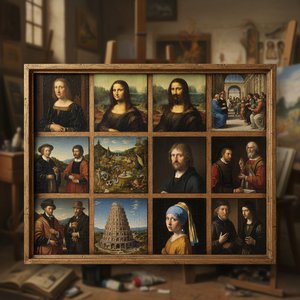
Oil on Panel Masters: 10 Paintings That Revolutionized Art |
Journey through 10 legendary 'Oil on Panel' masterpieces by Van Eyck, Bosch & Bruegel. Explore the stories behind these iconic Renaissance & Baroque paintings and find museum-quality art reproductions to elevate your home decor. Discover all masterpieces on !
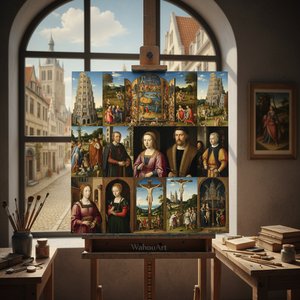
Northern Renaissance Masters: 10 Artworks That Shaped History |
Journey through the Northern Renaissance! Explore 10 iconic paintings by Jan van Eyck, Dürer & Bosch. Discover their stories, techniques & lasting impact. Find museum-quality art reproductions & elevate your home decor on .
From Initial Sketch to Enduring Legacy: A Comprehensive Exploration of the Oil Painting Reproduction Process
Discover the art of museum-quality oil painting reproduction. Explore our expert process, skilled artists & authentic replicas. Elevate your home with timeless beauty – handcrafted and customized to your vision.
The Enduring Legacy of Hand-Painted Oil Paintings: Aesthetic Value, Longevity & Emotional Resonance
Explore the enduring legacy of hand-painted oil paintings. Discover the aesthetic value, material longevity & emotional resonance that sets original art—and expertly crafted reproductions—apart. Invest in timeless beauty.
Oil on Panel: A Historical Survey of Technique, Support & Aesthetic Evolution
Explore the rich history of oil on panel painting! Discover Renaissance techniques, support structures & aesthetic evolution. Expert insights for art collectors and enthusiasts.