


 Preview
 Send
Send Share
Share
 Details

 Download
 Similars
 X-Ray
X-Ray Diaporama
Bringing up the ammunition, Flanders, Autumn 1917
 1920
1920 53.0 x 244.0 cm
 Australian War Memorial
 Read More
Purchase a high-resolution, enhanced digital image, far superior to the online preview.
Each file is meticulously prepared by our in-house specialists using advanced tools and expert manual retouching. We ensure every image has exceptional clarity, precise color accuracy, and fine detail.
The final file is delivered via email within 72 hours, optimized for immediate use in professional, editorial, and print environments. This is the same quality trusted by top-tier design studios, publishers, and galleries.
Digital Image
Download a high-resolution file for personal display, printing, and creative projects. ( Buy Print Buy Hand Made Painting)
Included in Every Digital Image Order
Expert Digital Delivery, Guaranteed
When you choose ArtsDot.com, you're not just getting an image - you're receiving a professionally enhanced digital artwork, crafted with precision and backed by a satisfaction guarantee. Here's everything that comes with your order, automatically:

Fast Email Delivery
Your high-resolution digital image file will be emailed to you within 72 hours of ordering - ready for immediate use.

AI-Enhanced Digital File
Your artwork is professionally optimized using advanced AI tools and manual editing, ensuring maximum detail, clarity, and color accuracy.

Free Lifetime Re-Delivery
Accidentally deleted or lost your file? No worries - we'll resend it to you anytime, free of charge.

No Import Fees - Ever
Enjoy your artwork instantly with zero customs, duties, or delivery fees - digital downloads are always tax-free.

Color Accuracy Guarantee
We ensure your digital image reflects the original colors as closely as possible using professional tools and color management.

60-Day Satisfaction Guarantee
If you're not satisfied with your digital image, we'll revise it or refund 100% within 60 days - no questions asked.

100% Money-Back Guarantee
Not satisfied? Get a full refund within 60 days of receiving your digital file - no questions asked.

Bulk Order Discounts
Buy 3 images, save 10% - Buy 5, save 15% - Buy 10+, save 20%. Great for creative projects, galleries, and agencies.
Related Artworks



Artist Biography
Harold Septimus Power: A Life in Art
Early Life and Education
- Born on December 31, 1877, in Dunedin, New Zealand, to Peter Power, an Irish-born hatter, and Jane Amers, his Scottish wife.
- The family migrated to Australia when Harold was six years old.
- Initially pressured by his father to study veterinary surgery for four years, he pursued his artistic inclinations with the encouragement of Walter Withers.
- He began his art studies in Adelaide after leaving home as a teenager.
Early Career and Artistic Development
- Exhibited with the Melbourne Art Club in 1899, marking an early step in his artistic journey.
- Worked as an illustrator and political cartoonist for Adelaide newspapers – *The Adelaide Observer*, *South Australian Register*, and *The Adelaide Critic*.
- In 1904, received a commission from the Art Gallery of South Australia to paint an animal scene.
- Married Isabel Laura Butterworth in September 1904.
- Between 1905 and 1907, studied at the Académie Julian in Paris, refining his skills and broadening his artistic horizons.
London Years and Artistic Recognition
- Settled in London after studying in Paris, becoming a member of both the Royal Institute of Oil Painters and the Society of Animal Painters.
- Exhibited at the prestigious Royal Academy of Arts, gaining recognition within the British art scene.
- Held his first one-man exhibition at the Guild Hall in Melbourne, Australia, in June 1913, showcasing oils and watercolors featuring rural landscapes used as backdrops for equine scenes and hunting subjects.
World War I and Official War Artist
- Appointed as an official war artist by the Australian government in 1917.
- Attached to the 1st Division, A.I.F., from September to December 1917, and again in August 1918.
- Became renowned for his powerful depictions of animals – particularly horses – on the battlefield, capturing their role and suffering during wartime.
Post-War Career and Legacy
- Continued to work with the Australian War Records Section for two decades after the war, documenting and commemorating the conflict.
- Painted the ceremonial opening of the Federal parliament in 1927 alongside W. B. McInnes.
- Maintained a successful career exhibiting both in Australia and overseas, even during the Depression era.
- Married Margery Isabel Desmazures in Adelaide in 1936.
- Associated with conservative art movements, including Robert Menzies' Australian Academy of Art.
- Continued teaching art at his Melbourne School of Art, influencing a new generation of artists.
Artistic Style and Influences
- Power’s style blended elements of Realism and Impressionism, particularly in his landscape backgrounds.
- His work is characterized by detailed depictions of animals, especially horses, combined with atmospheric landscapes.
- He was influenced by artists like Walter Withers who encouraged him to pursue art.
Historical Significance
- Harold Septimus Power’s wartime paintings provide a valuable visual record of the Australian Imperial Force's experiences during World War I.
- His depictions of horses on the battlefield offer a poignant perspective on the often-overlooked role of animals in warfare.
- He remains an important figure in Australian art history, celebrated for his skill as an animal painter and his contribution to war art.
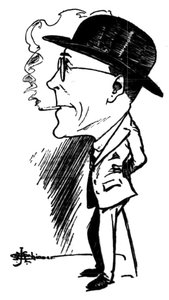
Harold Septimus Power
1877 - 1951 , New Zealand
Quick Facts
- Birth Date: 1877-12-31
- Birth Place: Dunedin, New Zealand
- Death Date: 1951-01-03
- Influenced By: Walter Withers
- Movement: Realism, Impressionism
- Name: Harold Septimus Power
- Nationality: New Zealander, Australian
- Notable Works:
- Bringing up the ammunition, Flanders, Autumn 1917
- The battle before Villers Bretonneux, August 8th, 1918

