 Preview
 Send
Send Share
Share
 Details

 Download
 Similars
 X-Ray
X-Ray Diaporama
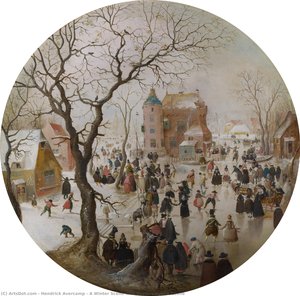
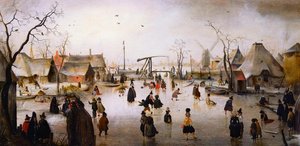
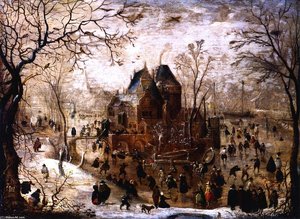
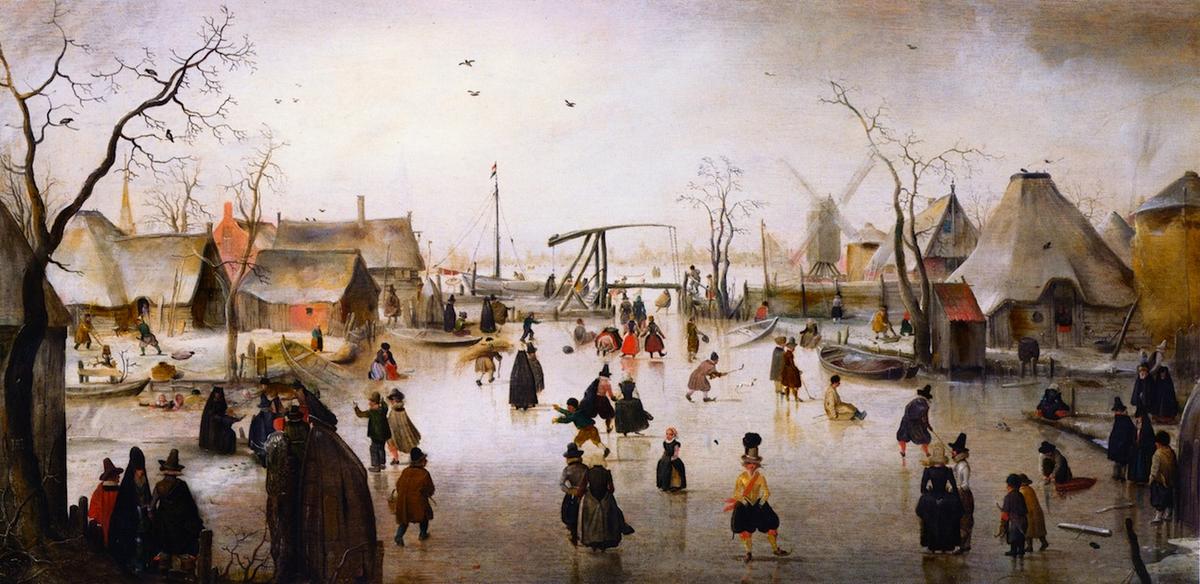
Ice Skating in a Village


 Read More
Hand Made Oil Reproduction
Hand-painted oil on canvas in your size and frame, made to order by our artists. ( Buy Print Buy Image)




P118B $10

P118H $10

P118W $10

P438Z $10

P508JH $12

P508YH $12

P805H $10

P805Z $10

P919BZ $10

P919G $10

P919XJ $10

P959ZH $10

P968JZ $12

W106C $8

W218G $10

W218JH $8

W218Y $10

W307PJ $10

W316G $10

W316PJ $8

W316Y $10

W398PJ $8

W4111J $10

W500HY $15

W500JH $15

W692G $12

W849H $8

W940BG $15

W953PJ $8




Pick from our preset sizes that match the artwork's original proportions.

You may enter your own dimensions to fit a specific frame or space. If your selected size does not match the original image's proportions, we will either crop the artwork or extend the painting with additional hand-painted elements. A digital mockup will be sent for your approval before production begins.
Please note that the on-screen preview does not reflect the actual cropping or extension. Only the mockup will accurately show the final composition.
While custom sizes are available, we recommend selecting a dimension from the predefined list to preserve the original proportions.
After order, ArtsDot.com team will email client for instructions and provide a mockup preview
Worldwide Delivery () in 3/4 weeks instead of standard 5 weeks. (16 August). No compromise on quality.

Free Worldwide Express Shipping

High-Quality Linen Canvas

Full Shipping Insurance

Customs Tax Refund Guarantee

True Color Matching Guarantee

60-Day Return Policy (Defects Only)

100% Money-Back Guarantee

Bulk Discount Offer
 Glass option is only available in size under 110 CM

Ice Skating in a Village
Reproduction Medium
Reproduction Size
-


Total Price
$ 263
Artwork Description
A Frozen Moment of Everyday Life: Hendrick Avercamp’s “Ice Skating in a Village”
Hendrick Avercamp's "Ice Skating in a Village," painted around 1608, isn’t merely a depiction of winter activity; it’s a vibrant snapshot of Dutch society frozen in time. More than just a picturesque scene, the painting offers a profound glimpse into the lives and customs of the early 17th century, revealing a world both familiar and subtly alien to our modern eyes. Avercamp, a remarkably quiet figure in his own life – known as “de Stomme van Kampen” (the Mute of Kampen) due to his presumed deafness and muteness – masterfully translates the sensory experience of a winter’s day onto canvas with an astonishing level of detail and warmth. The painting isn't about grand spectacle, but rather the quiet rhythms of daily life unfolding against a backdrop of snow and ice.
The scene unfolds in a small village square, bustling with activity despite the biting cold. A diverse group of figures – men, women, children, even a horse-drawn sleigh – are engaged in various pursuits: some gracefully gliding across the frozen pond on skates, others playing kolf (a precursor to golf), and still others simply strolling through the snow. Avercamp’s genius lies not just in capturing these individual actions but in weaving them together into a cohesive narrative, suggesting a community bound by shared traditions and routines. The inclusion of a church steeple in the background anchors the scene within a recognizable landscape, grounding the fantastical elements of winter play in a sense of place.
The Painter’s Technique: A Symphony of Light and Shadow
Avercamp's skill as a painter is immediately apparent in his meticulous attention to detail. The painting is rendered with remarkable precision, from the intricate folds of the clothing to the individual tracks left in the snow. He employs a technique known as “aerial perspective,” subtly lightening the colors and reducing the sharpness of details in the distance, creating an illusion of depth that draws the viewer into the scene. This masterful use of light and shadow is particularly effective in conveying the cold, crisp air of winter – the bright highlights reflecting off the snow and ice, contrasted with the darker tones of the buildings and figures.
The painting’s support—a panel constructed from three horizontally grained oak planks—contributes to its visual richness. The bevelled edges further enhance the sense of depth and create a subtle shimmer that mimics the reflective quality of snow and ice. Avercamp's use of oil paint allowed him to achieve incredible luminosity and texture, capturing the delicate beauty of the winter landscape with remarkable fidelity.
Symbolism and Context: A Window into Dutch Society
“Ice Skating in a Village” offers more than just a visual pleasure; it’s a window into the social and cultural life of 17th-century Holland. The painting reflects the importance of winter recreation – skating, sledding, and other outdoor activities – as a vital part of Dutch society. It also reveals the close relationship between people and animals, with the horse and sleigh representing both transportation and livelihood. The inclusion of the flag of the newly independent Dutch Republic subtly reinforces the nation’s burgeoning identity.
Considering Avercamp's own silence, it’s fascinating to contemplate how he observed and interpreted the world around him. His paintings are often described as “narrative-based,” filled with anecdotal details that invite speculation about the lives of the people depicted. The presence of a couple embracing in the foreground, for example, hints at a more intimate side to this seemingly idyllic winter scene – a reminder that even amidst the joys of recreation, human relationships and emotions remained central to daily life.
Bringing Avercamp’s World Home: Reproductions and Inspiration
Reproductions of “Ice Skating in a Village” capture the painting's remarkable detail and vibrant atmosphere. Whether displayed as a large-scale artwork or a smaller print, this iconic image continues to resonate with viewers today, evoking a sense of nostalgia for a simpler time and reminding us of the enduring appeal of winter landscapes. Its timeless quality makes it an ideal addition to any interior space, bringing a touch of Dutch Golden Age charm and artistic sophistication to your home.
Related Artworks
Artist Biography
A Pioneer of Dutch Winter: The Life and Art of Hendrick Avercamp
Hendrick Avercamp, a name synonymous with the shimmering, frozen landscapes of the Dutch Golden Age, was born in Amsterdam on January 27, 1585. His life story is as intriguing as his art—a tale marked by both artistic innovation and personal circumstance. From an early age, it became apparent that Avercamp lived within a world experienced differently than most; he was mute, and likely deaf, earning him the affectionate yet defining moniker “de Stomme van Kampen” – the Mute of Kampen. This perceived limitation, however, did not stifle his artistic voice but perhaps sharpened his observational skills, allowing him to translate the nuances of the Dutch winter onto canvas with unparalleled clarity and charm. He initially studied in Amsterdam under Pieter Isaacsz, a portrait painter, and possibly also received guidance from David Vinckboons, whose influence can be seen in Avercamp’s early works. In 1608, he relocated to Kampen, where he would spend the majority of his life and establish himself as a unique and celebrated artist.Capturing a Frozen World: Artistic Style and Innovation
Avercamp stands out as one of the first dedicated landscape painters in 17th-century Holland, a period traditionally dominated by portraiture, history painting, and still life. He carved his niche by specializing in winter scenes—a subject rarely explored with such consistent focus before him. His paintings aren’t merely depictions of cold weather; they are vibrant snapshots of Dutch life unfolding on the ice. Figures skate, sled, play *kolf* (a form of golf played on ice), and simply enjoy the frozen waterways, creating a lively tapestry of human activity against the stark beauty of the winter landscape. Avercamp's skill lies in his ability to convey both the chill of the season and the warmth of communal enjoyment. He masterfully employed aerial perspective, subtly shifting colors and details to create a convincing sense of depth, drawing the viewer into these icy worlds. His technique often involved applying watercolor washes over pen and ink drawings, creating delicate and luminous effects. These smaller works were frequently sold as finished pieces intended for inclusion in collectors’ albums—a testament to their intimate scale and appeal.Influences and Development: From Bruegel to Dutch Realism
While Avercamp forged his own distinctive style, he wasn't working in a vacuum. The influence of Flemish masters like Pieter Bruegel the Elder is evident in his early compositions—the bustling scenes filled with numerous figures engaged in everyday activities. However, Avercamp moved beyond mere imitation, developing a uniquely Dutch sensibility characterized by meticulous detail and a keen observation of light and atmosphere. He embraced the growing trend towards realism within Dutch painting, accurately portraying the clothing, tools, and customs of his time. His work also reflects the climatic conditions of the Little Ice Age, a period of unusually cold winters in Europe, which undoubtedly fueled his fascination with frozen landscapes. Unlike some contemporaries who might idealize their subjects, Avercamp presented a realistic—and often humorous—view of life, including playful details that hint at human foibles and everyday occurrences.Legacy and Historical Significance
Hendrick Avercamp’s impact on Dutch painting is considerable. He not only popularized the winter landscape as a legitimate subject for artistic exploration but also helped to define a distinctly Dutch approach to landscape painting—one that emphasized realism, atmospheric effects, and the depiction of everyday life. His work provided inspiration for later generations of artists and continues to captivate audiences today. Notable collections showcasing his artistry include the Rijksmuseum in Amsterdam, which holds a significant number of his paintings, and the Mauritshuis in The Hague. Avercamp’s legacy extends beyond his artistic achievements; he represents a triumph over adversity, demonstrating that creative expression can flourish even in the face of personal challenges. He died in Kampen on May 15, 1634, leaving behind a body of work that continues to offer a window into the vibrant and often-overlooked world of 17th-century Holland—a world frozen in time, yet brimming with life.Notable Works
- Winter Landscape with Skaters: Perhaps his most iconic work, this painting exemplifies Avercamp’s mastery of capturing the energy and atmosphere of a Dutch winter scene.
- Street in Delfi: A rare example of Avercamp venturing beyond landscapes, showcasing his skill in depicting town life.
- Enjoying the Ice near a Town: Demonstrates his ability to create dynamic compositions filled with numerous figures engaged in various activities.
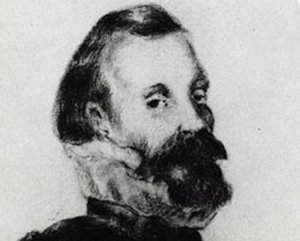
Hendrick Avercamp
1585 - 1634 , Netherlands
Quick Facts
- Artistic Movement Or Style: Dutch Golden Age painting
- Artists Who Influenced This Artist:
- Pieter Isaacsz
- David Vinckboons
- Date Of Birth: January 27, 1585
- Date Of Death: May 15, 1634
- Full Name: Hendrick Avercamp
- Nationality: Dutch
- Notable Artworks:
- Winter Landscape with Skaters
- Street in Delfi
- Place Of Birth: Amsterdam, Netherlands
Related Articles

Dutch Masters: 10 Golden Age Paintings That Still Inspire |
Journey into the Dutch Golden Age! Explore 10 iconic paintings by Rembrandt, Vermeer & Hals. Discover the stories behind these Baroque masterpieces and find museum-quality art reproductions to elevate your home decor on .
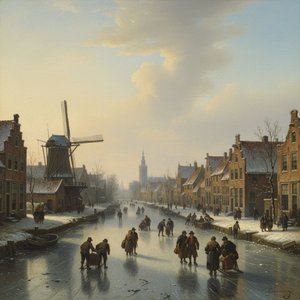
Charles Leickert: Capturing the Dutch Golden Age Light – A Comprehensive Study of Technique, Context, and Legacy
Explore the captivating winter landscapes of Charles Leickert, a master of Dutch Golden Age light & atmosphere. Discover his techniques, symbolism, and lasting legacy – a comprehensive study for art enthusiasts and collectors.
Golden Light & Dutch Skies: Bringing the Magic of Dutch Golden Age Landscapes into Your Home
Transform your home with the breathtaking light of Dutch Golden Age landscapes. Discover how hand-painted oil reproductions of masterworks like Ruisdael and Vermeer bring timeless elegance, atmosphere, and soulful texture to modern interiors. Elevate your space with museum-quality art.
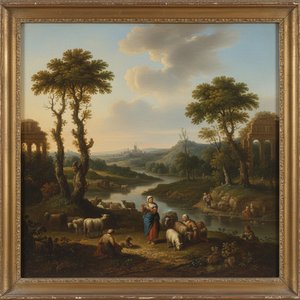
Nicolaes Berchem: Dutch Golden Age Pastoralism & the Evolution of Landscape Painting
Explore the captivating world of Nicolaes Berchem, a leading Dutch Golden Age painter. Discover his idyllic landscapes, masterful technique & lasting influence on art history. Learn more at ArtsDot.

Golden Age Reflections: Dutch Baroque Painting & Cultural Innovation
Explore the Dutch Golden Age of painting! Discover key artists like Vermeer & ter Borch, their innovative techniques, and the rich cultural context behind these Baroque masterpieces. Learn about collecting & appreciating this iconic art period.