 Preview
 Send
Send Share
Share
 Details

 Download
 Similars
 X-Ray
X-Ray Diaporama
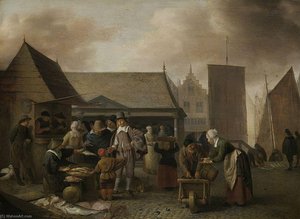
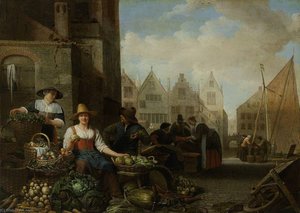
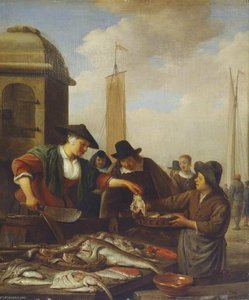
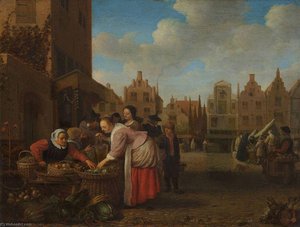
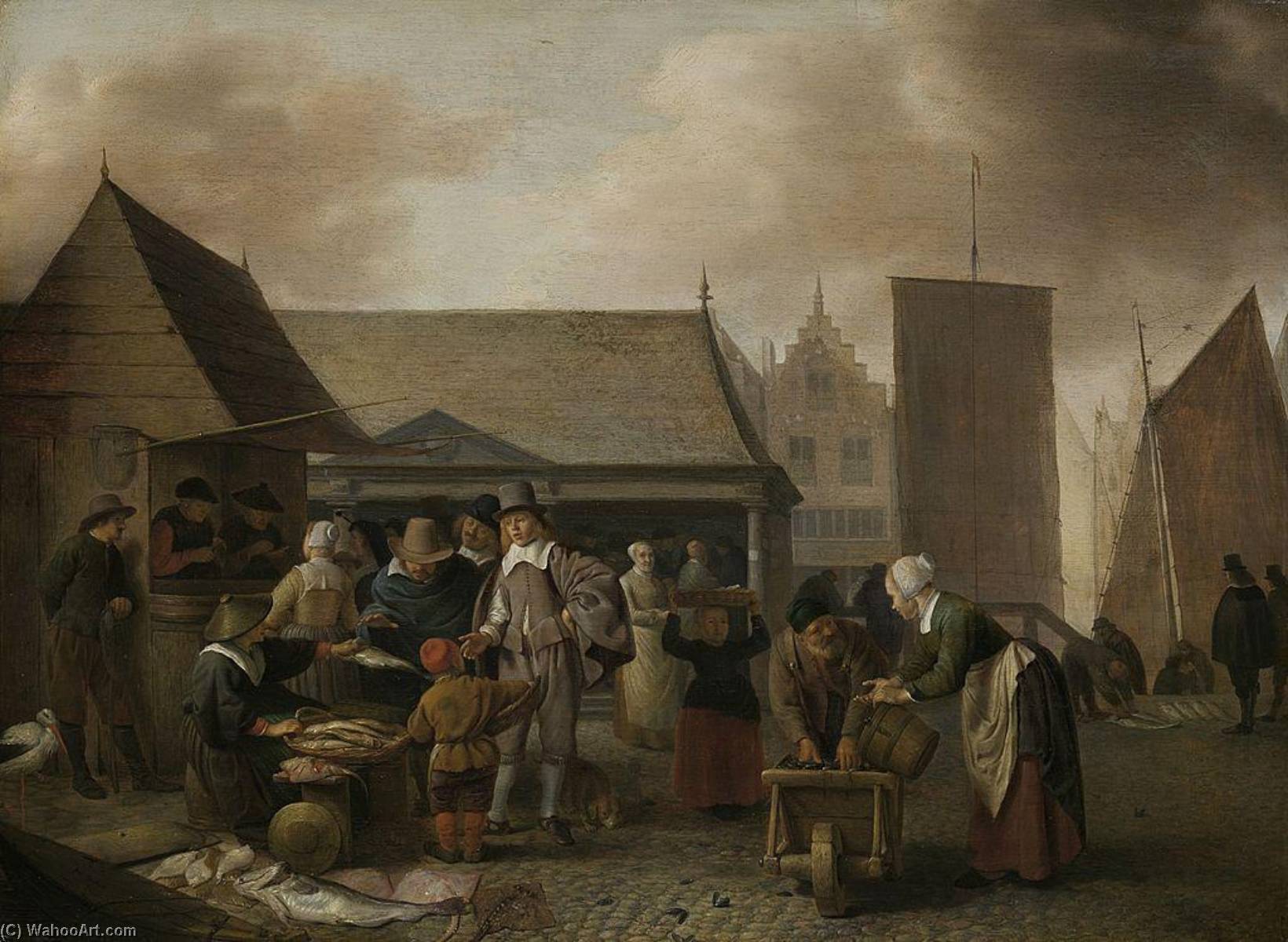
A Market Scene in Amsterdam


 Read More
Hand Made Oil Reproduction
Hand-painted oil on canvas in your size and frame, made to order by our artists. ( Buy Print Buy Image)




P118B $10

P118H $10

P118W $10

P438Z $10

P508JH $12

P508YH $12

P805H $10

P805Z $10

P919BZ $10

P919G $10

P919XJ $10

P959ZH $10

P968JZ $12

W106C $8

W218G $10

W218JH $8

W218Y $10

W307PJ $10

W316G $10

W316PJ $8

W316Y $10

W398PJ $8

W4111J $10

W500HY $15

W500JH $15

W692G $12

W849H $8

W940BG $15

W953PJ $8




Pick from our preset sizes that match the artwork's original proportions.

You may enter your own dimensions to fit a specific frame or space. If your selected size does not match the original image's proportions, we will either crop the artwork or extend the painting with additional hand-painted elements. A digital mockup will be sent for your approval before production begins.
Please note that the on-screen preview does not reflect the actual cropping or extension. Only the mockup will accurately show the final composition.
While custom sizes are available, we recommend selecting a dimension from the predefined list to preserve the original proportions.
After order, ArtsDot.com team will email client for instructions and provide a mockup preview
Worldwide Delivery () in 3/4 weeks instead of standard 5 weeks. (24 August). No compromise on quality.

Free Worldwide Express Shipping

High-Quality Linen Canvas

Full Shipping Insurance

Customs Tax Refund Guarantee

True Color Matching Guarantee

60-Day Return Policy (Defects Only)

100% Money-Back Guarantee

Bulk Discount Offer
 Glass option is only available in size under 110 CM

A Market Scene in Amsterdam
Reproduction Medium
Reproduction Size
-


Total Price
$ 263
Artwork Description
Hendrik Martenszoon Sorgh: Capturing Everyday Life in Amsterdam’s Vibrant Market
Hendrik Martenszoon Sorgh (1610 – buried 28 June 1670) stands as a pivotal figure in Dutch Golden Age painting, renowned for his masterful depictions of domestic interiors and, crucially, bustling market scenes—a genre he essentially pioneered. Unlike many of his contemporaries who focused on grand historical narratives or religious iconography, Sorgh’s gaze turned inward, documenting the realities of daily life with remarkable precision and emotional resonance. His legacy resides not merely in technical skill but in a profound understanding of human experience, reflected in canvases that continue to captivate audiences centuries later. ### The Painter's Vision: Style and Technique Sorgh’s artistic style is characterized by an unwavering commitment to realism blended seamlessly with Mannerist influences. He eschewed the idealized forms favored by some artists of his time, opting instead for depictions grounded in observation—a deliberate choice that distinguishes him from figures like Rembrandt and Vermeer. Sorgh employed oil paint on panel, a technique that allowed him to achieve astonishing levels of detail and luminosity. His brushstrokes were deliberately textured, conveying a palpable sense of atmosphere and capturing the subtle nuances of light and shadow – elements paramount to his ability to convey emotion and immediacy. Consider “A Market Scene in Amsterdam,” where Sorgh meticulously renders the textures of fabrics, produce stalls, and even individual faces, creating an immersive experience for the viewer that transcends mere visual representation. ### A Window into Seventeenth-Century Amsterdam Sorgh’s market scenes offer invaluable insight into the social fabric of seventeenth-century Amsterdam—a city at the epicenter of global trade and intellectual ferment. These paintings aren't simply representations of commerce; they are microcosms of urban life, populated by figures engaged in conversation, bargaining, and everyday activities. The inclusion of a prominent clock on one building serves as a symbolic reminder of time’s relentless march, anchoring the scene within its historical context. Sorgh’s meticulous attention to detail—the arrangement of fruits and vegetables, the expressions on the faces of shoppers—reveals a keen understanding of human psychology and social dynamics. ### Comparative Context: Fellow Masters of Genre Sorgh wasn't alone in exploring the genre of domestic interiors during this period. Artists like Johannes Vermeer and Pieter Claesz similarly focused on capturing quiet moments of domestic life, albeit with subtly different stylistic approaches. However, Sorgh’s distinctive technique—particularly his masterful manipulation of light—established him as a singular voice within the Golden Age canon. He stands alongside David Teniers the Younger and Willem Pieterszoon Buytewech as one of the foremost practitioners of genre painting, shaping the artistic landscape of his era and influencing generations of artists to come. ### Legacy and Influence: Beyond Technique Sorgh’s impact extends far beyond his technical prowess. His pioneering exploration of domestic interiors paved the way for subsequent artists to delve into the complexities of human emotion and experience—a shift away from grand narratives toward a more intimate portrayal of daily life. Furthermore, Sorgh's canvases continue to inspire interior designers seeking to evoke warmth, authenticity, and connection to history. Reproductions of “A Market Scene in Amsterdam” serve as tangible reminders of this artistic heritage, transporting viewers back to the vibrant heart of seventeenth-century Amsterdam.Related Artworks

Artist Biography
Michelangelo Merisi da Caravaggio: A Revolutionary of Light and Shadow
Michelangelo Merisi, more famously known as Caravaggio, remains one of the most compelling and controversial figures in art history. Born in Milan in 1571, his life was a whirlwind of dramatic events—a rebellious youth, a brief but intense career marked by both extraordinary talent and shocking behavior, and an untimely death at the age of thirty-nine. His legacy lies not just in the breathtaking beauty of his paintings, but also in the radical departure he made from established artistic conventions, forever altering the course of European art. Caravaggio’s impact continues to resonate today, influencing generations of artists with his innovative use of light, dramatic realism, and emotionally charged depictions of biblical and mythological subjects.Early Life and Artistic Training
Caravaggio's early life remains somewhat shrouded in mystery. He was born into a family of artists – his father was a minor Milanese court painter – and received some initial training in the techniques of oil painting. However, it wasn’t until he moved to Rome in 1592 at the age of twenty-one that his artistic journey truly began. Rome, then the epicenter of European art, proved an irresistible magnet for young artists eager to study its classical architecture and admire the works of masters like Raphael and Titian. Initially struggling to find work, Caravaggio quickly established himself as a specialist in still lifes – vibrant arrangements of fruits and flowers – and later, half-length figures, selling his paintings on the streets of Rome. This early period demonstrates a keen eye for detail and an emerging understanding of composition, though it was far removed from the dramatic intensity that would characterize his later work.The Revolutionary Technique: Light and Drama
Caravaggio’s artistic breakthrough stemmed from a radical departure in technique and subject matter. He abandoned the traditional methods of preparatory sketches and carefully rendered backgrounds favored by many of his contemporaries. Instead, he worked directly onto the canvas with loose brushstrokes, often applying paint with his fingers. Crucially, he employed a dramatic use of *chiaroscuro* – the stark contrast between light and dark – to create an unprecedented sense of immediacy and realism. Caravaggio pushed the figures up against the picture plane, as if they were stepping out of the painting and into the viewer’s space. He used light not merely to illuminate, but to sculpt form, heighten emotion, and draw attention to key elements within his compositions. This technique, inspired by contemporary theater, transformed religious scenes into powerful dramas, imbued with a sense of everyday life and human vulnerability.Controversy and Exile
Caravaggio’s success was inevitably accompanied by controversy. His depictions of biblical figures in contemporary dress, his unflinching portrayal of human flaws, and his often-violent scenes challenged the idealized representations prevalent in Renaissance art. He had a reputation for arrogance, impulsiveness, and a volatile temper, engaging in numerous brawls and acts of violence – including slashing a rival’s cloak, throwing an artichoke at a waiter, and even assaulting a police officer. In 1606, his life took a tragic turn when he was involved in a deadly duel with a young man, resulting in the man's death. Rather than face justice, Caravaggio fled Rome, seeking refuge in Naples, Malta, and Sicily.Later Years and Legacy
During his time in Malta, Caravaggio secured membership to the Knights of St. John by painting *The Beheading of Saint John the Baptist*. However, his temper flared again, leading to a prison sentence and eventual expulsion from the order. He returned to Naples and continued to paint, though his style evolved somewhat. In 1609, he suffered an injury that left him permanently scarred, further contributing to his sense of isolation and despair. Caravaggio died in Porto Ercole, Italy, in 1610, at the young age of thirty-nine, leaving behind a remarkably small but profoundly influential body of work. His followers, known as the Caravaggisti, spread his techniques throughout Europe, shaping the development of Baroque painting for centuries to come. Caravaggio’s legacy endures not only in the beauty and drama of his paintings, but also in his revolutionary approach to art – a bold assertion that painting could be a direct engagement with reality, imbued with emotion and immediacy. His work continues to captivate viewers today, reminding us of the power of light, shadow, and human experience.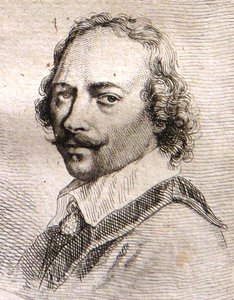
hendrik martensz sorgh
1610 - 1670
Quick Facts
- Artistic Movement Or Style: Caravaggism
- Artists Or Movements Influenced By This Artist: ['Baroque']
- Artists Who Influenced This Artist: ['Leonardo da Vinci']
- Date Of Birth: 1571
- Date Of Death: 1610
- Full Name: Michelangelo Merisi da Caravaggio
- Nationality: Italian
- Notable Artworks:
- The Calling of Saint Matthew
- Supper at Emmaus
- David and Goliath
- Place Of Birth: Milan, Lombardy
Related Articles

Dutch Masters: 10 Golden Age Paintings That Still Inspire |
Journey into the Dutch Golden Age! Explore 10 iconic paintings by Rembrandt, Vermeer & Hals. Discover the stories behind these Baroque masterpieces and find museum-quality art reproductions to elevate your home decor on .

Golden Age Reflections: Dutch Baroque Painting & Cultural Innovation
Explore the Dutch Golden Age of painting! Discover key artists like Vermeer & ter Borch, their innovative techniques, and the rich cultural context behind these Baroque masterpieces. Learn about collecting & appreciating this iconic art period.

Illuminating Innovation: Exploring the Dutch Golden Age of Painting
Explore the Dutch Golden Age of painting with ArtsDot. Discover Rembrandt, Vermeer & other Masters. Learn about key characteristics, iconic artworks, and lasting influence. Expert insights for collectors & enthusiasts.
Illuminating Realism: Exploring the Dutch Golden Age of Painting (1600-1700)
Explore the Dutch Golden Age of painting (1600-1700) with ArtsDot. Discover Rembrandt, Vermeer & other masters. Learn about techniques, history & find museum-quality reproductions.
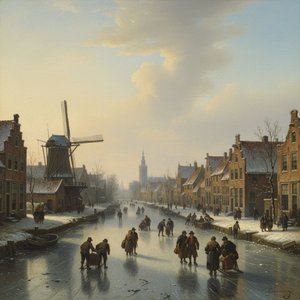
Charles Leickert: Capturing the Dutch Golden Age Light – A Comprehensive Study of Technique, Context, and Legacy
Explore the captivating winter landscapes of Charles Leickert, a master of Dutch Golden Age light & atmosphere. Discover his techniques, symbolism, and lasting legacy – a comprehensive study for art enthusiasts and collectors.