 Preview
 Send
Send Share
Share
 Details

 Download
 Similars
 X-Ray
X-Ray Diaporama
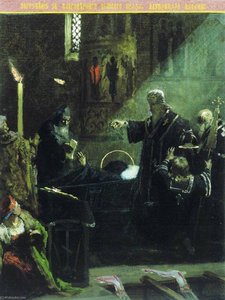
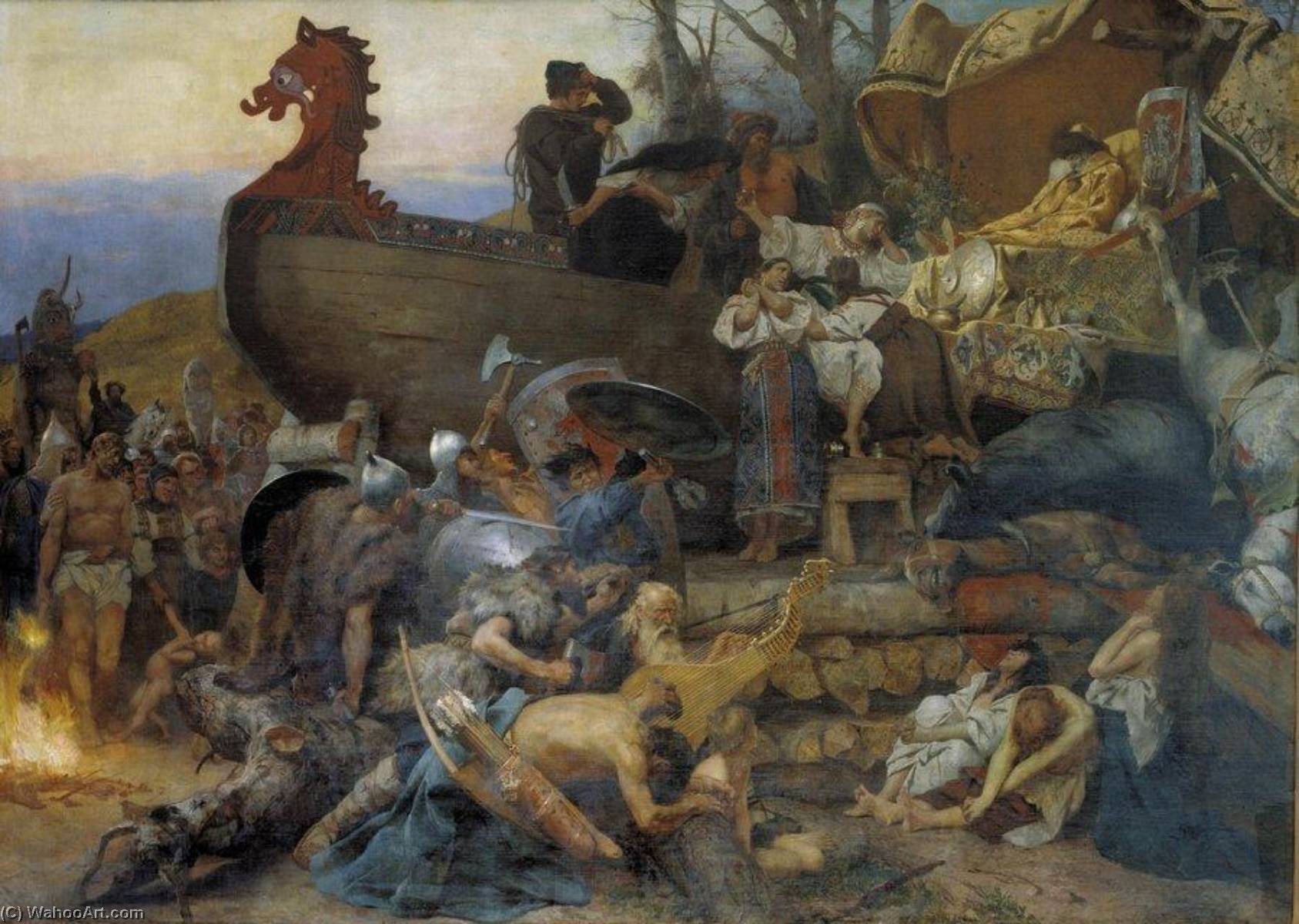
Funeral of a Nobleman

 Read More
Giclée / Art Print
Museum-quality giclée or canvas print with fast production and flexible finish options. ( Buy Hand Made Painting Buy Image)




































Pick from our preset sizes that match the artwork's original proportions.

You may enter your own dimensions to fit a specific frame or space. If your selected size does not match the original image's proportions, we will either crop the artwork or extend the image with a mirrored or solid-fill edge. A digital mockup will be sent for your approval before production begins.
Please note that the on-screen preview does not reflect the actual cropping or extension. Only the mockup will accurately show the final composition.
While custom sizes are available, we recommend selecting a dimension from the predefined list to preserve the original proportions.
Worldwide Delivery () in 2 weeks instead of standard 4/5 weeks. (25 August)

Free Worldwide Express Shipping

High-Quality Linen Canvas

Full Shipping Insurance

Customs Tax Refund Guarantee

True Color Matching Guarantee

60-Day Return Policy (Defects Only)

100% Money-Back Guarantee

Bulk Discount Offer
 Glass option is only available in size under 110 CM

Funeral of a Nobleman
Giclée / Art Print
Reproduction Size
-


Total Price
$ 63
Related Artworks





Artist Biography
The Master of Light and Antiquity: The Life of Henryk Siemiradzki
In the grand tapestry of nineteenth-century European art, few threads shine with as much dramatic brilliance as those woven by Henryk Siemiradzki. A titan of the Academic style, his name evokes images of sun-drenched Roman terraces, the flickering shadows of biblical sanctuaries, and the monumental grandeur of a lost classical world. Born in 1843 to a Polish noble officer and a devoted mother in the Kharkiv region, Siemiradzki’s early life was a confluence of cultural richness and intellectual rigor. His journey from a student of physics and mathematics at Kharkiv University to a celebrated master of the brush is a testament to a soul driven by an unyielding pursuit of aesthetic perfection. This unique duality—the precision of a scientist paired with the passion of a romantic—would become the hallmark of his legendary technique.
The trajectory of his artistic development was irrevocably shaped by his time at the Imperial Academy of Arts in Saint Petersburg. Under the rigorous tutelage of Karl von Piloty, Siemiradamente absorbed the essential tenets of Academicism: a devotion to meticulous realism, the idealization of form, and an unparalleled command over historical narrative. It was during these formative years that he learned to manipulate light not merely as a tool for visibility, but as a psychological force capable of breathing life into stone and silk alike. While his contemporaries began to experiment with the fleeting impressions of modern life, Siemiradzki chose to look backward, finding his muse in the eternal echoes of the Greco-Roman era and the sacred depths of the New Testament.
A Symphony of Chiaroscuro and Historical Grandeur
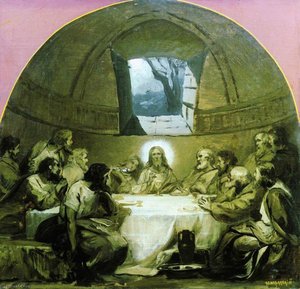
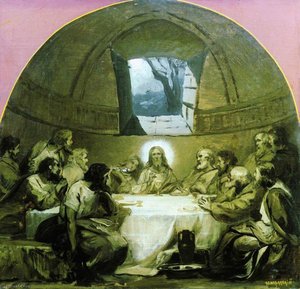
To gaze upon a Siemiradzki canvas is to enter a world where history is felt rather than merely observed. His works are characterized by an extraordinary ability to render texture and atmosphere, creating a sensory experience that transcends the flat surface of the oil painting. In his celebrated depictions of biblical narratives, such as The Last Supper, he employs a masterful chiaroscuro approach. He captures the profound stillness of a sanctuary where deep, enveloping shadows clash with warm, dancing light, mirroring the internal tension and spiritual gravity of the apostles gathered around Christ. Every fold of heavy drapery, every subtle sheen on a ceramic vessel, and every rugged stone in the background is rendered with a precision that borders on the miraculous.
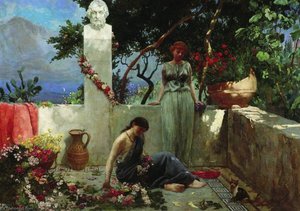
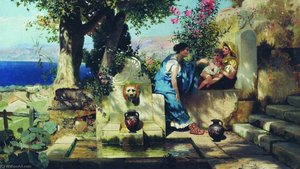
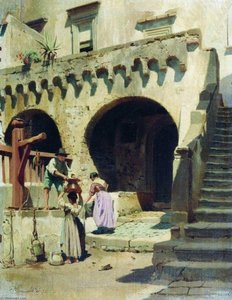
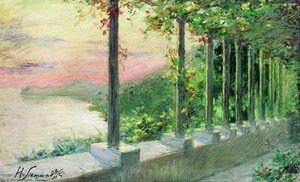
Beyond the sacred, Siemiradzki found immense joy in recreating the vibrant, sun-soaked atmosphere of Mediterranean life. His paintings of Italian courtyards and classical terraces serve as windows into an idealized antiquity. In these works, the artist captures the warmth of the sun and the architectural elegance of a bygone age, inviting the viewer to wander through landscapes that feel both palpably real and dreamily distant. This mastery of light—the ability to suggest heat, humidity, and the soft glow of twilight—allowed him to bridge the gap between historical documentation and poetic imagination.
Legacy and the Enduring Flame of Academicism
The significance of Henryk Siemiradzki extends far beyond the borders of Poland or Russia; he was a truly European artist whose influence resonated throughout the continent. His ability to command large-scale, monumental compositions made him a favorite among national galleries, ensuring that his visions of antiquity would be preserved for generations. Even as the art world shifted toward the fragmented perspectives of Modernism, Siemiradzki’s work remained a bastion of technical excellence and narrative clarity.
His life, which concluded in 1902, left behind a legacy defined by several key artistic contributions:
- The Elevation of Academic Narrative: He transformed historical painting from mere illustration into a profound psychological exploration of human emotion.
- Technical Mastery of Light: His sophisticated use of light and shadow set a standard for realism within the Academic movement.
- Cultural Preservation through Art: Through his evocations of the Greco-Roman and Biblical worlds, he kept the spirit of classical antiquity alive in the collective European consciousness.
Ultimately, Siemiradzki remains an artist of immense emotional depth. He did not simply paint history; he resurrected it, inviting us to stand once more in the presence of the divine and the ancient, caught forever in that breathless moment before the light fades.
hendryk siemiradzki
1843 - 1902
Quick Facts
- Artistic Movement Or Style: Academic Art
- Artists Or Movements Influenced By This Artist: ['Romanticism']
- Artists Who Influenced This Artist: ['Karl Briullov']
- Date Of Birth: October 24, 1843
- Date Of Death: August 23, 1902
- Full Name: Henryk Hektor Siemiradzki
- Nationality: Polish & Russian
- Notable Artworks:
- The Last Supper
- An Italian Courtyard
- Place Of Birth: Novobelgorod (Pechenihy), Ukraine