 Preview
 Send
Send Share
Share
 Details

 Download
 Similars
 X-Ray
X-Ray Diaporama
Martyrdom of St Denis
 Acrylic On Canvas
- WallArt
- International Gothic
 1416
1416 161.0 x 210.0 cm
 The Louvre
 Read More
Hand Made Oil Reproduction
Hand-painted oil on canvas in your size and frame, made to order by our artists. ( Buy Print Buy Image)




P118B $10

P118H $10

P118W $10

P438Z $10

P508JH $12

P508YH $12

P805H $10

P805Z $10

P919BZ $10

P919G $10

P919XJ $10

P959ZH $10

P968JZ $12

W106C $8

W218G $10

W218JH $8

W218Y $10

W307PJ $10

W316G $10

W316PJ $8

W316Y $10

W398PJ $8

W4111J $10

W500HY $15

W500JH $15

W692G $12

W849H $8

W940BG $15

W953PJ $8




Pick from our preset sizes that match the artwork's original proportions.

You may enter your own dimensions to fit a specific frame or space. If your selected size does not match the original image's proportions, we will either crop the artwork or extend the painting with additional hand-painted elements. A digital mockup will be sent for your approval before production begins.
Please note that the on-screen preview does not reflect the actual cropping or extension. Only the mockup will accurately show the final composition.
While custom sizes are available, we recommend selecting a dimension from the predefined list to preserve the original proportions.
After order, ArtsDot.com team will email client for instructions and provide a mockup preview
Worldwide Delivery () in 3/4 weeks instead of standard 5 weeks. (23 August). No compromise on quality.

Free Worldwide Express Shipping

High-Quality Linen Canvas

Full Shipping Insurance

Customs Tax Refund Guarantee

True Color Matching Guarantee

60-Day Return Policy (Defects Only)

100% Money-Back Guarantee

Bulk Discount Offer
 Glass option is only available in size under 110 CM

Martyrdom of St Denis
Reproduction Medium
Reproduction Size
-


Total Price
$ 263
Artwork Description
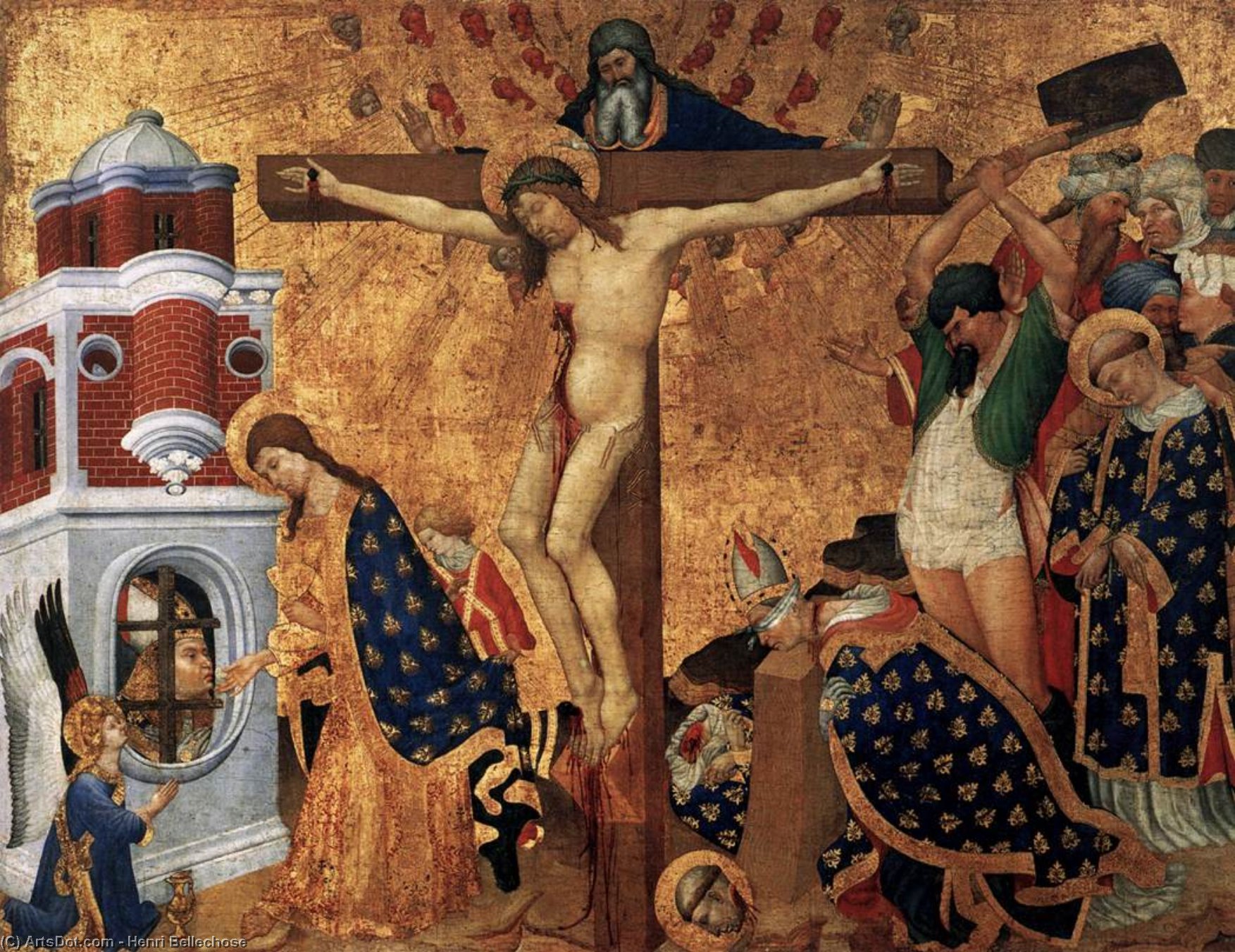
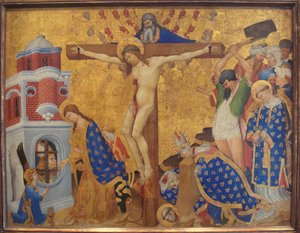
A Dramatic Tableau of Faith: Henri Bellechose’s ‘Martyrdom of St Denis’
Henri Bellechose's “Martyrdom of St Denis,” painted in 1415-16, is more than just a religious depiction; it’s a visceral embodiment of faith, sacrifice, and the enduring power of spiritual conviction. Commissioned by the ambitious Duke John the Fearless of Burgundy for the Chartreuse of Champmol, this panel painting transcends its initial purpose as a devotional image to become a profound meditation on martyrdom and the very essence of Christian belief. Bellechose, working within the vibrant artistic milieu of early 15th-century Dijon, masterfully blends elements of International Gothic style with a burgeoning realism that foreshadows the later innovations of the Netherlandish masters.
The scene unfolds with arresting immediacy. At its heart lies Christ, depicted in a radiant blue robe, extending a loaf of bread to St Denis, who is shown languishing within a stark brick prison cell. The composition immediately establishes a dramatic tension: the promise of salvation juxtaposed against the brutal reality of imprisonment and impending death. The figures surrounding the cross – including the executioner raising his sword, and the body of Denis’s companion lying prone on the ground – amplify this sense of urgency and suffering. Bellechose doesn't shy away from depicting the physicality of martyrdom; the wounds, the blood, and the lifeless form all contribute to a deeply affecting portrayal.
Symbolism Woven into Every Detail
The painting is rich in symbolic language, reflecting both the theological significance of St Denis’s story and the political aspirations of the Burgundian dukes. St Denis himself, the patron saint of Paris, represents not only Christian martyrdom but also the city's resilience and spiritual fortitude. The loaf of bread offered by Christ symbolizes the Eucharist – a cornerstone of Christian faith—and highlights the divine provision amidst human suffering. The presence of the two companions, already martyred, underscores the universality of sacrifice for the sake of belief. Even seemingly minor details, such as the golden halo surrounding Denis’s head and the carefully rendered clothing, are imbued with symbolic meaning, reinforcing the painting's devotional message.
Furthermore, the inclusion of clocks in the background – a detail often overlooked – speaks to the Burgundian fascination with time and order. The dukes sought to establish themselves as rulers not just of territory but also of temporal affairs, and this element subtly connects the religious narrative to their worldly ambitions. The overall composition echoes the “Throne of Mercy” iconographic type, emphasizing Christ’s divine authority and offering a sense of hope amidst despair.
Technique and Artistic Innovation
Bellechose's mastery is evident in his skillful use of color and texture. He employs a vibrant palette dominated by rich blues, reds, and golds, creating an atmosphere of otherworldly splendor. The application of paint is remarkably luminous, particularly in the depiction of Christ’s robe and the surrounding light. The artist demonstrates a keen understanding of perspective and spatial relationships, drawing the viewer's eye to key elements within the composition. While influenced by the International Gothic style—characterized by elegant figures and intricate details—Bellechose pushes beyond mere ornamentation, introducing a greater sense of dynamism and emotional intensity.
The debate surrounding Bellechose’s authorship – whether he completed a work initially begun by Jean Malouel – adds another layer of intrigue to this compelling artwork. Regardless of the precise attribution, “Martyrdom of St Denis” stands as a testament to the artistic talent and cultural significance of Henri Bellechose, a pivotal figure in the development of early Netherlandish painting. It remains a powerful and moving depiction of faith, sacrifice, and the enduring legacy of St Denis.
Related Artworks
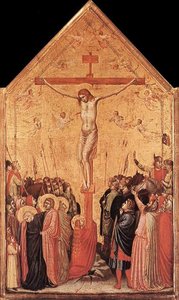
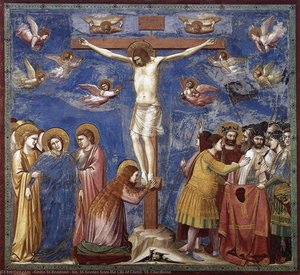
![Scrovegni - [35] - Crucifixion — Giotto Di Bondone, Gothic](/media/artworks/images-thumb/cf/93/cf934c5f25029370a72ef279c00495b1.jpg)
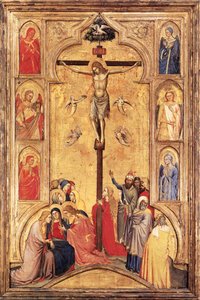
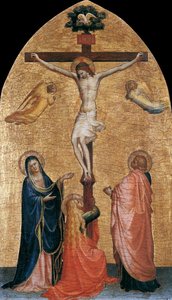
![Legend Of St Francis - [23] - St Francis Mourned By St Clare — Giotto Di Bondone, Gothic](/media/artworks/images-thumb/17/1c/171c284c41dc3ef8bca83e51c1e1e531.jpg)
Artist Biography
The Radiant Legacy of Henri Bellechose
In the twilight of the Middle Ages, as the artistic landscape of Northern Europe began to stir with a new, profound sense of realism, there emerged a figure whose brushstrokes helped define an era. Henri Bellechose, a pioneer of Early Netherlandish painting, stands as a luminous bridge between the stylized elegance of the International Gothic and the visceral, human-centric devotion that would soon characterize the Northern Renaissance. Though the biographical shadows surrounding his life remain deep—leaving historians to piece together his journey from fragmented records—his presence in the opulent courts of Burgundy remains undeniably potent.
Born in the region of Brabant, likely around 1395, Bellechose’s early years were shaped by the burgeoning artistic traditions of the Southern Netherlands. While the specific details of his apprenticeship are shrouded in mystery, scholars often point toward the influence of Jean Malouel, a master whose sophisticated style may have provided the foundation upon which Bellechose built his technical prowess. By 1415, Bellechose had ascended to the prestigious position of court painter under John the Fearless, the Duke of Burgundy. This appointment was far more than a mere job; it was an entry into one of the most culturally vibrant and wealthy circles in Europe, granting him access to rare pigments and the patronage required to execute monumental works of lasting significance.
A Master of Symbolism and Devotion
The artistry of Bellechose is best understood through his ability to weave complex theological narratives into tangible, physical reality. His work does not merely depict religious scenes; it invites the viewer into a sacred dialogue. This is most breathtakingly realized in his masterpiece, Martyrdom of Saint Denis. In this panel, the artist achieves a dramatic tension that is both haunting and holy. Through a masterful blend of light and shadow, he captures the brutal immediacy of martyrdom while simultaneously elevating the scene to a state of divine grace.
Within his compositions, every element serves a higher purpose, acting as a silent language for the faithful:
- The Eucharist as Hope: The depiction of Christ offering bread to Saint Denis serves as a profound symbol of the Eucharist, representing divine sustenance even in the darkest moments of human suffering.
- Architectural Realism: The use of stark, brick-like textures within prison settings grounds the spiritual narrative in a recognizable, earthly reality, foreshadowing the meticulous detail of later Netherlandish masters.
- Emotional Immediacy: Bellechose utilizes the physicality of wounds and the presence of death to evoke empathy, ensuring that the viewer feels the weight of the saint's sacrifice.
The Burgundian Influence and Historical Significance
To understand Bellechose is to understand the Burgundian Court. Serving as a valet de chambre, he was an integral part of the ducal machinery, tasked with creating visual propaganda that solidified the dynasty's glory. His ability to marry the decorative splendor required by his patrons with a burgeoning interest in naturalism allowed him to create works that were both politically potent and spiritually moving. This duality—the service to earthly power and the depiction of heavenly truth—is the hallmark of his contribution to art history.
Though he passed away in the early 1440s, Bellechose’s influence rippled through the decades that followed. He helped pave the way for the great innovators of the fifteenth century, establishing a precedent for the use of oil and tempera on wooden panels to achieve unprecedented depth and texture. His legacy is not merely found in the museums that house his surviving works, such as the Louvre, but in the very DNA of Northern European painting, where the pursuit of truth through the observation of nature remains a sacred endeavor.
Henri Bellechose
1442 , Netherlands
Quick Facts
- Artistic Movement Or Style: Early Netherlandish painting
- Artists Or Movements Influenced By This Artist: ['Jan van Eyck']
- Artists Who Influenced This Artist: ['Jean Malouel']
- Date Of Death: 1442
- Full Name: Henri Bellechose
- Nationality: Dutch
- Notable Artworks: ['Martyrdom of Saint Denis']
- Place Of Birth: Breda, Netherlands
Related Articles
Henri Matisse's Masterpieces: Explore 25 Iconic Paintings & Art Decor Ideas
Journey through Henri Matisse's 25 most iconic paintings! Explore Fauvism, vibrant colors & the stories behind masterpieces like 'The Dance'. Find museum-quality art reproductions and curated decor ideas to elevate your space. Discover all masterpieces on ArtsDot.com.

El Greco's Masterpieces: Explore 25 Iconic Paintings & Spiritual Visions | ArtsDot
Journey through El Greco's 25 most iconic paintings! Explore the spiritual depth & dramatic beauty of this Spanish Renaissance master. Discover art history, techniques & find museum-quality reproductions for your home at ArtsDot.com.
Fauvism's Boldest Visions: 10 Masterpieces That Revolutionized Modern Art | ArtsDot
Explore 10 Fauvist masterpieces by Matisse, Derain & Vlaminck that ignited Modern Art! Discover bold colors, expressionist landscapes & the history of this revolutionary movement. Find museum-quality prints at ArtsDot.com.
Denis Maurice: A Study in Post-War French Figuration & the Poetics of Everyday Life
Explore the life & work of Maurice Denis, pivotal French painter bridging Impressionism to modern art. Discover his Nabis symbolism, theories on 'ideation,' and profound commitment to sacred art. A deep dive for art enthusiasts.
Robert Henri & the Spirit of American Realism: A Legacy of Urban Life and Artistic Independence
Explore the life & legacy of Robert Henri, a pivotal figure in American Realism. Discover his captivating portraits, influence on the Ashcan School, and enduring impact on art history. Learn more at ArtsDot.