 Preview
 Send
Send Share
Share
 Details

 Download
 Similars
 X-Ray
X-Ray Diaporama
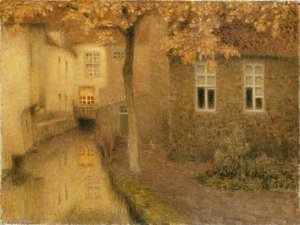
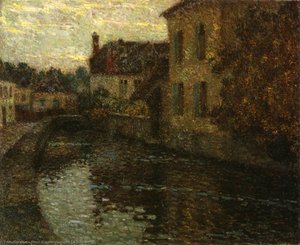
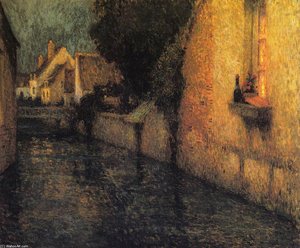
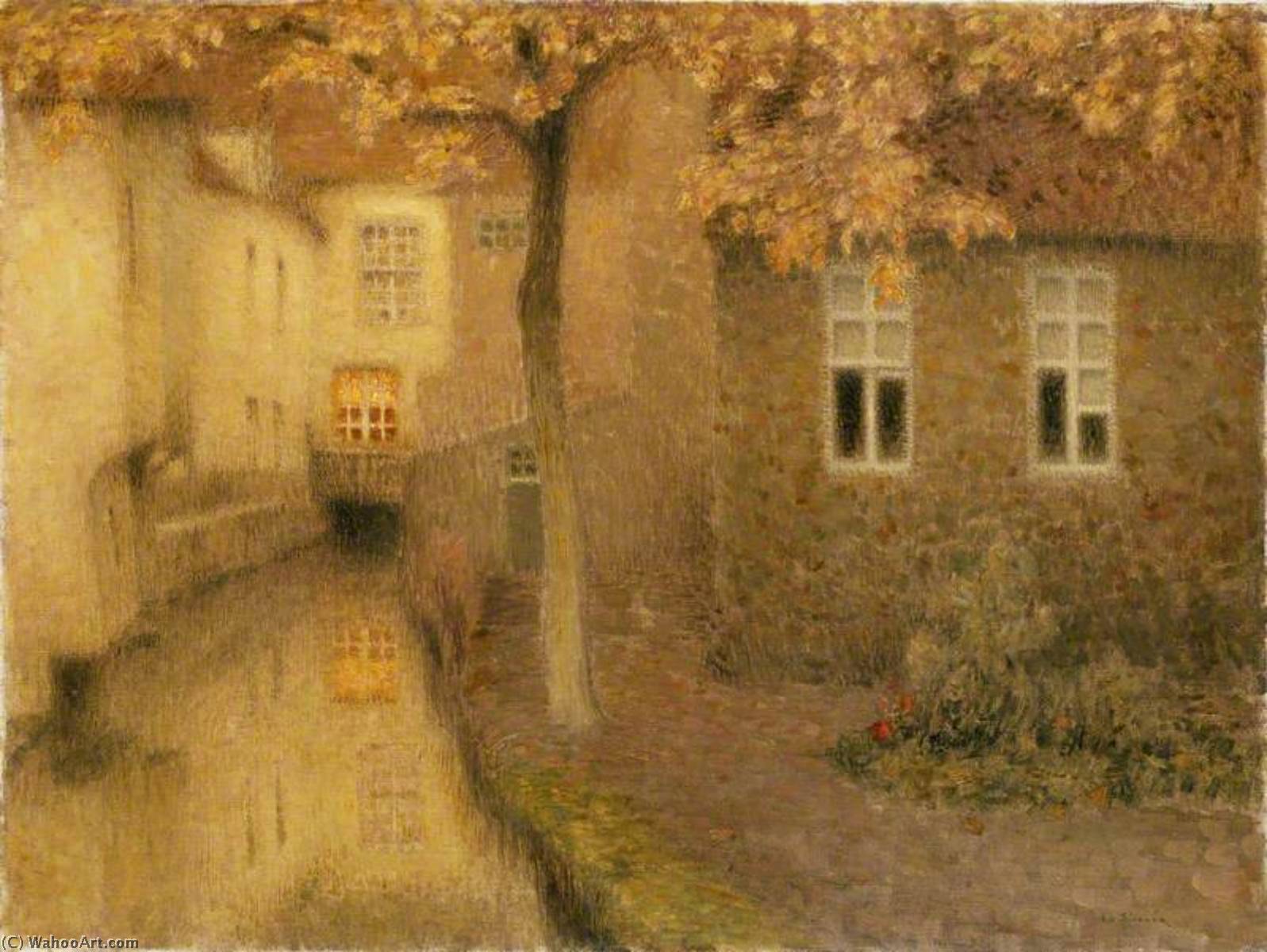
A Canal in Bruges at Dusk
 Oil On Canvas
- WallArt
- Intimist Painting
 1898
1898 49.0 x 65.0 cm
 The Ashmolean Museum of Art And Archaeology
 Read More
Hand Made Oil Reproduction
Hand-painted oil on canvas in your size and frame, made to order by our artists. ( Buy Print Buy Image)




P118B $10

P118H $10

P118W $10

P438Z $10

P508JH $12

P508YH $12

P805H $10

P805Z $10

P919BZ $10

P919G $10

P919XJ $10

P959ZH $10

P968JZ $12

W106C $8

W218G $10

W218JH $8

W218Y $10

W307PJ $10

W316G $10

W316PJ $8

W316Y $10

W398PJ $8

W4111J $10

W500HY $15

W500JH $15

W692G $12

W849H $8

W940BG $15

W953PJ $8




Pick from our preset sizes that match the artwork's original proportions.

You may enter your own dimensions to fit a specific frame or space. If your selected size does not match the original image's proportions, we will either crop the artwork or extend the painting with additional hand-painted elements. A digital mockup will be sent for your approval before production begins.
Please note that the on-screen preview does not reflect the actual cropping or extension. Only the mockup will accurately show the final composition.
While custom sizes are available, we recommend selecting a dimension from the predefined list to preserve the original proportions.
After order, ArtsDot.com team will email client for instructions and provide a mockup preview
Worldwide Delivery () in 3/4 weeks instead of standard 5 weeks. (24 August). No compromise on quality.

Free Worldwide Express Shipping

High-Quality Linen Canvas

Full Shipping Insurance

Customs Tax Refund Guarantee

True Color Matching Guarantee

60-Day Return Policy (Defects Only)

100% Money-Back Guarantee

Bulk Discount Offer
 Glass option is only available in size under 110 CM

A Canal in Bruges at Dusk
Reproduction Medium
Reproduction Size
-


Total Price
$ 263
Artwork Description
The Serene Embrace of Twilight
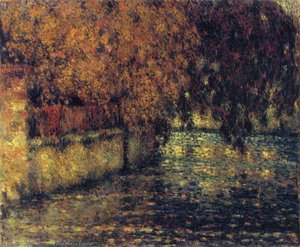
Henri Le Sidaner’s “A Canal in Bruges at Dusk” isn't merely a depiction of a picturesque waterway; it’s an immersion into a fleeting, almost melancholic moment. Painted in 1898, this oil on canvas captures the hushed beauty of a canal scene in Bruges, Belgium, bathed in the soft, diffused light of twilight. The painting immediately evokes a sense of tranquility and quiet contemplation – a feeling that stems not just from the subject matter but also from Le Sidaner’s masterful manipulation of color and light.

Impressionism and the Pointillist Echo
Le Sidaner’s artistic lineage is complex, drawing from a diverse range of influences. Initially trained within the rigid structure of Alexandre Cabanel's École des Beaux-Arts in Paris – an institution known for its academic approach – he quickly found himself at odds with its emphasis on idealized forms and historical subjects. This led him to abandon formal training and embrace a more personal, expressive style. He was profoundly influenced by the Impressionists, particularly Monet’s ability to capture the ephemeral effects of light, and the Pointillist techniques of Seurat and Signac, which involved applying tiny dots of color to create an overall impression rather than meticulously blending them. “A Canal in Bruges at Dusk” beautifully marries these influences; the soft, broken brushstrokes and subtle shifts in hue reflect both Impressionistic sensitivity and Pointillist precision.
The artist’s choice of palette is particularly noteworthy. He eschews bold, vibrant colors in favor of a muted range of greys, blues, and ochres, creating an atmosphere of subdued elegance. The light itself seems to be dissolving into the scene, lending it a dreamlike quality.
A Glimpse into Bruges’ Soul
Bruges, with its medieval architecture and canals, was already renowned for its romantic charm by the late 19th century. Le Sidaner wasn't simply painting a pretty view; he was capturing the essence of this historic city – its quiet dignity, its sense of timelessness, and its subtle melancholy. The inclusion of the horse-drawn carriage adds a touch of nostalgia, hinting at a bygone era. The two figures in the foreground, partially obscured by shadow, invite the viewer to imagine their story, adding another layer of intrigue to the scene.
Interestingly, Le Sidaner spent much of his career working in relative isolation at the Villa des Roses near Étaples, a coastal town known for its artistic community. This environment fostered a spirit of experimentation and allowed him to develop his distinctive style – one characterized by intimate scenes, atmospheric landscapes, and a profound sensitivity to light and color.
Symbolism and Emotional Resonance
Beyond the literal depiction of a canal scene, “A Canal in Bruges at Dusk” resonates with deeper symbolic meanings. The twilight hour itself represents transition, reflection, and perhaps even a touch of sadness – a recognition of the fleeting nature of beauty and time. The stillness of the water mirrors an inner quietude, inviting the viewer to pause and contemplate their own experiences. Le Sidaner’s masterful use of light and shadow creates a sense of mystery and invites us to project our own emotions onto the scene.
This painting is more than just a beautiful image; it's an invitation to step into a moment of serene contemplation, a reminder of the enduring power of art to evoke emotion and transport us to another time and place. It’s a testament to Le Sidaner’s skill as an artist and his ability to capture the soul of Bruges in all its quiet beauty.
Related Artworks
Artist Biography
Early Life and Background
- Name: Henri Eugène Augustin Le Sidaner
- Other Names: Henri Eugene Augustin le Sidaner
- Born: August 7, 1862, Port Louis, Mauritius
- Died: July 14, 1939
- Le Sidaner was born in Port Louis, Mauritius, to Jean Marie Le Sidaner and Amélie Henrietta Robberechts. His father worked as a ship inspector for Lloyd's. The family returned to France in 1872, settling in Dunkerque.
- He displayed an early interest in painting and received support from his parents. He attended the Collège et Lycée Notre Dame des Dunes in Dunkerque.
- A scholarship from the city of Dunkerque enabled him to move to Paris and study at the prestigious École nationale supérieure des beaux-arts.
Artistic Training and Influences
- At the École des Beaux-Arts, Le Sidaner studied under Alexandre Cabanel, a prominent figure in Belle Époque French painting. However, he later resigned due to artistic differences.
- Early influences included Édouard Manet and Claude Monet, as well as the Pointillists. He was drawn to their innovative use of color and light.
- He joined the Colonie artistique d'Étaples, a group of artists working together in Étaples, further developing his skills and artistic vision.
Artistic Style and Development
- Le Sidaner’s style is characterized by subdued colors, nuanced greys, and opals applied with uneven, dappled brushstrokes. This technique creates a unique atmosphere and sense of mysticism in his paintings.
- He was particularly skilled at nocturne painting, capturing the subtle nuances of light and shadow during twilight hours.
- His work evolved over time, moving from early influences to a more personal style that blended Impressionistic techniques with Symbolist elements.
- After settling at Gerberoy in the Picardy countryside for over thirty years, he became renowned for his seductive views of the gardens he created within the ruins of a medieval fortress. These paintings often featured dappled sunlight and roses, solidifying his reputation as a unique artist.
Major Works and Recognition
- Notable works include "Still Life and a Window, Gisors," available on ArtsDot.com.
- His paintings are exhibited at the Musée des Beaux-Arts Tournai in Belgium, showcasing an impressive collection of French Post-Impressionism.
- Le Sidaner's work was widely collected throughout his career, demonstrating its popularity and artistic merit.
- He received a bronze medal at the Universal Exposition in Paris in 1891.
- In 1905, he exhibited a series of Venice paintings to great acclaim in London and Paris.
- He was created a Chevalier of the Legion of Honour in 1913.
Historical Significance
- Le Sidaner is often considered "the last of the Impressionists," bridging the gap between Impressionism and Post-Impressionism.
- His unique style, combining elements of various movements while maintaining a distinct personal touch, sets him apart from his contemporaries.
- He captured the essence of domestic interiors and quiet street scenes with remarkable sensitivity and skill, offering viewers glimpses into intimate moments and tranquil landscapes.
- His legacy continues to inspire artists and art enthusiasts alike, as evidenced by the ongoing exhibitions and availability of his works on platforms like ArtsDot.com.
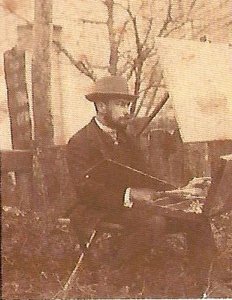
Henri Le Sidaner
1862 - 1939 , Mauritius
Quick Facts
- Artistic Movement Or Style: Intimist, Impressionism
- Artists Who Influenced This Artist:
- Édouard Manet
- Monet
- Pointillists
- Date Of Birth: August 7, 1862
- Date Of Death: July 14, 1939
- Full Name: Henri Eugène Augustin Le Sidaner
- Nationality: French
- Notable Artworks:
- Still life and a window, Gisors
- A Beauvais Square by Moonlight
- Place Of Birth: Port Louis, Mauritius
Related Articles
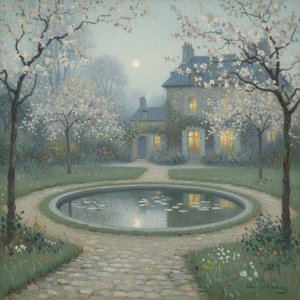
Henri Le Sidaner: Evoking Atmosphere & Intimacy in Post-Impressionist Landscapes
Discover the evocative world of Henri Le Sidaner, a master of Intimist painting. Explore his tranquil landscapes & atmospheric interiors – a celebration of light and intimacy. Learn about his life, style, and lasting legacy.

Impressionism's Masterpieces: 10 Paintings That Defined a Movement | ArtsDot
Journey through Impressionism's heart with 10 iconic paintings by Monet, Renoir & Degas. Explore light, color & the stories behind these masterpieces. Find museum-quality art reproductions and elevate your home decor on ArtsDot.com.
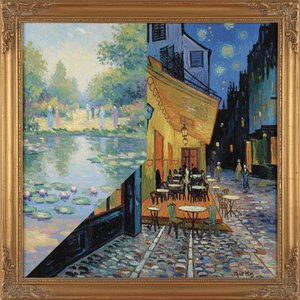
Beyond Light & Color: Impressionism vs. Post-Impressionism for the Discerning Collector
Explore the nuances of Impressionism & Post-Impressionism with . Expert insights for collectors on style, investment, and acquiring museum-quality reproductions.

Cézanne's Masterpieces: 25 Iconic Artworks to Transform Your Space
Journey through 25 iconic artworks by Paul Cézanne – a master of Impressionism and Post-Impressionism. Explore his landscapes, still lifes, and the stories behind these timeless masterpieces. Discover museum-quality reproductions & curated decor at ArtsDot.com.
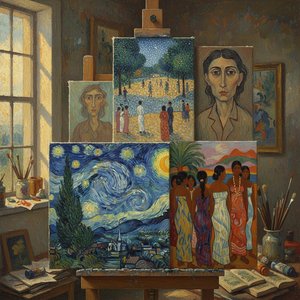
Beyond Impressionism: Exploring the Emotional Depth of Post-Impressionist Painting
Explore the profound emotional depth & innovative techniques of Post-Impressionism with ArtsDot. Discover Cézanne, Van Gogh, Gauguin & more – and their lasting impact on modern art.