 Preview
 Send
Send Share
Share
 Details

 Download
 Similars
 X-Ray
X-Ray Diaporama
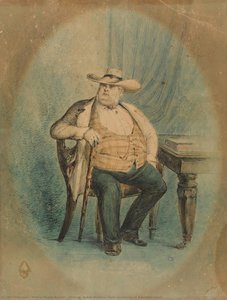
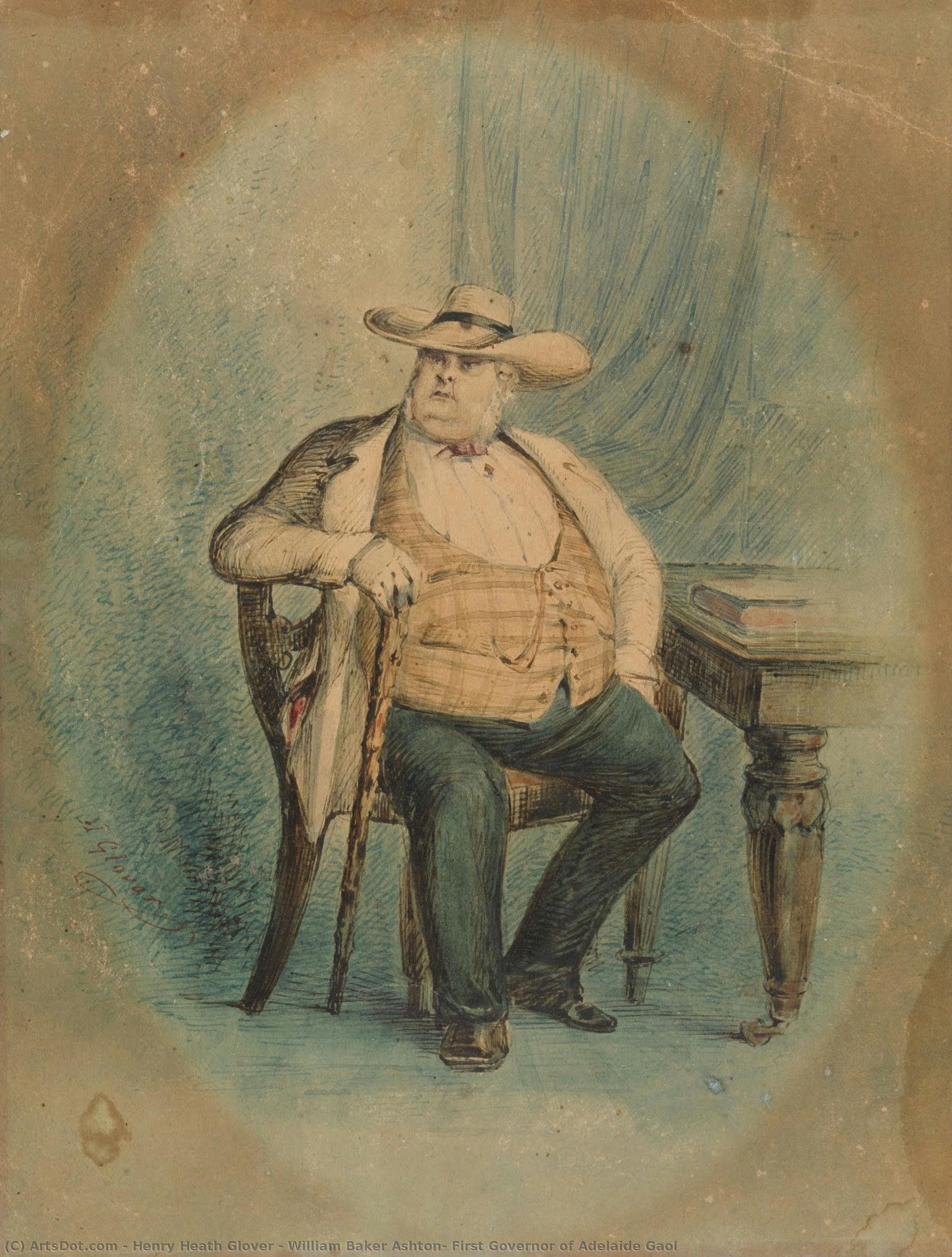
William Baker Ashton, First Governor of Adelaide Gaol
 Watercolor
- WallArt
- Realism
 1849
1849- 19th Century
 43.0 x 38.0 cm
 National Portrait Gallery
 Read More
Hand Made Oil Reproduction
Hand-painted oil on canvas in your size and frame, made to order by our artists. ( Buy Print Buy Image)




































Pick from our preset sizes that match the artwork's original proportions.

You may enter your own dimensions to fit a specific frame or space. If your selected size does not match the original image's proportions, we will either crop the artwork or extend the painting with additional hand-painted elements. A digital mockup will be sent for your approval before production begins.
Please note that the on-screen preview does not reflect the actual cropping or extension. Only the mockup will accurately show the final composition.
While custom sizes are available, we recommend selecting a dimension from the predefined list to preserve the original proportions.
After order, ArtsDot.com team will email client for instructions and provide a mockup preview
Worldwide Delivery () in 3/4 weeks instead of standard 5 weeks. (21 August). No compromise on quality.

Free Worldwide Express Shipping

High-Quality Linen Canvas

Full Shipping Insurance

Customs Tax Refund Guarantee

True Color Matching Guarantee

60-Day Return Policy (Defects Only)

100% Money-Back Guarantee

Bulk Discount Offer
 Glass option is only available in size under 110 CM

William Baker Ashton, First Governor of Adelaide Gaol
Reproduction Medium
Reproduction Size
-


Total Price
$ 263
Artwork Description
A Portrait of Colonial Authority and Character
In this evocative watercolor from 1849, we are invited into the private, dignified world of William Baker Ashton, a man whose life was defined by both the rigid structures of law and a surprising, legendary warmth. The portrait, captured by the skilled hand of Henry Heath Glover, presents more than just a likeness; it offers a window into the mid-19th-century colonial psyche. As the first governor of Adelaide Gaol, Ashton occupied a position of immense responsibility in the burgeoning colony of South Australia. Through Glover’s delicate use of light and shadow, we see a gentleman of substance—not merely in physical presence, but in the weight of his station. The composition centers on a man of imposing stature, whose seated posture and formal attire, including a meticulously rendered vest and tie, suggest a person accustomed to command and respect.
The artistry of the piece lies in its ability to balance the formality of a public figure with the intimate details of a private moment. Glover, having been trained in the meticulous tradition of lithography under his father, brings an extraordinary level of precision to the textures of the scene. One can almost feel the weight of the books resting on the table before him—symbols of literacy, law, and the intellectual foundations upon which the new colony was being built. The subtle interplay of light across the man's prominent features and the soft cushioning of his chair creates a sense of lived-in comfort, hinting at the "Ashton’s Hotel" era where his generosity toward even the most marginalized members of society was well known.
The Intersection of History and Artistry
To possess or display a reproduction of this work is to hold a piece of South Australian heritage. The historical context surrounding Ashton is one of profound complexity; he was a man who navigated the fine line between being a celebrated, benevolent leader and a figure embroiled in the shadows of legal controversy. This tension is subtly reflected in the painting's atmosphere—there is a certain gravity in his gaze that speaks to the heavy burdens of his office. For the discerning collector or interior designer, this artwork serves as a sophisticated focal point, bringing a sense of historical depth and narrative richness to any space.
Technically, the watercolor medium allows for a softness that prevents the portrait from feeling overly stern. The gentle transitions in tone and the delicate handling of the subject's silhouette evoke an emotional response of nostalgia and curiosity. It is a piece that invites long periods of contemplation, prompting viewers to wonder about the man behind the title—the soldier, the policeman, the governor, and the philanthropist. Whether placed in a traditional study, a library, or a contemporary living space, this portrait acts as a conversation starter, bridging the gap between the rugged beginnings of colonial life and the refined aesthetic of the Victorian era.
Related Artworks
Artist Biography
Early Life and Apprenticeship in England
Henry Heath Glover, born around May 24th, 1827, in the bustling heart of Lambeth, Surrey, emerged into a world already steeped in artistic tradition. His father, Henry “Harry” Glover, was an established artist himself—a caricaturist and illustrator with a growing reputation in London society. Young Henry’s path seemed predetermined from an early age; he began his formal training as a lithographer under the tutelage of his father, absorbing not only technical skills but also a keen eye for detail and a burgeoning sense of artistic expression. This apprenticeship was further broadened by experience within several prominent London lithographic firms, honing his craft and preparing him for a future that would eventually lead him far from the cobbled streets of England. His brother, Sydney George Glover, also followed in their father’s footsteps, creating a familial bond strengthened by shared creative pursuits. The early years were formative, instilling in Henry a dedication to precision and observation—qualities that would become hallmarks of his later work.Emigration to Australia and Early Colonial Life
In 1849, the Glover family embarked on a momentous journey, leaving behind their established lives for the promise of new beginnings in South Australia. Arriving in Port Adelaide aboard the Calcutta on June 23rd, they sought opportunity in a young colony brimming with potential. Harry Glover Sr. quickly secured a license to operate the Stag Inn in Adelaide, attempting to balance publican duties with his artistic endeavors. This period was not without its challenges; an altercation at the inn in October 1851 resulted in a dramatic incident involving Henry’s brother, Sydney, and charges of manslaughter—a stark reminder of the rough-and-tumble realities of colonial life. Despite these difficulties, Harry Jr. continued to develop his skills, absorbing the unique landscapes and characters of Australia into his artistic repertoire. The allure of the Victorian gold rush beckoned in 1852, drawing him away from Adelaide for four years of prospecting and sketching—a period that would prove pivotal in shaping his distinctive style.A Rising Profile: Lithographs and Early Publications
The years spent on the Australian diggings were not solely dedicated to the pursuit of gold. Henry Glover seized every opportunity to document the life and scenes unfolding around him, creating a series of sketches that would later be transformed into compelling lithographs. These works offered a glimpse into the raw energy and hardship of the gold rush era, capturing the faces and experiences of those who sought fortune in the Australian interior. Upon settling in Carlton around 1855, Glover began to publish his work, gaining recognition for his ability to translate observation into evocative imagery. In 1857, Edgar Ray & Co. released *Twelve Hours Road Scraping in Melbourne: Scraped from the Streets and Sketched on Stone*, a collection of twelve lithographs that showcased his talent for capturing everyday life with wit and precision. The following year, he produced *The Intercolonial Cricket Match*, a souvenir lithograph commemorating the Test between New South Wales and Victoria—a testament to his versatility and growing popularity.Professional Development and Artistic Contributions
Glover’s career continued its upward trajectory as he joined the Melbourne engraving firm of De Gruchy & Leigh, further refining his technical skills and expanding his network within the artistic community. From 1864 to 1868, he relocated to Christchurch, New Zealand, working for Ward and Reeves, proprietors of *The Lyttelton Times*. This period saw him achieve notable success, winning an award at the Victorian Exhibition for his chromolithograph *Three Marys after “Angel announcing the Resurrection of Christ to the three Marys”* by Annibale Carracci. He also designed a winning certificate for the Otago Exhibition, demonstrating his aptitude for both fine art and commercial design. Upon returning to Melbourne, Glover continued to contribute cartoons to *Canterbury Punch*, showcasing his satirical talents. As a founding member of the Victorian Academy of Arts in 1870, he exhibited works such as *Diggers Return* and *Greek Soldier*, solidifying his position within the Australian art scene. His later years were marked by a series of engagements with various firms—Fergusson & Mitchell, Philip-Stephen Photo-Litho Co., Ackhurst & Co., David James & Co.—before establishing his own business.Legacy and Historical Significance
Henry Heath Glover’s life was one of constant movement and adaptation, shaped by the opportunities and challenges of colonial Australia and New Zealand. He died on June 15th, 1904, at his son Arthur's home in North Sydney, leaving behind a rich artistic legacy. His work provides invaluable insights into the social and cultural landscape of the 19th century—capturing scenes of everyday life, historical events, and the natural beauty of Australia and New Zealand. Glover’s lithographs are particularly significant for their detailed observation, skillful execution, and ability to convey a sense of place and time. His contributions extended beyond his own artistic creations; as an educator and mentor, he helped shape the development of Australian art. Today, his works are held in numerous collections throughout Australia—including the State Library of South Australia, the Art Gallery of South Australia, and the National Library and National Portrait Gallery in Canberra—testifying to his enduring impact on the region’s artistic heritage. He remains a vital figure in understanding the evolution of Australian lithography and the visual representation of colonial life. His art is not merely a record of the past; it is a window into the soul of a nation.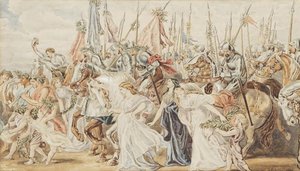
henry heath glover
United Kingdom
Quick Facts
- Artistic Movement Or Style: Victorian lithography
- Date Of Birth: c. 24 May 1827
- Date Of Death: 15 June 1904
- Full Name: Henry Heath Glover
- Nationality: Australian
- Notable Artworks:
- 12 Hours Road Scraping
- Intercolonial Cricket Match
- Corroboree (South Australia)
- Place Of Birth: Lambeth, UK
Related Articles
Henri Matisse's Masterpieces: Explore 25 Iconic Paintings & Art Decor Ideas
Journey through Henri Matisse's 25 most iconic paintings! Explore Fauvism, vibrant colors & the stories behind masterpieces like 'The Dance'. Find museum-quality art reproductions and curated decor ideas to elevate your space. Discover all masterpieces on ArtsDot.com.
William Henry Hunt: Luminosity & Detail in Early 19th-Century Watercolour Painting
Explore the captivating watercolour paintings of William Henry Hunt (1790-1864). Discover his mastery of naturalistic detail, luminous technique & influence on 19th-century art. Learn about collecting Hunt's work and its enduring value.
William Henry Pyne: A Topographical Vision of Early 19th-Century England – Art, Society & Watercolour's Rise
Explore the captivating world of William Henry Pyne (1769-1843), a key figure in early 19th-century English art. Discover his stunning watercolours, architectural studies & contribution to the rise of watercolour painting. Learn about this fascinating artist's life and legacy.
William Henry Hope: Illuminating American Genre Painting Through Luminosity & Narrative
Explore the captivating landscapes & genre scenes of William Henry Hope, a pivotal Canadian artist. Discover his mastery of light, realism, and narrative in this insightful guide. Learn about collecting his work & its place in art history.
Fauvism's Boldest Visions: 10 Masterpieces That Revolutionized Modern Art | ArtsDot
Explore 10 Fauvist masterpieces by Matisse, Derain & Vlaminck that ignited Modern Art! Discover bold colors, expressionist landscapes & the history of this revolutionary movement. Find museum-quality prints at ArtsDot.com.