 Preview
 Send
Send Share
Share
 Details

 Download
 Similars
 X-Ray
X-Ray Diaporama
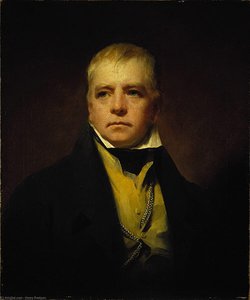
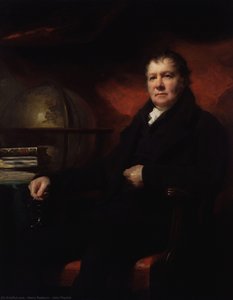
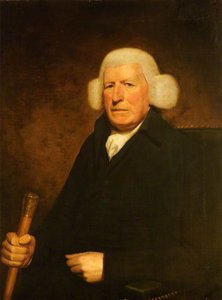
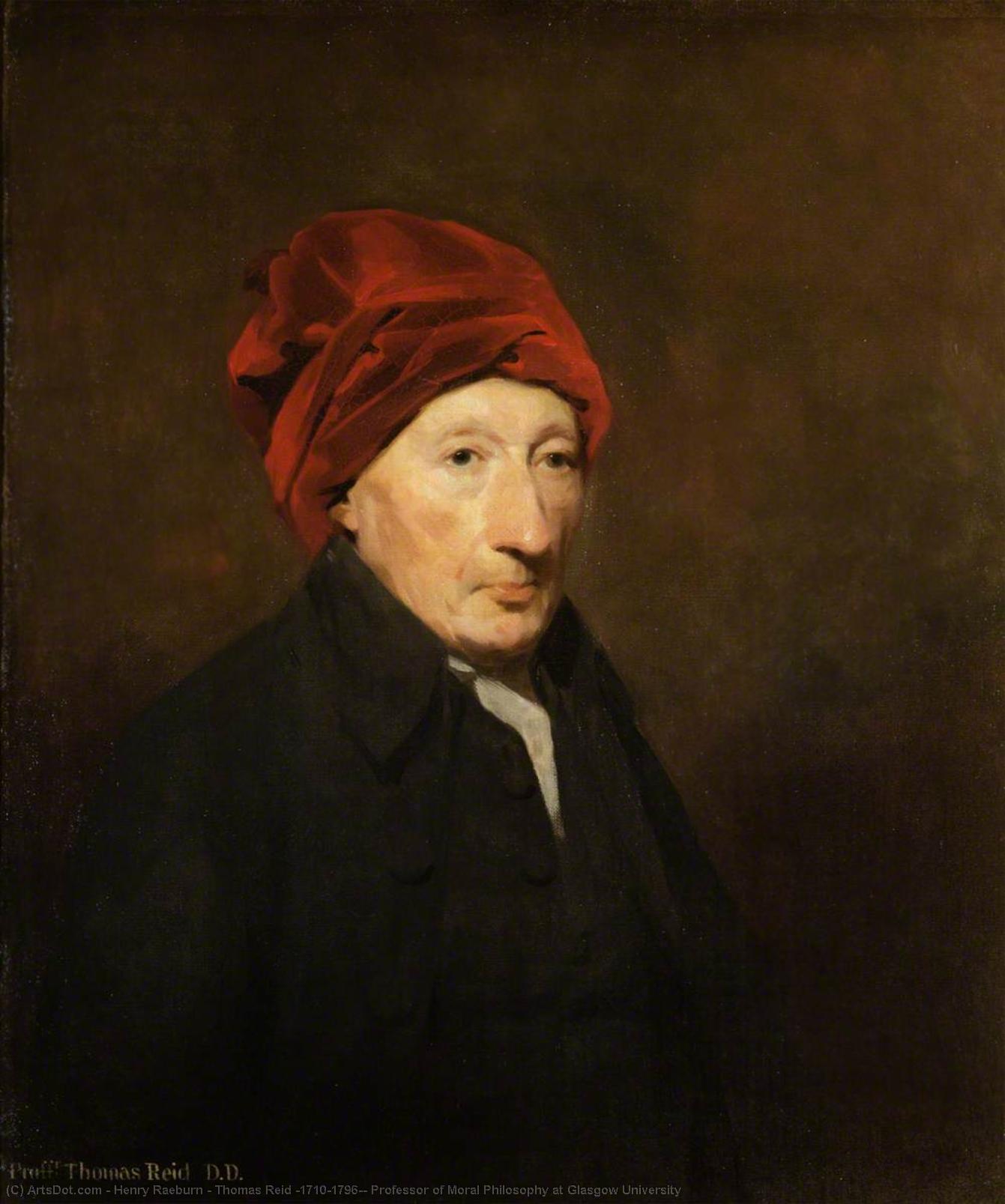
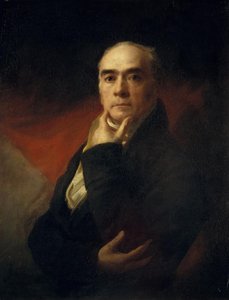
Thomas Reid (1710–1796), Professor of Moral Philosophy at Glasgow University
 Acrylic On Canvas
- WallArt
- Scottish Realism
 1796
1796 73.0 x 62.0 cm
 The National Trust For Scotland
 Read More
Hand Made Oil Reproduction
Hand-painted oil on canvas in your size and frame, made to order by our artists. ( Buy Print Buy Image)




P118B $10

P118H $10

P118W $10

P438Z $10

P508JH $12

P508YH $12

P805H $10

P805Z $10

P919BZ $10

P919G $10

P919XJ $10

P959ZH $10

P968JZ $12

W106C $8

W218G $10

W218JH $8

W218Y $10

W307PJ $10

W316G $10

W316PJ $8

W316Y $10

W398PJ $8

W4111J $10

W500HY $15

W500JH $15

W692G $12

W849H $8

W940BG $15

W953PJ $8




Pick from our preset sizes that match the artwork's original proportions.

You may enter your own dimensions to fit a specific frame or space. If your selected size does not match the original image's proportions, we will either crop the artwork or extend the painting with additional hand-painted elements. A digital mockup will be sent for your approval before production begins.
Please note that the on-screen preview does not reflect the actual cropping or extension. Only the mockup will accurately show the final composition.
While custom sizes are available, we recommend selecting a dimension from the predefined list to preserve the original proportions.
After order, ArtsDot.com team will email client for instructions and provide a mockup preview
Worldwide Delivery () in 3/4 weeks instead of standard 5 weeks. (28 August). No compromise on quality.

Free Worldwide Express Shipping

High-Quality Linen Canvas

Full Shipping Insurance

Customs Tax Refund Guarantee

True Color Matching Guarantee

60-Day Return Policy (Defects Only)

100% Money-Back Guarantee

Bulk Discount Offer
 Glass option is only available in size under 110 CM

Thomas Reid (1710–1796), Professor of Moral Philosophy at Glasgow University
Reproduction Medium
Reproduction Size
-


Total Price
$ 263
A Portrait of Philosophical Depth: Henry Raeburn’s Thomas Reid
Henry Raeburn's “Thomas Reid (1710–1796), Professor of Moral Philosophy at Glasgow University” is more than a simple likeness; it’s a carefully constructed tableau of intellect, virtue, and the quiet dignity of scholarly life. Painted in 1796, this remarkable portrait offers a glimpse into the mind of a pivotal figure in Scottish Enlightenment thought – Thomas Reid, a man whose profound contributions to moral philosophy continue to resonate today. Raeburn, already establishing himself as a leading portraitist, masterfully captures not just Reid’s physical appearance but also an aura of contemplative seriousness that speaks volumes about his character and intellectual pursuits.
The painting immediately draws the eye to Reid's face – a study in controlled expression. His gaze is direct, unwavering, yet imbued with a subtle hint of introspection. The lighting, expertly rendered by Raeburn, highlights the planes of his face, emphasizing his strong features and suggesting an inner strength. Notice the slight furrowing of his brow, a visual cue to the rigorous mental activity he undoubtedly engaged in daily. The red velvet waistcoat, a fashionable detail for the time, adds a touch of understated elegance, while the dark coat hints at a life dedicated to intellectual pursuits rather than worldly concerns.
A Masterclass in Realism and Psychological Insight
Raeburn’s skill lies not merely in his technical proficiency but in his ability to convey personality through subtle details. He doesn't rely on dramatic poses or extravagant gestures; instead, he employs a restrained realism that allows Reid’s character to emerge organically. The background, though relatively simple – a glimpse of a room and two figures – serves to anchor the subject and provide context without distracting from his central presence. The inclusion of the two observers in the distance subtly suggests the importance of dialogue and debate within the realm of philosophical inquiry.
Raeburn’s approach was revolutionary for its time. He moved away from the idealized, often stiff portraits favored by some of his contemporaries, opting instead to capture a more authentic and psychologically nuanced representation of his subject. This commitment to realism is evident in the careful observation of Reid's features – the texture of his skin, the slight wrinkles around his eyes, the subtle shift in expression that reveals his inner thoughts. This attention to detail elevates the portrait beyond a mere likeness; it becomes a window into the soul of a man.
The Context of Enlightenment Thought
To fully appreciate “Thomas Reid,” one must understand the intellectual climate in which it was created – the Scottish Enlightenment. This period, spanning roughly from the mid-18th to the late 18th centuries, witnessed an explosion of philosophical and scientific inquiry. Figures like David Hume, Adam Smith, and, of course, Thomas Reid were challenging established orthodoxies and exploring new ways of understanding the world. Reid’s work in moral philosophy, particularly his critique of empiricism and his emphasis on innate ideas, was profoundly influential.
Raeburn's decision to paint Reid reflects this intellectual fervor. By immortalizing a leading figure in the Scottish Enlightenment, he contributed to the celebration of reason, knowledge, and philosophical debate. The portrait serves as a visual testament to the importance of these ideals – a reminder that intellectual pursuits are worthy of admiration and respect.
Symbolism and Emotional Resonance
Beyond its technical brilliance, “Thomas Reid” is rich in symbolic meaning. The professor’s posture conveys a sense of authority and wisdom, suggesting his mastery of his subject matter. The quiet contemplation in his eyes speaks to the depth of his intellectual engagement – he's not merely reciting facts; he's wrestling with fundamental questions about human nature and morality.
Furthermore, the painting evokes a feeling of serenity and intellectual honesty. It’s a portrait that invites us to pause, reflect, and consider the enduring value of philosophical inquiry. The subdued colors and carefully controlled lighting contribute to this sense of calm and contemplation, creating an image that is both intellectually stimulating and emotionally resonant. This piece remains a powerful reminder of the importance of thoughtful reflection in a world often dominated by superficiality.
Related Artworks
Artist Biography
A Scottish Master of Realism: The Life and Art of Sir Henry Raeburn
Born in 1756 amidst the burgeoning Enlightenment of Scotland, Sir Henry Raeburn emerged as a pivotal figure in British portraiture. His story is one of self-driven artistry, rising from humble beginnings to become the first native Scottish painter to achieve widespread acclaim and royal patronage. Orphaned at a young age, Raeburn’s early life was shaped by the support of his brother William, who secured him an education at Heriot's Hospital in Edinburgh. This foundation proved crucial, though his initial path led not directly to canvas and brush, but to the meticulous craft of goldsmithing under James Gilliland. It was within this world of intricate detail and refined skill that Raeburn honed a precision that would later define his artistic style. He began creating miniature portraits on ivory, demonstrating an innate talent for capturing likenesses with remarkable accuracy. However, it wasn’t long before the allure of larger-scale oil painting beckoned, and he bravely embarked on a self-taught journey to master this more demanding medium.From Miniature Precision to Grand Portraiture
Raeburn's artistic evolution was marked by a relentless pursuit of skill. He absorbed knowledge from David Martin, a leading portraitist in Edinburgh who had been an assistant to Allan Ramsay, but largely relied on his own dedication and observation. His early works reveal a developing talent, yet it was through consistent practice and a keen eye for detail that he began to distinguish himself. A turning point came with his marriage to Ann Edgar, a wealthy widow, in 1778. This union provided financial stability, allowing Raeburn to fully dedicate himself to painting without the constraints of commercial obligations. He immersed himself in studying the works of masters like Joshua Reynolds, whom he met during a brief sojourn in London en route to Italy – though the Italian journey was ultimately abandoned. Raeburn’s style began to coalesce around a powerful realism, characterized by dramatic lighting and an ability to capture not just physical resemblance but also the inner character of his sitters. He moved away from the softer, more idealized portrayals common at the time, opting for a directness and honesty that resonated with Scottish sensibilities.Capturing Character: Raeburn’s Artistic Signature
Raeburn's portraits are not merely representations of individuals; they are psychological studies rendered in oil paint. He possessed an extraordinary ability to convey the personality, status, and even the mood of his subjects. His technique was masterful – a combination of meticulous observation, confident brushwork, and a sophisticated understanding of light and shadow. The Young Polo Player, for example, is not simply a depiction of a sporting gentleman; it’s an energetic snapshot of youthful vitality and aristocratic leisure. Similarly, his portrait of Alexander Allan, a prominent figure in Scottish art, reveals a man of intellect and refinement. Raeburn's use of chiaroscuro – the dramatic contrast between light and dark – became a hallmark of his style, lending depth and intensity to his compositions. He often positioned his subjects against dark backgrounds, allowing their faces and figures to emerge with striking clarity. This technique not only enhanced the visual impact of his portraits but also served to focus attention on the individual’s character and presence.Recognition and Legacy: A Scottish Icon
Throughout his career, Raeburn enjoyed considerable success and recognition. He became a leading member of Edinburgh society, attracting commissions from prominent families and individuals. In 1815, he was elected to the Royal Academy in London, solidifying his reputation on a national level. His appointment as Portrait Painter to King George IV in Scotland in 1822 – shortly before his death in 1823 – was the ultimate acknowledgment of his artistic achievements. Raeburn’s influence on Scottish art is immeasurable. He established a standard for portraiture that subsequent generations would strive to emulate, and his work continues to inspire artists today. His paintings are now held in prestigious collections around the world, including the Scottish National Gallery in Edinburgh and The Frick Collection in New York.- His dedication to realism and psychological insight set him apart from many of his contemporaries.
- He helped establish a distinctly Scottish identity within British art.
- His masterful technique continues to be studied and admired by artists and scholars alike.
Henry Raeburn
1756 - 1823 , United Kingdom
Quick Facts
- Artistic Movement Or Style: Portraiture, Realism
- Artists Or Movements Influenced By This Artist: Scottish Art
- Artists Who Influenced This Artist:
- David Martin
- Joshua Reynolds
- Date Of Birth: March 4, 1756
- Date Of Death: July 8, 1823
- Full Name: Henry Raeburn
- Nationality: Scottish
- Notable Artworks:
- The Young Polo Player
- Alexander Allan
- Sir John Hay
- Place Of Birth: Stockbridge, UK
Related Articles
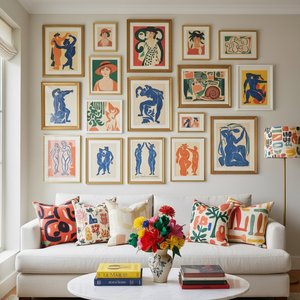
Henri Matisse's Masterpieces: Explore 25 Iconic Paintings & Art Decor Ideas
Journey through Henri Matisse's 25 most iconic paintings! Explore Fauvism, vibrant colors & the stories behind masterpieces like 'The Dance'. Find museum-quality art reproductions and curated decor ideas to elevate your space. Discover all masterpieces on ArtsDot.com.
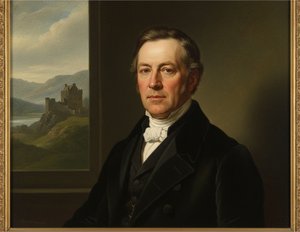
Henry Raeburn: A Scottish Portraitist's Mastery of Light, Character & National Identity
Explore the life & work of Henry Raeburn, a master Scottish portraitist. Discover his innovative techniques, captivating portraits of the Enlightenment era, and lasting legacy in art history. Learn more at ArtsDot.
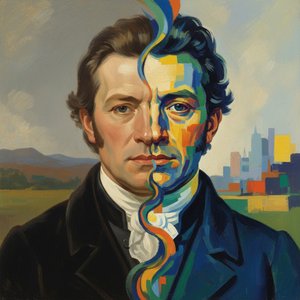
Henry Raeburn Dobson: A Scottish Colourist Bridging Tradition & Modernity
Explore the life & work of Henry Raeburn Dobson, a key figure bridging Scottish tradition & modern art. Discover his neoclassical portraits, landscapes, and connection to the Colourists. Learn about collecting his works.
Sir John Watson Gordon: A Study in Scottish Landscape Painting & Tonal Impressionism
Explore the captivating portraits of Sir John Watson Gordon, a leading Scottish master. Discover his evolution from neoclassical style to atmospheric Tonalism and influence on 19th-century British art. Learn about his iconic sitters & legacy.
Henry Thomas Dawson: Navigating Light, Sea & Sentiment in Victorian Marine Painting
Explore the captivating world of Henry Thomas Dawson (1811-1878), a master of Victorian marine painting. Discover his evocative coastal scenes, landscapes & lasting artistic legacy. Learn about collecting Dawson's work and find reproductions at ArtsDot.