 Preview
 Send
Send Share
Share
 Details

 Download
 Similars
 X-Ray
X-Ray Diaporama
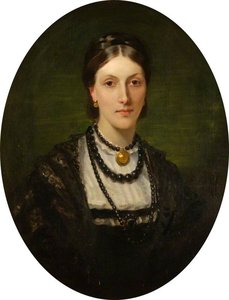
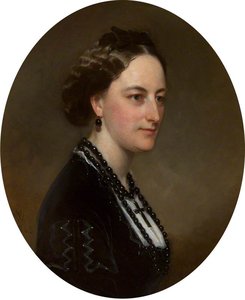
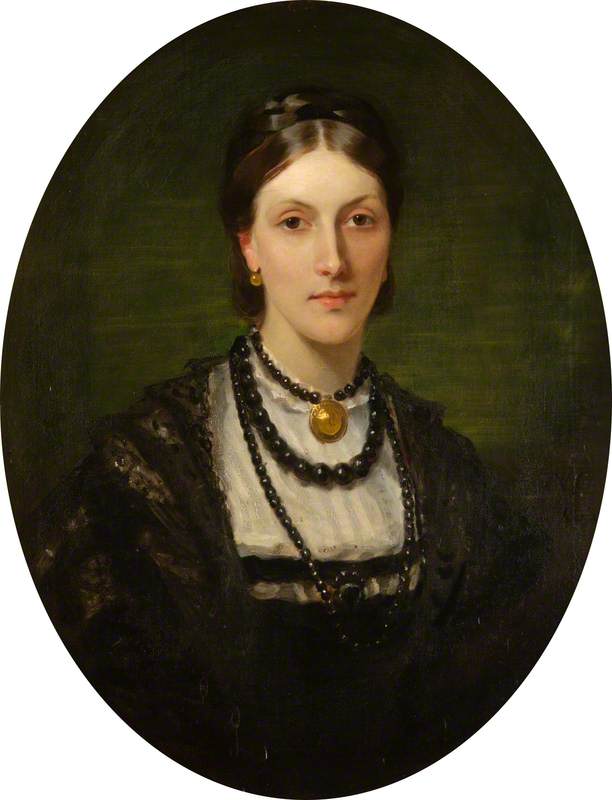
Christina Grace Agnes Hamilton (d.1897), Wife of Colonel Alexander Leith Hay
 Oil On Canvas
- WallArt
- Academic Realism
 1861
1861- 19th Century
 64.0 x 51.0 cm
 The National Trust For Scotland
 Read More
Giclée / Art Print
Museum-quality giclée or canvas print with fast production and flexible finish options. ( Buy Hand Made Painting Buy Image)




P118B $10

P118H $10

P118W $10

P438Z $10

P508JH $12

P508YH $12

P805H $10

P805Z $10

P919BZ $10

P919G $10

P919XJ $10

P959ZH $10

P968JZ $12

W106C $8

W218G $10

W218JH $8

W218Y $10

W307PJ $10

W316G $10

W316PJ $8

W316Y $10

W398PJ $8

W4111J $10

W500HY $15

W500JH $15

W692G $12

W849H $8

W940BG $15

W953PJ $8




Pick from our preset sizes that match the artwork's original proportions.

You may enter your own dimensions to fit a specific frame or space. If your selected size does not match the original image's proportions, we will either crop the artwork or extend the image with a mirrored or solid-fill edge. A digital mockup will be sent for your approval before production begins.
Please note that the on-screen preview does not reflect the actual cropping or extension. Only the mockup will accurately show the final composition.
While custom sizes are available, we recommend selecting a dimension from the predefined list to preserve the original proportions.
Worldwide Delivery () in 2 weeks instead of standard 4/5 weeks. (4 September)

Free Worldwide Express Shipping

High-Quality Linen Canvas

Full Shipping Insurance

Customs Tax Refund Guarantee

True Color Matching Guarantee

60-Day Return Policy (Defects Only)

100% Money-Back Guarantee

Bulk Discount Offer
 Glass option is only available in size under 110 CM

Christina Grace Agnes Hamilton (d.1897), Wife of Colonel Alexander Leith Hay
Giclée / Art Print
Reproduction Size
-


Total Price
$ 63
A Portrait of Victorian Grace: Christina Hamilton, Lady Suttie of Balgone
Henry Weigall’s 1861 portrait of Christina Grace Agnes Hamilton, wife of Colonel Alexander Leith Hay, is a masterclass in capturing the refined elegance and quiet dignity characteristic of mid-Victorian portraiture. Executed with meticulous detail and a profound understanding of light and shadow, this painting transcends a simple likeness; it’s an evocative snapshot of a woman embodying the social standing and measured grace expected of her station.
The composition immediately draws the eye to Christina's face – rendered with a remarkable sensitivity to texture and form. Her gaze is direct yet subtly melancholic, hinting at the complexities beneath a composed exterior. The soft lighting, typical of Weigall’s technique, gently illuminates her features, creating a sense of depth and volume while simultaneously lending an air of timelessness. Notice how he utilizes subtle gradations in tone to model the folds of her dress – a testament to his mastery of oil paint and his ability to create the illusion of fabric through careful brushwork.
The Language of Victorian Portraiture
This portrait exemplifies many key elements of Victorian portraiture. The formal pose, with Christina seated upright and maintaining a dignified posture, reflects the social conventions of the era. Her attire – a rich velvet gown adorned with a delicate gold pendant – speaks volumes about her wealth and status. These details were not merely decorative; they served as visual markers of identity within a rigidly stratified society.
Furthermore, the inclusion of symbolic elements is noteworthy. The pendant, likely a family heirloom, represents lineage and inherited wealth. The careful arrangement of her jewelry – a hallmark of Victorian portraiture – was intended to subtly enhance her image and communicate her social position. Weigall’s skill lies not just in his technical ability but also in his understanding of the visual language of his time.
Historical Context & Artistic Influences
Henry Weigall was a prominent figure within the London art scene during the mid-19th century, deeply influenced by the Academic tradition. He trained under Thomas Webster, absorbing the principles of classical realism and mastering techniques that prioritized accuracy and tonal harmony. This influence is clearly evident in Christina Hamilton’s portrait – its balanced composition, precise detailing, and restrained palette are all hallmarks of Weigall's style.
The painting reflects a period of significant social and artistic change. The Victorian era was marked by rapid industrialization, urbanization, and the rise of the middle class. Portraiture played a crucial role in documenting this transformation, serving as both a personal keepsake and a marker of social status. Weigall’s work captures this duality perfectly – celebrating individual beauty while reflecting the broader cultural context of his time.
Emotional Resonance & Collector's Appeal
Beyond its historical significance, Christina Hamilton, Lady Suttie of Balgone, possesses a profound emotional resonance. The painting’s quiet dignity and subtle melancholy invite contemplation and evoke a sense of timeless beauty. This is not merely a representation of a woman; it’s an exploration of human character and emotion.
As a hand-painted reproduction, this artwork offers the opportunity to own a truly unique piece of art history. Its meticulous detail and evocative atmosphere will undoubtedly enhance any interior space, serving as a conversation starter and a testament to the enduring legacy of Henry Weigall’s artistic vision.
Related Artworks
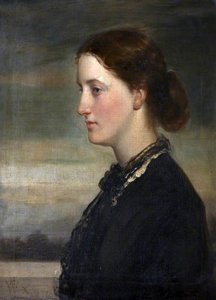
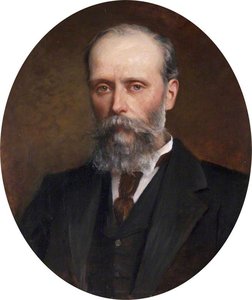
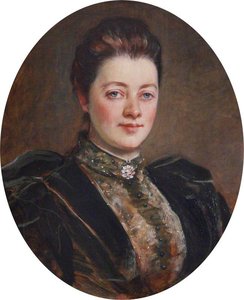
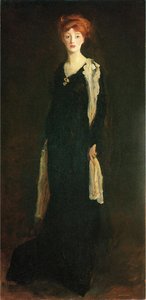
Artist Biography
The Master of Victorian Elegance: The Life and Legacy of Henry Weigall
In the grand tapestry of nineteenth-century art, few threads possess the refined texture and dignified grace found in the works of Henry Weigall. Born in Philadelphia in 1829, Weigall emerged as a painter who could seamlessly bridge the gap between the rigorous traditions of European Academicism and the burgeoning spirit of American identity. His journey was one of transatlantic movement, beginning with formative years spent in the heart of London’s artistic circles. Under the tutelage of the esteemed Thomas Webster, Weigall absorbed the essential principles of classical realism, learning to manipulate light and shadow to breathe life into his subjects. This early training instilled in him a profound respect for tonal harmony and a disciplined approach to composition that would become the hallmark of his enduring career.
Upon his return to the United States, Weigall’s artistic evolution took on a dual nature. While he found deep inspiration in the sprawling beauty of the American landscape—utilizing atmospheric perspective and subtle, emotive color palettes to capture the quiet majesty of the countryside—it was within the intimate confines of portraiture that he truly found his voice. He possessed a rare, almost intuitive ability to look beyond the surface of a sitter, seeking to capture not just a physical likeness, but the psychological depth and social standing of his subjects. His canvases became windows into the Victorian era, documenting the faces of industrialists, diplomats, and literary luminaries with a level of precision that commanded respect across the Atlantic.
Technique, Light, and the Art of the Portrait
The brilliance of Weigall’s technique lies in his masterful command of tonal gradation. He did not merely apply paint; he sculpted light. By meticulously blending subtle shifts in shade, he achieved a luminous quality that gave his portraits an almost three-dimensional presence. This mastery of light allowed him to create depth within the folds of heavy Victorian fabrics and to render the soft glow of skin with breathtaking realism. His compositions often favored a dignified, frontal approach, which lent his subjects an air of permanence and composure. Yet, beneath this formal exterior, there is always a subtle hint of nuance—a slight tilt of the head or a particular glint in the eye—that suggests the complex inner lives of those he painted.
One of his most captivating achievements can be seen in his depictions of the era's social elite, such as his 1878 portrait of Mary Dickinson, the 6th Viscountess Clifden. In this work, Weigall demonstrates his ability to marry classical realism with an evocative sense of elegance. The painting serves as a testament to his skill in capturing both the material splendor of the age and the quiet, aristocratic grace of the individual. Through such works, Weigall did more than record history; he elevated it, turning the portraits of his contemporaries into timeless icons of cultural heritage.
Historical Significance and Artistic Heritage
As the nineteenth century transitioned into the twentieth, Weigall’s work remained a steadfast anchor to the values of classical beauty and technical excellence. While art movements began to shift toward more experimental and abstract forms, Weigall’s commitment to realism provided a vital link to the traditions of the past. His legacy is not merely found in the museums that house his paintings, but in the way he captured the very soul of an era. He documented a period of immense social and industrial transformation through the eyes of those who lived it, providing a visual record of the dignity and complexity of the Victorian age.
Today, the works of Henry Weigall continue to resonate with collectors and art historians alike. His ability to harmonize technical precision with emotional resonance ensures that his portraits remain much more than historical artifacts; they are living breathing encounters with the past. To study Weigall is to understand the intersection of American ambition and European refinement, a period where art served as both a mirror to society and a monument to the human spirit.
henry weigall
1829 - 1925
Quick Facts
- Artistic Movement Or Style: Academic Realism
- Artists Or Movements Influenced By This Artist:
- Victorian Art Style
- Portrait Painting
- Artists Who Influenced This Artist:
- Henry Raeburn
- Jean-Auguste Dominique Ingres
- Date Of Birth: 1829
- Date Of Death: 1925
- Full Name: Henry Weigall
- Nationality: British
- Notable Artworks:
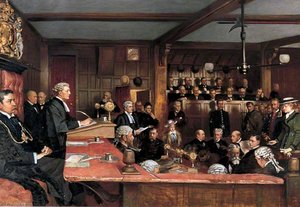
- Sandwich Quarter Sessions, 1898
- Mary Dickinson (1853–1921), 6th Viscountess Clifden
- Alda Gertrude Lethbridge (1836–1906), Mrs Henry William Purcell Weston
- Place Of Birth: London, England
Related Articles
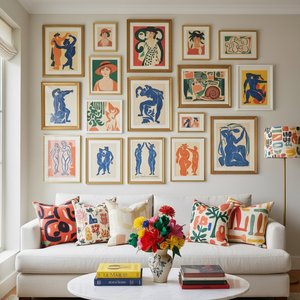
Henri Matisse's Masterpieces: Explore 25 Iconic Paintings & Art Decor Ideas
Journey through Henri Matisse's 25 most iconic paintings! Explore Fauvism, vibrant colors & the stories behind masterpieces like 'The Dance'. Find museum-quality art reproductions and curated decor ideas to elevate your space. Discover all masterpieces on ArtsDot.com.
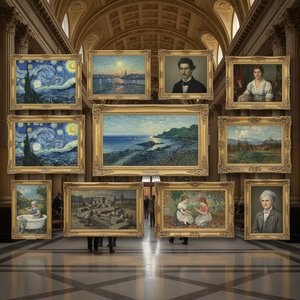
19th Century Masterpieces: 10 Paintings That Defined an Era | ArtsDot
Journey through 19th century art with ArtsDot! Explore 10 iconic paintings – from Monet & Renoir to Courbet – and discover the stories behind Romanticism, Realism & Impressionism. Find museum-quality reproductions for your home decor. Explore the full collection online!

The Enduring Legacy of Oil on Canvas: Technique, History & Aesthetic Impact
Explore the rich history & techniques of oil painting – from Renaissance masters to Impressionism. Discover pigments, layering methods, and why this timeless medium endures. Expert insights for artists & art enthusiasts.

Oil on Canvas: A Historical & Technical Exploration of a Timeless Artistic Medium
Explore the rich history & enduring techniques of oil painting on canvas. Discover the science behind its longevity, conservation practices, and contemporary relevance. Expert insights for art enthusiasts.

The Enduring Power of Painting: A Historical & Contemporary Exploration of Form and Emotion
Explore the rich history & enduring techniques of oil painting with ArtsDot. Discover masterpieces, learn about art collecting, and find authentic handmade reproductions crafted by skilled artists.