 Preview
 Send
Send Share
Share
 Details

 Download
 Similars
 X-Ray
X-Ray Diaporama
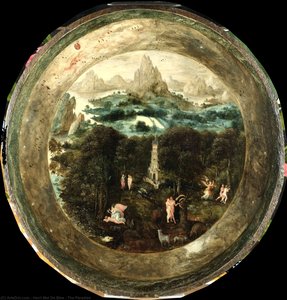
The Paradise
 Acrylic On Canvas
- WallArt
- Northern Renaissance Mannerism
 47.0 x 47.0 cm
 Rijksmuseum
 Read More
Hand Made Oil Reproduction
Hand-painted oil on canvas in your size and frame, made to order by our artists. ( Buy Print Buy Image)




P118B $10

P118H $10

P118W $10

P438Z $10

P508JH $12

P508YH $12

P805H $10

P805Z $10

P919BZ $10

P919G $10

P919XJ $10

P959ZH $10

P968JZ $12

W106C $8

W218G $10

W218JH $8

W218Y $10

W307PJ $10

W316G $10

W316PJ $8

W316Y $10

W398PJ $8

W4111J $10

W500HY $15

W500JH $15

W692G $12

W849H $8

W940BG $15

W953PJ $8




Pick from our preset sizes that match the artwork's original proportions.

You may enter your own dimensions to fit a specific frame or space. If your selected size does not match the original image's proportions, we will either crop the artwork or extend the painting with additional hand-painted elements. A digital mockup will be sent for your approval before production begins.
Please note that the on-screen preview does not reflect the actual cropping or extension. Only the mockup will accurately show the final composition.
While custom sizes are available, we recommend selecting a dimension from the predefined list to preserve the original proportions.
After order, ArtsDot.com team will email client for instructions and provide a mockup preview
Worldwide Delivery () in 3/4 weeks instead of standard 5 weeks. (17 August). No compromise on quality.

Free Worldwide Express Shipping

High-Quality Linen Canvas

Full Shipping Insurance

Customs Tax Refund Guarantee

True Color Matching Guarantee

60-Day Return Policy (Defects Only)

100% Money-Back Guarantee

Bulk Discount Offer
 Glass option is only available in size under 110 CM

The Paradise
Reproduction Medium
Reproduction Size
-


Total Price
$ 263
Artwork Description
A Vision of Primordial Harmony
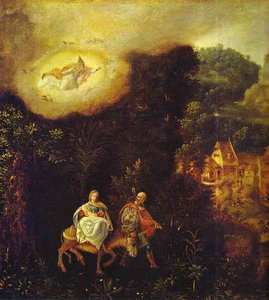
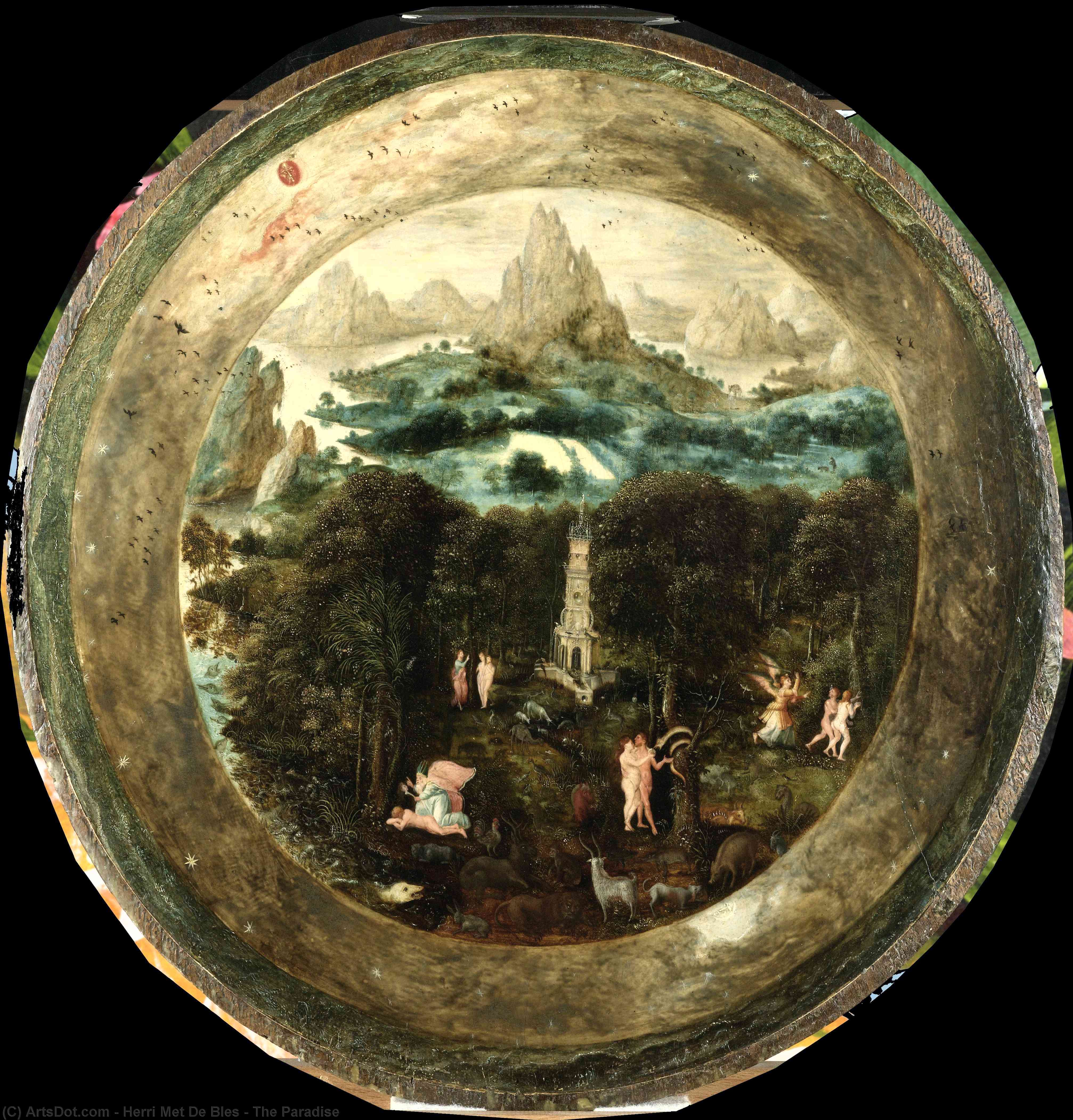
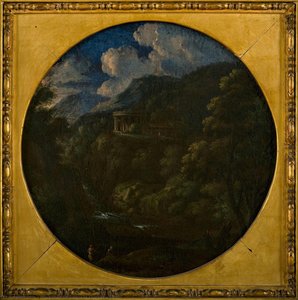
Herri met de Bles' "The Paradise," painted circa 1540, isn’t merely a depiction of the biblical Garden of Eden; it’s an immersive experience, a carefully constructed landscape brimming with symbolic weight and a profound sense of serenity. The tondo format – a circular painting – immediately draws the viewer in, creating an intimate space within which to contemplate this idealized world. It's a scene steeped in the traditions of Northern Renaissance art, particularly influenced by the pioneering work of Gerard David, yet imbued with a distinctly atmospheric quality that transcends simple representation.
The composition unfolds with deliberate grace. A rugged, mountainous backdrop, rendered in muted browns and greens, establishes a sense of timelessness and solidity – an ancient earth beneath a nascent paradise. Within this landscape, figures are subtly integrated, not dominating the scene but rather existing as part of its organic flow. We see Adam and Eve, positioned near the center, engaged in quiet contemplation, their forms rendered with a delicate realism that contrasts beautifully with the broader, more stylized depiction of the surrounding flora and fauna. A dog playfully bounds through the foreground, while birds soar above, adding to the feeling of vibrant life within this enclosed sanctuary.
The Language of Landscape: Symbolism in Detail
Met de Bles’ genius lies not just in his technical skill but in his masterful use of symbolism. The abundance of trees – a profusion of fruit-bearing branches and towering trunks – speaks to the Garden's fertility, its promise of sustenance and renewal. The presence of a fountain, positioned at the heart of the composition, is particularly significant; it’s a potent symbol of life itself, a source from which all creation springs forth. Notice, too, the carefully placed horse on the left – a nod to the animal kingdom and a reminder of humanity's connection to nature.
The inclusion of a figure holding what appears to be a staff or bow adds an intriguing layer of narrative complexity. While its precise meaning remains open to interpretation, it suggests a guardianship role, perhaps representing God’s watchful presence over this sacred space. The overall effect is one of carefully balanced harmony – a visual representation of Eden's perfection before the intrusion of sin.
A Masterpiece of Northern Renaissance Technique
Technically, “The Paradise” exemplifies the hallmarks of the Northern Renaissance style. Met de Bles employs a meticulous approach to detail, evident in the realistic rendering of individual leaves, branches, and animal forms. However, he doesn’t simply replicate reality; instead, he uses perspective and atmospheric effects – particularly the subtle use of light and shadow – to create a sense of depth and distance. The muted color palette contributes significantly to the painting's overall mood of tranquility and timelessness.
The influence of Joachim Patinir, another key figure in Northern Renaissance landscape painting, is readily apparent in Met de Bles’ use of aerial perspective – creating a sense of depth through variations in color and detail. This technique, combined with the artist's masterful composition, elevates “The Paradise” beyond a simple depiction of a biblical scene, transforming it into a profound meditation on themes of creation, innocence, and the enduring allure of paradise.
Rediscovering Eden: A Reproduction for Your Space
Reproductions of "The Paradise" offer a remarkable opportunity to bring this evocative masterpiece into your home or office. Available in various sizes, our hand-painted reproductions faithfully capture the painting’s rich detail and atmospheric depth, ensuring that you can experience its beauty and symbolism firsthand. Whether you're an art enthusiast, a collector of Northern Renaissance art, or simply seeking a piece to add a touch of serenity to your surroundings, this stunning reproduction is sure to captivate and inspire.
Related Artworks
![Vida De Miguel De Cervantes Saavedra (life Of Miguel De Cervantes Saavedra). Book V Of The Edition Of Don Quixote (biblioteca Nacional De España)\n\n[7] — Martín Fernández De Navarrete Y Ximénez De Tejada, Academic Art](/media/artworks/images/thumbnails/99/f9/99f969c294754562907a5ffd062310fa.jpg)
Artist Biography
The Architect of Atmospheric Vistas
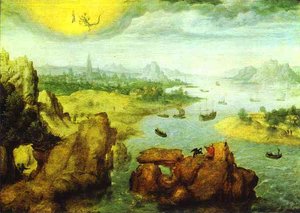
In the golden age of the Northern Renaissance, few artists captured the ethereal beauty of the expanding world as masterfully as Herri met de Bles. A pioneer of the Weltlandschaft, or "world landscape," his canvases served as windows into a realm where the terrestrial and the divine converged. Unlike his predecessors who often relegated scenery to a mere backdrop, de Bles elevated the landscape to a protagonist in its own right.His compositions are characterized by sweeping, high-altitude perspectives that draw the eye across jagged, rocky masses and through layers of hazy, atmospheric blue. Through this mastery of aerial perspective, he achieved a sense of infinite depth, inviting the viewer to wander through misty valleys and over craggy peaks that seem to dissolve into the very horizon itself. This technique allowed him to create an immersive experience, where the scale of nature feels both overwhelming and profoundly beautiful.
A Life Woven into the Flemish Landscape
Born in the rugged environs of Dinant or Bouvignes around the turn of the sixteenth century, de Bles’s identity was as multifaceted as his art. Known by various names such as Henri Blès and Herri de Dinant, he moved within a circle of influential masters, including the legendary Joachim Patinir. While historical evidence regarding a direct familial link to Patinir remains debated, the stylistic lineage is undeniable; de Bles became a vital successor in refining the panoramic style.His journey likely took him far beyond the borders of Flanders, with traces suggesting a sojourn in Ferrara, Italy. This exposure to Italian influences may have enriched his Mannerist sensibilities, allowing him to blend Northern precision with a more dramatic, emotive sense of space and light. Whether he was painting the lush gardens of The Paradise or the chaotic energy of religious struggles, his work remained anchored in a profound understanding of the natural world's ability to reflect the human condition.
The Owl’s Watch and the Human Spirit
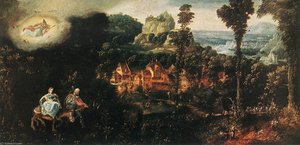
Beyond the grand vistas, de Bles infused his work with intimate, symbolic details that transformed mere scenery into profound narratives. He was famously known in Italy as il Civetta, or "the little owl," a moniker earned by the recurring presence of a small owl nestled within a hollow tree or rocky crevice—a signature motif that acted as an artist's seal. Within these vast, sweeping compositions, he meticulously placed small, vibrant vignettes of human existence:- Religious episodes such as the Flight into Egypt, where sacred drama unfolds amidst the wildness of nature.
- Scenes of industrious Flemish life, including the rhythmic toil of mining, agriculture, and trade.
- The interplay of light and shadow across landscapes that celebrate both the spiritual and the mundane.
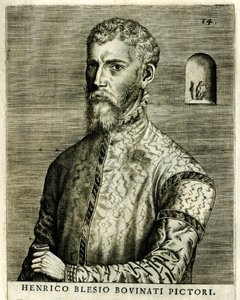
Herri met de Bles
1500 - 1555 , Belgium
Quick Facts
- Artistic Movement Or Style: High Renaissance
- Artists Or Movements Influenced By This Artist: ['Da Vinci family']
- Artists Who Influenced This Artist: ['Andrea del Verrocchio']
- Date Of Birth: April 15, 1452
- Date Of Death: May 2, 1519
- Full Name: Leonardo di ser Piero da Vinci
- Nationality: Italian
- Notable Artworks:
- Mona Lisa
- The Last Supper
- Vitruvian Man
- Place Of Birth: Vinci, Italy
Related Articles

Goya's Masterpieces: Explore 25 Iconic Paintings & Art Prints | ArtsDot
Delve into the world of Francisco Goya with ArtsDot. Explore 25 iconic paintings – from 'The Third of May' to his haunting Black Paintings. Discover the stories, techniques & emotions behind these Spanish masterpieces. Find museum-quality art reproductions for your home at ArtsDot.com!

Demandes Commerciales
APS ofrece reproducciones de bellas artes y encargos personalizados desde 2004. Confían en nosotros corporaciones, hoteles y coleccionistas selectos para obras de arte de calidad museística, servicio discreto y soluciones artísticas completas. ¡Póngase en contacto con nosotros para obtener un presupuesto personalizado!
Cultivating Paradise: A Historical & Artistic Exploration of Gardens in Painting
Explore the rich history of gardens in painting! Discover masterpieces from Renaissance to Impressionism & beyond. Learn about symbolism, artists like Monet & Klimt, and find your perfect artwork at ArtsDot.

A riguardo di noi
Découvrez notre histoire ! Nous apportons l'art de classe mondiale dans votre vie grâce à une sélection experte, des créations personnalisées et des aperçus gratuits. Approuvé par les particuliers et les entreprises depuis 2000.
Pieter de Hooch: Illuminating Dutch Domestic Life & Golden Age Charm
Explore the captivating world of Pieter de Hooch, a master of Dutch Golden Age painting. Discover his innovative use of light, intimate domestic scenes, and lasting influence on art history. Learn more at ArtsDot.