 Preview
 Send
Send Share
Share
 Details

 Download
 Similars
 X-Ray
X-Ray Diaporama
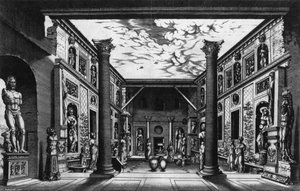
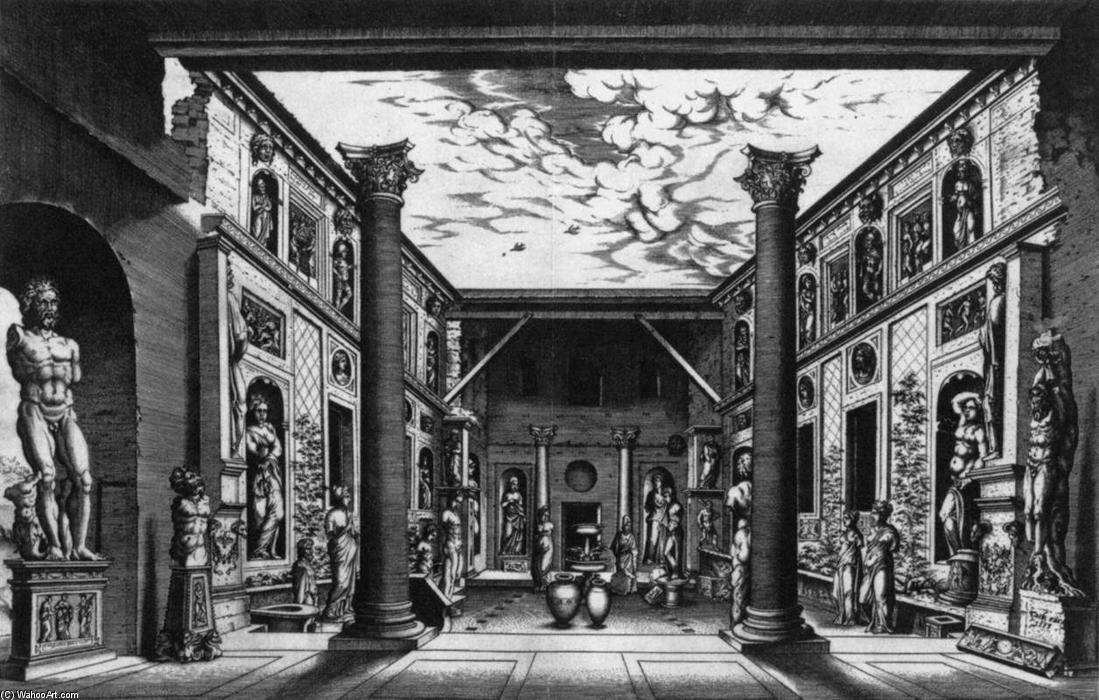
Ancient Sculpture Displayed in s Courtyard


 Read More
Hand Made Oil Reproduction
Hand-painted oil on canvas in your size and frame, made to order by our artists. ( Buy Print Buy Image)




P118B $10

P118H $10

P118W $10

P438Z $10

P508JH $12

P508YH $12

P805H $10

P805Z $10

P919BZ $10

P919G $10

P919XJ $10

P959ZH $10

P968JZ $12

W106C $8

W218G $10

W218JH $8

W218Y $10

W307PJ $10

W316G $10

W316PJ $8

W316Y $10

W398PJ $8

W4111J $10

W500HY $15

W500JH $15

W692G $12

W849H $8

W940BG $15

W953PJ $8




Pick from our preset sizes that match the artwork's original proportions.

You may enter your own dimensions to fit a specific frame or space. If your selected size does not match the original image's proportions, we will either crop the artwork or extend the painting with additional hand-painted elements. A digital mockup will be sent for your approval before production begins.
Please note that the on-screen preview does not reflect the actual cropping or extension. Only the mockup will accurately show the final composition.
While custom sizes are available, we recommend selecting a dimension from the predefined list to preserve the original proportions.
After order, ArtsDot.com team will email client for instructions and provide a mockup preview
Worldwide Delivery () in 3/4 weeks instead of standard 5 weeks. (17 August). No compromise on quality.

Free Worldwide Express Shipping

High-Quality Linen Canvas

Full Shipping Insurance

Customs Tax Refund Guarantee

True Color Matching Guarantee

60-Day Return Policy (Defects Only)

100% Money-Back Guarantee

Bulk Discount Offer
 Glass option is only available in size under 110 CM

Ancient Sculpture Displayed in s Courtyard
Reproduction Medium
Reproduction Size
-


Total Price
$ 438
Artwork Description
A Window into Antiquity: The World of Hieronymus Cock
Hieronymus Cock's "Ancient Sculpture Displayed in s Courtyard," a meticulously rendered engraving from 1553, isn’t merely a depiction of a Roman courtyard; it’s a carefully constructed portal to the Renaissance fascination with classical antiquity. Created during a period of fervent rediscovery and emulation of Greco-Roman art and architecture, Cock's work embodies the spirit of this era – a desire to revive the glories of the past while simultaneously forging a new artistic identity for Europe. The image transports us to a meticulously planned space, brimming with fragmented sculptures, hinting at a grander, lost collection, and speaking volumes about the patronage and intellectual climate of its time.

The Art of the Print: Technique and Innovation
Cock’s genius lay not just in his subject matter, but in his mastery of printmaking – a medium he fundamentally reshaped. Unlike earlier woodcuts or engravings that often lacked depth and nuance, Cock's work demonstrates an unprecedented level of detail and tonal variation. He employed the technique of drypoint engraving, utilizing a needle to scratch directly into a metal plate (typically copper), creating lines of varying darkness depending on the pressure applied. This allowed for subtle gradations of tone – crucial for conveying the play of light and shadow within the courtyard. The intricate cross-hatching, a hallmark of his style, builds volume and texture with astonishing precision, giving the impression of palpable stone and weathered surfaces. The image is not simply copied; it’s reimagined through the lens of meticulous observation and artistic skill.
Furthermore, Cock's role as a publisher was revolutionary. He didn’t just create individual prints; he established a sophisticated system for distributing works by leading artists like Bruegel, Bosch, and Floris across Europe. This democratization of art – making masterpieces accessible to a wider audience – marked a significant shift in the artistic landscape.
A Roman Echo: Symbolism and Context
The scene depicted is deeply rooted in the Renaissance’s obsession with Rome and its classical heritage. The courtyard itself, likely belonging to a wealthy patron or a religious institution, serves as a carefully curated display of ancient sculpture fragments. These broken pieces – a deliberate choice by Cock – evoke a sense of loss and longing for a lost golden age. They represent not just individual works of art but also the broader cultural memory of Rome’s artistic achievements. The arrangement suggests an act of preservation, a conscious effort to honor and emulate the past. The inclusion of architectural elements—columns, arches, and distant structures—reinforces this theme, creating a cohesive visual narrative that speaks to the ideals of order, harmony, and intellectual pursuit so central to Renaissance thought.
Beyond the Image: Cock’s Legacy
Hieronymus Cock's "Ancient Sculpture Displayed in s Courtyard" is more than just a beautiful print; it’s a testament to his innovative spirit and his pivotal role in shaping the course of European art history. His pioneering work as a print publisher transformed the artistic world, making Renaissance masterpieces accessible to a broader audience. Today, this engraving continues to captivate viewers with its remarkable detail, evocative atmosphere, and profound connection to the ideals of the Renaissance – a timeless reminder of humanity’s enduring fascination with beauty, knowledge, and the legacy of the past.
Related Artworks
Artist Biography
A Flemish Master of Print: The Life and Legacy of Hieronymus Cock
Hieronymus Cock, a name perhaps less instantly recognizable than those of his contemporaries Bruegel or Bosch, nevertheless stands as a pivotal figure in the artistic landscape of 16th-century Flanders. Born around 1518 in Antwerp, a city then pulsing with commercial and creative energy, Cock wasn’t merely a painter or etcher; he was an innovator who fundamentally reshaped how art was produced, disseminated, and consumed. His story is one of entrepreneurial vision coupled with artistic talent, transforming printmaking from a craft practiced by individual artisans into a burgeoning industry that democratized access to imagery across Europe. Cock's early life was steeped in artistry – his father, Jan Wellens de Cock, and brother, Matthys Cock, were both established painters, providing him with an immersive introduction to the world of visual creation. He formally trained as a painter, achieving mastery within Antwerp’s prestigious Guild of Saint Luke in 1545, solidifying his professional standing within the artistic community. A formative journey to Rome around 1546-1547 further broadened his horizons, exposing him to the stylistic currents of the Italian Renaissance that would later subtly influence his own work and, crucially, the aesthetic direction of his publishing ventures.The Rise of “Aux Quatre Vents”: A Publishing Revolution
Upon returning to Antwerp in 1547, Cock married Volcxken Diericx, a partnership that proved instrumental in launching one of the most significant print publishing houses of the Northern Renaissance: "Aux quatre vents" (At the Four Winds), or “In de Vier Winden.” This wasn’t simply a matter of adding another workshop to Antwerp's already vibrant scene; it represented a paradigm shift. Prior to Cock, prints were largely created and distributed by individual artists. Cock envisioned – and realized – a division of labor. He assembled a team of specialized engravers who executed designs provided by various artists, allowing for mass production and wider distribution than ever before. This innovative approach was remarkably successful. Between 1548 and his death in 1570, "Aux Quatre Vents" issued over 1,100 prints – an astonishing output that dramatically expanded the reach of artistic ideas throughout Europe. The workshop became a hub for reproducing works by leading artists of the time, including Frans Floris, Pieter Bruegel the Elder, Lambert Lombard, Maarten van Heemskerck, and even reinterpretations of the fantastical imagery of Hieronymus Bosch. Architectural designs from Cornelis Floris and Hans Vredeman de Vries also found a broad audience through Cock’s publications. The efficiency and scale of “Aux Quatre Vents” established a new standard for print production, effectively creating an early form of artistic mass media.Artistic Contributions Beyond Publishing
While his legacy is inextricably linked to his role as a publisher, it's important to recognize Hieronymus Cock’s accomplishments as an artist in his own right. He created approximately 62 etchings throughout his career, demonstrating considerable skill and artistic vision. His series of twelve landscape etchings from 1558 are particularly noteworthy, showcasing a distinctive style that echoes the imaginative landscapes painted by his brother, Matthys. These works reveal a fascination with fantastical elements and atmospheric effects, hinting at a creative sensibility beyond simply overseeing production. Cock also actively collaborated with other artists and designers on ambitious projects. His partnership with Cornelis Floris de Vriendt resulted in beautifully illustrated books such as "Veelderley niewe inuentien van antycksche sepultueren" (Many New Inventions of Antique Sepulchers) and “Veelderley veranderinghe van grotissen” (Many Varieties of Grotesques), which played a significant role in popularizing the ornate Floris style. Furthermore, his involvement extended beyond purely artistic endeavors; he collaborated with Spanish cartographer Diego Gutiérrez on a detailed map of America in 1562, demonstrating a willingness to engage with diverse fields of visual representation.A Lasting Impact on Art History
Hieronymus Cock’s most enduring contribution lies in his transformation of printmaking into a sophisticated and commercially viable enterprise. He didn't just produce prints; he built an industry, fundamentally altering the way art was disseminated and experienced. The prints emanating from "Aux Quatre Vents" were instrumental in spreading the influence of the Italian High Renaissance northward, introducing works by masters like Raphael, Primaticcio, Bronzino, Giulio Romano, and Andrea del Sarto to a wider audience than ever before. His publication of portraits of prominent Netherlandish painters in 1572 – *Pictorum aliquot celebrium germaniae inferioris effigies* – was also profoundly influential, helping to solidify the canon of celebrated artists from the region and shaping subsequent art historical narratives. This collection significantly impacted Karel van Mander’s later biographical work on artists, establishing a foundation for future scholarship. After Cock's death in 1570, Philip Galle, who had worked within his workshop, continued the publishing legacy. His widow, Volcxken Diericx, skillfully managed the business until her own passing in 1601, ensuring its continued prominence and solidifying Hieronymus Cock’s place as a true innovator in the history of art. His vision extended beyond artistry; it was a vision of accessibility, dissemination, and the power of the printed image.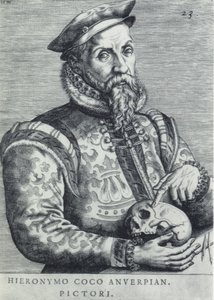
Hieronymus Cock
1510 - 1570 , Belgium
Quick Facts
- Artistic Movement Or Style: Northern Renaissance
- Artists Or Movements Influenced By This Artist:
- Philip Galle
- Northern Renaissance art
- Artists Who Influenced This Artist:
- Frans Floris
- Pieter Bruegel the Elder
- Date Of Birth: c. 1518
- Date Of Death: October 1570
- Full Name: Hieronymus Cock
- Nationality: Flemish
- Notable Artworks:
- Tentation de Saint Antoine
- The Flight into Egypt
- Landscape etchings (1558)
- Place Of Birth: Antwerp, Belgium
Related Articles
Luca della Robbia: Renaissance Sculpture & the Innovation of Terracotta Glazing
Discover the innovative terracotta glazing techniques of Luca della Robbia, a Renaissance master sculptor. Explore his iconic works, legacy, and collecting tips with ArtsDot.
The Flourishing of Humanism: A Comprehensive Exploration of the Italian Renaissance Art Movement
Explore the Italian Renaissance! Discover humanist ideals, iconic masterpieces by Leonardo, Michelangelo & Raphael, and lasting artistic innovations. A comprehensive guide for art enthusiasts.
Renaissance Humanism's Greatest Art: 10 Masterpieces for Your Home
Explore 10 Renaissance Humanism masterpieces by Leonardo da Vinci, Michelangelo & Raphael. Discover the stories behind these iconic paintings & sculptures and bring timeless art into your home with museum-quality reproductions from ArtsDot.com. Explore the full collection online!
The Enduring Allure of Marble in Art History: From Classical Sculpture to Modern Abstraction
Explore the captivating history of marble sculpture from ancient Greece to modern art. Discover renowned artists like Canova & Michelangelo, carving techniques, and investment insights at ArtsDot.

Bronze Age to Modern Masters: 10 Sculptures That Redefined Art | ArtsDot
Journey through art history with 10 legendary bronze sculptures – from Michelangelo's David to Rodin’s Thinker. Explore the stories, techniques & timeless beauty of these masterpieces. Find museum-quality reproductions & elevate your home decor on ArtsDot.com.