 Preview
 Send
Send Share
Share
 Details

 Download
 Similars
 X-Ray
X-Ray Diaporama
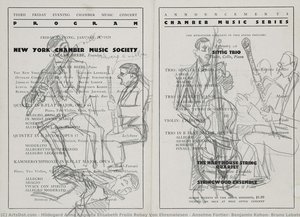
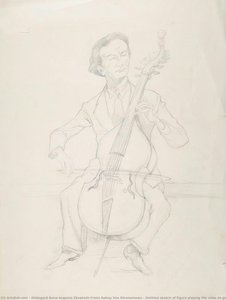
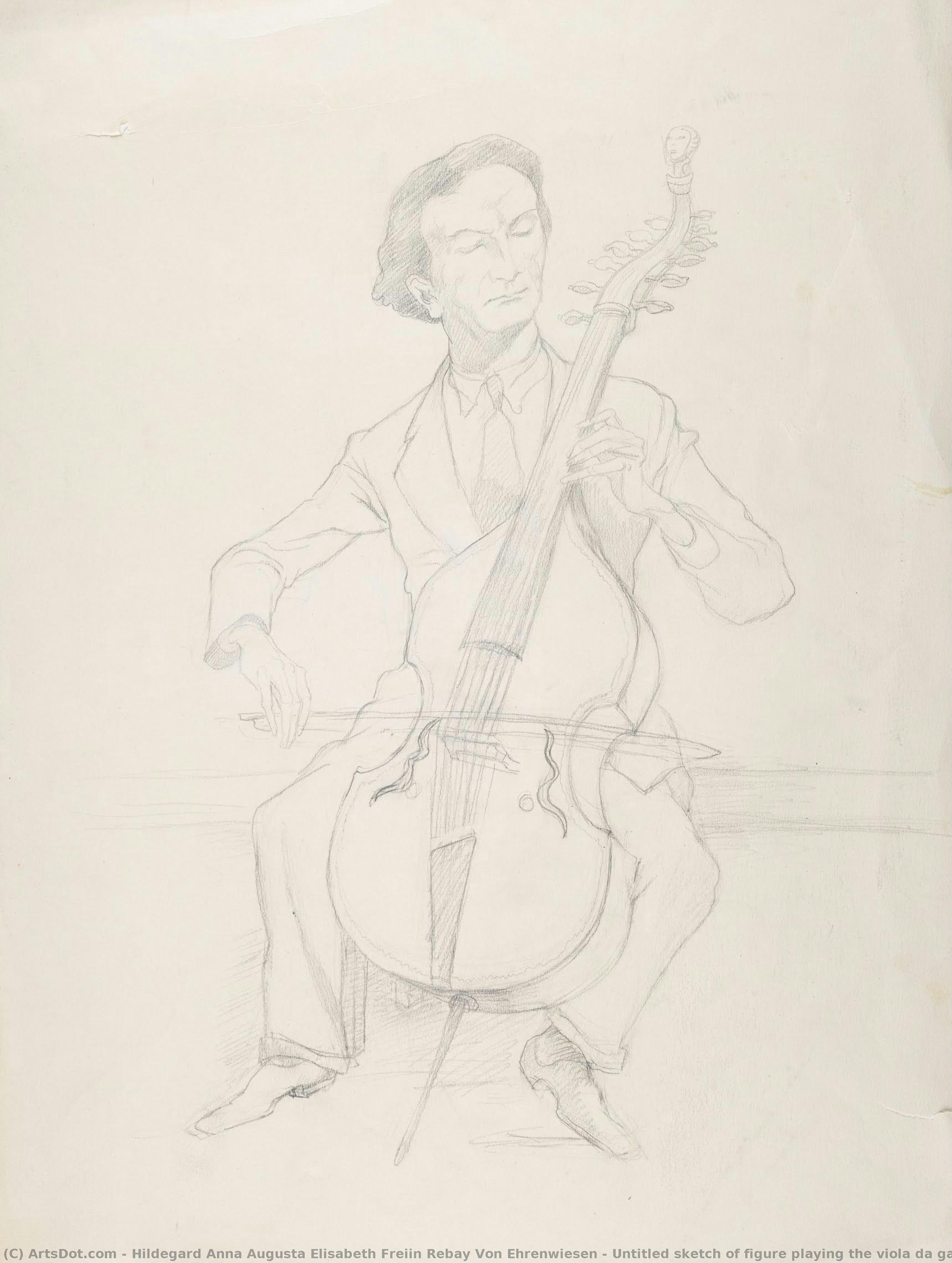
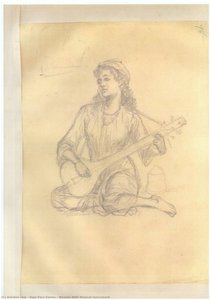
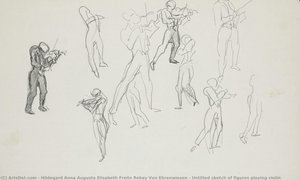
Untitled sketch of figure playing the viola da gamba


 Read More
Hand Made Oil Reproduction
Hand-painted oil on canvas in your size and frame, made to order by our artists. ( Buy Print Buy Image)




P118B $10

P118H $10

P118W $10

P438Z $10

P508JH $12

P508YH $12

P805H $10

P805Z $10

P919BZ $10

P919G $10

P919XJ $10

P959ZH $10

P968JZ $12

W106C $8

W218G $10

W218JH $8

W218Y $10

W307PJ $10

W316G $10

W316PJ $8

W316Y $10

W398PJ $8

W4111J $10

W500HY $15

W500JH $15

W692G $12

W849H $8

W940BG $15

W953PJ $8




Pick from our preset sizes that match the artwork's original proportions.

You may enter your own dimensions to fit a specific frame or space. If your selected size does not match the original image's proportions, we will either crop the artwork or extend the painting with additional hand-painted elements. A digital mockup will be sent for your approval before production begins.
Please note that the on-screen preview does not reflect the actual cropping or extension. Only the mockup will accurately show the final composition.
While custom sizes are available, we recommend selecting a dimension from the predefined list to preserve the original proportions.
After order, ArtsDot.com team will email client for instructions and provide a mockup preview
Worldwide Delivery () in 3/4 weeks instead of standard 5 weeks. (6 September). No compromise on quality.

Free Worldwide Express Shipping

High-Quality Linen Canvas

Full Shipping Insurance

Customs Tax Refund Guarantee

True Color Matching Guarantee

100-Day Return Policy (Defects Only)

100% Money-Back Guarantee

Bulk Discount Offer
 Glass option is only available in size under 110 CM

Untitled sketch of figure playing the viola da gamba
Reproduction Medium
Reproduction Size
-


Total Price
$ 263
A Moment Captured: The Essence of Hilla Rebay's Sketch
This untitled sketch, a study in charcoal and gray tones, offers a rare glimpse into the creative process of Hildegard Rebay von Ehrenwiesen – a pioneering figure in abstraction and a pivotal influence on the development of modern art. Far from a finished masterpiece, it’s a captivatingly intimate portrayal of a musician lost in their performance, rendered with a remarkable immediacy that speaks volumes about the artist's keen observation and expressive technique. The work immediately draws the viewer in, inviting contemplation not just of the subject matter – a player of the viola da gamba – but also of the very act of artistic creation itself.
Rebay’s approach is distinctly gestural; visible pencil strokes dance across the paper, conveying movement and spontaneity. There's an absence of rigid formality, suggesting a quick study or preliminary drawing intended to capture a fleeting moment rather than meticulously documenting a finished piece. This deliberate looseness contributes significantly to the sketch’s charm, imbuing it with a sense of immediacy and vulnerability – as if we’ve stumbled upon a private rehearsal, a captured breath before the music truly begins.
The Language of Line: Technique and Composition
The foundation of this piece lies in Rebay's masterful command of line. Hatching and cross-hatching techniques are deployed with precision, creating subtle gradations of tone and defining the form of both the musician and their instrument. Notice how varying line weights – from delicate whispers to bolder declarations – build volume and suggest texture. The composition itself is carefully balanced, though not rigidly symmetrical; the figure occupies a central position, slightly off-center, allowing for a generous expanse of space on the right side of the frame. This strategic use of negative space enhances the feeling of intimacy and draws the eye directly to the subject.
The monochromatic palette – primarily shades of gray – is remarkably effective in conveying mood and atmosphere. It’s not merely a lack of color, but rather a deliberate choice that amplifies the sketch's emotional resonance. The absence of vibrant hues forces us to focus on the nuances of tone, the subtle shifts in value created by varying pencil pressure, and the dynamic interplay of light and shadow.
A Pioneer’s Process: Historical Context and Artistic Intent
Dating back to the early 20th century, this sketch provides a valuable window into Rebay's artistic development. Her work aligns with the practices of artists exploring abstraction and non-objective aesthetics – a movement she profoundly shaped through her influential role as an advisor to Solomon R. Guggenheim. As documented in extensive research (see links below), Rebay’s commitment to showcasing groundbreaking art, particularly works that challenged traditional notions of representation, was revolutionary for its time.
Furthermore, the sketch's style reflects a broader shift within artistic circles – a move away from representational accuracy and towards a more subjective, expressive approach. It’s a testament to Rebay’s ability to distill complex ideas into simple lines and tones, capturing not just the physical appearance of the musician but also their emotional state and engagement with their instrument.
Symbolism and Emotional Resonance
While overtly symbolic elements are absent, this sketch possesses a quiet power that resonates deeply. The image evokes a sense of contemplative stillness – a moment suspended in time where the musician is completely absorbed in their music. It’s a scene ripe with potential for interpretation: perhaps it represents the pursuit of beauty, the solace found in artistic expression, or simply the human connection between creator and creation. The unfinished quality of the sketch adds to its allure, suggesting that this is not a definitive statement but rather an ongoing exploration – a testament to Rebay’s lifelong dedication to pushing the boundaries of art.
Resources for Further Exploration:
Related Artworks
Artist Biography
A Pioneer of Abstraction: The Life and Legacy of Hilla Rebay
Born Hildegard Anna Augusta Elisabeth Freiin Rebay von Ehrenwiesen in 1890, the woman who would become known simply as Hilla Rebay emerged from a world steeped in German aristocracy. Her birthplace, Strasbourg – then part of the German Empire – provided an early backdrop to a life that would traverse national boundaries and artistic movements with remarkable fluidity. The daughter of Baron Franz Josef Rebay von Ehrenwiesen, an officer in the Prussian Army, she received an upbringing befitting her station, yet it was not societal expectations but an intrinsic creative drive that ultimately defined her path. From a young age, Rebay demonstrated a keen aptitude for art, setting the stage for a journey that would lead her to become a pivotal figure in the development of abstract expression and a champion of non-objective aesthetics. Her initial artistic training at the Cologne Kunstgewerbeschule and later at the Académie Julian in Paris provided a solid foundation in traditional techniques – landscape, portraiture, genre painting, and history painting – skills she would skillfully employ before embarking on her radical departure into abstraction. These early years weren’t merely about mastering form; they were about absorbing the visual language of the past, which she would later deconstruct and reimagine.From Traditional Roots to Avant-Garde Visions
The seeds of Rebay's artistic revolution were sown in Munich in 1910, where exposure to the work of German Jugendstil painter Fritz Erler opened her eyes to the burgeoning world of modern art. This encounter marked a turning point, propelling her towards experimentation and challenging conventional artistic norms. Her participation in exhibitions at the Cologne Kunstverein in 1912 and the Salon des Indépendants in Paris in 1913 brought her into contact with a constellation of avant-garde artists – Archipenko, Brâncuși, Chagall, Delaunay, Gleizes, Rivera, and van Rees among them. While exhilarating, this experience also prompted a period of intense self-assessment, leading Rebay to question the direction of her own work. A pivotal moment arrived with her meeting Hans (Jean) Arp in Zurich. Through Arp, she was introduced to the groundbreaking non-objective works of Kandinsky, Klee, Marc, Chagall, and Bauer – artists who dared to abandon representational form altogether. This exposure ignited a profound shift in Rebay’s artistic vision, inspiring her to explore the expressive potential of pure abstraction. In 1920, she solidified her commitment to avant-garde expression by co-founding “Der Krater” alongside Rudolf Bauer and Otto Nebel, a group dedicated to pushing the boundaries of artistic innovation. Her early abstract works were characterized by overlapping curved lines, planes, dots, and dense textures of asymmetrical shapes – a visual language that hinted at underlying energies and spiritual dimensions.A Patronage Forged in Vision: Rebay and Solomon Guggenheim
In 1927, Rebay embarked on a new chapter, immigrating to New York City. This move proved transformative, not only for her own artistic development but also for the landscape of American art. It was in New York that she forged an extraordinary relationship with Solomon R. Guggenheim, a bond built on mutual respect and a shared passion for non-objective art. Rebay quickly became Guggenheim’s confidante and trusted advisor, guiding his collecting endeavors and shaping what would become one of the world's most significant collections of modern art. She tirelessly championed artists like Bauer and Kandinsky, recognizing their genius and advocating for their inclusion in Guggenheim’s holdings. This patronage wasn’t merely about acquiring artworks; it was about fostering a new aesthetic sensibility and challenging prevailing artistic conventions. In 1939, Rebay's vision culminated in the founding of the Museum of Non-Objective Painting – the precursor to the Solomon R. Guggenheim Museum – with herself as its first director. This institution served as a beacon for abstract art, providing a platform for groundbreaking artists and introducing American audiences to new ways of seeing. Her ambition didn’t stop there; in 1943, she commissioned Frank Lloyd Wright to design a permanent museum building, resulting in the iconic spiral structure that stands today as a testament to her unwavering commitment to modernism.A Lasting Impact: Legacy and Historical Significance
Hilla Rebay’s influence extends far beyond her own artistic creations. She was a tireless advocate for non-objective art, organizing numerous exhibitions throughout Europe and the United States, and fostering dialogue around its aesthetic principles. As director of the Museum of Non-Objective Painting/Solomon R. Guggenheim Museum, she played a vital role in establishing its reputation as a leading center for modern art. Her guidance to Solomon Guggenheim not only shaped the development of a world-renowned collection but also contributed to the broader acceptance and appreciation of non-objective aesthetics. While her later years were marked by personal challenges within the Guggenheim family – ultimately leading to her departure from the museum’s board – Rebay continued to paint, receiving recognition for her own abstract works. Though she did not live to see the opening of the Frank Lloyd Wright-designed museum in 1959, her contribution remains a cornerstone of its history and a testament to her visionary leadership. Hilla Rebay’s legacy is one of artistic courage, unwavering dedication, and a profound belief in the power of abstraction to transform our perception of the world. She stands as a pivotal figure in the story of modern art, a pioneer who dared to challenge conventions and champion a new aesthetic vision.Key Achievements
- Co-founder of Der Krater: A significant artist group promoting avant-garde expression.
- Advisor to Solomon R. Guggenheim: Instrumental in shaping his collection of non-objective art.
- Founder and First Director of the Museum of Non-Objective Painting (now the Guggenheim): Established a leading institution for modern art.
- Commissioned Frank Lloyd Wright to design the Guggenheim Museum: Resulting in an iconic architectural landmark.
- Champion of Abstract Art: Organized exhibitions and fostered dialogue around non-objective aesthetics.
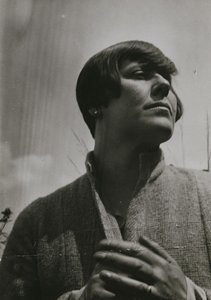
hildegard anna augusta elisabeth freiin rebay von ehrenwiesen
1890 - 1967 , Germany
Quick Facts
- Artistic Movement Or Style: Abstract Art, Non-Objective Art
- Artists Or Movements Influenced By This Artist:
- Solomon Guggenheim
- Guggenheim Museum
- Artists Who Influenced This Artist:
- Hans Arp
- Kandinsky
- Rudolf Bauer
- Date Of Birth: May 31, 1890
- Date Of Death: September 27, 1967
- Full Name: Hildegard Anna Augusta Elisabeth Freiin Rebay von Ehrenwiesen
- Nationality: German
- Notable Artworks:
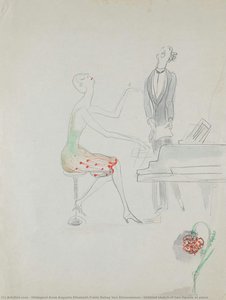
- Untitled sketch of two figures at piano
- Amelita Galli-Curci
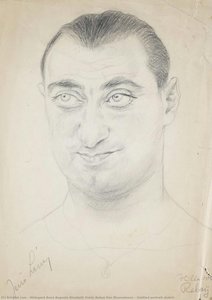
- Untitled portrait sketch
- Place Of Birth: Strasbourg, Germany
Related Articles
Leonardo da Vinci's Masterpieces: Explore 25 Iconic Artworks for Your Home | ArtsDot
Journey through Leonardo da Vinci's genius with our curated selection of 25 iconic artworks. Explore the stories behind Mona Lisa, The Last Supper & more Renaissance masterpieces. Find museum-quality art reproductions for your home at ArtsDot.com.
The Alchemy of Graphite: An Expert Guide to Mastering Detail and Depth in Pencil Sketching
Unlock the secrets of graphite sketching with our expert guide for art students. Learn to master pencil grades, create realistic depth, and capture intricate textures through professional techniques designed to elevate your observational drawing skills.

The Eloquent Line: Exploring the Artistic Significance of Sketches Across Movements and Media
Explore the profound artistic significance of sketches throughout history. From Renaissance masters to modern innovators like Van Gogh & Guston, discover how these foundational works reveal technique, emotion, and vision. Learn more at ArtsDot.

Leonardo da Vinci: A Renaissance Master’s Synthesis of Art, Science & Human Observation – Reinterpreted for the Collector
Explore Leonardo da Vinci’s timeless masterpieces with ArtsDot. Discover insights into his art, science, and legacy – trusted expertise for discerning collectors seeking authentic reproductions & investment opportunities.
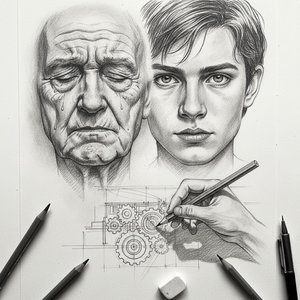
The Nuances of Graphite: Exploring Emotional Depth & Technical Mastery in Pencil Drawing
Explore the captivating world of graphite drawing! Discover its rich history, master essential techniques like chiaroscuro, and learn how artists evoke emotion through this timeless medium. Expert insights for art enthusiasts.