 Preview
 Send
Send Share
Share
 Details

 Download
 Similars
 X-Ray
X-Ray Diaporama
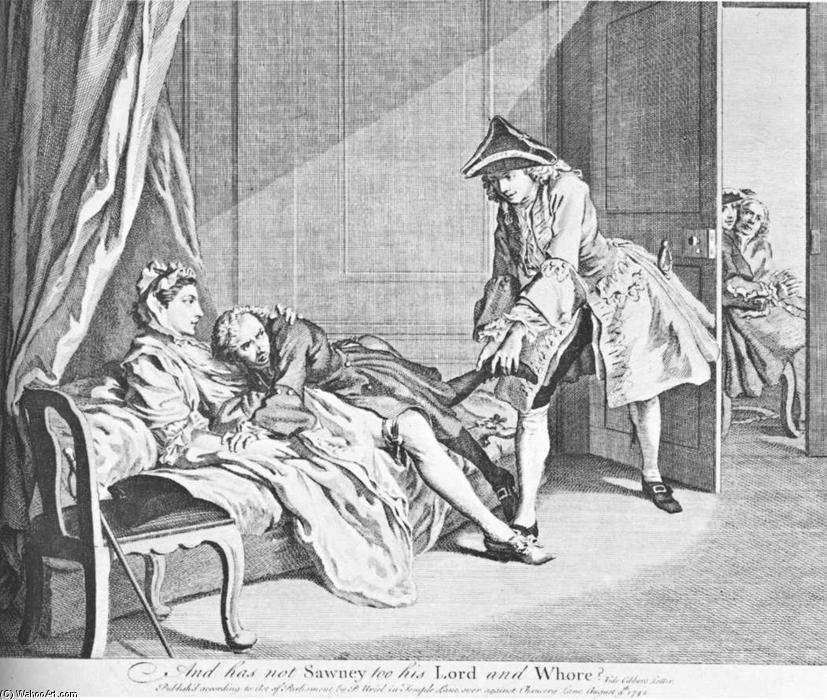
And Has Not Sawney Too His Lord and Whore.
 Engraving
- WallArt
- Rococo
 1742
1742- Early Modern
 280.0 x 330.0 cm
 British Museum
 Read More
Hand Made Oil Reproduction
Hand-painted oil on canvas in your size and frame, made to order by our artists. ( Buy Print Buy Image)




P118B $10

P118H $10

P118W $10

P438Z $10

P508JH $12

P508YH $12

P805H $10

P805Z $10

P919BZ $10

P919G $10

P919XJ $10

P959ZH $10

P968JZ $12

W106C $8

W218G $10

W218JH $8

W218Y $10

W307PJ $10

W316G $10

W316PJ $8

W316Y $10

W398PJ $8

W4111J $10

W500HY $15

W500JH $15

W692G $12

W849H $8

W940BG $15

W953PJ $8




Pick from our preset sizes that match the artwork's original proportions.

You may enter your own dimensions to fit a specific frame or space. If your selected size does not match the original image's proportions, we will either crop the artwork or extend the painting with additional hand-painted elements. A digital mockup will be sent for your approval before production begins.
Please note that the on-screen preview does not reflect the actual cropping or extension. Only the mockup will accurately show the final composition.
While custom sizes are available, we recommend selecting a dimension from the predefined list to preserve the original proportions.
After order, ArtsDot.com team will email client for instructions and provide a mockup preview
Worldwide Delivery () in 3/4 weeks instead of standard 5 weeks. (6 September). No compromise on quality.

Free Worldwide Express Shipping

High-Quality Linen Canvas

Full Shipping Insurance

Customs Tax Refund Guarantee

True Color Matching Guarantee

60-Day Return Policy (Defects Only)

100% Money-Back Guarantee

Bulk Discount Offer
 Glass option is only available in size under 110 CM

And Has Not Sawney Too His Lord and Whore.
Reproduction Medium
Reproduction Size
-


Total Price
$ 338
A Window into the Rococo Soul
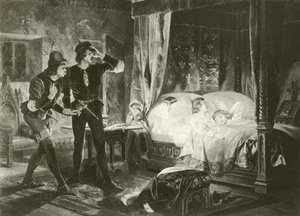
In the delicate, monochromatic world of Hubert-François Gravelot’s 1742 engraving, "And Has Not Sawney Too His Lord and Whore," we are invited to witness a moment frozen in time, captured with the exquisite precision characteristic of the mid-18th century. This masterful print serves as more than just a visual record; it is a theatrical stage set within a single frame. The scene unfolds in an intimate interior, where the soft interplay of light and shadow breathes life into a narrative of social intrigue. As natural light pours from a large window on the left, it illuminates a central grouping of figures—a woman resting upon a bed, a standing man, and a seated companion—creating a sense of profound domesticity layered with unspoken tension. The composition is a masterclass in balance, using the architectural depth of the room to guide the viewer’s eye from the immediate intimacy of the foreground toward a solitary figure watching from the background, suggesting that even in private moments, eyes are always watching.
The technical brilliance of this piece lies in Gravelot's command over the engraving medium. Eschewing the distraction of color, the artist relies entirely on the sophisticated use of hatching and cross-hatching to sculpt form and texture from nothing but ink and paper. Through varying densities of fine lines, he achieves a breathtaking illusion of materiality: the heavy, rhythmic folds of drapery, the intricate lace of period clothing, and the smooth, cold surfaces of classical architectural elements all coexist within this grayscale realm. This meticulous line work does not merely define shapes; it creates a tactile experience for the viewer, where one can almost feel the weight of the fabric and the grain of the wooden furniture. The use of linear perspective further enhances this realism, pulling the observer into the spatial reality of the room and creating a three-dimensional depth that is rare in such detailed printmaking.
Beyond its technical prowess, the artwork resonates with the emotional complexity of the Rococo era. The title itself hints at a labyrinthine storyline involving power dynamics, class, and perhaps even scandal, inviting collectors and historians alike to speculate on the drama unfolding before them. There is an underlying sense of apprehension and contemplation etched into the facial expressions of the figures, suggesting that this gathering is laden with social commentary. For the discerning interior designer or art enthusiast, this reproduction offers a sophisticated focal point that brings a sense of historical gravity and intellectual depth to any space. It is a piece that rewards repeated viewing, offering new layers of symbolic meaning and aesthetic delight with every glance, making it an incomparable addition to a collection dedicated to the elegance and narrative power of French and British design history.
Related Artworks
Artist Biography
Hubert-François Gravelot: Life and Legacy
Early Life and Education
Hubert-François Bourguignon, commonly known as Gravelot (born March 26, 1699, Paris, France – died April 20, 1773, Paris), was a highly influential French engraver, illustrator, and drawing master. His early life wasn’t marked by immediate artistic success. He initially struggled as a student and a premature trip to Rome, financed by his father, proved unproductive. A subsequent commercial venture in Saint Domingue also failed. Eventually, he found guidance under Jean II Restout and later François Boucher, laying the foundation for his future career.
Career in London (1732-1745)
In 1732, Gravelot emigrated to London at the invitation of Claude du Bosc to work on engravings for an English translation of Bernard Picart’s *Ceremonies and Religious Customs of…the Known World*. This marked a turning point in his career. He quickly became central to introducing the Rococo style into British design, disseminating it through book illustrations and engraved designs. His work was noted by George Vertue for its “neat and correct” manner, reminiscent of Picart.
- He became a key figure at Slaughter’s Coffee House and the St. Martin's Lane Academy, an informal precursor to the Royal Academy.
- Gravelot served as a drawing master, notably teaching Thomas Gainsborough.
Artistic Style and Major Works
Gravelot’s style is characterized by its descriptive precision, elegant lines, and inventive compositions. He revitalized illustrative engraving in England and later influenced a group of engravers back in Paris to work in his manner. Some of his most significant works include:
- Illustrations for Theobald's edition of the complete works of William Shakespeare (1740), featuring 35 frontispieces.
- Illustrations for a French translation of Boccaccio’s *Decameron*** (1757), considered one of the most outstanding illustrated books of all time.
- Illustrations for La Nouvelle Héloïse (1761) and the *Contes moraux* of Marmontel (1765).
- French translations of Ovid’s *Metamorphoses*** (1767–71) and Torquato Tasso’s *Gerusalemme Liberata*** (1771).
Return to Paris and Later Life
Anti-French sentiment in London following the Battle of Fontenoy in 1745 prompted Gravelot's return to Paris in October of that year. He continued his work as a book illustrator, enjoying considerable success. He was known for being an avid reader and developed innovative techniques using articulated mannequins to aid in his illustrations.
Influence and Historical Significance
Gravelot’s influence extended beyond his immediate circle of students. He played a crucial role in shaping the visual culture of 18th-century Europe, bridging French artistic trends with British tastes. His work not only exemplified the Rococo style but also elevated book illustration to a higher art form. His meticulous attention to detail and elegant designs continue to be admired by scholars and collectors today. He is remembered as a master engraver who significantly impacted both French and English artistic landscapes.

hubert françois gravelot
1699 - 1773 , France
Quick Facts
- Birth Date: 26 March 1699
- Birth Place: Paris, France
- Death Date: 20 April 1773
- Influenced: ['Thomas Gainsborough']
- Influenced By:
- Jean II Restout
- François Boucher
- Movement: Rococo
- Name: Hubert-François Gravelot
- Nationality: French
- Notable Works: Illustrations for Shakespeare, Boccaccio's Decameron, Ovid's Metamorphoses
Related Articles

The Rococo Aesthetic: Opulence, Rebellion & the Pursuit of Pleasure in 18th-Century Art
Explore the opulent world of Rococo art! Discover its origins, key artists like Watteau & Boucher, and lasting influence on design. Expert insights for collectors & enthusiasts.
Engraving's Golden Age: 10 Masterpieces That Redefined Art | ArtsDot
Journey through art history with our Top 10 Legendary Engravings! Explore masterpieces by Dürer, Rembrandt & Goya. Discover the stories behind these iconic prints and find museum-quality reproductions for your home at ArtsDot.com.

Rococo's Radiant Legacy: 10 Masterpieces for Your Home |
Indulge in the elegance of Rococo! Explore 10 masterpieces by Fragonard, Boucher & Watteau. Discover the stories behind these iconic paintings and bring timeless art to your home with museum-quality reproductions from .
Engraving: A Historical Survey of Technique, Artistic Expression & Enduring Legacy
Explore the rich history of engraving with ArtsDot. Discover techniques, iconic artists like Dürer & Callot, collecting tips, and expert guidance for preserving your art investment. Learn about intaglio printing & more!
The Intricate World of Engraving: A Historical Survey of Technique, Artistic Expression & Enduring Legacy
Explore the rich history of engraving with ArtsDot. Discover techniques, iconic artists like Dürer & Callot, collecting tips, and expert guidance for preserving your art investment. Learn about intaglio printing & more!