 Preview
 Send
Send Share
Share
 Details

 Download
 Similars
 X-Ray
X-Ray Diaporama
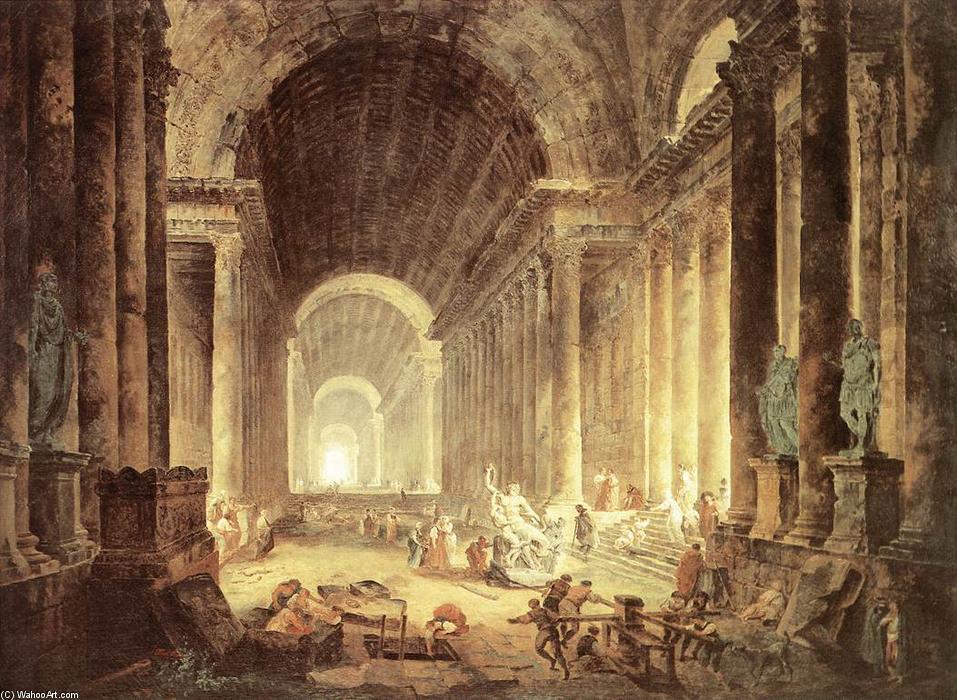
The Finding of the Laocoön
 Acrylic On Canvas
- WallArt
- Romantic Antiquarianism
 1773
1773 119.0 x 163.0 cm
 Virginia Museum of Fine Arts
 Read More
Hand Made Oil Reproduction
Hand-painted oil on canvas in your size and frame, made to order by our artists. ( Buy Print Buy Image)




P118B $10

P118H $10

P118W $10

P438Z $10

P508JH $12

P508YH $12

P805H $10

P805Z $10

P919BZ $10

P919G $10

P919XJ $10

P959ZH $10

P968JZ $12

W106C $8

W218G $10

W218JH $8

W218Y $10

W307PJ $10

W316G $10

W316PJ $8

W316Y $10

W398PJ $8

W4111J $10

W500HY $15

W500JH $15

W692G $12

W849H $8

W940BG $15

W953PJ $8




Pick from our preset sizes that match the artwork's original proportions.

You may enter your own dimensions to fit a specific frame or space. If your selected size does not match the original image's proportions, we will either crop the artwork or extend the painting with additional hand-painted elements. A digital mockup will be sent for your approval before production begins.
Please note that the on-screen preview does not reflect the actual cropping or extension. Only the mockup will accurately show the final composition.
While custom sizes are available, we recommend selecting a dimension from the predefined list to preserve the original proportions.
After order, ArtsDot.com team will email client for instructions and provide a mockup preview
Worldwide Delivery () in 3/4 weeks instead of standard 5 weeks. (16 August). No compromise on quality.

Free Worldwide Express Shipping

High-Quality Linen Canvas

Full Shipping Insurance

Customs Tax Refund Guarantee

True Color Matching Guarantee

60-Day Return Policy (Defects Only)

100% Money-Back Guarantee

Bulk Discount Offer
 Glass option is only available in size under 110 CM

The Finding of the Laocoön
Reproduction Medium
Reproduction Size
-


Total Price
$ 263
Artwork Description
The Romantic Vision of Decay: Hubert Robert’s “The Finding of the Laocoön”
Hubert Robert's "The Finding of the Laocoön," completed in 1773, transcends mere depiction; it embodies the spirit of Romantic antiquarianism—a fascination with ruins and a yearning for lost grandeur. Painted during a period marked by intellectual ferment and artistic experimentation, this monumental oil on canvas captures not just an event but also a mood: the palpable excitement surrounding the rediscovery of Michelangelo’s sculptures after centuries of obscurity. Robert wasn't simply recreating a historical scene; he was channeling the anxieties and aspirations of his time into a powerfully expressive artwork.A Scene Steeped in History
The painting portrays a dramatic tableau—a group of figures clustered around a statue of Laocoön and His Sons, unearthed from beneath the rubble of Rome’s ancient temples. This event captivated European intellectuals and artists alike, fueling debates about classical ideals versus modern sensibilities. Robert meticulously rendered the crumbling edifice, emphasizing textures and shadows to convey the passage of time and the inevitable decay that consumes all things beautiful. The inclusion of a horse adds an element of dynamism and reinforces the grandeur of the setting—a deliberate choice reflecting the Romantic preoccupation with sublime landscapes and heroic narratives.Technique and Style: Capturing Atmosphere
Robert’s masterful technique exemplifies the Romantic style's commitment to capturing atmospheric illusionism. He employed layering glazes and scumbling techniques to achieve remarkable depth and luminosity, creating a sense of palpable airiness that draws the viewer into the scene. The artist skillfully utilized chiaroscuro—the dramatic interplay between light and dark—to sculpt form and heighten emotional impact. Notice how Robert’s brushstrokes subtly suggest movement and instability, mirroring the crumbling ruins themselves. This deliberate manipulation of visual elements underscores his intention to evoke a feeling of awe and contemplation.Symbolism: Echoes of Classical Ideals
Beyond its technical brilliance, “The Finding of the Laocoön” resonates with profound symbolic significance. The statue itself represents the triumph of classical art over barbarity—a cornerstone belief in the Enlightenment era. Robert’s depiction underscores the importance of preserving cultural heritage and confronting mortality. Furthermore, the ruined temple symbolizes the decline of aristocratic power and the fragility of human ambition. Yet, amidst the devastation, there is also a glimmer of hope—the presence of figures engaged in scholarly observation suggests that knowledge and beauty endure even as empires crumble.Emotional Impact: A Moment Frozen in Time
Ultimately, Robert’s masterpiece succeeds in transporting the viewer to another era, eliciting feelings of melancholy, wonder, and intellectual curiosity. The painting's luminous palette and dramatic composition capture the sublime—that paradoxical blend of terror and beauty—characteristic of Romantic art. It invites contemplation on themes of loss, remembrance, and the enduring power of artistic vision. “The Finding of the Laocoön” remains a testament to Robert’s ability to transform historical fact into emotionally resonant art, securing its place as an iconic image of the Romantic aesthetic.Related Artworks
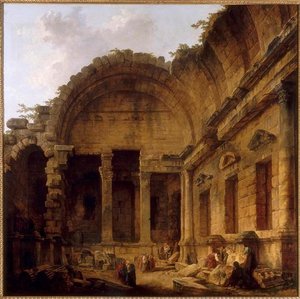
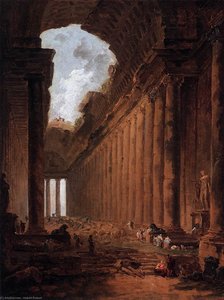
Artist Biography
A Painter of Ruins and Visions: The World of Hubert Robert
Hubert Robert, a name synonymous with evocative landscapes and the romantic allure of ruins, occupies a unique position in 18th-century French art. Born in Paris in 1733, his life unfolded against a backdrop of shifting artistic styles and monumental historical upheaval—from the Rococo’s playful elegance to the dawn of Neoclassicism, and ultimately, through the tumultuous years of the French Revolution. He wasn't merely documenting decay; he was crafting visions, blending observation with imagination to create scenes that resonated with both a nostalgic longing for the past and an anticipation of the future. His journey began within the structured world of artistic training, initially under the sculptor Michel-Ange Slodtz, who recognized Robert’s talent but wisely steered him towards painting, sensing his true calling lay in capturing light, atmosphere, and the subtle poetry of form.Roman Reveries: Shaping an Artistic Identity
The pivotal moment in Robert's artistic development arrived with his extended sojourn to Rome in 1754. Accompanying Étienne-François de Choiseul, he immersed himself in a world steeped in history and architectural grandeur. For eleven years, the ancient city became his open-air studio, its crumbling temples, majestic arches, and overgrown gardens fueling his imagination. This wasn’t simply about replicating what he saw; it was about interpreting it, reimagining it, and imbuing it with a sense of melancholic beauty. He worked alongside Giovanni Paolo Panini, whose influence is visible in Robert's early *capriccio* compositions—those fanciful views that juxtaposed classical ruins with contemporary life. However, Robert quickly moved beyond imitation, developing his own distinctive style characterized by meticulous detail, atmospheric perspective, and a profound sensitivity to the play of light and shadow. He wasn’t just painting ruins; he was painting time itself, capturing the poignant beauty of transience and the enduring power of memory. His sketchbooks from this period are invaluable records of his observations, filled with detailed studies of Roman landmarks like the Villa d'Este and Caprarola, demonstrating a keen eye for architectural nuance and landscape composition.Parisian Acclaim and Royal Patronage
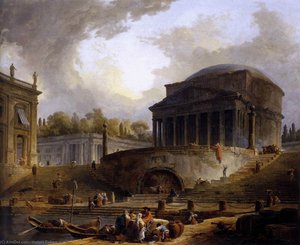
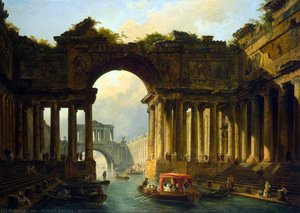
Robert’s return to Paris in 1765 marked a turning point in his career. He swiftly gained recognition within the artistic establishment, securing admission to the Académie Royale de Peinture et de Sculpture with “The Port of Rome, Ornamented with Different Monuments of Architecture, Ancient and Modern.” His subsequent exhibitions at the Salon garnered widespread acclaim, captivating audiences with their evocative depictions of ruins and picturesque landscapes. Denis Diderot, a prominent figure of the Enlightenment, famously praised the grandeur evoked by Robert’s paintings, recognizing his ability to transport viewers to another time and place. This success led to royal patronage, with commissions for decorative projects and appointments as “Designer of the King's Gardens” and later, “Keeper of the King's Pictures.” He became a sought-after artist, not only for his easel paintings but also for his innovative designs for gardens and palatial interiors. His work resonated with the prevailing taste for *capriccio* painting—a genre that appealed to collectors fascinated by history, archaeology, and the picturesque—but Robert infused it with a unique sensibility, elevating it beyond mere decorative art.Revolution, Resilience, and Lasting Legacy
The French Revolution presented an unprecedented challenge for Robert. While many artists struggled to navigate the turbulent political climate, he found himself caught in the crosscurrents of change. He even faced imprisonment during the Reign of Terror, a harrowing experience that nonetheless inspired a series of drawings documenting his time in prison. Remarkably, he continued to paint prolifically throughout this period, demonstrating an unwavering commitment to his art. Following the Revolution, Robert was appointed curator of the newly established Muséum Central des Arts—the future Musée du Louvre—a testament to his expertise and dedication to preserving cultural heritage. He played a crucial role in organizing and cataloging the museum’s collection, ensuring that France's artistic treasures were safeguarded for future generations. Hubert Robert died in Paris in 1808, leaving behind an extraordinary body of work that continues to inspire awe and admiration. His legacy lies not only in his technical mastery but also in his unique ability to blend historical accuracy with imaginative vision. He pioneered a genre of painting that celebrated both the beauty of decay and the enduring power of human creativity, solidifying his place as a pivotal figure bridging the Rococo and Neoclassical periods, and anticipating aspects of Romanticism with his fascination for history and imagination.- Key Influences: Giovanni Paolo Panini, Piranesi, the architectural landscape of Rome.
- Major Themes: Ruins, landscapes, *capriccio* paintings, historical memory, the passage of time.
- Artistic Style: Meticulous detail, atmospheric perspective, evocative lighting, blending observation with imagination.
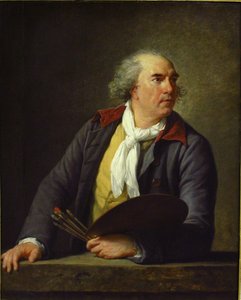
Hubert Robert
1733 - 1808 , France
Quick Facts
- Artistic Movement Or Style: Romanticism, Neoclassicism
- Artists Or Movements Influenced By This Artist: ['Romanticism']
- Artists Who Influenced This Artist:
- Giovanni Panini
- Piranesi
- Date Of Birth: May 22, 1733
- Date Of Death: April 15, 1808
- Full Name: Hubert Robert
- Nationality: French
- Notable Artworks:
- The Port of Rome
- Flight of Galatea
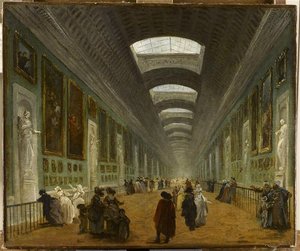
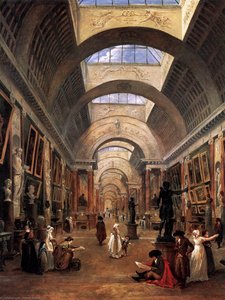
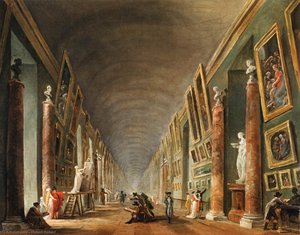
- La Galerie du Louvre
- Place Of Birth: Paris, France
Related Articles
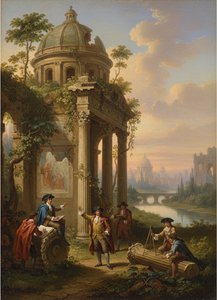
Hubert Robert: Picturing Ruins, Preserving Memory – A Study of Romantic Antiquarianism & Artistic Innovation
Explore the captivating world of Hubert Robert, master of Romantic landscape painting & 'capriccio' ruins. Discover his historical context, artistic innovations, and collecting insights with ArtsDot.

Romantic Landscapes: 10 Masterpieces for Your Home | ArtsDot
Journey through 10 Romantic landscape masterpieces by Friedrich, Turner & Cole. Explore emotional art, sublime nature scenes & iconic 19th-century paintings. Find museum-quality reproductions for your home at ArtsDot.com – discover the full collection online!

Bronze Sculptures That Defined Art History | ArtsDot
Journey through art history with our Top 10 bronze sculptures! Explore masterpieces by Rodin, Michelangelo & more. Discover stories behind iconic statues and find museum-quality reproductions for your home decor at ArtsDot.com.

Beyond the Horizon: 10 Landscape Masterpieces for Your Home Decor
Journey through 10 breathtaking landscape paintings by Monet, Van Gogh & more! Explore iconic artworks, artistic techniques & find inspiration for your home decor. Museum-quality reproductions at ArtsDot.com. Discover all masterpieces on ArtsDot.com
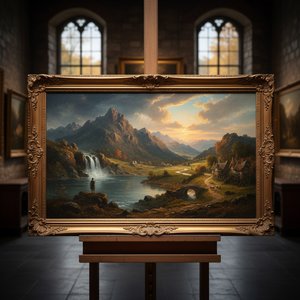
The Sublime and the Picturesque: Exploring Emotion & Nature in Romantic Landscape Painting
Explore the emotional power of Romantic landscape painting! Discover the sublime & picturesque traditions, key artists like Friedrich & Cole, and find your perfect artwork at ArtsDot.