 Preview
 Send
Send Share
Share
 Details

 Download
 Similars
 X-Ray
X-Ray Diaporama
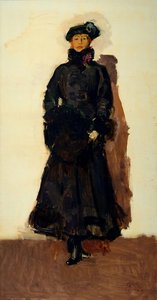
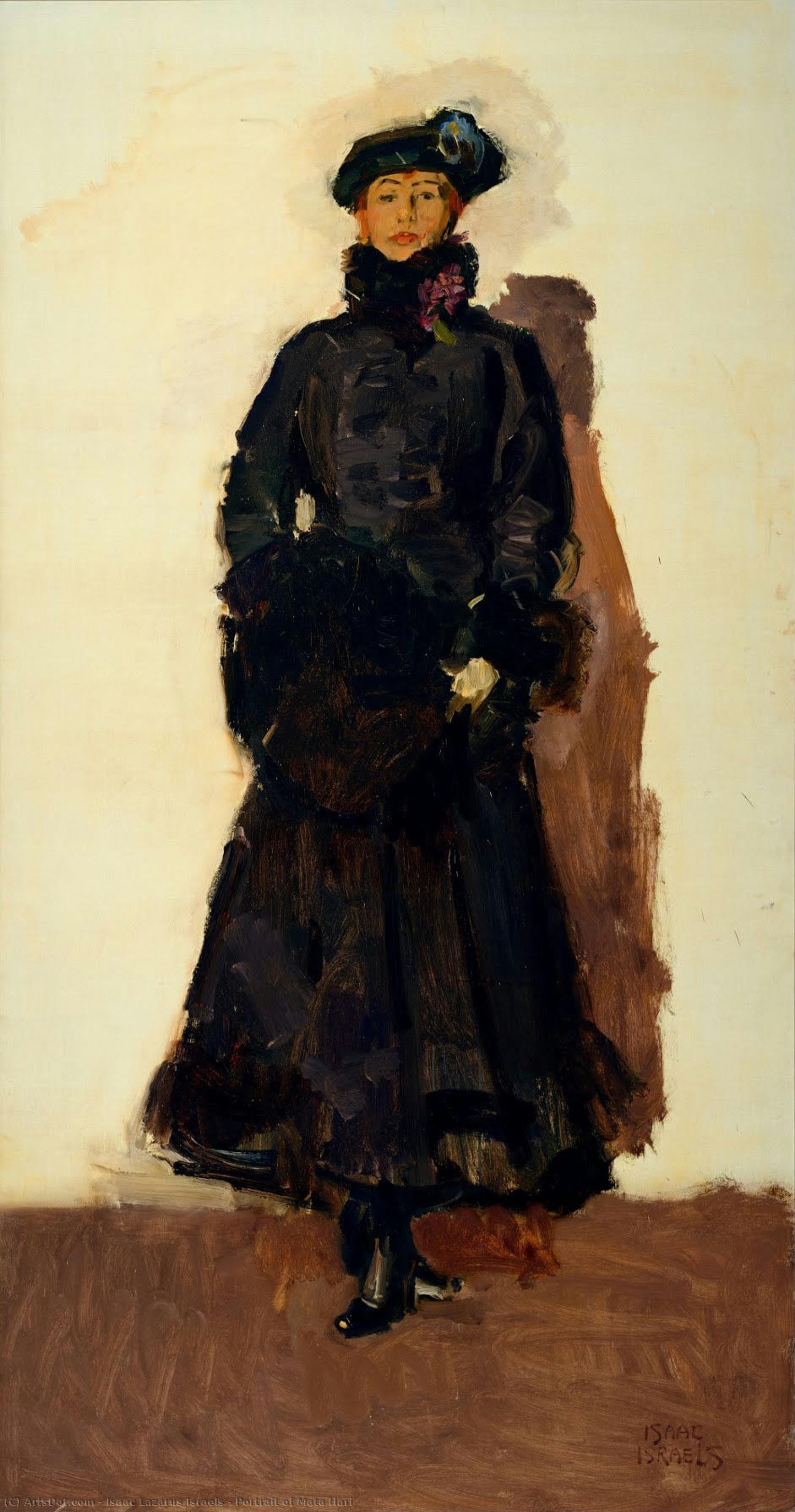
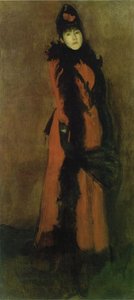
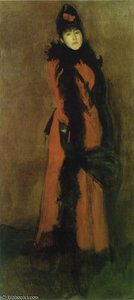
Portrait of Mata Hari
 Oil On Canvas
- WallArt
- Hague School Impressionism
 1916
1916- 19th Century
 210.0 x 110.0 cm
 Kröller-Müller Museum
 Read More
Hand Made Oil Reproduction
Hand-painted oil on canvas in your size and frame, made to order by our artists. ( Buy Print Buy Image)




P118B $10

P118H $10

P118W $10

P438Z $10

P508JH $12

P508YH $12

P805H $10

P805Z $10

P919BZ $10

P919G $10

P919XJ $10

P959ZH $10

P968JZ $12

W106C $8

W218G $10

W218JH $8

W218Y $10

W307PJ $10

W316G $10

W316PJ $8

W316Y $10

W398PJ $8

W4111J $10

W500HY $15

W500JH $15

W692G $12

W849H $8

W940BG $15

W953PJ $8




Pick from our preset sizes that match the artwork's original proportions.

You may enter your own dimensions to fit a specific frame or space. If your selected size does not match the original image's proportions, we will either crop the artwork or extend the painting with additional hand-painted elements. A digital mockup will be sent for your approval before production begins.
Please note that the on-screen preview does not reflect the actual cropping or extension. Only the mockup will accurately show the final composition.
While custom sizes are available, we recommend selecting a dimension from the predefined list to preserve the original proportions.
After order, ArtsDot.com team will email client for instructions and provide a mockup preview
Worldwide Delivery () in 3/4 weeks instead of standard 5 weeks. (17 August). No compromise on quality.

Free Worldwide Express Shipping

High-Quality Linen Canvas

Full Shipping Insurance

Customs Tax Refund Guarantee

True Color Matching Guarantee

60-Day Return Policy (Defects Only)

100% Money-Back Guarantee

Bulk Discount Offer
 Glass option is only available in size under 110 CM

Portrait of Mata Hari
Reproduction Medium
Reproduction Size
-


Total Price
$ 263
Artwork Description
The Allure of Modernity: Capturing an Icon
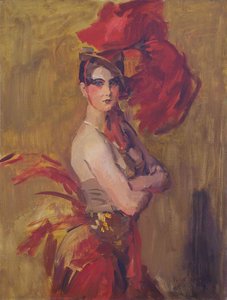
Isaac Lazarus Israëls captures a moment suspended in time with this striking portrait of Mata Hari. More than just a likeness, the painting is a vibrant document of early twentieth-century European nightlife—a world shimmering with glamour, mystery, and underlying tension. The subject herself, Margaretha Zelle, known by her stage name, embodied an exotic allure that captivated Paris and beyond. Israëls, ever the keen observer of urban life, immortalizes this celebrated dancer not in a moment of performance, but in a poised stillness, suggesting the complex duality between public spectacle and private self.
Technique and Brushwork: The Impressionist Gaze
What immediately draws the eye is Israëls' masterful handling of paint. His technique here is characterized by those signature loose, quick brushstrokes and visible smears of color that define his connection to Impressionism. He does not seek photographic perfection; rather, he captures an impression—a feeling—of light interacting with fabric, shadow clinging to skin, and the subtle gleam off accessories. The application of paint lends the portrait a palpable energy, making the canvas feel alive, as if the subject might turn around at any moment. This spontaneity is key; it invites the viewer into the artist's immediate perception rather than presenting a polished, untouchable ideal.
Symbolism in Shadow and Silk
Observe the details: the elegant black dress, the carefully placed hat, the scarf lending a touch of mystery around her neck. These elements are not mere costume pieces; they function as symbols of her persona—a calculated presentation of self for an admiring audience. The inclusion of the handbags and the visible tie in the composition adds layers of narrative depth, suggesting a life lived between grand entrances and quiet departures. Israëls focuses intensely on her tall, dignified stature, elevating her beyond mere exotic dancer to a figure of undeniable, almost monumental self-possession.
A Window into a Turbulent Era
Painted in 1916, this work resonates deeply with the historical undercurrents of World War I. While the subject was famous for her captivating performances, the backdrop against which Israëls painted her hints at an era teetering on the brink. The painting captures that intoxicating blend of hedonism and impending societal shift—the dazzling lights of nightlife set against a backdrop of geopolitical uncertainty. For the collector or designer, this piece offers more than decoration; it offers a sophisticated conversation starter about the fleeting nature of glamour and the enduring power of personal magnetism.
Related Artworks

Artist Biography
Isaac Lazarus Israëls: A Life in Amsterdam Impressionism
- Born: Amsterdam, Netherlands (February 3, 1865)
- Died: The Hague, Netherlands (October 7, 1934)
Early Life and Artistic Beginnings
Isaac Lazarus Israëls was born into a family deeply rooted in the Dutch art world. He was the son of Jozef Israëls, a prominent painter associated with the Hague School, and Aleida Schaap. This artistic heritage fostered an early appreciation for painting within Isaac, who displayed remarkable talent from a young age. Between 1880 and 1882, he studied at the Royal Academy of Art in The Hague, where he met George Hendrik Breitner, forming a lifelong friendship that would significantly influence his artistic trajectory. At just sixteen years old, Israëls achieved early recognition when he sold "Bugle Practice" to artist and collector Hendrik Willem Mesdag even before it was fully completed. Portraits of his grandmother and a family friend, created in the same year, demonstrated his already considerable technical skill.
The Amsterdam Impressionist
Israëls became a leading figure within the Amsterdam Impressionism movement. Influenced by the philosophy of the Tachtigers—a group of writers and artists advocating for style to reflect content and emotionally charged subjects represented through intense technique—he shifted his focus towards capturing the vibrant scenes of everyday life in Amsterdam. He frequently spent summers with his father in Scheveningen, painting colorful seaside landscapes. His work reflected a desire to portray the bustling streets, cafes, and cabarets of Amsterdam, moving away from the more traditional subject matter favored by earlier Dutch masters.
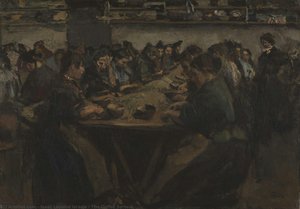
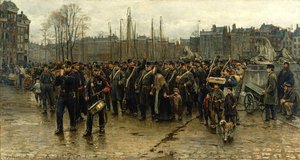
- Key Works: "Transport of Colonial Soldiers" (Kröller-Müller Museum), "The Coffee Sorters" (Museum Boijmans Van Beuningen), Portrait of Mata Hari (Kröller-Müller Museum)
Travels and Artistic Evolution
In 1904, Israëls relocated to Paris, establishing a studio and embracing the city's unique motifs. He further explored his interest in fashion by studying at Paquin and Drecoll fashion houses. The outbreak of World War I prompted his return to Holland, where he primarily focused on portraiture. Following the war, he embarked on extensive travels throughout Europe and Asia, including two years spent sketching and painting in India and the Dutch East Indies. These experiences broadened his artistic horizons, introducing him to new subjects and perspectives that enriched his later work.
Legacy and Recognition
Isaac Lazarus Israëls left behind a significant body of work celebrated for its vibrant colors, loose brushwork, and insightful portrayals of everyday life. His paintings are now housed in prestigious museums worldwide, including the Van Gogh Museum and the Mauritshuis. He achieved international recognition, notably winning a Gold Medal at the 1928 Olympic Games for his painting "Red Rider." Israëls' legacy lies not only in his artistic achievements but also in his contribution to the development of Amsterdam Impressionism, solidifying his place as one of the most important Dutch painters of his era.
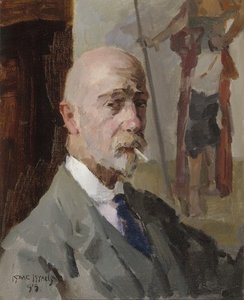
Isaac Lazarus Israels
1865 - 1934 , Netherlands
Quick Facts
- Artistic Movement Or Style: Amsterdam Impressionism
- Artists Who Influenced This Artist: ['Émile Zola']
- Date Of Birth: February 3, 1865
- Date Of Death: October 7, 1934
- Full Name: Isaac Lazarus Israëls
- Nationality: Dutch
- Notable Artworks:
- Transport of Colonial Soldiers
- The Coffee Sorters
- Portrait of Mata Hari
- Ippy and Gertie at Hirsch
- A Lady in Front of Van Gogh's Sunflowers
- Dancer La Cocette Sun
- Cafe dansant, Moulin de la Galette
- The Drummer
- Place Of Birth (City And Country): Amsterdam, Netherlands
Related Articles
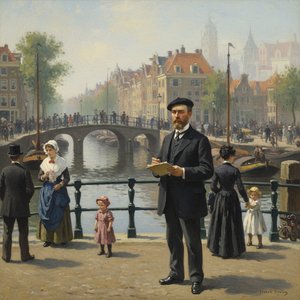
Isaac Lazarus Israëls: A Chronicle of Dutch Life & the Evolution of Impressionistic Realism
Explore the captivating world of Isaac Lazarus Israëls (1865-1934), a leading Dutch Amsterdam Impressionist. Discover his city scenes, portraits & travels through Asia – a chronicle of Dutch life and artistic evolution.
Rijksmuseum's Masterpieces: 25 Iconic Artworks for Your Home | ArtsDot
Explore 25 iconic artworks from Amsterdam's Rijksmuseum! Discover Rembrandt, Vermeer & Dutch Masters’ stories. Find museum-quality art reproductions and elevate your home decor with timeless paintings on ArtsDot.com.

Golden Age Reflections: Dutch Baroque Painting & Cultural Innovation
Explore the Dutch Golden Age of painting! Discover key artists like Vermeer & ter Borch, their innovative techniques, and the rich cultural context behind these Baroque masterpieces. Learn about collecting & appreciating this iconic art period.
Cornelis Springer: A Dutch Master of Cityscapes & Intimate Reflections
Explore the captivating world of Cornelis Springer (1817-1891), a Dutch master renowned for his detailed cityscapes and atmospheric paintings. Discover his life, style & available artworks at ArtsDot.
Charles Leickert: Capturing the Dutch Golden Age Light – A Comprehensive Study of Technique, Context, and Legacy
Explore the captivating winter landscapes of Charles Leickert, a master of Dutch Golden Age light & atmosphere. Discover his techniques, symbolism, and lasting legacy – a comprehensive study for art enthusiasts and collectors.