 Preview
 Send
Send Share
Share
 Details

 Download
 Similars
 X-Ray
X-Ray Diaporama
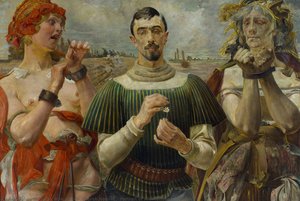
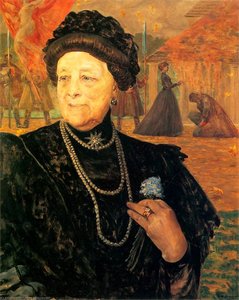
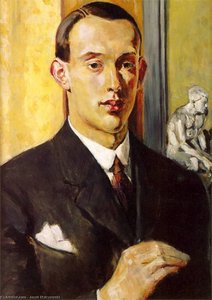
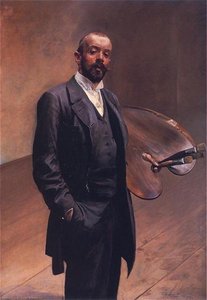
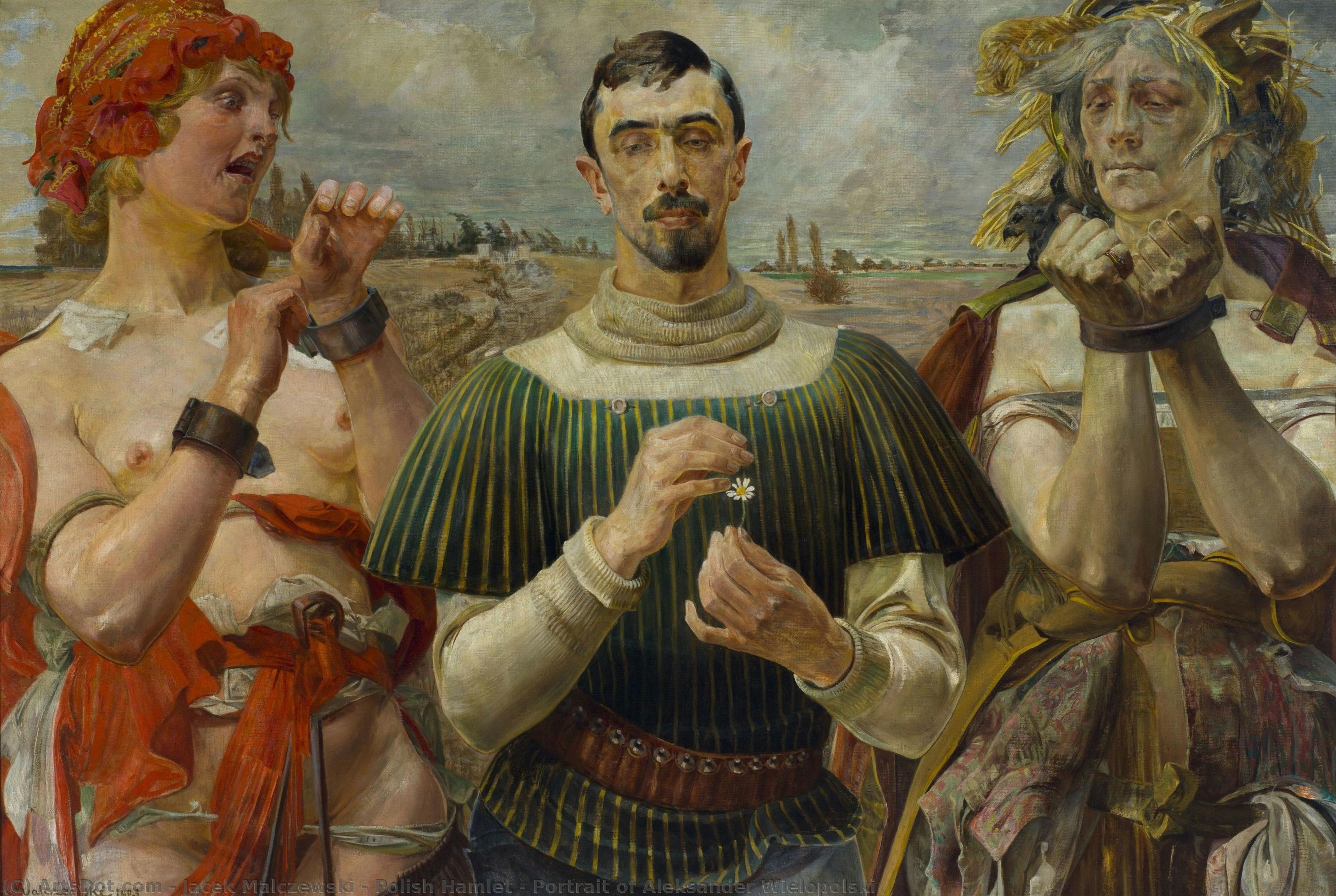
Polish Hamlet – Portrait of Aleksander Wielopolski
 Oil On Canvas
- WallArt
- Polish Symbolism
 Modern
 148.0 x 100.0 cm
 Warsaw National Museum
 Read More
Hand Made Oil Reproduction
Hand-painted oil on canvas in your size and frame, made to order by our artists. ( Buy Print Buy Image)




P118B $10

P118H $10

P118W $10

P438Z $10

P508JH $12

P508YH $12

P805H $10

P805Z $10

P919BZ $10

P919G $10

P919XJ $10

P959ZH $10

P968JZ $12

W106C $8

W218G $10

W218JH $8

W218Y $10

W307PJ $10

W316G $10

W316PJ $8

W316Y $10

W398PJ $8

W4111J $10

W500HY $15

W500JH $15

W692G $12

W849H $8

W940BG $15

W953PJ $8




Pick from our preset sizes that match the artwork's original proportions.

You may enter your own dimensions to fit a specific frame or space. If your selected size does not match the original image's proportions, we will either crop the artwork or extend the painting with additional hand-painted elements. A digital mockup will be sent for your approval before production begins.
Please note that the on-screen preview does not reflect the actual cropping or extension. Only the mockup will accurately show the final composition.
While custom sizes are available, we recommend selecting a dimension from the predefined list to preserve the original proportions.
After order, ArtsDot.com team will email client for instructions and provide a mockup preview
Worldwide Delivery () in 3/4 weeks instead of standard 5 weeks. (2 September). No compromise on quality.

Free Worldwide Express Shipping

High-Quality Linen Canvas

Full Shipping Insurance

Customs Tax Refund Guarantee

True Color Matching Guarantee

60-Day Return Policy (Defects Only)

100% Money-Back Guarantee

Bulk Discount Offer
 Glass option is only available in size under 110 CM

Polish Hamlet – Portrait of Aleksander Wielopolski
Reproduction Medium
Reproduction Size
-


Total Price
$ 263
A Vision of National Soul: Unveiling Malczewski’s Polish Hamlet
In the grand tapestry of European Symbolism, few works resonate with as much profound melancholy and patriotic fervor as Jacek Malczewski’s “Polish Hamlet – Portrait of Aleksander Wielopolski.” Completed in 1903, this masterpiece serves as far more than a mere portrait; it is a haunting meditation on the fractured identity of a nation. Through a masterful blend of neo-romanticism and evocative imagery, Malczewski invites the viewer into a psychological landscape where history and myth collide. The painting captures a moment of intense internal conflict, mirroring the existential struggle of Poland itself during an era of partition and political uncertainty. For the discerning collector or lover of fine art, this work offers a window into a period where every brushstroke was imbued with the weight of destiny.
The composition is a sophisticated dance of allegorical figures, centered around the likeness of Aleksander Wielopolski. As the grandson of a prominent political figure, his presence anchors the piece in historical reality, yet he is surrounded by elements that transcend the temporal. Malczewski utilizes a rich, emotive color palette to weave together the disparate threads of the scene. The technique, executed with meticulous care in oil on canvas, allows for a luminous depth that breathes life into the characters. One can almost feel the tension in the air as the artist balances the heavy, somber tones of the past with the flickering, brighter possibilities of the future, creating a visual rhythm that is both unsettling and deeply captivating.
The Language of Symbols: Shadows and Light
To gaze upon this painting is to decode a complex language of symbols designed to stir the soul. Malczewski, often hailed as the father of Polish Symbolism, populates his canvas with figures that represent the dualistic nature of the Polish spirit. On one side, we encounter an elderly woman, her form bound by twine and crowned with a wreath of the same, embodying the weight of an enslaved and subjugated past. In stark, poignant contrast, a young girl emerges—a symbol of burgeoning revolution and the unyielding hope of a new generation breaking free from her shackles. This juxtaposition creates a powerful narrative arc within a single frame, moving the viewer from the stagnation of memory to the kinetic energy of aspiration.
Even the smallest details carry immense weight; the flower held by Wielopolski acts as a delicate metaphor for the fading spiritual virtues of his era, echoing the internal moral struggle of Shakespeare’s iconic Prince of Denmark. This connection to the "Hamlet" archetype deepens the emotional impact, transforming a political portrait into a universal study of indecision, responsibility, and the heavy burden of leadership. For those seeking to adorn a space with art that provokes thought and conversation, this piece provides an inexhaustible well of intellectual and emotional depth.
An Enduring Legacy for the Modern Collector
Beyond its historical significance, “Polish Hamlet” possesses an aesthetic magnetism that makes it a timeless choice for sophisticated interior design. Its ability to evoke profound contemplation makes it a centerpiece capable of anchoring a room with gravity and grace. Whether placed in a quiet study or a grand gallery, the painting’s interplay of light and shadow commands attention, offering a sense of historical continuity and cultural richness.
Owning a high-quality reproduction of such a monumental work allows one to bring the spirit of Polish Symbolism into the contemporary home. It is an invitation to engage with the complexities of human history and the enduring power of the artistic imagination. As a piece of decor, it does not merely fill a wall; it transforms an environment, providing a focal point that celebrates the resilience of the human spirit and the eternal beauty of symbolic storytelling.
Related Artworks


Artist Biography
A Life Imbued with Polish Longing
Jacek Malczewski, born in 1854 in Radom, a city then nestled within the Russian-controlled Congress Poland, was more than simply a painter; he was a visual embodiment of Polish national identity and a profound voice for a nation yearning for self-determination. His life’s trajectory and artistic vision were inextricably linked to the romantic ideals of independence, deeply instilled by his father, Julian Malczewski—a dedicated patriot who cultivated in young Jacek an unwavering love for Polish culture, literature, and history. This early influence became the bedrock of his creative expression, shaping him into the leading figure of Polish Symbolism and earning him the esteemed title of “father of Polish Symbolism.” His formative years were steeped in tales of heroism, sacrifice, and a poignant awareness of Poland’s troubled past—themes that would resonate throughout his entire *oeuvre*. The family's relocation to Wielgiem, and the guidance he received from Adolf Dygasiński, further cemented this connection to Poland’s rich folklore and evocative landscapes, providing an inexhaustible wellspring of inspiration for his future artistic endeavors.From Academic Training to Symbolic Revelation
Malczewski's artistic journey began in Kraków in 1872, where he studied under Leon Piccard at the Academy of Fine Arts, benefiting from the mentorship of Władysław Łuszczkiewicz and Feliks Szynalewski. A pivotal moment arrived with his time at the École des Beaux-Arts in Paris, exposing him to a diverse range of European artistic currents while simultaneously solidifying his commitment to a distinctly Polish aesthetic sensibility. While absorbing international influences, Malczewski never strayed far from the patriotic fervor that defined his upbringing. This unique synthesis is readily apparent in his early works, which gradually evolved from historical narratives influenced by Jan Matejko—whose dramatic style and exploration of Polish history left an indelible mark—to more complex symbolic compositions. He completed master classes with Matejko in 1879, a period where he honed his technical skills while absorbing the neo-romantic metaphors that would later characterize his own work. The influence of Artur Grottger’s dramatic art also played a crucial role in shaping Malczewski's artistic vision, particularly its emotional intensity and focus on themes of suffering and resilience.The Language of Symbolism: A Nation’s Soul Unveiled
Malczewski’s mature style is characterized by an evocative blend of historical motifs, Christian iconography, mythological allusions, and the haunting beauty of the Polish landscape. He wasn't merely depicting scenes; he was crafting visual allegories that spoke directly to the soul of a nation—a nation burdened by oppression yet sustained by enduring hope. Works like Melancholia (1890-1894), widely considered a masterpiece of Polish Symbolism, capture the profound sense of national sorrow and introspection prevalent during a time of political subjugation. Błędne koło (The Mad Circle, 1895–97) stands as a poignant reflection on the human condition, its cyclical imagery mirroring the seemingly endless struggles for freedom and self-determination. Natchnienie malarza (Painter's Muse, 1897) showcases his unique style and explores the role of the artist in society, often portraying himself within his paintings as a symbolic figure grappling with artistic inspiration and national identity. The *Thanatos* Series delves into profound themes of mortality and the afterlife, reflecting a philosophical depth that permeated his work. His collection of Bajki (Fables) draws upon folklore and mythology, imbuing these traditional narratives with layers of symbolic meaning and offering subtle critiques of contemporary society.Legacy and Enduring Influence on Polish Art
Beyond his remarkable artistic achievements, Malczewski dedicated himself to education, serving as a professor and later rector of the Academy of Fine Arts in Kraków. He nurtured generations of artists, imparting not only technical skills but also a deep sense of national pride and unwavering artistic integrity. His works were exhibited internationally, gaining recognition for their unique blend of Polish identity and European artistic trends. The preservation of his legacy was largely due to the tireless efforts of his son, Rafał Malczewski, who ensured that many of his father’s paintings found their way into the National Museum in Warsaw. Jacek Malczewski's influence on Polish art is undeniable; he remains a pivotal figure in the nation’s cultural heritage, forever celebrated as the “father of Polish Symbolism.” His ability to weave together personal emotion, national longing, and universal themes continues to resonate with audiences today, solidifying his place among the great masters of European painting. He left behind not just paintings, but a visual language that spoke volumes about the Polish spirit—a spirit of resilience, faith, and an enduring hope for a brighter future.Key Characteristics of His Work
- Symbolism: Malczewski’s work is deeply rooted in symbolism, using allegorical figures and motifs to convey complex ideas about Polish identity, history, and spirituality.
- Patriotism: A strong sense of patriotism permeates his art, reflecting Poland's struggles for independence and the longing for national revival.
- Mythology & Folklore: He frequently drew inspiration from Polish folklore, mythology, and religious themes, blending them with historical narratives.
- Psychological Depth: His paintings often explore psychological states of melancholy, introspection, and existential questioning.
- Unique Style: Malczewski developed a distinctive style characterized by muted colors, ethereal atmospheres, and dreamlike imagery.
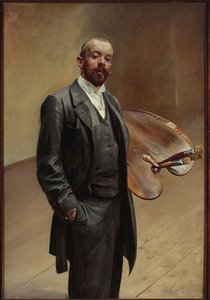
Jacek Malczewski
1854 - 1897 , United States of America
Quick Facts
- Artistic Movement Or Style: Symbolism
- Artists Or Movements Influenced By This Artist: ['Young Poland']
- Artists Who Influenced This Artist:
- Jan Matejko
- Artur Grottger
- Date Of Birth: 1854
- Date Of Death: 1929
- Full Name: Jacek Malczewski
- Nationality: Polish
- Notable Artworks:
- Melancholia
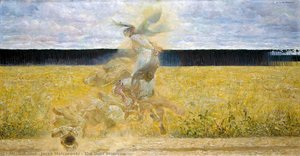
- The Dust Storm
- Death
- Painter's Muse
- Place Of Birth: Radom, Poland
Related Articles

The Enduring Legacy of Oil on Canvas: Technique, History & Aesthetic Impact
Explore the rich history & techniques of oil painting – from Renaissance masters to Impressionism. Discover pigments, layering methods, and why this timeless medium endures. Expert insights for artists & art enthusiasts.

Oil on Canvas: A Historical & Technical Exploration of a Timeless Artistic Medium
Explore the rich history & enduring techniques of oil painting on canvas. Discover the science behind its longevity, conservation practices, and contemporary relevance. Expert insights for art enthusiasts.

The Enduring Legacy of Oil on Canvas: Technique, History & Contemporary Practice
Explore the rich history & enduring techniques of oil painting on canvas. Discover the science behind its longevity, conservation practices, and contemporary relevance. Expert insights for art enthusiasts.
Oil on Canvas Masters: 10 Paintings That Redefined Art History |
Journey through art history with our guide to 10 legendary oil on canvas masterpieces! Explore iconic works by Van Gogh, Monet & Rembrandt. Find museum-quality reproductions and elevate your home decor at . Discover all masterpieces online.

The Enduring Power of Painting: A Historical & Contemporary Exploration of Form and Emotion
Explore the rich history & enduring techniques of oil painting with ArtsDot. Discover masterpieces, learn about art collecting, and find authentic handmade reproductions crafted by skilled artists.