 Preview
 Send
Send Share
Share
 Details

 Download
 Similars
 X-Ray
X-Ray Diaporama
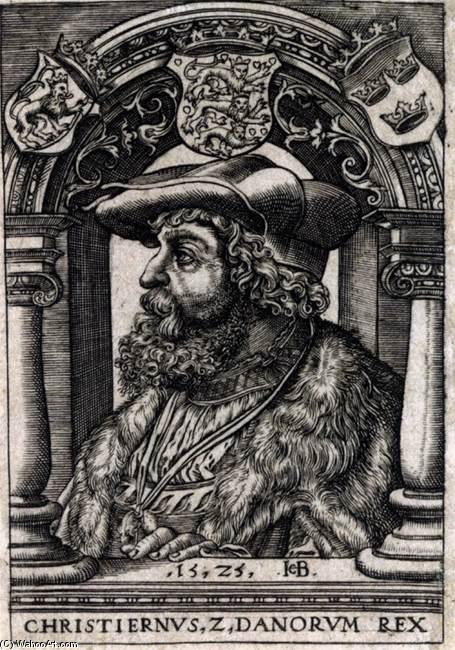
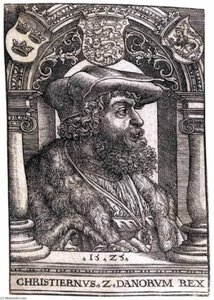
Christian II of Denmark
 Acrylic On Canvas
- WallArt
- Renaissance
 1525
1525 126.0 x 84.0 cm
 British Museum
 Read More
Hand Made Oil Reproduction
Hand-painted oil on canvas in your size and frame, made to order by our artists. ( Buy Print Buy Image)




P118B $10

P118H $10

P118W $10

P438Z $10

P508JH $12

P508YH $12

P805H $10

P805Z $10

P919BZ $10

P919G $10

P919XJ $10

P959ZH $10

P968JZ $12

W106C $8

W218G $10

W218JH $8

W218Y $10

W307PJ $10

W316G $10

W316PJ $8

W316Y $10

W398PJ $8

W4111J $10

W500HY $15

W500JH $15

W692G $12

W849H $8

W940BG $15

W953PJ $8




Pick from our preset sizes that match the artwork's original proportions.

You may enter your own dimensions to fit a specific frame or space. If your selected size does not match the original image's proportions, we will either crop the artwork or extend the painting with additional hand-painted elements. A digital mockup will be sent for your approval before production begins.
Please note that the on-screen preview does not reflect the actual cropping or extension. Only the mockup will accurately show the final composition.
While custom sizes are available, we recommend selecting a dimension from the predefined list to preserve the original proportions.
After order, ArtsDot.com team will email client for instructions and provide a mockup preview
Worldwide Delivery () in 3/4 weeks instead of standard 5 weeks. (17 August). No compromise on quality.

Free Worldwide Express Shipping

High-Quality Linen Canvas

Full Shipping Insurance

Customs Tax Refund Guarantee

True Color Matching Guarantee

60-Day Return Policy (Defects Only)

100% Money-Back Guarantee

Bulk Discount Offer
 Glass option is only available in size under 110 CM

Christian II of Denmark
Reproduction Medium
Reproduction Size
-


Total Price
$ 263
Artwork Description
A Regal Portrait Embodied in Line: Jacob Binck’s Christian II of Denmark
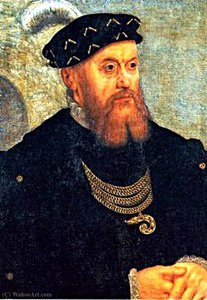
Jacob Binck's engraving of Christian II of Denmark stands as a testament to the meticulous craftsmanship and artistic sensibilities characteristic of Renaissance portraiture. Executed around 1525, this artwork transcends mere representation; it captures the essence of power, nobility, and the anxieties surrounding political upheaval in Denmark during its tumultuous reign.
- Subject Matter: The engraving portrays Christian II, King of Denmark, seated confidently within an ornate chair. Binck’s focus is sharply delineated on the king's head and shoulders, presenting a portrait that prioritizes psychological depth alongside visual accuracy.
- Style & Technique: Binck skillfully employs etching or engraving—a technique favored for its ability to achieve remarkable tonal variations and intricate textural effects—to render this regal figure. The resulting image is dominated by linear contours, meticulously crafted to convey both form and atmosphere. Cross-hatching and stippling contribute significantly to the depiction of fabric folds, hair strands, and architectural surfaces.
The engraving’s historical context illuminates its significance. Christian II ascended to the throne through a controversial election process orchestrated by the Danish nobility, marking a departure from established hereditary succession. His reign was swiftly marred by discontent fueled by his ambitious reforms aimed at curbing papal influence and bolstering Protestantism—a stance that alienated significant segments of the populace.
- Symbolism: Binck’s artistic choices resonate with broader symbolic concerns prevalent during the Renaissance. The prominent crown symbolizes royal authority, while heraldic shields display emblems representing Christian II's lineage and allegiance. These visual cues underscore the artwork’s narrative dimension—a chronicle of ambition, defiance, and ultimately, exile.
- Emotional Impact: Despite its formal composition, Binck’s engraving conveys a palpable sense of dignity and composure. The artist’s masterful rendering captures not only the physical appearance of Christian II but also his inner resolve—a reflection of the king's unwavering conviction in his cause amidst mounting opposition.
Furthermore, Binck’s work is notable for its stylistic kinship with Albrecht Dürer, reflecting the artistic dynamism of Cologne during this period. The engraving’s meticulous attention to detail—particularly the architectural backdrop featuring columns and arches—demonstrates Binck's commitment to capturing both realism and grandeur. It serves as a compelling exemplar of Renaissance portraiture, inviting viewers to contemplate not only the visual splendor but also the complex political realities shaping Christian II’s era.
- Material & Method: The engraving utilizes ink applied to a copper plate—a process that allows for precise control over tonal gradations and textural nuances. This technique exemplifies the precision demanded by Renaissance art, ensuring that every line contributes to the overall impression of sophistication and artistic mastery.
Related Artworks
Artist Biography
Jacob Binck: A Renaissance Portraitist of Cologne
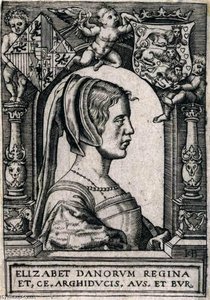
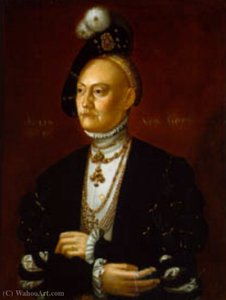
Jacob Binck (1497-1568), a name perhaps less familiar than some of his contemporaries, nevertheless stands as a significant figure in the artistic landscape of 16th-century Germany. Born in Cologne during a period of burgeoning artistic innovation, Binck’s career unfolded across Northern Europe, leaving behind a legacy primarily defined by his exquisite portraits of royalty and nobility – most notably Christian II & III of Denmark and Isabella of Austria. His work offers a compelling glimpse into the refined aesthetic sensibilities prevalent within Cologne at the time, reflecting both the influence of Italian Renaissance ideals and the distinctive character of German artistic tradition.
Early biographical details surrounding Binck are somewhat fragmented, shrouded in the typical uncertainties of historical records. While often associated with the renowned Albrecht Dürer, the precise nature of any direct student-teacher relationship remains debated by scholars. It’s plausible that he was exposed to Dürer's groundbreaking techniques and artistic philosophy during his formative years, though evidence is circumstantial. Furthermore, his early residence in Italy – a common trajectory for young artists seeking to hone their skills – introduces an element of speculation regarding potential influences from the Italian Renaissance masters. Accounts also suggest periods spent working under Marcantonio Raimondi in Rome, further expanding his exposure to diverse artistic styles.
A Peripatetic Career and Royal Patronage
Binck’s career was marked by a considerable degree of mobility. He wasn't rooted in one single location but rather traveled extensively throughout Europe, accepting commissions from various courts and patrons. This itinerant lifestyle is particularly evident in his service to the Danish court under King Christian III. He quickly ascended to the position of royal painter, responsible for capturing the likenesses of both the king and his queen, Dorothea. His portraits became valued possessions, reflecting the prestige and power of the Danish monarchy. Beyond Denmark, Binck also found employment with Prince Albrecht of Brandenburg in Prussia, undertaking a significant commission involving the creation of a monument to a deceased princess – a testament to his versatility and artistic skill.
This royal patronage wasn’t merely a source of income; it provided Binck with access to luxurious materials, influential circles, and opportunities to refine his technique. The demands of portraiture required meticulous observation, an understanding of human anatomy, and the ability to convey not just physical appearance but also personality and status. Binck excelled in these areas, producing works characterized by a remarkable degree of realism and a subtle elegance that distinguished him from many of his contemporaries.
Style and Technique: A Blend of Precision and Refinement
Binck’s artistic style is often described as “neat” and “correct,” exhibiting a notable attention to detail. While comparisons are frequently drawn between his work and the art of H. Aldegrever, a prominent Flemish painter known for his refined portraits, Binck's engravings tend to display a slightly less masterful execution compared to his painted works. His drawings demonstrate a strong foundation in perspective and anatomical accuracy, but sometimes lack the same level of dynamism or expressive intensity found in some of his peers.
However, it’s crucial to acknowledge the challenges inherent in assessing Binck's style due to the historical complexities surrounding artist attribution during this period. Many artists employed similar stylistic conventions and used cipher markings – such as “C” for Coloniensis – to identify their work. This has led to considerable confusion among scholars, with some engravers mistakenly identified as belonging to the group known as the Little Masters. The meticulous documentation of Binck’s works, particularly his engravings, provides valuable insights into his artistic process and technical capabilities.
Notable Works and Lasting Legacy
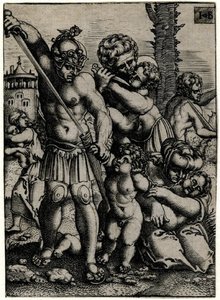
Binck's oeuvre primarily consists of portraits, reflecting the prevailing demand for this genre during the 16th century. Among his most celebrated achievements are the portraits of Christian II & III of Denmark and Isabella of Austria – works that showcase his ability to capture regal dignity and convey a sense of timelessness. His self-portrait in the Belvedere, Vienna, offers a rare opportunity to study his artistic approach firsthand. Furthermore, his engravings, including copies of Raphael’s “Massacre of the Innocents,” demonstrate his skill as an engraver and his appreciation for classical art.
Despite not achieving widespread fame during his lifetime, Jacob Binck's contributions to the development of portraiture in Northern Europe are undeniable. His meticulous technique, refined aesthetic sensibilities, and service to prominent royal courts cemented his place as a significant artist of the Renaissance period. His works continue to be studied and admired for their elegance, realism, and subtle portrayal of human character – a testament to the enduring legacy of this often-overlooked Cologne painter.
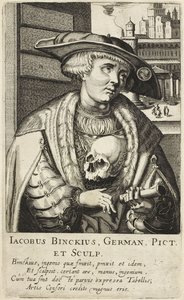
jacob binck
1497 - 1568 , Germany
Quick Facts
- Artistic Movement Or Style: Renaissance art
- Artists Or Movements Influenced By This Artist: ['H. Aldegrever']
- Artists Who Influenced This Artist: ['Dürer']
- Date Of Birth: 1497
- Date Of Death: 1568
- Full Name: Jacob Binck
- Nationality: German
- Notable Artworks:
- Christian II Denmark
- Isabella of Austria
- Place Of Birth: Cologne, Germany
Related Articles
Engraving's Golden Age: 10 Masterpieces That Redefined Art | ArtsDot
Journey through art history with our Top 10 Legendary Engravings! Explore masterpieces by Dürer, Rembrandt & Goya. Discover the stories behind these iconic prints and find museum-quality reproductions for your home at ArtsDot.com.
Engraving: A Historical Survey of Technique, Artistic Expression & Enduring Legacy
Explore the rich history of engraving with ArtsDot. Discover techniques, iconic artists like Dürer & Callot, collecting tips, and expert guidance for preserving your art investment. Learn about intaglio printing & more!
The Intricate World of Engraving: A Historical Survey of Technique, Artistic Expression & Enduring Legacy
Explore the rich history of engraving with ArtsDot. Discover techniques, iconic artists like Dürer & Callot, collecting tips, and expert guidance for preserving your art investment. Learn about intaglio printing & more!
Hendrick Goltzius: Master Engraver & the Flourishing of Dutch Mannerism
Explore the life & art of Hendrick Goltzius, a master engraver of Dutch Mannerism. Discover his innovative techniques, iconic engravings like 'Jahel', and lasting influence on Baroque art. Learn about collecting Goltzius today.
Albrecht Dürer's Masterpieces: 25 Iconic Artworks for Your Home | ArtsDot
Explore 25 iconic artworks by Albrecht Dürer, a master of the German Renaissance. Discover the stories behind Melencolia I, Knight Death and Devil & more. Find museum-quality art reproductions for your home at ArtsDot.com.