 Preview
 Send
Send Share
Share
 Details

 Download
 Similars
 X-Ray
X-Ray Diaporama
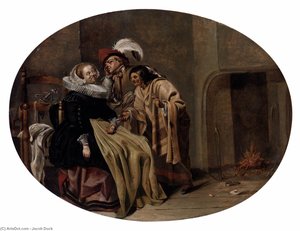
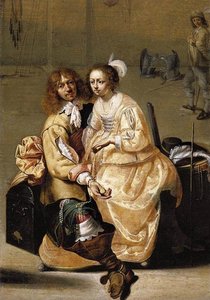
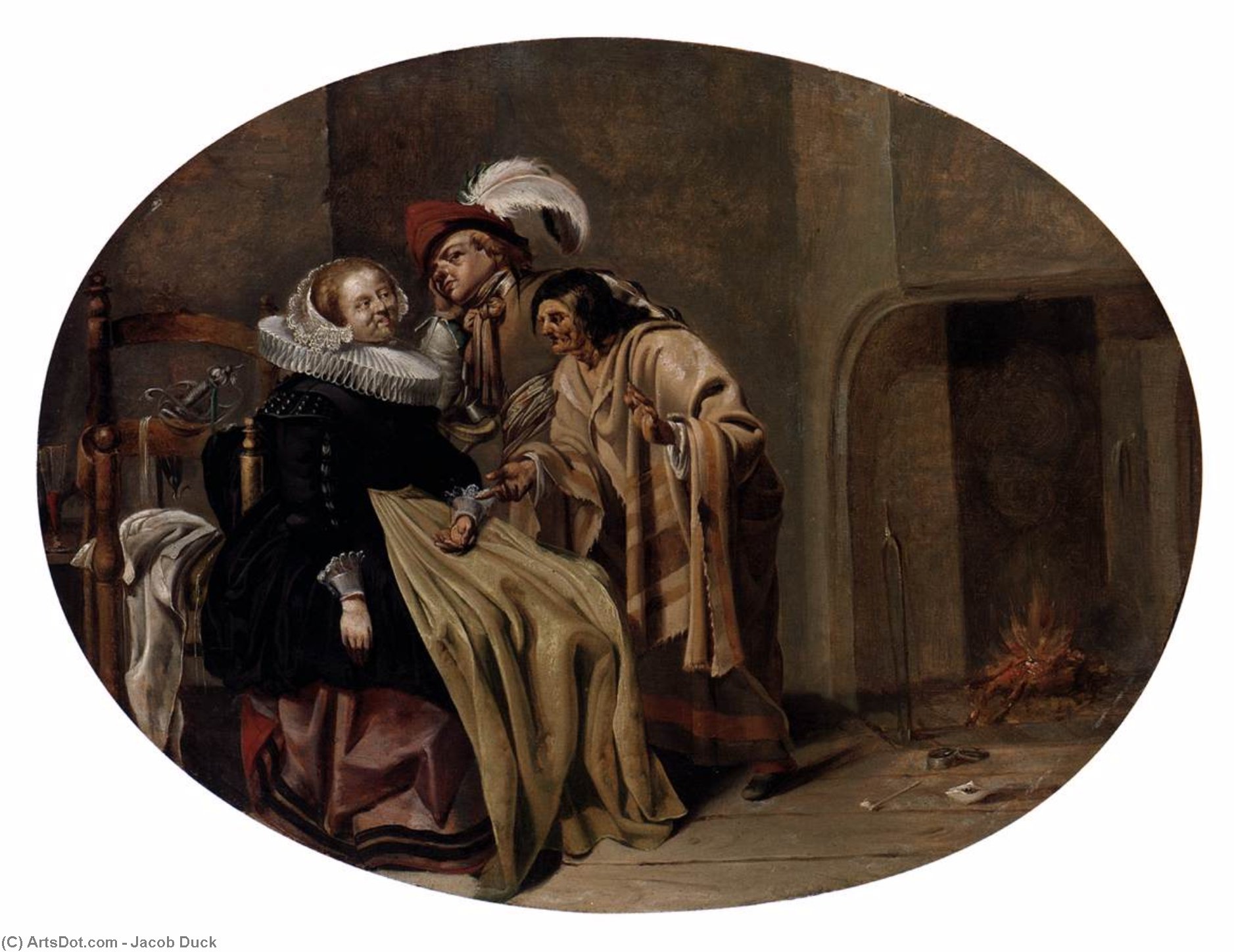
A Couple in an Interior with a Gypsy Fortune-Teller
 Oil On Canvas
- WallArt
- Baroque Dutch Painting
 1632
1632- Renaissance
 25.0 x 33.0 cm
 Metropolitan Museum of Art
 Read More
Hand Made Oil Reproduction
Hand-painted oil on canvas in your size and frame, made to order by our artists. ( Buy Print Buy Image)




P118B $10

P118H $10

P118W $10

P438Z $10

P508JH $12

P508YH $12

P805H $10

P805Z $10

P919BZ $10

P919G $10

P919XJ $10

P959ZH $10

P968JZ $12

W106C $8

W218G $10

W218JH $8

W218Y $10

W307PJ $10

W316G $10

W316PJ $8

W316Y $10

W398PJ $8

W4111J $10

W500HY $15

W500JH $15

W692G $12

W849H $8

W940BG $15

W953PJ $8




Pick from our preset sizes that match the artwork's original proportions.

You may enter your own dimensions to fit a specific frame or space. If your selected size does not match the original image's proportions, we will either crop the artwork or extend the painting with additional hand-painted elements. A digital mockup will be sent for your approval before production begins.
Please note that the on-screen preview does not reflect the actual cropping or extension. Only the mockup will accurately show the final composition.
While custom sizes are available, we recommend selecting a dimension from the predefined list to preserve the original proportions.
After order, ArtsDot.com team will email client for instructions and provide a mockup preview
Worldwide Delivery () in 3/4 weeks instead of standard 5 weeks. (16 August). No compromise on quality.

Free Worldwide Express Shipping

High-Quality Linen Canvas

Full Shipping Insurance

Customs Tax Refund Guarantee

True Color Matching Guarantee

60-Day Return Policy (Defects Only)

100% Money-Back Guarantee

Bulk Discount Offer
 Glass option is only available in size under 110 CM

A Couple in an Interior with a Gypsy Fortune-Teller
Reproduction Medium
Reproduction Size
-


Total Price
$ 263
Artwork Description
A Window into Dutch Life: Jacob Duck’s “A Couple in an Interior with a Gypsy Fortune-Teller”
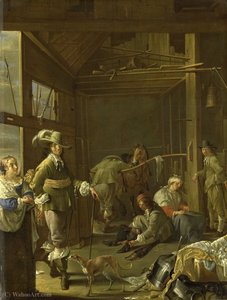
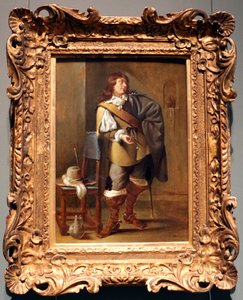
Jacob Duck's "A Couple in an Interior with a Gypsy Fortune-Teller," painted in 1632, offers a remarkably intimate glimpse into the bustling everyday life of 17th-century Holland. More than just a portrait, it’s a carefully constructed tableau vivant – a snapshot of a moment frozen in time, brimming with subtle narratives and quiet observations. The painting depicts a small room, likely a domestic space, where a man and woman are engaged in conversation alongside a fortune teller, her presence injecting an element of intrigue and perhaps even a touch of the uncanny into the scene.
Duck’s masterful technique is immediately apparent. He employs a meticulous realism, characteristic of the Dutch Golden Age, rendering each object – from the worn wooden chair to the simple bed draped with a patterned cloth – with painstaking detail. The use of light and shadow creates a palpable sense of depth, drawing the viewer into the room and inviting them to become an unseen observer. Notice how Duck skillfully utilizes chiaroscuro, contrasting areas of bright illumination with deep shadows, adding drama and highlighting key figures within the composition. The brushwork is smooth and controlled, reflecting Duck’s training as a goldsmith – a skill that undoubtedly informed his precision and attention to detail.
The Intrigue of the Fortune Teller
The inclusion of the fortune teller immediately elevates the painting beyond a simple domestic scene. Gypsies, or *Roma*, were often viewed with suspicion and fascination during this period, associated with both good luck and misfortune. Their itinerant lifestyle and perceived connection to the supernatural made them figures of mystery and speculation. Duck’s depiction isn't sensationalized; instead, he presents her as a respected member of the room, actively involved in a conversation. Her posture suggests confidence and perhaps even authority, hinting at a life lived outside the confines of conventional society.
The man and woman, while largely obscured by the folds of their clothing, appear to be deeply engrossed in their discussion. Their gestures and expressions are subtle but suggest a complex relationship – one filled with both affection and perhaps a hint of tension. The presence of the fortune teller acts as a catalyst, prompting them to reflect on their lives and futures. The painting invites us to speculate about their story, adding layers of meaning beyond the immediate visual elements.
Historical Context and Artistic Influences
"A Couple in an Interior with a Gypsy Fortune-Teller" is firmly rooted in the artistic landscape of 17th-century Holland. The Dutch Golden Age was a period of unprecedented prosperity and cultural flourishing, marked by a burgeoning interest in realism and a celebration of everyday life. Artists like Rembrandt and Rubens profoundly influenced Duck’s style, particularly his use of light and shadow and his ability to capture human emotion. Duck's early training under Joost Cornelis Droochloot provided him with the foundational skills necessary to develop his distinctive voice.
The painting reflects a broader trend in Dutch art during this era – a shift away from idealized representations of religious subjects towards more secular and realistic depictions of human experience. Furthermore, it aligns with the growing fascination with portraiture, as wealthy merchants and professionals sought to document their status and identity through commissioned paintings.
Symbolism and Emotional Resonance
Beyond its immediate visual appeal, “A Couple in an Interior with a Gypsy Fortune-Teller” is rich in symbolism. The objects within the room – the chair, the bed, the bottle – each carry subtle connotations of domesticity, comfort, and perhaps even indulgence. The fortune teller’s presence symbolizes fate, chance, and the uncertainty of life.
Ultimately, the painting evokes a sense of quiet contemplation and understated drama. It's not a grand historical scene or a heroic portrait; rather, it offers a poignant glimpse into the private lives of ordinary people, inviting us to pause and reflect on the complexities of human relationships and the enduring mysteries of life itself. Reproductions of this captivating work offer a beautiful way to bring a touch of 17th-century Dutch realism into any interior space.
Related Artworks
Artist Biography
The Gilded Precision of a Dutch Master
In the vibrant, bustling landscape of the seventeenth-century Netherlands, few artists captured the quiet drama of existence with as much technical finesse and observational grace as Jacob Duck. Born in Utrecht around 1600, Duck’s journey into the world of fine art was not born from a traditional painter's studio, but rather from the meticulous workshop of a goldsmith. Having mastered the intricate craft of metalwork by the age of nineteen, he brought a unique, jeweler-like precision to his canvases. This early training in goldsmithing instilled in him an unparalleled eye for detail, a quality that would later allow him to render the glint of a soldier's armor, the texture of a tavern cloth, or the subtle sheen of a wine glass with breathtaking realism.
His transition from precious metals to pigments began in earnest when he entered the studio of Joost Cornelisz Droochsloot. Under this mentorship, Duck moved beyond the rigid boundaries of craft and embraced the fluid storytelling of genre painting. As he matured, his artistic footprint expanded across the great cultural hubs of the Dutch Golden Age, from the industrious streets of Haarlem to the sophisticated atmosphere of The Hague. Throughout his travels, he absorbed the atmospheric brilliance of masters like Rubens and the dramatic, light-piercing shadows of Rembrandt. This synthesis of influences allowed him to master chiaroscuro, using deep shadows to push his figures forward into the viewer's space, creating a sense of intimacy that makes his scenes feel less like distant histories and more like captured moments in time.
A Window into the Golden Age
The true soul of Jacob Duck’s oeuvre lies in his profound dedication to the "everyday." While many of his contemporaries sought glory in grand mythological epics or sweeping historical narratives, Duck found divinity in the mundane. He was a chronicler of the human condition, finding profound narrative weight in the simplest of settings. His work often oscillates between two distinct yet equally captivating realms: the camaraderie of the military and the conviviality of civilian life.
In his celebrated guardroom scenes, Duck provides a window into the lives of the burgeoning military class of the Dutch Republic. These paintings—often featuring officers playing cards, soldiers resting, or men sharing quiet moments of reflection—do more than just depict military life; they capture the social shifts of an era following the Eighty Years' War. Through his brush, we see the tension between duty and leisure, the camaraderie of the barracks, and the subtle psychological depth of men caught in the stillness between conflicts. His ability to render the heavy fabrics of uniforms and the stark, dramatic lighting of a dimly lit guardroom creates an immersive experience that resonates with historical gravity.
Beyond the barracks, Duck’s artistry flourished in the depiction of domestic interiors and bustling public spaces. He possessed a remarkable talent for composing scenes of tavern life, market stalls, and private rooms where the light falls softly upon everyday objects. In these works, one might encounter:
- The Intimacy of Interiors: Quiet, contemplative scenes where figures are lost in thought or engaged in subtle domestic tasks.
- Social Conviviality: Lively gatherings in taverns, filled with the warmth of conversation and the sensory richness of food and drink.
- Genre Narratives: Small, poignant stories captured in a single frame, such as a gypsy fortune-teller or a couple sharing a private moment.
Legacy and Artistic Significance
The historical significance of Jacob Duck lies in his ability to elevate the common experience to the level of high art. By focusing on the textures of reality—the way light hits a pewter mug or the weary expression on a soldier's face—he contributed to the humanist spirit that defined the Dutch Golden Age. He did not need grand legends to move his audience; he relied on the truth of the visible world.
Though he eventually returned to Utrecht, where he passed away in 1667, his influence endured through the enduring power of his imagery. Today, his works reside in some of the world's most prestigious institutions, including the Hermitage Museum, serving as vital touchstones for anyone seeking to understand the social fabric of the seventeenth century. Duck remains a master of the small-scale epic, proving that within the confines of a single room or a quiet corner of a tavern, an entire world of human emotion and historical truth can be found.
Jacob Duck
1600 - 1667 , Netherlands
Quick Facts
- Artistic Movement Or Style: Dutch Golden Age
- Artists Or Movements Influenced By This Artist: ['Genre Painting']
- Artists Who Influenced This Artist: ['Joost Cornelis Droochloot']
- Date Of Birth: 1600 Utrecht Netherlands
- Date Of Death: 1667
- Full Name: Jacob Duck
- Nationality: Dutch
- Notable Artworks:
- The Wine Connoisseurs
- Dividing the Spoils
- The Distraint
- Place Of Birth: Utrecht Netherlands
Related Articles

Dutch Masters: 10 Golden Age Paintings That Still Inspire |
Journey into the Dutch Golden Age! Explore 10 iconic paintings by Rembrandt, Vermeer & Hals. Discover the stories behind these Baroque masterpieces and find museum-quality art reproductions to elevate your home decor on .

Golden Age Reflections: Dutch Baroque Painting & Cultural Innovation
Explore the Dutch Golden Age of painting! Discover key artists like Vermeer & ter Borch, their innovative techniques, and the rich cultural context behind these Baroque masterpieces. Learn about collecting & appreciating this iconic art period.

Illuminating Innovation: Exploring the Dutch Golden Age of Painting
Explore the Dutch Golden Age of painting with ArtsDot. Discover Rembrandt, Vermeer & other Masters. Learn about key characteristics, iconic artworks, and lasting influence. Expert insights for collectors & enthusiasts.
Illuminating Realism: Exploring the Dutch Golden Age of Painting (1600-1700)
Explore the Dutch Golden Age of painting (1600-1700) with ArtsDot. Discover Rembrandt, Vermeer & other masters. Learn about techniques, history & find museum-quality reproductions.
Golden Light & Dutch Skies: Bringing the Magic of Dutch Golden Age Landscapes into Your Home
Transform your home with the breathtaking light of Dutch Golden Age landscapes. Discover how hand-painted oil reproductions of masterworks like Ruisdael and Vermeer bring timeless elegance, atmosphere, and soulful texture to modern interiors. Elevate your space with museum-quality art.