 Preview
 Send
Send Share
Share
 Details

 Download
 Similars
 X-Ray
X-Ray Diaporama
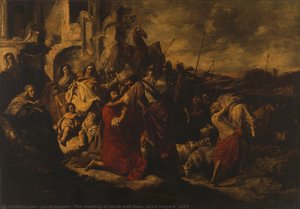
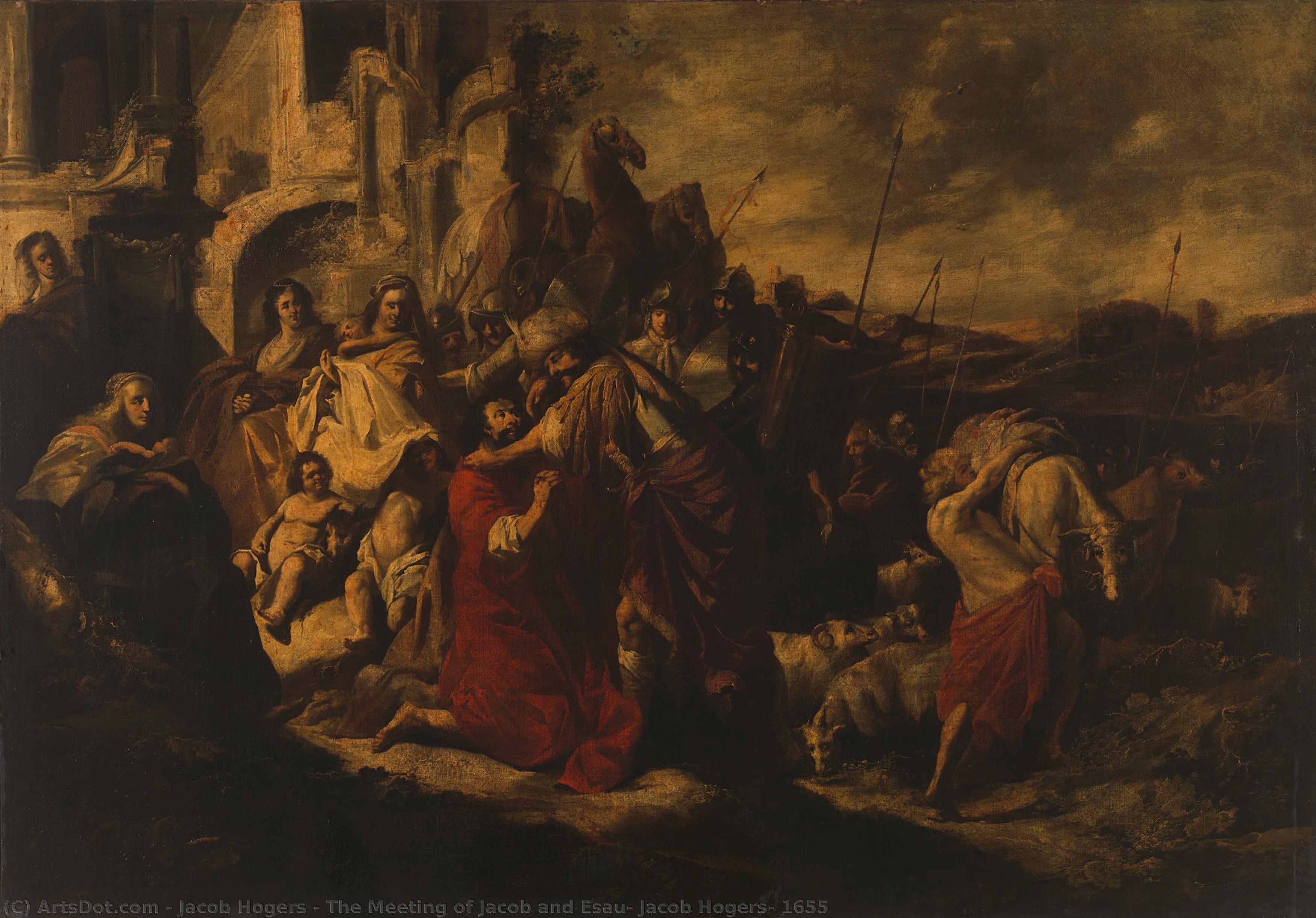
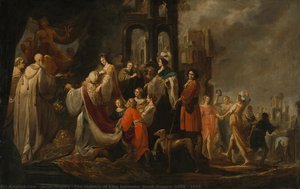
The Meeting of Jacob and Esau, Jacob Hogers, 1655


 Read More
Hand Made Oil Reproduction
Hand-painted oil on canvas in your size and frame, made to order by our artists. ( Buy Print Buy Image)




































Pick from our preset sizes that match the artwork's original proportions.

You may enter your own dimensions to fit a specific frame or space. If your selected size does not match the original image's proportions, we will either crop the artwork or extend the painting with additional hand-painted elements. A digital mockup will be sent for your approval before production begins.
Please note that the on-screen preview does not reflect the actual cropping or extension. Only the mockup will accurately show the final composition.
While custom sizes are available, we recommend selecting a dimension from the predefined list to preserve the original proportions.
After order, ArtsDot.com team will email client for instructions and provide a mockup preview
Worldwide Delivery () in 3/4 weeks instead of standard 5 weeks. (30 August). No compromise on quality.

Free Worldwide Express Shipping

High-Quality Linen Canvas

Full Shipping Insurance

Customs Tax Refund Guarantee

True Color Matching Guarantee

60-Day Return Policy (Defects Only)

100% Money-Back Guarantee

Bulk Discount Offer
 Glass option is only available in size under 110 CM

The Meeting of Jacob and Esau, Jacob Hogers, 1655
Reproduction Medium
Reproduction Size
-


Total Price
$ 463
Related Artworks

Artist Biography
The Enigmatic Brush of Jacob Hogers
In the vast, golden tapestry of the Dutch Golden Age, certain names shimmer with legendary brilliance, while others linger like a soft shadow, waiting for the light of scholarship to reveal their true depth. Jacob Hogers is precisely such an artist—an enigmatic figure whose life and work offer a captivating glimpse into the dramatic intensity of the seventeenth- and early eighteenth-century Baroque style. Born in 1614 to a patrician family in Deventer, Hogers emerged from a background of distinction, yet his artistic legacy is defined not by social standing, but by the profound emotional resonance of his canvases and drawings.
Though much of his personal history remains shrouded in the mists of time, the traces of his journey suggest a life deeply intertwined with the great artistic hubs of the Netherlands. It is believed that during his formative years, Hogers studied in Haarlem, a period that would fundamentally shape his aesthetic sensibilities. There, he breathed the same air as the masters of the Haarlem School, absorbing the rhythmic compositions and narrative clarity of artists such as Pieter de Grebber and Gerrit Bleker. This early exposure instilled in him a mastery of the human form and a penchant for the grand, theatrical storytelling that would become his hallmark.
A Mastery of Light and Sacred Narrative
As Hogers moved through the artistic landscape, his style underwent a sophisticated evolution. His time in Amsterdam, particularly following his marriage to Sara Abrahams in 1641, brought him into the orbit of the Rembrandt School. This encounter introduced a new layer of complexity to his work: a profound awareness of chiaroscuro, where light does not merely illuminate but actively sculpts the drama within the frame. His later paintings reveal an ability to manipulate shadow and brilliance to evoke the divine and the monumental.
Hogers found his true calling in the sophisticated genre of history painting, specializing in scenes drawn from the Bible and classical antiquity. His works are characterized by a remarkable ability to transform theological narratives into visceral human experiences. Consider the following elements that define his approach:
- Biblical Grandeur: He possessed a unique talent for depicting pivotal scriptural moments, such as The Meeting of Jacob & Esau, with a sense of palpable tension and emotional weight.
- Technical Precision: Whether working in oil on canvas or the delicate medium of pen and wash on vellum, his command over texture and light remained consistent.
- Atmospheric Depth: His use of color and shadow creates an immersive environment, inviting the viewer to step into the sacred space of the painting.
His drawings, though exceedingly rare, are particularly noteworthy for their intimacy. Executed often on vellum with black, red, and grey washes, these works showcase a sensitive touch that complements the monumental scale of his larger oil paintings. In these smaller formats, one can observe the artist's ability to capture the subtle nuances of facial expressions and the delicate interplay of light on skin.
Legacy and Historical Significance
For centuries, Jacob Hogers remained a figure of scholarly curiosity, often overlooked by early biographers like Houbraken. It was not until the late nineteenth century that his importance began to be fully recognized by the wider art world, spurred by the acquisition of his masterpieces by prestigious institutions such as the Rijksmuseum. This rediscovery has allowed historians to re-evaluate him not merely as a follower of great masters, but as a significant contributor to the Dutch Baroque tradition in his own right.
Today, Hogers stands as a testament to the enduring power of narrative art. His ability to bridge the gap between the structured elegance of the Haarlem School and the dramatic, psychological depth of the Rembrandt circle makes him a vital link in the evolution of seventeenth-century painting. Through his work, we continue to witness the profound intersection of faith, history, and the masterful manipulation of light, ensuring that while his life may be partially obscured by time, his artistic vision remains vibrantly alive.
Quick Facts
- Artistic Movement Or Style: Baroque
- Artists Who Influenced This Artist:
- Pieter de Grebber
- Gerrit Bleker
- Date Of Birth: 1614
- Date Of Death: After 1652
- Full Name: Jacob Hogers
- Nationality: Dutch
- Notable Artworks:
- The Meeting of Jacob & Esau
- The Idolatry of King Solomon
- Place Of Birth: Deventer, Netherlands
Related Articles

The Dramatic Flourish: Exploring the Baroque Movement's Enduring Legacy in Art History
Explore the dramatic world of Baroque art! Discover iconic artists like Caravaggio & Rubens, defining techniques, and its lasting impact on art history. Expert insights for collectors & enthusiasts at ArtsDot.

Baroque Drama: Bringing Opulence & Emotion into Contemporary Interiors
Explore the opulent world of Baroque interior design! Discover key elements, modern applications & how to bring dramatic elegance into your home with 's authentic reproductions.

Oil on Canvas: A Historical & Technical Exploration of a Timeless Artistic Medium
Explore the rich history & enduring techniques of oil painting on canvas. Discover the science behind its longevity, conservation practices, and contemporary relevance. Expert insights for art enthusiasts.

Baroque Masterpieces: 10 Paintings That Defined an Era |
Journey through the drama & grandeur of Baroque art! Explore 10 masterpieces by Caravaggio, Rembrandt, Rubens & more. Discover stunning oil paintings, rich colors & timeless stories. Find museum-quality reproductions at .

The Enduring Power of Painting: A Historical & Contemporary Exploration of Form and Emotion
Explore the rich history & enduring techniques of oil painting with ArtsDot. Discover masterpieces, learn about art collecting, and find authentic handmade reproductions crafted by skilled artists.