 Preview
 Send
Send Share
Share
 Details

 Download
 Similars
 X-Ray
X-Ray Diaporama
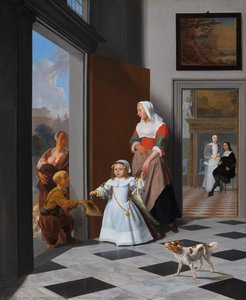
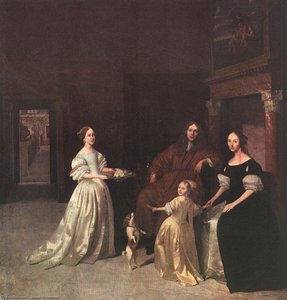
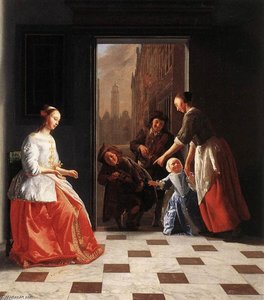
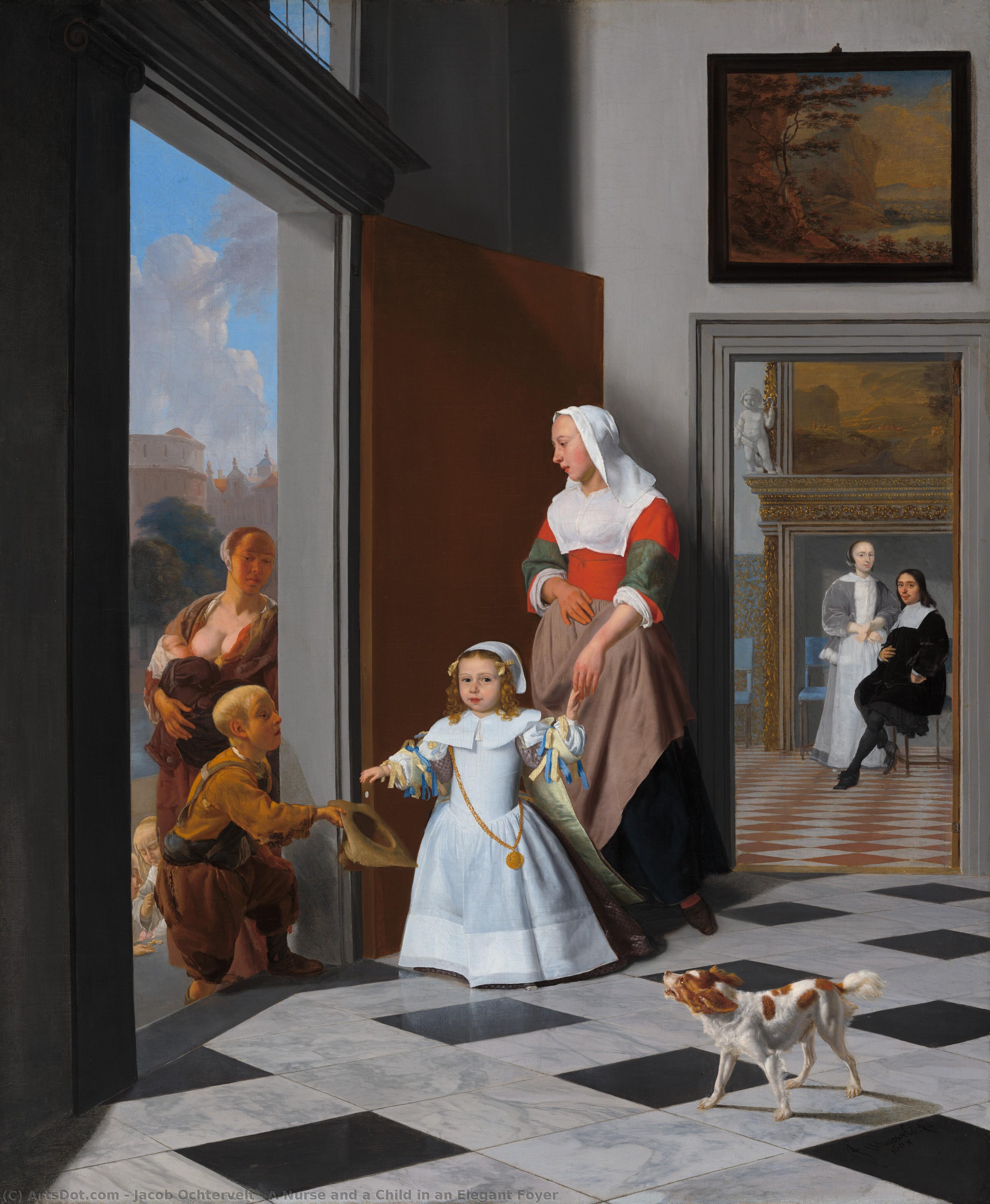
A Nurse and a Child in an Elegant Foyer
 Dutch Golden Age
 1663
1663 82.0 x 67.0 cm
 Read More
Hand Made Oil Reproduction
Hand-painted oil on canvas in your size and frame, made to order by our artists. ( Buy Print Buy Image)




































Pick from our preset sizes that match the artwork's original proportions.

You may enter your own dimensions to fit a specific frame or space. If your selected size does not match the original image's proportions, we will either crop the artwork or extend the painting with additional hand-painted elements. A digital mockup will be sent for your approval before production begins.
Please note that the on-screen preview does not reflect the actual cropping or extension. Only the mockup will accurately show the final composition.
While custom sizes are available, we recommend selecting a dimension from the predefined list to preserve the original proportions.
After order, ArtsDot.com team will email client for instructions and provide a mockup preview
Worldwide Delivery () in 3/4 weeks instead of standard 5 weeks. (17 August). No compromise on quality.

Free Worldwide Express Shipping

High-Quality Linen Canvas

Full Shipping Insurance

Customs Tax Refund Guarantee

True Color Matching Guarantee

60-Day Return Policy (Defects Only)

100% Money-Back Guarantee

Bulk Discount Offer
 Glass option is only available in size under 110 CM

A Nurse and a Child in an Elegant Foyer
Reproduction Medium
Reproduction Size
-


Total Price
$ 363
Artwork Description
Related Artworks
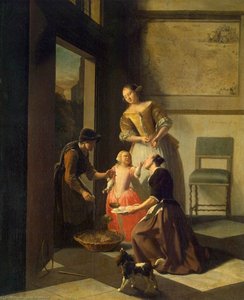
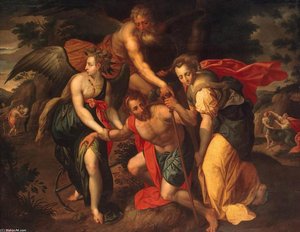
Artist Biography
A Life Dedicated to Intimacy: The World of Jacob Ochtervelt
Jacob Ochtervelt, born in Rotterdam in 1634 and passing away in Amsterdam in 1682, occupies a fascinating yet somewhat understated position within the pantheon of Dutch Golden Age painters. While not as immediately recognizable a name as Rembrandt or Vermeer, Ochtervelt carved out a distinctive niche for himself with his exquisitely rendered genre scenes and portraits that offered glimpses into the lives – and aspirations – of the burgeoning middle class and aristocracy of 17th-century Holland. His story is one of quiet mastery, subtle observation, and an ability to capture not just likenesses but also the very *atmosphere* of domestic comfort and social grace.Early Training and Influences
Ochtervelt’s artistic journey began in a workshop environment steeped in tradition. Initially apprenticed to Nicolaes Pietersz Berchem in Haarlem, he shared studio space with another rising talent, Pieter de Hooch. However, it was his subsequent tutelage under Ludolf de Jongh in Rotterdam that appears to have had the most profound impact on his developing style. De Jongh, also a mentor to de Hooch, specialized in refined portraits and elegant interiors, qualities that would become hallmarks of Ochtervelt’s own work. This early training instilled in him a meticulous attention to detail, a sensitivity to light and color, and an appreciation for the nuances of social interaction. Interestingly, despite this solid foundation, Ochtervelt was curiously overlooked by several prominent art historians of his time – Andre Felibien, Jochaim Sandrart, and R. de Piles all failed to mention him in their influential writings. It wasn’t until Arnold Houbraken, a later biographer, that Ochtervelt received any formal recognition, though even then the assessment was somewhat backhanded, suggesting his work lacked the sophisticated perspective of contemporaries like De Hooch.A Master of Genre and Portraiture
Ochtervelt's oeuvre, comprising around one hundred paintings, is characterized by a remarkable consistency in subject matter and quality. He excelled at depicting scenes of daily life within affluent households – musical gatherings, drawing lessons, ladies engaged in needlework, or simply families enjoying each other’s company. These are not grand historical narratives or dramatic religious allegories; instead, they are intimate snapshots of a world preoccupied with leisure, refinement, and social display. His portraits, too, possess a similar quality of quiet dignity and understated elegance. He wasn't interested in bombast or overt symbolism, but rather in capturing the personality and status of his sitters through subtle gestures, carefully chosen props, and an almost photographic realism.Style and Technique: Echoes of Metsu and Ter Borch
While Ochtervelt developed a style uniquely his own, it’s possible to discern influences from other leading painters of the era. Comparisons have been drawn with Gabriel Metsu, particularly in the delicate rendering of fabrics and textures, and Gerard ter Borch, whose ability to convey a sense of naturalism and psychological depth also resonates in Ochtervelt's work. However, Ochtervelt’s paintings often possess a greater emphasis on architectural detail and a more restrained color palette than either Metsu or Ter Borch. He was particularly adept at creating convincing illusions of space and light, using subtle gradations of tone to suggest the play of sunlight filtering through windows or reflecting off polished surfaces. His brushwork is remarkably smooth and refined, contributing to the overall sense of elegance and sophistication that characterizes his work.Historical Significance and Lasting Legacy
Despite being initially overlooked by some contemporary art critics, Jacob Ochtervelt’s paintings were clearly sought after during his lifetime, suggesting a considerable level of appreciation among collectors and connoisseurs. His ability to capture the spirit of the Dutch Golden Age – its prosperity, its social aspirations, and its emphasis on domestic comfort – continues to resonate with viewers today. While he may not be a household name like Rembrandt or Vermeer, Ochtervelt’s work offers a valuable window into the lives of those who lived during this remarkable period in history. His paintings are a testament to the power of quiet observation, meticulous technique, and an unwavering commitment to capturing the beauty and dignity of everyday life. He remains a significant figure for scholars and collectors alike, representing a refined and elegant corner of the Dutch Golden Age artistic landscape.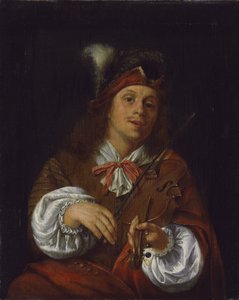
jacob ochtervelt
1635 - 1682 , Netherlands
Quick Facts
- Artistic Movement Or Style: Dutch Golden Age painting
- Artists Who Influenced This Artist:
- Ludolf de Jongh
- Frans van Mieris the Elder
- Date Of Birth: 1634
- Date Of Death: 1682
- Full Name: Jacob Ochtervelt
- Nationality: Dutch
- Notable Artworks:
- The Players
- Musical Company in Interior
- The Drawing Lesson
- Place Of Birth: Rotterdam, Netherlands
Related Articles

Dutch Masters: 10 Golden Age Paintings That Still Inspire |
Journey into the Dutch Golden Age! Explore 10 iconic paintings by Rembrandt, Vermeer & Hals. Discover the stories behind these Baroque masterpieces and find museum-quality art reproductions to elevate your home decor on .
Genre Painting: A Window into Daily Life & Societal Values of the Dutch Golden Age
Explore the captivating world of Dutch Golden Age genre painting! Discover realistic depictions of daily life, masterful artists like Ostade & Metsu, and hidden symbolism. Learn about this influential art movement with ArtsDot.

Golden Age Reflections: Dutch Baroque Painting & Cultural Innovation
Explore the Dutch Golden Age of painting! Discover key artists like Vermeer & ter Borch, their innovative techniques, and the rich cultural context behind these Baroque masterpieces. Learn about collecting & appreciating this iconic art period.

Illuminating Innovation: Exploring the Dutch Golden Age of Painting
Explore the Dutch Golden Age of painting with ArtsDot. Discover Rembrandt, Vermeer & other Masters. Learn about key characteristics, iconic artworks, and lasting influence. Expert insights for collectors & enthusiasts.
Illuminating Realism: Exploring the Dutch Golden Age of Painting (1600-1700)
Explore the Dutch Golden Age of painting (1600-1700) with ArtsDot. Discover Rembrandt, Vermeer & other masters. Learn about techniques, history & find museum-quality reproductions.