 Preview
 Send
Send Share
Share
 Details

 Download
 Similars
 X-Ray
X-Ray Diaporama
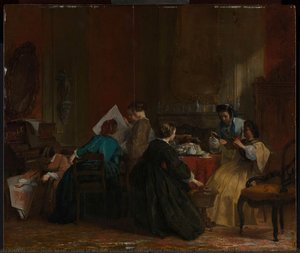
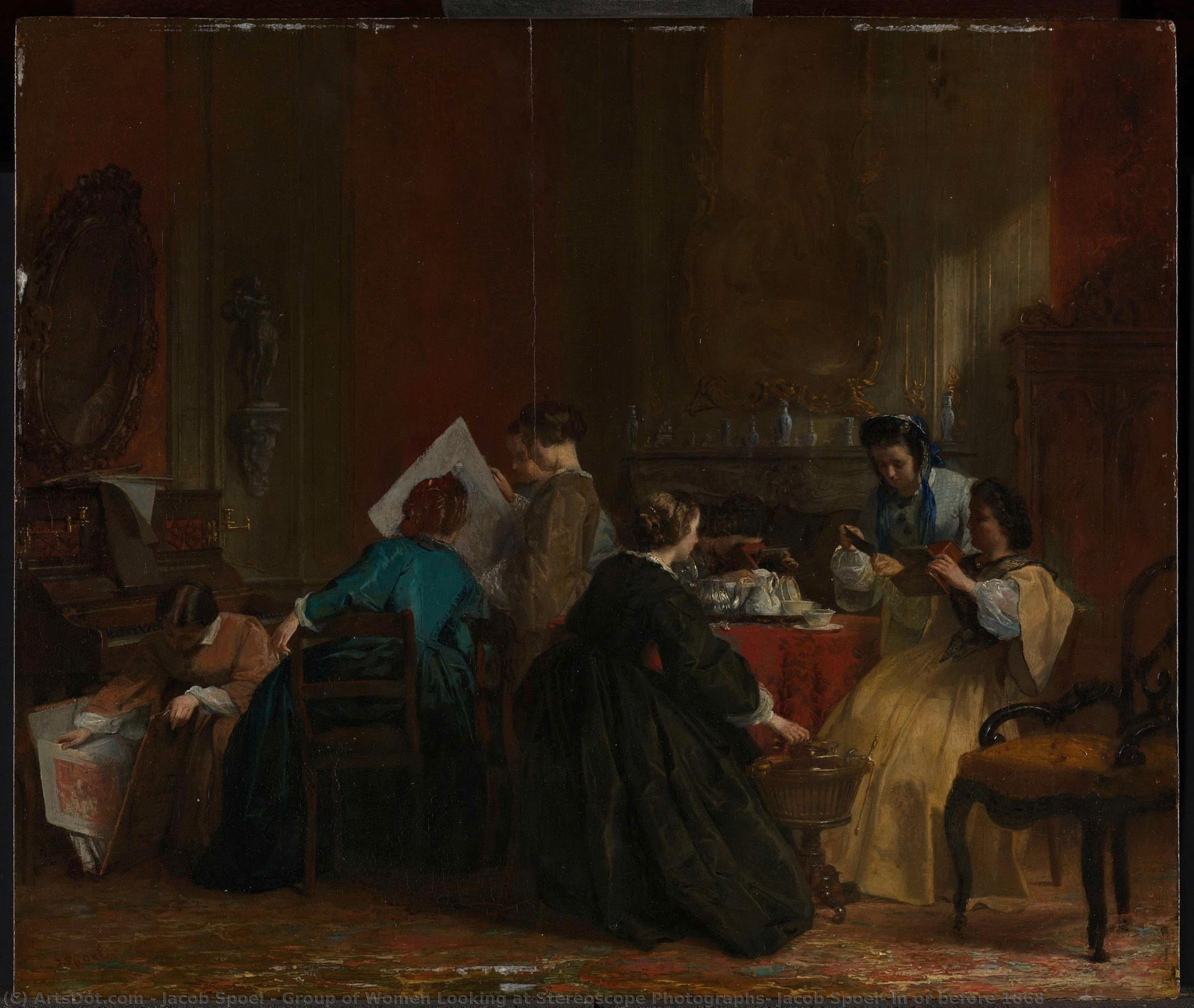
Group of Women Looking at Stereoscope Photographs, Jacob Spoel, in or before 1868
 Romanticism
 1868
1868 42.0 x 49.0 cm
 Read More
Hand Made Oil Reproduction
Hand-painted oil on canvas in your size and frame, made to order by our artists. ( Buy Print Buy Image)




































Pick from our preset sizes that match the artwork's original proportions.

You may enter your own dimensions to fit a specific frame or space. If your selected size does not match the original image's proportions, we will either crop the artwork or extend the painting with additional hand-painted elements. A digital mockup will be sent for your approval before production begins.
Please note that the on-screen preview does not reflect the actual cropping or extension. Only the mockup will accurately show the final composition.
While custom sizes are available, we recommend selecting a dimension from the predefined list to preserve the original proportions.
After order, ArtsDot.com team will email client for instructions and provide a mockup preview
Worldwide Delivery () in 3/4 weeks instead of standard 5 weeks. (29 August). No compromise on quality.

Free Worldwide Express Shipping

High-Quality Linen Canvas

Full Shipping Insurance

Customs Tax Refund Guarantee

True Color Matching Guarantee

60-Day Return Policy (Defects Only)

100% Money-Back Guarantee

Bulk Discount Offer
 Glass option is only available in size under 110 CM

Group of Women Looking at Stereoscope Photographs, Jacob Spoel, in or before 1868
Reproduction Medium
Reproduction Size
-


Total Price
$ 363
Related Artworks

Artist Biography
Benjamin West: Bridging America and the Neoclassical Ideal
Born in Springfield, Pennsylvania, in 1738 – a location now recognized as Swarthmore – Benjamin West’s life was one of remarkable transatlantic movement and artistic evolution. His early years were marked by a self-taught apprenticeship, nurtured by his parents who recognized his innate talent for drawing. This foundational period, steeped in the traditions of colonial America and informed by his family's innkeeping business, provided a unique perspective that would profoundly shape his artistic vision. West’s journey began not with formal schooling but with an intense observation of the natural world – he recounted how Native Americans demonstrated to him the secrets of pigment creation using local clay and bear grease, a testament to his early engagement with materials and techniques.
West's ambition led him to Italy in 1760, a pivotal moment that irrevocably altered the course of his career. He immersed himself in the burgeoning Neoclassical movement, studying under luminaries like Gavin Hamilton and Anton Raphael Mengs. This immersion wasn’t merely academic; West actively participated in the vibrant artistic circles of Rome, absorbing the latest trends and refining his skills. Crucially, he embraced the ideals of classical antiquity – a fascination that would become central to his work and influence his approach to composition and subject matter. His early Italian works, such as Agrippina Landing at Brundisium with the Ashes of Germanicus (1768), demonstrate this initial engagement, albeit in a somewhat tentative style, foreshadowing the grander narratives he would later master.
The Rise to Prominence in London
Returning to England in 1763, West swiftly established himself as a leading figure in the British art world. His charm, coupled with his American origins and an understanding of contemporary tastes, proved remarkably effective. He secured patronage from influential figures, including King George III, who appointed him Surveyor of the King’s Pictures – a position of immense prestige. This elevation coincided with a shift in artistic sensibilities; West became instrumental in popularizing the Neoclassical style, previously considered somewhat austere and academic. His success was not merely based on technical skill but also on his ability to connect with the prevailing cultural climate.
West’s most celebrated achievement undoubtedly lies in his historical paintings. He pioneered a new approach to depicting historical scenes, moving beyond the static formality of earlier works. His Death of Nelson (1770), exhibited at the Royal Academy, revolutionized history painting by incorporating contemporary costume and dramatic lighting – a departure from the traditional reliance on idealized figures and distant settings. This work established him as a major force in British art and set a precedent for subsequent generations of painters.
A Legacy of Students and Innovation
West’s studio became a crucible for artistic talent, attracting a remarkable cohort of American artists who sought to hone their skills under his guidance. Figures like Charles Willson Peale, Gilbert Stuart, John Trumbull, and Thomas Sully benefited immensely from West's mentorship, gaining invaluable experience in composition, technique, and the art of capturing historical narratives. West’s generosity extended beyond instruction; he provided a crucial bridge between American artistic aspirations and the established institutions of London.
Beyond his role as a teacher, West was a keen innovator. He pushed the boundaries of history painting by embracing dramatic lighting, dynamic compositions, and emotionally charged scenes. His later works, such as Saul and the Witch of Endor (1777) and Death on the Pale Horse (1817), demonstrate a shift towards Romanticism, characterized by heightened emotion, theatricality, and a focus on individual experience. These paintings signaled West’s willingness to experiment with new styles and themes, solidifying his position as a forward-thinking artist.
Benjamin West: A Bridge Between Continents
Benjamin West's career spanned over five decades, during which he navigated the complexities of transatlantic artistic exchange. He was more than just a painter; he was a cultural ambassador, bridging the gap between America and Europe. His influence extended far beyond his own paintings, shaping the course of American art history and leaving an enduring legacy as one of the most important figures in 18th-century British painting. His life’s work serves as a testament to the power of observation, innovation, and the transformative potential of artistic mentorship.
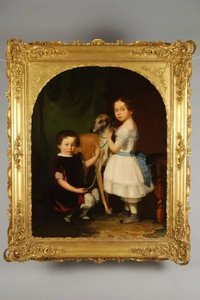
jacob spoel
1820 - 1868 , Netherlands
Quick Facts
- Artistic Movement Or Style: Neoclassical, Romantic
- Artists Or Movements Influenced By This Artist:
- Copley
- Allston
- Artists Who Influenced This Artist: ['Benjamin West']
- Date Of Birth: 10 Oct 1738
- Date Of Death: 11 Mar 1820
- Full Name: Benjamin West
- Nationality: American
- Notable Artworks:
- Death of Wolfe
- Treaty of Paris
- Agrippina Landing
- Place Of Birth: Springfield, PA
Related Articles

19th Century Masterpieces: 10 Paintings That Defined an Era | ArtsDot
Journey through 19th century art with ArtsDot! Explore 10 iconic paintings – from Monet & Renoir to Courbet – and discover the stories behind Romanticism, Realism & Impressionism. Find museum-quality reproductions for your home decor. Explore the full collection online!
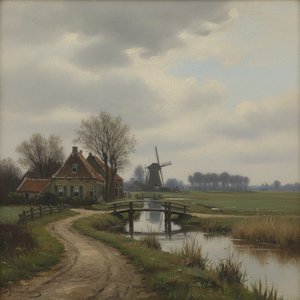
Jacob Henricus Maris: A Master of Dutch Atmospheric Realism & the Intimate Landscape
Explore the captivating world of Jacob Henricus Maris, a leading figure of the Dutch Hague School. Discover his atmospheric landscapes, signature brushstrokes & lasting influence on 19th-century art. Learn more at ArtsDot.
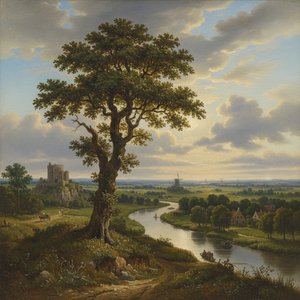
Jacob van Ruisdael: Master of Dutch Landscape & the Evocation of National Identity
Explore the life & work of Jacob van Ruisdael, the preeminent Dutch landscape painter. Discover his technical brilliance, symbolic depth, and lasting influence on art history. Learn about collecting Ruisdael's masterpieces.

Golden Age Reflections: Dutch Baroque Painting & Cultural Innovation
Explore the Dutch Golden Age of painting! Discover key artists like Vermeer & ter Borch, their innovative techniques, and the rich cultural context behind these Baroque masterpieces. Learn about collecting & appreciating this iconic art period.
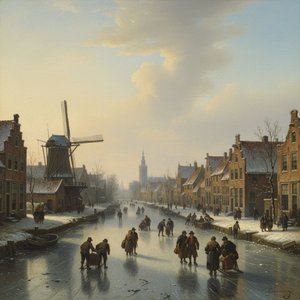
Charles Leickert: Capturing the Dutch Golden Age Light – A Comprehensive Study of Technique, Context, and Legacy
Explore the captivating winter landscapes of Charles Leickert, a master of Dutch Golden Age light & atmosphere. Discover his techniques, symbolism, and lasting legacy – a comprehensive study for art enthusiasts and collectors.