 Preview
 Send
Send Share
Share
 Details

 Download
 Similars
 X-Ray
X-Ray Diaporama
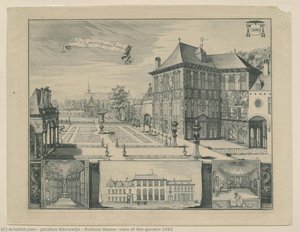
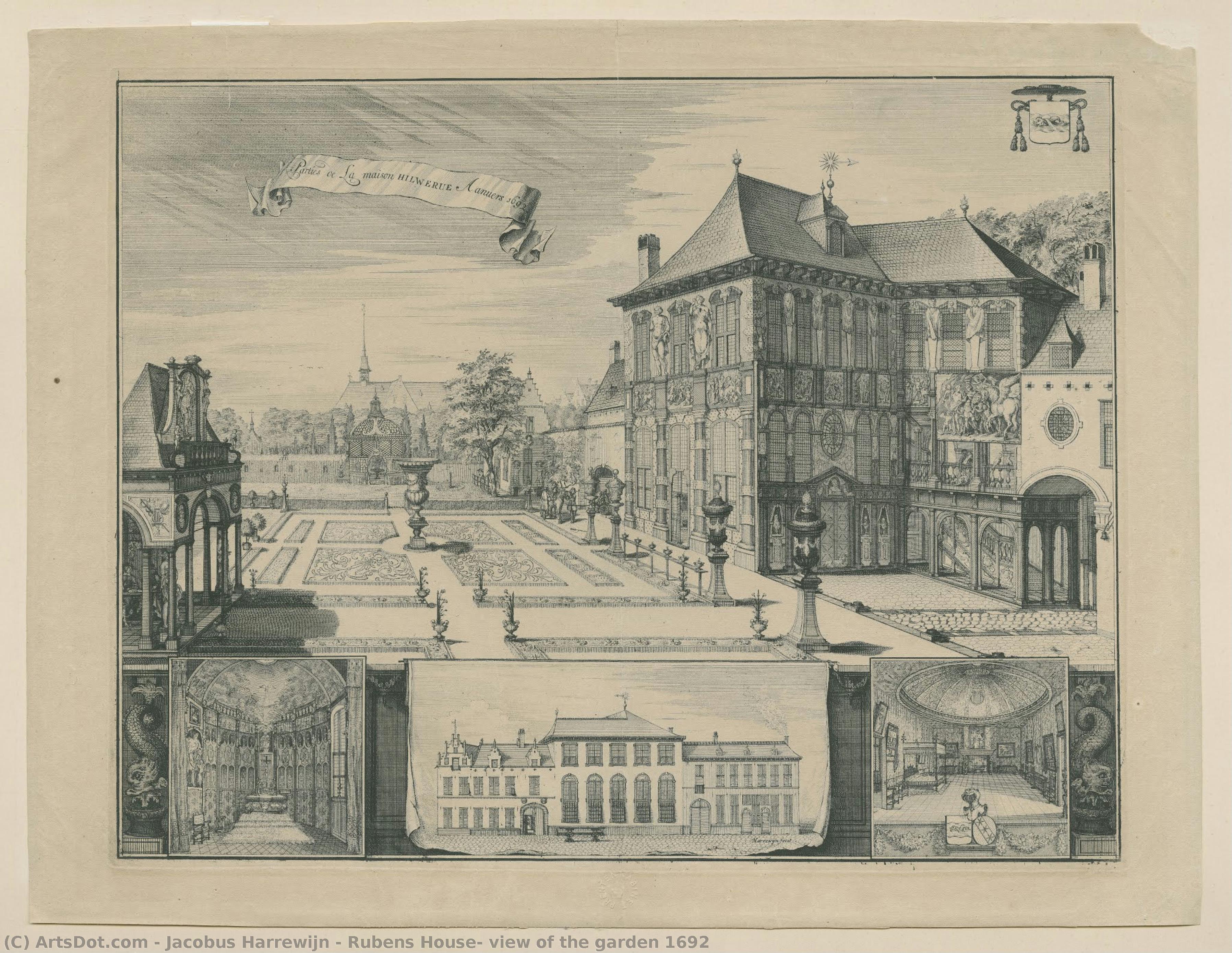
Rubens House: view of the garden 1692


 Read More
Giclée / Art Print
Museum-quality giclée or canvas print with fast production and flexible finish options. ( Buy Hand Made Painting Buy Image)




































Pick from our preset sizes that match the artwork's original proportions.

You may enter your own dimensions to fit a specific frame or space. If your selected size does not match the original image's proportions, we will either crop the artwork or extend the image with a mirrored or solid-fill edge. A digital mockup will be sent for your approval before production begins.
Please note that the on-screen preview does not reflect the actual cropping or extension. Only the mockup will accurately show the final composition.
While custom sizes are available, we recommend selecting a dimension from the predefined list to preserve the original proportions.
Worldwide Delivery () in 2 weeks instead of standard 4/5 weeks. (1 September)

Free Worldwide Express Shipping

High-Quality Linen Canvas

Full Shipping Insurance

Customs Tax Refund Guarantee

True Color Matching Guarantee

60-Day Return Policy (Defects Only)

100% Money-Back Guarantee

Bulk Discount Offer
 Glass option is only available in size under 110 CM

Rubens House: view of the garden 1692
Giclée / Art Print
Reproduction Size
-


Total Price
$ 63
Related Artworks



Artist Biography
A Life Etched in Detail: Jacobus Harrewijn and the Art of Perspective
Jacobus Harrewijn, a name perhaps less celebrated than his Dutch Baroque contemporaries like Rembrandt or Vermeer, nevertheless occupies a significant niche in the history of 17th and early 18th-century engraving. Born in Amsterdam in 1660, Harrewijn’s artistic journey led him away from the bustling heart of the Dutch Golden Age towards the Southern Netherlands – present-day Belgium – where he established himself as a master of topographical views, portraits, and intricate frontispieces. His life, though documented with some gaps, reveals a craftsman deeply attuned to the demands of his patrons and skilled in capturing the architectural grandeur and social nuances of his adopted home. While initial training likely occurred within Amsterdam’s vibrant artistic milieu, it was his relocation and subsequent integration into the Antwerp Guild in 1688 that truly marked the beginning of his professional career. A second marriage in Deurne in 1689 further solidified his ties to the region, and from 1695 onwards, Brussels became his primary base of operation for over two decades.From Amsterdam Roots to Brussels Commissions
Harrewijn’s early work remains somewhat elusive, but it is reasonable to assume a foundation in the detailed draftsmanship characteristic of Dutch printmaking traditions. The move to Antwerp signaled a shift in focus; while Dutch engraving often centered on biblical scenes and genre depictions, Harrewijn found himself increasingly sought after for his ability to render precise architectural views and compelling portraits. Brussels at this time was a center of aristocratic power and religious institutions, creating a demand for engravings that documented the city’s splendor and commemorated its prominent figures. He skillfully catered to these needs, producing maps that were not merely functional but also visually arresting works of art. His talent extended beyond simple replication; Harrewijn possessed an eye for composition and perspective, elevating his topographical work from technical exercises to captivating representations of urban life. The precision he brought to his engravings was highly valued by the nobility and religious orders who commissioned him.The Art of Frontispieces and Historical Narrative
Beyond maps and portraits, Harrewijn distinguished himself through his creation of elaborate frontispieces for books – a testament to his versatility as an artist. These were not simply decorative elements but rather integral components of the published works themselves, designed to encapsulate the essence of the text within a single, compelling image. Notably, he produced numerous frontispieces for religious texts and theatrical productions, including editions of Molière’s *Œuvres* and Racine’s plays. This work demonstrates his ability to interpret literary themes visually, translating complex narratives into striking allegorical compositions. Perhaps one of his most ambitious undertakings was the creation of thirty-two portraits for a two-volume set of *Mémoires pour servir à l'histoire de France*. This project required not only technical skill in portraiture but also an understanding of historical context and character representation – a challenge Harrewijn met with considerable success.Technique, Style, and Influences
Harrewijn’s engraving technique was characterized by meticulous detail and a mastery of line work. He employed the burin with precision, creating subtle gradations of tone and texture that brought his subjects to life. While he did not necessarily pioneer new techniques in engraving, his skill lay in his application of existing methods to achieve remarkable realism and clarity. His style reflects the influence of both Dutch Baroque draftsmanship and the more ornate aesthetic prevalent in the Southern Netherlands. The precision of his architectural renderings suggests a careful study of perspective and proportion, while his portraits reveal an attention to detail that captures the individuality of his sitters. Although direct influences are difficult to pinpoint definitively, it is likely he drew inspiration from contemporary engravers working in both Amsterdam and Antwerp.Legacy and Historical Significance
Jacobus Harrewijn’s work provides a valuable window into the artistic and social landscape of late 17th and early 18th-century Brussels. His engravings offer not only accurate depictions of the city's architecture but also insights into the lives and aspirations of its elite. While his name may not be as widely recognized as some of his contemporaries, his contributions to topographical engraving and book illustration are significant. He was a skilled craftsman who catered to the demands of his patrons while maintaining a high level of artistic quality. The debate surrounding the final years of his life – with some sources suggesting continued work in The Hague until 1732 despite his documented death in Brussels in 1727 – underscores the challenges of reconstructing the lives and careers of artists from this period. Nevertheless, Harrewijn’s legacy endures through the numerous engravings he left behind, testaments to a life etched in detail and dedicated to capturing the beauty and complexity of his world.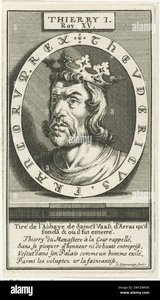
jacobus harrewijn
1660 - 1727 , Netherlands
Quick Facts
- Artistic Movement Or Style: Engraving, Baroque
- Date Of Birth: 1660
- Date Of Death: 1727
- Full Name: Jacobus Harrewijn
- Nationality: Dutch
- Notable Artworks:
- Rubens House view 1692
- Maps & Views Brussels
- Frontispieces portraits
- Place Of Birth: Amsterdam, Netherlands
Related Articles

Dutch Masters: 10 Golden Age Paintings That Still Inspire |
Journey into the Dutch Golden Age! Explore 10 iconic paintings by Rembrandt, Vermeer & Hals. Discover the stories behind these Baroque masterpieces and find museum-quality art reproductions to elevate your home decor on .

Golden Age Reflections: Dutch Baroque Painting & Cultural Innovation
Explore the Dutch Golden Age of painting! Discover key artists like Vermeer & ter Borch, their innovative techniques, and the rich cultural context behind these Baroque masterpieces. Learn about collecting & appreciating this iconic art period.

Illuminating Innovation: Exploring the Dutch Golden Age of Painting
Explore the Dutch Golden Age of painting with ArtsDot. Discover Rembrandt, Vermeer & other Masters. Learn about key characteristics, iconic artworks, and lasting influence. Expert insights for collectors & enthusiasts.
Illuminating Realism: Exploring the Dutch Golden Age of Painting (1600-1700)
Explore the Dutch Golden Age of painting (1600-1700) with ArtsDot. Discover Rembrandt, Vermeer & other masters. Learn about techniques, history & find museum-quality reproductions.
Charles Leickert: Capturing the Dutch Golden Age Light – A Comprehensive Study of Technique, Context, and Legacy
Explore the captivating winter landscapes of Charles Leickert, a master of Dutch Golden Age light & atmosphere. Discover his techniques, symbolism, and lasting legacy – a comprehensive study for art enthusiasts and collectors.