

 Preview
 Send
Send Share
Share
 Details

 Download
 Similars
 X-Ray
X-Ray Diaporama
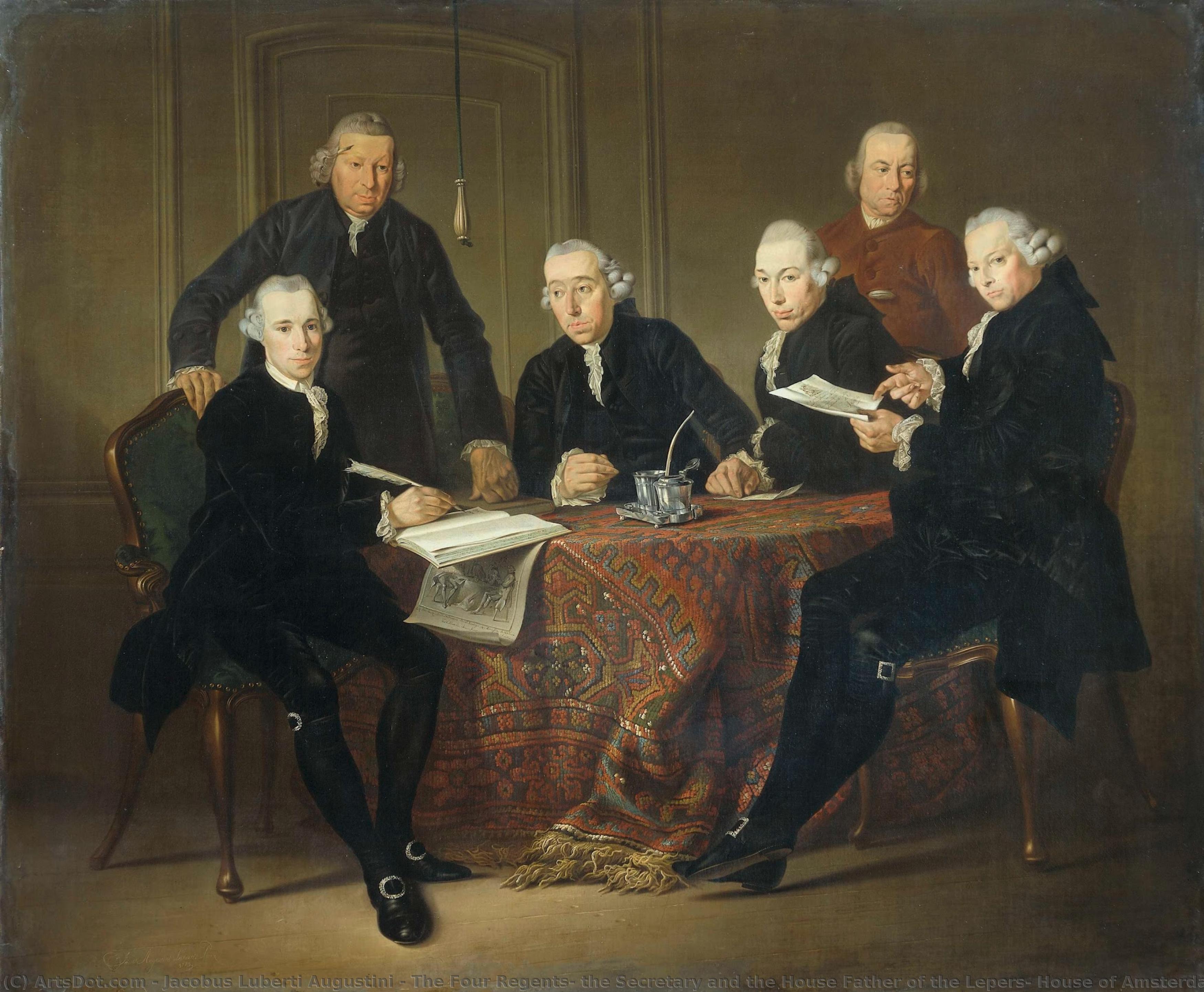
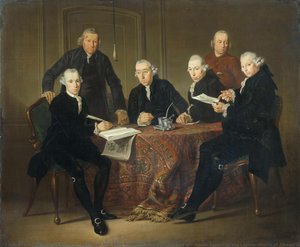
The Four Regents, the Secretary and the House Father of the Lepers" House of Amsterdam, 1773, Jacobus Luberti Augustini, 1773
 Neoclassicism
 1773
1773 176.0 x 212.0 cm
 Read More
Hand Made Oil Reproduction
Hand-painted oil on canvas in your size and frame, made to order by our artists. ( Buy Print Buy Image)




































Pick from our preset sizes that match the artwork's original proportions.

You may enter your own dimensions to fit a specific frame or space. If your selected size does not match the original image's proportions, we will either crop the artwork or extend the painting with additional hand-painted elements. A digital mockup will be sent for your approval before production begins.
Please note that the on-screen preview does not reflect the actual cropping or extension. Only the mockup will accurately show the final composition.
While custom sizes are available, we recommend selecting a dimension from the predefined list to preserve the original proportions.
After order, ArtsDot.com team will email client for instructions and provide a mockup preview
Worldwide Delivery () in 3/4 weeks instead of standard 5 weeks. (4 September). No compromise on quality.

Free Worldwide Express Shipping

High-Quality Linen Canvas

Full Shipping Insurance

Customs Tax Refund Guarantee

True Color Matching Guarantee

60-Day Return Policy (Defects Only)

100% Money-Back Guarantee

Bulk Discount Offer
 Glass option is only available in size under 110 CM

The Four Regents, the Secretary and the House Father of the Lepers" House of Amsterdam, 1773, Jacobus Luberti Augustini, 1773
Reproduction Medium
Reproduction Size
-


Total Price
$ 338
Related Artworks

Artist Biography
A Legacy of Light and Line: The Life of Jacobus Luberti Augustini
In the vibrant artistic landscape of the eighteenth-century Dutch Republic, few lives reflect the unpredictable currents of history as poignantly as that of Jacobus Luberti Augustini. Born in the historic city of Haarlem on April 30th, 1748, Augustini was a child of tradition, nurtured by the brushstrokes of his father, Jan Augustini. His early years were steeped in the meticulous discipline of classical training, as his father—a renowned master of monumental wall decorations and landscapes—instilled in him a profound reverence for visual storytelling. This foundational period did more than teach him technique; it gifted him an eye for the dramatic and a soul attuned to the subtle nuances of light and shadow that would define his later masterpieces.
The trajectory of Augustini’s career was far from linear, marked by a fascinating tension between artistic passion and the pragmatic demands of survival. While he initially found acclaim in the creation of complex allegorical works—paintings that sought to translate abstract virtues into tangible imagery—his path took an unexpected detour when he accepted a position as a tax collector. This period of professional hiatus, though seemingly disconnected from the easel, perhaps deepened his understanding of the social fabric of the Netherlands. When life’s unforeseen circumstances stripped him of this administrative role, Augustini did not retreat into obscurity; instead, he pivoted with remarkable resilience, establishing a modest publishing house in Haarlem. This venture allowed him to remain a vital participant in the dissemination of visual culture, blending his painterly sensibilities with the burgeoning world of print and publication.
Mastery of the Portrait and the Allegorical Spirit
Despite the interruptions brought by his administrative pursuits, Augustini’s true essence remained tethered to the canvas. He emerged as a painter capable of profound psychological depth, particularly within the realm of portraiture. His ability to capture the very essence of a subject—conveying character, status, and emotion through nuanced detail—set him apart from his contemporaries. This skill is perhaps most breathtakingly realized in his 1773 masterpiece, “The Four Regents, the Secretary and the House Father of the Lepers’ House of Amsterdam.” In this monumental oil painting, Augustini demonstrates a command over classical composition that echoes the grandeur of the Venetian masters.
Through his work, one can observe the lingering influence of titans such as Titian and Rubens. He utilized dramatic lighting—often referred to as chiaroscuro—to sculpt figures out of the darkness, lending a sense of solemn dignity to the regents depicted. The painting is not merely a record of historical figures but an atmospheric experience that captures a specific moment of civic duty and gravity. His technique allowed him to weave together the following elements seamlessly:
- Dramatic Lighting: Using high contrast to direct the viewer's eye toward the central subjects.
- Narrative Precision: The ability to depict complex social hierarchies within a single, cohesive group portrait.
- Textural Realism: A meticulous approach to rendering the fabrics and textures of 18th-century attire.
Historical Significance and Artistic Endurance
The significance of Jacobus Luberti Augustini lies not only in his individual achievements but in his role as a bridge between the grand traditions of the past and the evolving commercial art world of his era. As a painter, publisher, and son of a master, he embodied the multifaceted nature of the Dutch artistic identity. His work serves as a vital window into the social structures of the late 18th century, documenting the faces of leadership and the allegorical ideals that guided the period's moral compass.
Though his life ended in 1822, leaving behind a legacy shaped by both the brush and the printing press, Augustini’s contribution to the Haarlem school remains indelible. He stands as a testament to the artist's ability to adapt, proving that even when the hand is called away from the palette to serve more mundane ends, the creative spirit continues to shape the cultural narrative of a nation.
jacobus luberti augustini
1748 - 1822 , Netherlands
Quick Facts
- Artistic Movement Or Style: Classic Style
- Artists Or Movements Influenced By This Artist: ['Roberti']
- Artists Who Influenced This Artist: ['Jan Augustini']
- Date Of Birth: 1748
- Date Of Death: 1822
- Full Name: Jacobus Luberti Augustini
- Nationality: Dutch
- Notable Artworks: ['The Four Regents, the Secretary and the House Father of the Lepers" House of Amsterdam']
- Place Of Birth: Haarlem, Netherlands
Related Articles
Rijksmuseum's Masterpieces: 25 Iconic Artworks for Your Home | ArtsDot
Explore 25 iconic artworks from Amsterdam's Rijksmuseum! Discover Rembrandt, Vermeer & Dutch Masters’ stories. Find museum-quality art reproductions and elevate your home decor with timeless paintings on ArtsDot.com.
Cornelis Springer: A Dutch Master of Cityscapes & Intimate Reflections
Explore the captivating world of Cornelis Springer (1817-1891), a Dutch master renowned for his detailed cityscapes and atmospheric paintings. Discover his life, style & available artworks at ArtsDot.

Golden Age Reflections: Dutch Baroque Painting & Cultural Innovation
Explore the Dutch Golden Age of painting! Discover key artists like Vermeer & ter Borch, their innovative techniques, and the rich cultural context behind these Baroque masterpieces. Learn about collecting & appreciating this iconic art period.

Illuminating Realism: Exploring the Dutch Golden Age of Painting (1600-1700)
Explore the Dutch Golden Age of painting (1600-1700) with ArtsDot. Discover Rembrandt, Vermeer & other masters. Learn about techniques, history & find museum-quality reproductions.

Illuminating Innovation: Exploring the Dutch Golden Age of Painting
Explore the Dutch Golden Age of painting with ArtsDot. Discover Rembrandt, Vermeer & other Masters. Learn about key characteristics, iconic artworks, and lasting influence. Expert insights for collectors & enthusiasts.

