 Preview
 Send
Send Share
Share
 Details

 Download
 Similars
 X-Ray
X-Ray Diaporama
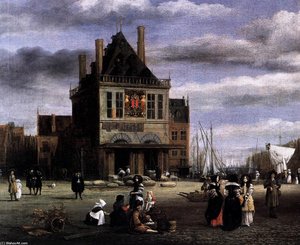
View of the Dam and the Damrak in Amsterdam
 Oil On Canvas
- WallArt
- Dutch Golden Age
 1675
1675 46.0 x 43.0 cm
 Mauritshuis
 Read More
Hand Made Oil Reproduction
Hand-painted oil on canvas in your size and frame, made to order by our artists. ( Buy Print Buy Image)




P118B $10

P118H $10

P118W $10

P438Z $10

P508JH $12

P508YH $12

P805H $10

P805Z $10

P919BZ $10

P919G $10

P919XJ $10

P959ZH $10

P968JZ $12

W106C $8

W218G $10

W218JH $8

W218Y $10

W307PJ $10

W316G $10

W316PJ $8

W316Y $10

W398PJ $8

W4111J $10

W500HY $15

W500JH $15

W692G $12

W849H $8

W940BG $15

W953PJ $8




Pick from our preset sizes that match the artwork's original proportions.

You may enter your own dimensions to fit a specific frame or space. If your selected size does not match the original image's proportions, we will either crop the artwork or extend the painting with additional hand-painted elements. A digital mockup will be sent for your approval before production begins.
Please note that the on-screen preview does not reflect the actual cropping or extension. Only the mockup will accurately show the final composition.
While custom sizes are available, we recommend selecting a dimension from the predefined list to preserve the original proportions.
After order, ArtsDot.com team will email client for instructions and provide a mockup preview
Worldwide Delivery () in 3/4 weeks instead of standard 5 weeks. (16 August). No compromise on quality.

Free Worldwide Express Shipping

High-Quality Linen Canvas

Full Shipping Insurance

Customs Tax Refund Guarantee

True Color Matching Guarantee

60-Day Return Policy (Defects Only)

100% Money-Back Guarantee

Bulk Discount Offer
 Glass option is only available in size under 110 CM

View of the Dam and the Damrak in Amsterdam
Reproduction Medium
Reproduction Size
-


Total Price
$ 388
Artwork Description
A Window on Golden Age Amsterdam
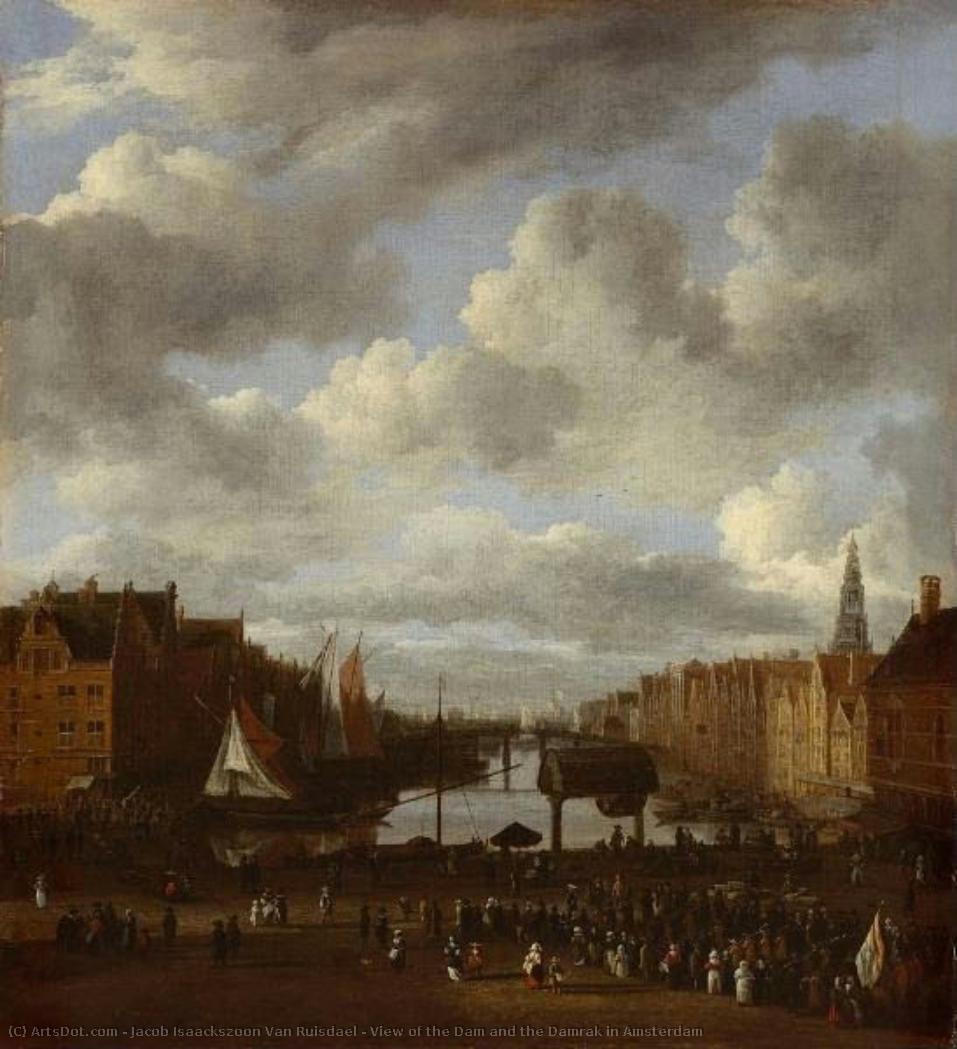
Jacob van Ruisdael’s “View of the Dam and the Damrak in Amsterdam,” painted around 1675, isn't merely a cityscape; it’s a meticulously crafted portal into the heart of seventeenth-century Dutch life. This oil painting, now residing within the esteemed Frick Collection in New York, offers a remarkably intimate glimpse of a bustling urban scene – the Dam Square and its surrounding thoroughfare – bathed in the diffused light characteristic of an overcast Amsterdam day. Ruisdael, widely considered the preeminent landscape painter of the Dutch Golden Age, masterfully captures not just the physical appearance of the city but also a profound sense of its vibrant energy and historical significance.
The painting’s composition is remarkably balanced, employing a strong horizontal emphasis dictated by the canals and the orderly lines of the buildings. The perspective, executed with the precision typical of Dutch Golden Age art, recedes into the distance, diminishing the size of objects as they move further away – a technique known as linear perspective. Yet, it’s Ruisdael's masterful use of atmospheric perspective that truly elevates the work. Details soften and fade in the background, creating an illusion of depth and lending the scene a palpable sense of space and time. The focus isn’t on dramatic grandeur but rather on the everyday rhythms of Amsterdam life – merchants engaged in trade, boats navigating the canals, and citizens going about their business.
The Painter's Technique: A Symphony of Brushstrokes
Ruisdael’s technique is immediately recognizable. He eschews the smooth, polished surfaces favored by some of his contemporaries, opting instead for a visible, textured approach to painting. His brushwork is deliberate and layered, creating a tactile quality that invites close inspection. Impasto – the application of thick paint – is particularly evident in the rendering of the buildings’ facades, lending them a sculptural appearance and highlighting their materiality. The muted browns, grays, and blues dominate the palette, reflecting the perpetually overcast skies typical of Amsterdam weather and the prevalent use of brick and timber in the city's architecture. The sky itself isn’t a uniform expanse; it’s filled with billowing clouds, rendered with loose, expressive brushstrokes that contribute to the painting’s overall sense of dynamism.
Interestingly, Ruisdael’s approach evolved over time. Early works, like this one, often featured a more heroic portrayal of the Dutch landscape, influenced by his travels. Later paintings, produced during his years in Amsterdam, shifted towards city panoramas and seascapes, retaining that same atmospheric depth but with a greater emphasis on urban detail. The “View of the Dam” exemplifies this transition – it’s a quintessential example of Ruisdael's ability to capture both the grandeur and the intimacy of Dutch life.
Symbolism and Historical Context
Beyond its aesthetic qualities, "View of the Dam and the Damrak" is rich in symbolic meaning. The bustling market scene, with its merchants and shoppers, represents the economic prosperity that fueled Amsterdam’s rise to global prominence. The boats navigating the canals symbolize trade and commerce – the very lifeblood of the city. The presence of ships further underscores this maritime power. Painted around 1675, during the height of the Dutch Golden Age, the painting offers a snapshot of a society at its peak, confident in its wealth, influence, and artistic achievements.
It’s worth noting that the scene depicted isn't simply a random view; it’s a carefully constructed representation of Amsterdam as it was perceived by its inhabitants. The Dam Square, the city’s central marketplace, served as a focal point for civic life, trade, and social gatherings. Ruisdael’s painting captures this vibrant atmosphere with remarkable accuracy, offering viewers a tangible connection to a bygone era.
A Legacy of Landscape Painting
Jacob van Ruisdael's “View of the Dam and the Damrak in Amsterdam” stands as a testament to his exceptional talent and artistic vision. His masterful use of light, color, and perspective, combined with his ability to capture the essence of Dutch life, has secured his place as one of the most important landscape painters in history. His influence can be seen in the works of later artists, both in Holland and abroad, including English Romantic painters who were deeply inspired by Ruisdael’s atmospheric landscapes. Today, reproductions of this iconic painting continue to captivate audiences worldwide, offering a timeless glimpse into the heart of Golden Age Amsterdam.
Related Artworks
Artist Biography
early life and career
jacob isaackszoon van ruisdael, a prominent dutch painter, draughtsman, and etcher, was born in 1628 in the netherlands. he is widely regarded as the pre-eminent landscape painter of the dutch golden age, a period marked by great wealth and cultural achievement.
artistic style and contributions
van ruisdael's work is characterized by its versatility and prolific nature, depicting a wide variety of landscape subjects. from 1646, he painted remarkable dutch countryside scenes, which later took on a more heroic character after his trip to germany in 1650. his late work, produced while living and working in amsterdam, featured city panoramas and seascapes, often with the sky occupying two-thirds of the canvas.
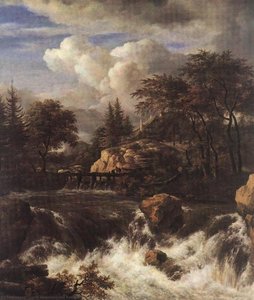
- waterfall in a rocky and mountainous landscape, showcasing his mastery of light and composition.
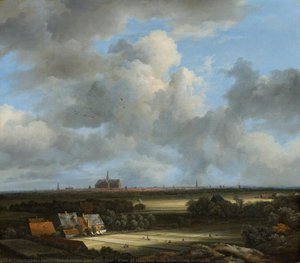
- view of haarlem with bleaching grounds, exemplifying his ability to capture the essence of the dutch landscape.
- view of the dam and the damrak in amsterdam, highlighting his skill in cityscape painting.
museums and collections
van ruisdael's work is spread across private and institutional collections worldwide, with notable holdings at:
- the national gallery in london
- the rijksmuseum in amsterdam
- the hermitage museum in st. petersburg
influence and legacy
van ruisdael's influence on landscape painting traditions is profound, shaping the english romantics, the barbizon school in france, and the hudson river school in the us. he also inspired generations of dutch landscape artists. notable works:
- view of haarlem with bleaching grounds
- waterfall in a rocky and mountainous landscape
- view of the dam and the damrak in amsterdam
artist's profile on ArtsDot: jacob isaackszoon van ruisdael
jacob isaackszoon van ruisdael
1628 - 1682 , Netherlands
Quick Facts
- Artistic Movement Or Style: Dutch Golden Age, Baroque
- Artists Or Movements Influenced By This Artist:
- English Romantics
- Barbizon School
- Artists Who Influenced This Artist: ['Hendrick Vroom']
- Date Of Birth: 1628/1629, Haarlem
- Date Of Death: 1682, Amsterdam
- Full Name: Jacob Isaackszoon van Ruisdael
- Nationality: Dutch
- Notable Artworks:
- View of Haarlem
- Waterfall landscape
- Amsterdam cityscape
- Place Of Birth: Haarlem, Netherlands
Related Articles
Van Gogh's Masterpieces: Explore 25 Iconic Paintings & Art for Your Home
Journey through Vincent van Gogh's 25 most iconic paintings! Explore 'Starry Night', 'Sunflowers,' and more—discover the stories, techniques & emotions behind these Post-Impressionist masterpieces. Find museum-quality art reproductions for your home at ArtsDot.com.

Dutch Masters: 10 Golden Age Paintings That Still Inspire |
Journey into the Dutch Golden Age! Explore 10 iconic paintings by Rembrandt, Vermeer & Hals. Discover the stories behind these Baroque masterpieces and find museum-quality art reproductions to elevate your home decor on .

Rembrandt's Masterpieces: Explore 25 Iconic Paintings & Prints | ArtsDot
Journey through Rembrandt van Rijn's 25 most iconic paintings & etchings. Explore Dutch Golden Age masterpieces, dramatic chiaroscuro, and timeless portraits. Find museum-quality art reproductions to elevate your home decor on ArtsDot.com.

Golden Age Reflections: Dutch Baroque Painting & Cultural Innovation
Explore the Dutch Golden Age of painting! Discover key artists like Vermeer & ter Borch, their innovative techniques, and the rich cultural context behind these Baroque masterpieces. Learn about collecting & appreciating this iconic art period.
Willem van de Velde the Elder: Master of Maritime Painting & Chronicler of the Dutch Golden Age
Discover the captivating maritime paintings of Willem van de Velde the Elder, a master chronicler of the Dutch Golden Age. Explore his unparalleled realism and lasting influence on naval art history.