 Preview
 Send
Send Share
Share
 Details

 Download
 Similars
 X-Ray
X-Ray Diaporama
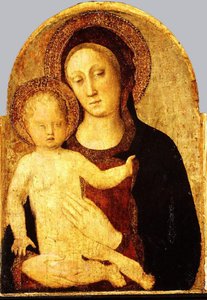
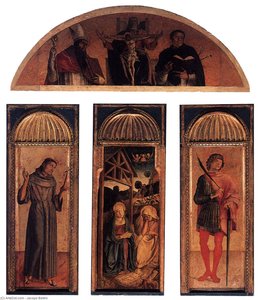
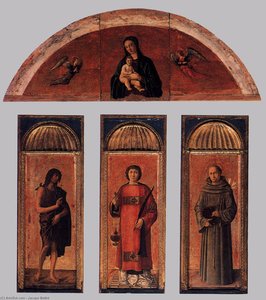
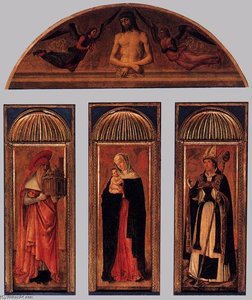
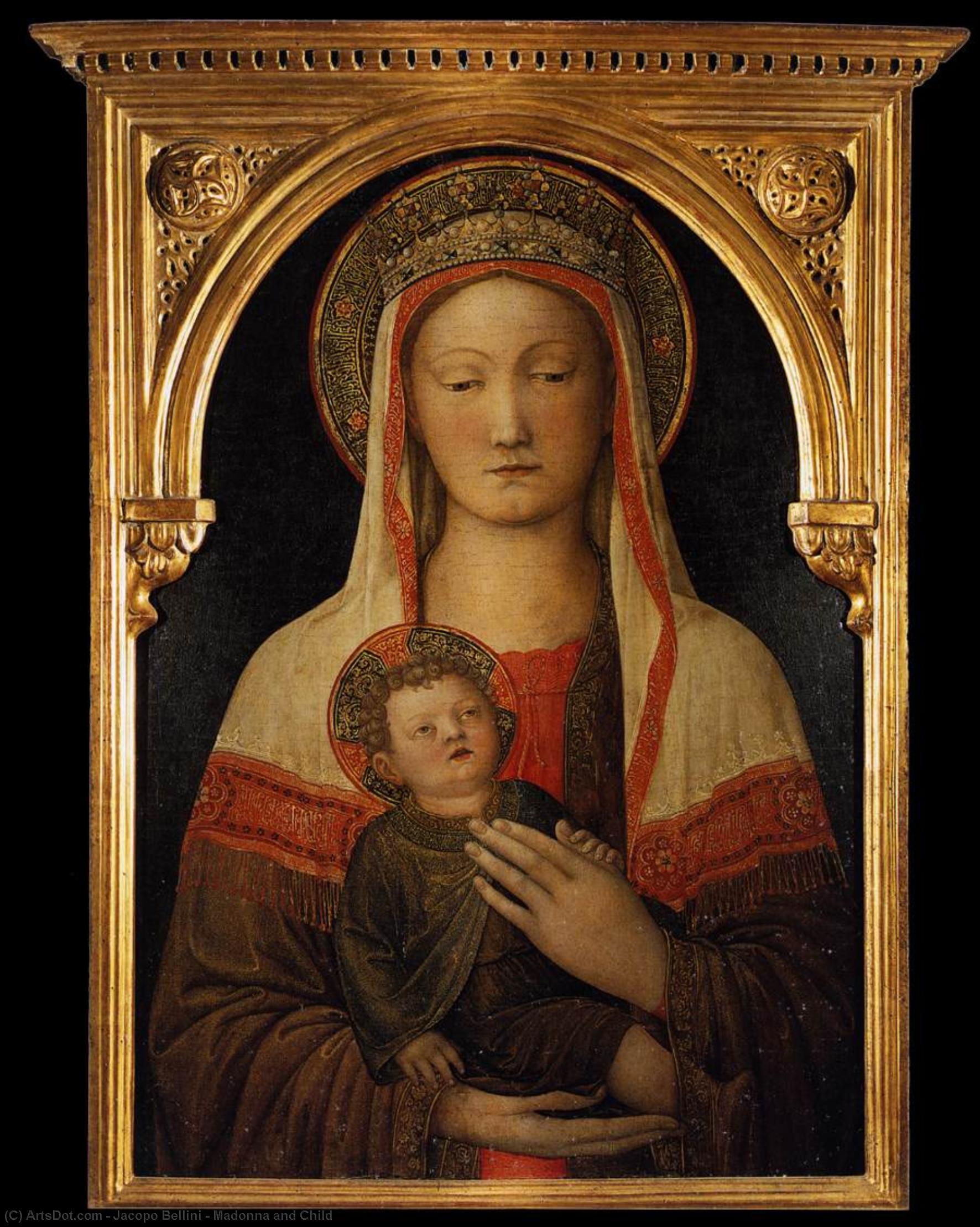
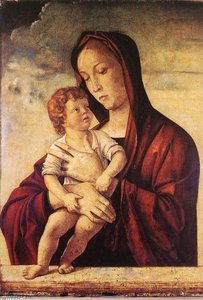
Madonna and Child
 Oil On Panel
- Renaissance
 1450
1450 111.0 x 62.0 cm
 Galleria degli Uffizi
 Read More
Hand Made Oil Reproduction
Hand-painted oil on canvas in your size and frame, made to order by our artists. ( Buy Print Buy Image)




P118B $10

P118H $10

P118W $10

P438Z $10

P508JH $12

P508YH $12

P805H $10

P805Z $10

P919BZ $10

P919G $10

P919XJ $10

P959ZH $10

P968JZ $12

W106C $8

W218G $10

W218JH $8

W218Y $10

W307PJ $10

W316G $10

W316PJ $8

W316Y $10

W398PJ $8

W4111J $10

W500HY $15

W500JH $15

W692G $12

W849H $8

W940BG $15

W953PJ $8




Pick from our preset sizes that match the artwork's original proportions.

You may enter your own dimensions to fit a specific frame or space. If your selected size does not match the original image's proportions, we will either crop the artwork or extend the painting with additional hand-painted elements. A digital mockup will be sent for your approval before production begins.
Please note that the on-screen preview does not reflect the actual cropping or extension. Only the mockup will accurately show the final composition.
While custom sizes are available, we recommend selecting a dimension from the predefined list to preserve the original proportions.
After order, ArtsDot.com team will email client for instructions and provide a mockup preview
Worldwide Delivery () in 3/4 weeks instead of standard 5 weeks. (16 August). No compromise on quality.

Free Worldwide Express Shipping

High-Quality Linen Canvas

Full Shipping Insurance

Customs Tax Refund Guarantee

True Color Matching Guarantee

60-Day Return Policy (Defects Only)

100% Money-Back Guarantee

Bulk Discount Offer
 Glass option is only available in size under 110 CM

Madonna and Child
Reproduction Medium
Reproduction Size
-


Total Price
$ 288
Artwork Description
Madonna and Child - A Renaissance Masterpiece
Jacopo Bellini’s *Madonna and Child*, painted around 1450, stands as an emblem of Venetian Renaissance artistic achievement—a testament to meticulous observation and masterful execution that continues to captivate viewers centuries later. More than just a depiction of the Virgin Mary cradling Jesus, it embodies the burgeoning humanist spirit of its time, reflecting a profound engagement with classical ideals while simultaneously forging new paths in artistic expression. Its survival as one of Bellini’s few extant paintings is remarkable, offering invaluable insight into his creative process and cementing his position as a pivotal figure in shaping Venetian art history.Historical Context & Artistic Influences
The painting emerged during a period of significant cultural transformation in Venice—a city experiencing rapid economic growth fueled by trade with the East and increasingly receptive to intellectual currents originating from Florence. Bellini’s artistic sensibilities were profoundly shaped by these developments, particularly by the influence of Masolino da Panicale, who had resided in Lucca during Bellini's formative years. Masolino’s pioneering use of linear perspective—a technique previously largely absent from Venetian painting—served as a catalyst for Bellini’s own experimentation with spatial representation. This embrace of perspective wasn’t merely a stylistic innovation; it represented a fundamental shift toward portraying the world in greater accuracy and realism, mirroring the broader humanist preoccupation with understanding nature through mathematical principles. Furthermore, Bellini absorbed elements of Flemish art, evident in the luminous color palette and atmospheric haze characteristic of his style—a stylistic convergence that exemplifies the dynamism of Venetian artistic culture during this era.Style & Technique – The Venetian Renaissance Touch
Bellini’s *Madonna and Child* exemplifies the Venetian Renaissance aesthetic with its serene composition and subtle emotional depth. Unlike earlier Gothic depictions, which often prioritized symbolic grandeur over psychological realism, Bellini achieved a remarkable balance between formal elegance and expressive nuance. He skillfully employed tempera on panel—a technique favored by Venetian artists—resulting in a surface finish that is remarkably smooth and luminous. The artist’s meticulous attention to detail—particularly in rendering the drapery of Mary’s robes—demonstrates an unparalleled mastery of brushwork, creating folds and contours that imbue the painting with palpable texture and dimensionality. Bellini's use of color is equally noteworthy; he eschewed the harsh hues of earlier styles, opting instead for muted browns, reds, and golds that convey a sense of solemn reverence and spiritual contemplation. The pyramidal composition—a compositional device borrowed from classical sculpture—further reinforces the painting’s stability and grandeur, directing the viewer's gaze toward the central figures with unwavering focus.Symbolism & Emotional Impact
Beyond its formal achievements, *Madonna and Child* resonates deeply with viewers on an emotional level—expressing a profound reverence for motherhood and divine grace. The halo surrounding Jesus’ head symbolizes his divinity, while Mary’s serene expression embodies her role as protector of faith and compassion. The inclusion of the fruit held by Christ represents his status as the New Adam—the embodiment of humanity redeemed from original sin—underscoring the painting's theological significance. Bellini’s masterful depiction of gesture—particularly Mary’s blessing—captures a moment of profound tenderness and spiritual communion, inviting contemplation on themes of faith, love, and humility. The overall atmosphere is one of tranquility and ethereal beauty—a testament to Bellini’s ability to convey complex emotions through subtle visual cues.Conclusion
Jacopo Bellini's *Madonna and Child* remains an enduring masterpiece—a cornerstone of Venetian Renaissance art that continues to inspire admiration for its technical brilliance and expressive power. Its legacy extends far beyond the confines of the Uffizi Gallery, where it resides today; it serves as a poignant reminder of the transformative potential of artistic innovation and the capacity of art to communicate profound spiritual truths across centuries.Related Artworks

Artist Biography
The Venetian Pioneer of Renaissance Perspective
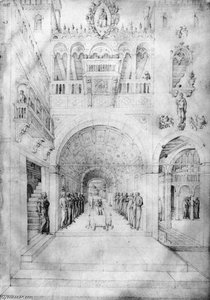
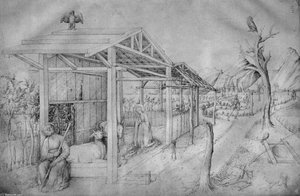
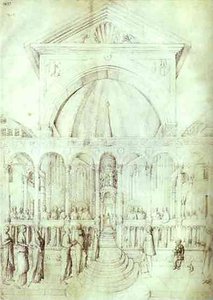
Jacopo Bellini stands as a pivotal figure in the burgeoning Renaissance style of painting that flourished in Venice and northern Italy. He was far more than a mere painter; he was one of the foundational innovators of his era, shaping artistic sensibilities through a meticulous observation of nature and a masterful incorporation of linear perspective—a technique that was previously largely absent from the Venetian tradition. While few of Bellini's original canvases survive today to be viewed in their full glory, his profound legacy resides primarily within his exquisite sketchbooks, such as those housed in the British Museum and the Louvre. These drawings reveal a deep fascination with sweeping landscape vistas and elaborate architectural designs, offering invaluable insight into an artistic process that foreshadowed the stylistic revolutions of the centuries to follow.
Born in Venice around 1396, Jacopo’s formative years were steeped in the rich, decorative traditions of the late Gothic period. His early training suggests he was a pupil of the celebrated Gentile da Fabriano, an artist whose workshop produced some of the most ambitious and ornate frescoes of the era. This prestigious association undoubtedly instilled in Bellini a lifelong appreciation for intricate detail, color harmony, and a certain decorative complexity. His early career saw him active in Foligno between 1411 and 1412, where he collaborated on the monumental frescoes of the Palazzo Trinci, working alongside the very masters who defined the international Gothic style.
A Journey Through the Heart of the Renaissance
A significant turning point arrived when Bellini traveled to Florence around 1423. This journey placed him at the epicenter of an intense period of artistic experimentation led by luminaries such as Brunelleschi, Donatello, and Masaccio. In Florence, he encountered the burgeoning science of linear perspective, a discovery that would fundamentally alter his approach to space and depth. By blending the lyrical, decorative elegance of his Venetian roots with the structural rigor and spatial clarity of the Florentine innovators, Bellini began to forge a unique visual language. This synthesis allowed him to move beyond the flat, symbolic planes of the Middle Ages toward a more immersive, window-like depiction of the world.
As his career progressed, Bellini became a central figure in establishing a family dynasty that would dominate Venetian art for generations. His influence was not merely personal but pedagogical, as he passed his innovations down to his sons, Gentile and Giovanni. Through them, the seeds of his experimentation with light, landscape, and perspective blossomed into the high Renaissance splendor associated with the Bellini name. His work served as a bridge between the ornamental traditions of the past and the humanistic realism of the future, making him an indispensable link in the evolution of Italian art.
Legacy and Historical Significance
The historical significance of Jacopo Bellini lies in his role as a catalyst for change. Though much of his output remains captured in the intimate medium of ink and pen, those sketches serve as a blueprint for the Venetian Renaissance. His ability to envision complex, multi-layered landscapes and mathematically coherent architectures provided the groundwork for his successors to explore the atmospheric beauty of the Venetian lagoon. To study Bellini is to witness the very moment when the eye of the artist began to truly master the illusion of depth, forever changing how humanity perceives the painted world.
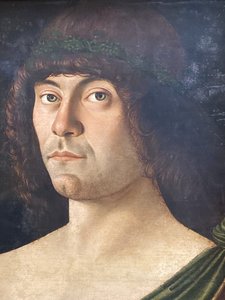
Jacopo Bellini
1396 - 1470 , Italy
Quick Facts
- Artistic Movement Or Style: Renaissance
- Artists Or Movements Influenced By This Artist: ['Masaccio']
- Artists Who Influenced This Artist: ['Gentile da Fabriano']
- Date Of Birth: Venice, Italy (1396)
- Date Of Death: c. 1470
- Full Name: Jacopo Bellini
- Nationality: Italian
- Notable Artworks:
- The Crucifixion in Verona Cathedral
- Madonna and Child
- Place Of Birth: Venice
Related Articles

Jacopo Tintoretto's Masterpieces: 25 Paintings That Define Venetian Drama | ArtsDot
Explore 25 breathtaking masterpieces by Jacopo Tintoretto, the Venetian master of drama and light. Discover the stories behind iconic Renaissance paintings & find museum-quality art reproductions to elevate your home decor on ArtsDot.com.

The Enduring Legacy of Oil on Canvas: Technique, History & Aesthetic Impact
Explore the rich history & techniques of oil painting – from Renaissance masters to Impressionism. Discover pigments, layering methods, and why this timeless medium endures. Expert insights for artists & art enthusiasts.
Raphael's Masterpieces: 25 Iconic Paintings & Renaissance Art for Your Home
Explore 25 breathtaking Raphael paintings! Journey through the Italian Renaissance with masterpieces like 'School of Athens' & iconic Madonnas. Find museum-quality art reproductions and elevate your home decor on ArtsDot.com.

Oil on Canvas: A Historical & Technical Exploration of a Timeless Artistic Medium
Explore the rich history & enduring techniques of oil painting on canvas. Discover the science behind its longevity, conservation practices, and contemporary relevance. Expert insights for art enthusiasts.

The Enduring Power of Painting: A Historical & Contemporary Exploration of Form and Emotion
Explore the rich history & enduring techniques of oil painting with ArtsDot. Discover masterpieces, learn about art collecting, and find authentic handmade reproductions crafted by skilled artists.