 Preview
 Send
Send Share
Share
 Details

 Download
 Similars
 X-Ray
X-Ray Diaporama
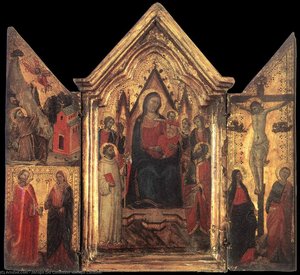
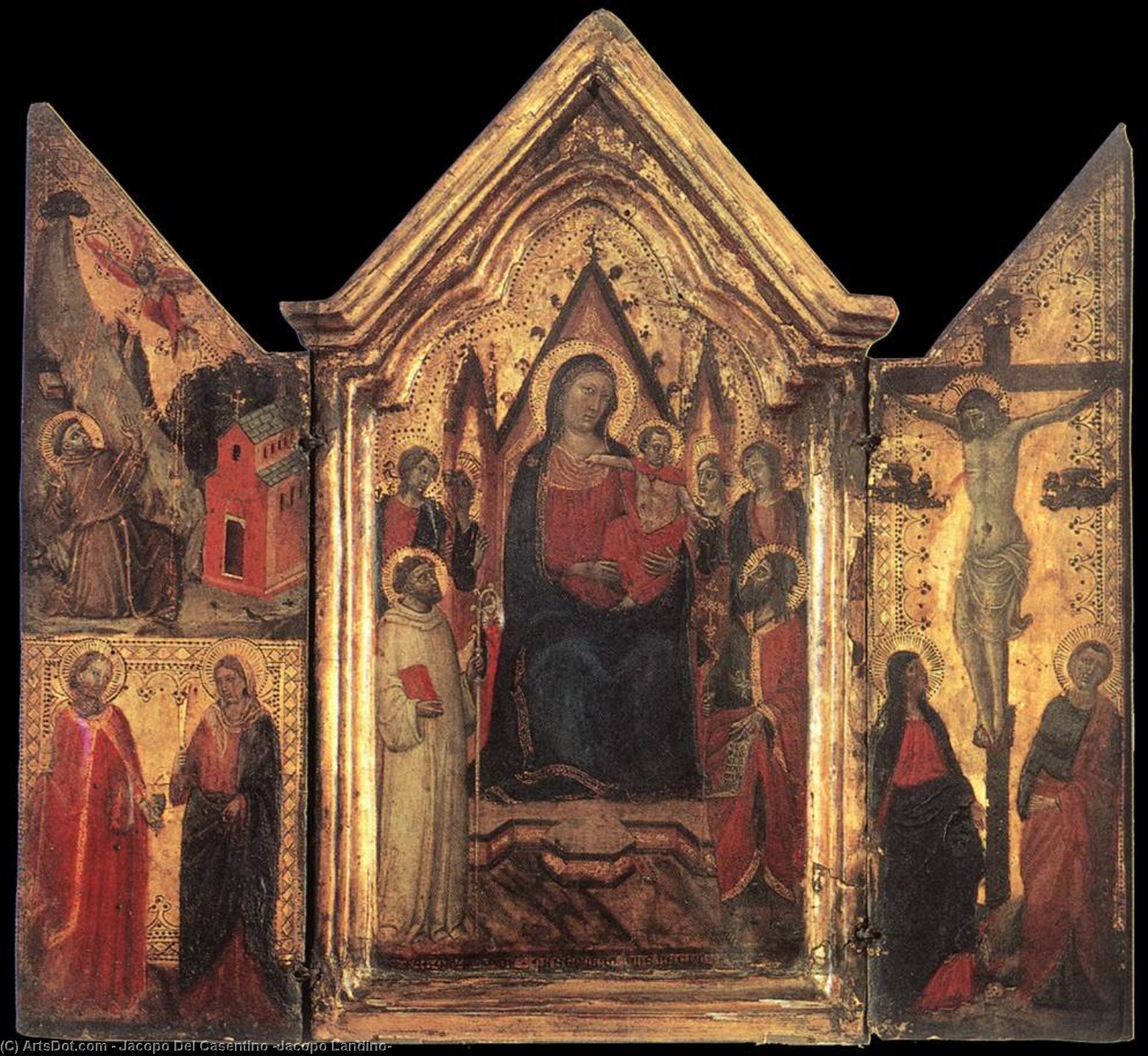
Madonna Enthroned with Angels and Saints
 Acrylic On Canvas
- WallArt
- Early Renaissance
 1320
1320 39.0 x 42.0 cm
 Galleria degli Uffizi
 Read More
Hand Made Oil Reproduction
Hand-painted oil on canvas in your size and frame, made to order by our artists. ( Buy Print Buy Image)




P118B $10

P118H $10

P118W $10

P438Z $10

P508JH $12

P508YH $12

P805H $10

P805Z $10

P919BZ $10

P919G $10

P919XJ $10

P959ZH $10

P968JZ $12

W106C $8

W218G $10

W218JH $8

W218Y $10

W307PJ $10

W316G $10

W316PJ $8

W316Y $10

W398PJ $8

W4111J $10

W500HY $15

W500JH $15

W692G $12

W849H $8

W940BG $15

W953PJ $8




Pick from our preset sizes that match the artwork's original proportions.

You may enter your own dimensions to fit a specific frame or space. If your selected size does not match the original image's proportions, we will either crop the artwork or extend the painting with additional hand-painted elements. A digital mockup will be sent for your approval before production begins.
Please note that the on-screen preview does not reflect the actual cropping or extension. Only the mockup will accurately show the final composition.
While custom sizes are available, we recommend selecting a dimension from the predefined list to preserve the original proportions.
After order, ArtsDot.com team will email client for instructions and provide a mockup preview
Worldwide Delivery () in 3/4 weeks instead of standard 5 weeks. (3 September). No compromise on quality.

Free Worldwide Express Shipping

High-Quality Linen Canvas

Full Shipping Insurance

Customs Tax Refund Guarantee

True Color Matching Guarantee

60-Day Return Policy (Defects Only)

100% Money-Back Guarantee

Bulk Discount Offer
 Glass option is only available in size under 110 CM

Madonna Enthroned with Angels and Saints
Reproduction Medium
Reproduction Size
-


Total Price
$ 263
A Florentine Reverie: Exploring Jacopo del Casentino’s Madonna Enthroned
Florence, circa 1320 – The air hangs heavy with incense and devotion as we gaze upon “Madonna Enthroned with Angels and Saints,” a masterpiece executed by Jacopo del Casentino (Jacopo Landino), a Florentine painter whose legacy continues to resonate centuries later. This painting isn’t merely an image; it's a tangible embodiment of the spiritual fervor that characterized the early Renaissance, capturing a moment of profound piety within the burgeoning artistic innovation of its time.Subject Matter and Composition
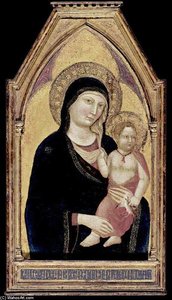
At the heart of this artwork lies Mary, depicted majestically upon a throne adorned with rich fabrics—a deliberate gesture signifying her divine dignity and regal status. Surrounding her are twelve angelic figures, each radiating luminescence and conveying an aura of serenity and grace. These angels aren’t simply decorative elements; they represent messengers of God, emphasizing Mary's role as intermediary between heaven and earth. Below the throne sit saints – identifiable by their halos and robes—further bolstering the painting’s sacred narrative and reinforcing its connection to Christian iconography. The careful arrangement of figures contributes to a sense of balance and grandeur, reflecting the artistic ideals prevalent during this period.Style and Technique: Mastering Chiaroscuro
Del Casentino's skill shines through in his masterful application of chiaroscuro—the dramatic manipulation of light and shadow—a technique that would become a cornerstone of Renaissance painting. Notice how light illuminates Mary’s face and robes, highlighting her serene expression and drawing the viewer’s eye to her central position. Conversely, shadows envelop the surrounding figures and architectural elements, creating depth and dimensionality and enhancing the overall visual impact. This meticulous attention to detail demonstrates Del Casentino's profound understanding of artistic principles and elevates the painting beyond a simple depiction of religious imagery. The subdued earth tones used throughout the composition lend an air of antiquity and solemn beauty, mirroring the stylistic preferences of the era.Historical Context: Florence Amidst Spiritual Renewal
Painted during a period marked by significant intellectual and spiritual transformation—the early Renaissance—this Madonna Enthroned reflects the profound influence of Christian faith on Florentine art and culture. The revival of classical ideals alongside renewed devotion to religious themes fueled artistic creativity, resulting in works like this that aspire to convey moral virtue and spiritual contemplation. Del Casentino’s painting stands as a testament to Florence's role as a cradle of humanist thought and artistic excellence—a city striving to recapture the grandeur of antiquity while simultaneously reaffirming its spiritual core.Symbolism: Layers of Meaning
Beyond its visual splendor, “Madonna Enthroned with Angels and Saints” is laden with symbolic significance. The throne symbolizes Mary’s divine authority and holiness, mirroring the imperial iconography of Rome—a deliberate reference to Christ as King of Kings. The angels represent God's benevolence and protection, guiding Mary towards her sacred mission. Furthermore, the saints serve as exemplars of Christian virtues, reminding viewers of the moral ideals upheld by the Church during this time. Each element contributes to a complex tapestry of meaning, inviting contemplation on themes of faith, humility, and divine grace.Emotional Impact: A Window into Sacred Devotion
Looking upon this painting evokes a feeling of tranquility and reverence—a palpable connection to the spiritual traditions of medieval Europe. The artist’s skillful use of chiaroscuro creates an atmosphere of solemn beauty, transporting the viewer back to a time when faith permeated every aspect of life. “Madonna Enthroned with Angels and Saints” remains a powerful reminder of humanity's yearning for transcendence and its enduring fascination with depictions of divine grace—a timeless masterpiece that continues to inspire awe and contemplation.Related Artworks
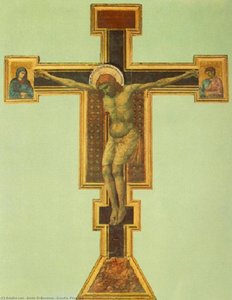
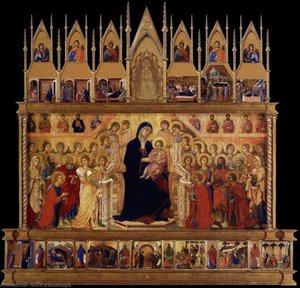
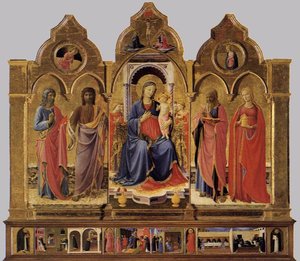
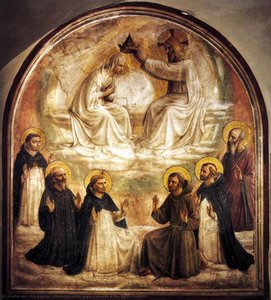
Artist Biography
The Ethereal Legacy of Jacopo del Casentino
In the vibrant, sun-drenched landscape of fourteenth-century Tuscany, a period defined by profound spiritual devotion and the dawn of artistic transformation, the name Jacopo del Casentino resonates with the quiet power of a prayer. Often known to history through the mistaken identity of Jacopo Landino—a nomenclature born from the historical errors of Giorgio Vasari—this Florentine master navigated the delicate transition between the late Gothic tradition and the burgeoning sensibilities of the early Renaissance. While the precise details of his birth and early years remain shrouded in the mists of time, his presence is indelibly etched into the sacred altarpieces that once graced the chapels of Italy, serving as a bridge between the stylized elegance of the past and the humanistic depth of the future.
The origins of his artistry are deeply rooted in the Florentine milieu, likely shaped by the influential circle surrounding the Master of St. Cecilia. This formative period instilled in him a reverence for sacred geometry and a capacity to translate theological complexity into visual splendor. His work does not merely depict religious scenes; it invites the viewer into a state of contemplation. Through his brush, the divine becomes tangible, as he mastered the subtle art of chiaroscuro long before it became a hallmark of the High Renaissance. By manipulating the interplay of light and shadow, he breathed life into drapery and gave weight to the celestial figures that populate his compositions, creating a sense of three-dimensional presence that was revolutionary for his era.
Mastery of Light and Devotional Grandeur
The true brilliance of Jacopo del Casentino is most vibrantly realized in his monumental depictions of the Virgin Mary. His Madonna Enthroned with Angels and Saints stands as a testament to his ability to command both scale and emotion. In this masterpiece, one can witness the artist's profound skill in rendering the ethereal glow that surrounds the Queen of Heaven. The throne, adorned with rich, heavy fabrics, serves as an anchor for the composition, while the surrounding angelic figures radiate a serene luminescence that seems to emanate from within the painting itself. This careful orchestration of light does more than illuminate; it sanctifies the space, guiding the eye toward the central mystery of the Incarnation.
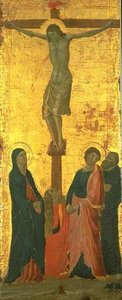
Beyond his celebrated Madonnas, Jacopo’s repertoire included significant works such as the Crucifixion and various Madonna and Child compositions, each demonstrating a versatile command over different narrative tones. In his more somber works, he utilized shadow to evoke the profound sorrow of the Passion, whereas in his devotional icons, he employed a luminous palette to inspire hope and reverence. His ability to weave complex theological narratives into a single, cohesive visual experience allowed him to communicate with both the literate clergy and the faithful laity, making his art a vital instrument of the Church's spiritual mission.
Historical Significance and Artistic Impact
Though the historical record regarding his exact lifespan is subject to scholarly debate—with some placing his activity in the first half of the 14th century—his impact on the Florentine school remains undeniable. He was a painter who understood that art was not merely an ornament but a window into the divine. His contributions helped lay the groundwork for the next generation of masters, providing a foundation of technical precision and emotional sincerity upon which the giants of the Renaissance would later build.
To study the works of Jacopo del Casentino is to witness the evolution of the human spirit through paint. His legacy survives in the enduring beauty of his altarpieces, which continue to captivate modern observers with their:
- Spiritual Depth: A profound ability to evoke religious ecstasy and quiet piety.
- Technical Innovation: Early mastery of light, shadow, and the illusion of volume.
- Iconographic Clarity: The seamless integration of complex Christian symbolism within accessible, beautiful compositions.
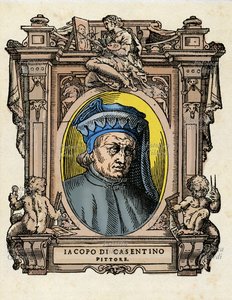
jacopo del casentino (jacopo landino)
1330 - 1380 , Italy
Quick Facts
- Artistic Movement Or Style: Renaissance
- Date Of Birth: Florence, Italy (1330)
- Date Of Death: 1380
- Full Name: Jacopo del Casentino (jacopo landino)
- Nationality: Italian
- Notable Artworks:
- Madonna Enthroned with Angels and Saints
- Madonna and Child
- Crucifixion
- Place Of Birth: Florence
Related Articles
Uffizi's 25 Masterpieces: Renaissance Art & Timeless Decor Inspiration
Journey through the Uffizi Gallery's 25 most iconic Renaissance artworks! Explore Botticelli, Leonardo da Vinci & Michelangelo’s masterpieces. Find museum-quality art reproductions and curated decor ideas to bring timeless Italian beauty into your home. Discover all masterpieces on ArtsDot.com
Fra Angelico's Masterpieces: 25 Renaissance Paintings for Your Home | ArtsDot
Explore 25 breathtaking masterpieces by Fra Angelico, a Renaissance master. Discover the stories behind his iconic frescoes, Annunciations & religious art. Find museum-quality reproductions and elevate your home decor with ArtsDot.com.
Raphael's Masterpieces: 25 Iconic Paintings & Renaissance Art for Your Home
Explore 25 breathtaking Raphael paintings! Journey through the Italian Renaissance with masterpieces like 'School of Athens' & iconic Madonnas. Find museum-quality art reproductions and elevate your home decor on ArtsDot.com.
Sacred Narratives Embodied: A Comprehensive Exploration of Religious Iconography in Art History
Explore the rich history of religious iconography in art! Discover symbolism, movements & masterpieces from Byzantine to Renaissance periods. Expert insights for collectors and enthusiasts at ArtsDot.
Giotto's Masterpieces: 25 Renaissance Artworks for Your Home | ArtsDot
Explore 25 breathtaking artworks by Giotto di Bondone, a Renaissance master. Discover the stories behind iconic frescoes & paintings like the Scrovegni Chapel cycle. Find museum-quality Giotto reproductions and elevate your home decor with ArtsDot.com.