 Preview
 Send
Send Share
Share
 Details

 Download
 Similars
 X-Ray
X-Ray Diaporama
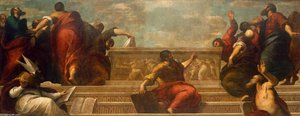
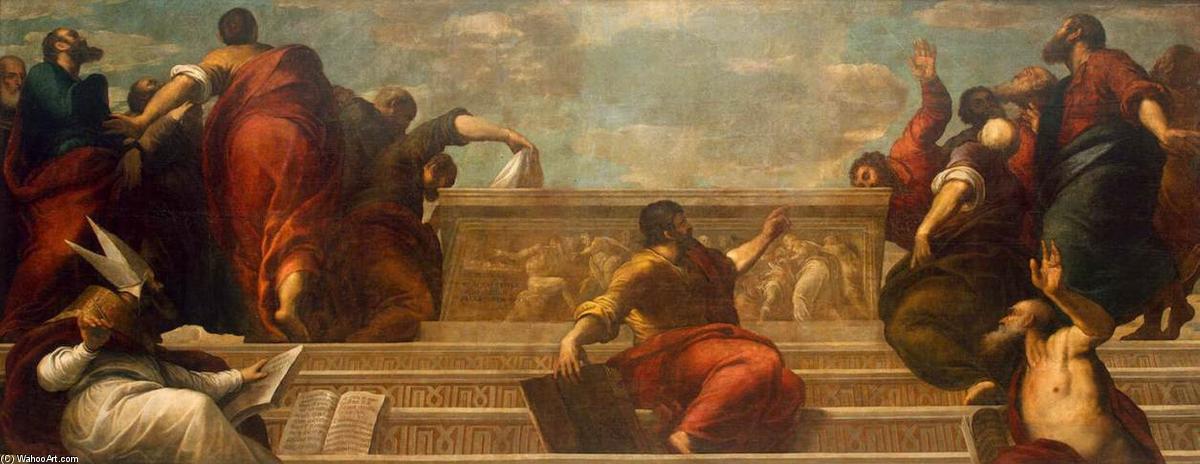
Apostles at the Virgin's Tomb
 Oil On Canvas
- WallArt
- Baroque
 1582
1582- Renaissance
 349.0 x 880.0 cm
 Hermitage Museum
 Read More
Giclée / Art Print
Museum-quality giclée or canvas print with fast production and flexible finish options. ( Buy Hand Made Painting Buy Image)




P118B $10

P118H $10

P118W $10

P438Z $10

P508JH $12

P508YH $12

P805H $10

P805Z $10

P919BZ $10

P919G $10

P919XJ $10

P959ZH $10

P968JZ $12

W106C $8

W218G $10

W218JH $8

W218Y $10

W307PJ $10

W316G $10

W316PJ $8

W316Y $10

W398PJ $8

W4111J $10

W500HY $15

W500JH $15

W692G $12

W849H $8

W940BG $15

W953PJ $8




Pick from our preset sizes that match the artwork's original proportions.

You may enter your own dimensions to fit a specific frame or space. If your selected size does not match the original image's proportions, we will either crop the artwork or extend the image with a mirrored or solid-fill edge. A digital mockup will be sent for your approval before production begins.
Please note that the on-screen preview does not reflect the actual cropping or extension. Only the mockup will accurately show the final composition.
While custom sizes are available, we recommend selecting a dimension from the predefined list to preserve the original proportions.
Worldwide Delivery () in 2 weeks instead of standard 4/5 weeks. (25 August)

Free Worldwide Express Shipping

High-Quality Linen Canvas

Full Shipping Insurance

Customs Tax Refund Guarantee

True Color Matching Guarantee

60-Day Return Policy (Defects Only)

100% Money-Back Guarantee

Bulk Discount Offer
 Glass option is only available in size under 110 CM

Apostles at the Virgin's Tomb
Giclée / Art Print
Reproduction Size
-


Total Price
$ 63
Collectible Description
A Venetian Synthesis: Palma Giovane’s “The Apostles at the Virgin’s Tomb”
Jacopo Palma il Giovane (1548–1628), often referred to as Jacopo Negretti, stands as a cornerstone of Venetian painting during its illustrious High Renaissance period. His legacy rests upon a masterful fusion of Titian’s luminous palette and Tintoretto’s dramatic dynamism—a stylistic inheritance that embodies the spirit of Venice itself at the zenith of artistic achievement. This monumental oil on canvas, “The Apostles at the Virgin’s Tomb,” exemplifies this synthesis perfectly, captivating viewers with its serene beauty and profound theological resonance. Painted in 1582, it represents more than just a depiction of biblical iconography; it's an embodiment of Venetian artistic ideals and a testament to Palma Giovane’s unparalleled skill as a colorist and draftsman.A Masterful Blend of Influences
Palma Giovane’s formative years were deeply intertwined with the tutelage of Titian, arguably Venice’s most celebrated painter. This connection instilled in him an unwavering devotion to capturing light and texture—a characteristic that distinguishes his oeuvre from many contemporaries. Simultaneously, he absorbed Tintoretto's theatrical flair for composition and dramatic chiaroscuro, resulting in a style characterized by rich color harmonies and meticulously rendered figures imbued with palpable emotion. Unlike the more austere Mannerist tendencies prevalent elsewhere in Europe, Palma Giovane championed a humanist aesthetic rooted in observation and expressive realism—a philosophy that profoundly shaped his artistic vision.Composition and Technique: Light as Divine Revelation
The painting’s grandeur is immediately apparent upon viewing it – measuring 349 x 880 cm, it commands attention with its expansive scale. Palma Giovane skillfully employs a pyramidal composition, anchoring the scene around the Virgin Mary at the center, while positioning the apostles in descending tiers to convey depth and solemnity. The artist’s meticulous technique is evident in every brushstroke; he achieves an astonishing level of detail, capturing the folds of drapery with breathtaking accuracy and rendering facial expressions with nuanced subtlety. Palma Giovane's masterful use of color—particularly reds—creates a vibrant yet restrained atmosphere that underscores the sacred nature of the depicted event. Light plays a crucial role, illuminating the figures and casting dramatic shadows that heighten the sense of reverence and contemplation.Symbolism: Grief and Hope Amidst Sacred Remembrance
“The Apostles at the Virgin’s Tomb” transcends mere visual representation; it is laden with symbolic significance. The apostles are portrayed in moments of profound grief as they contemplate the relics of Mary—a poignant reminder of mortality and faith. Yet, amidst this sorrowful contemplation, there exists an underlying current of hope—represented by the luminous Virgin Mary herself, radiating divine grace and compassion. The inclusion of a book symbolizes piety and spiritual reflection, reinforcing the painting’s theological core. Palma Giovane's deliberate choices in color and composition serve to elevate the scene beyond the earthly realm, inviting viewers to contemplate themes of faith, sorrow, and redemption—universal concepts that resonate across cultures and epochs.Emotional Impact: A Window into Venetian Spirituality
Ultimately, “The Apostles at the Virgin’s Tomb” succeeds in conveying a powerful emotional response. The painting's serene beauty combined with its dramatic lighting evokes feelings of solemn contemplation and spiritual reverence. It captures the essence of Venetian piety during the Baroque era—a period marked by fervent devotion to religious iconography and artistic grandeur. Palma Giovane’s masterpiece continues to inspire admiration for its technical brilliance and its ability to communicate profound theological ideas, securing its place as a timeless exemplar of Venetian art history and an enduring source of aesthetic pleasure.Related Artworks

Artist Biography
The Radiant Legacy of Jacopo Palma il Giovane
In the golden twilight of the Venetian Renaissance, a period defined by unparalleled mastery of color and light, there emerged a painter whose brush bridged the gap between the High Renaissance and the burgeoning drama of the Baroque. Jacopo Palma il Giovane, born Iacopo Negretti around 1548, was not merely a successor to the great masters but a vital link in the continuity of the Venetian School. As the great-nephew of the celebrated Palma Vecchio, he was born into a lineage of artistic excellence, inheriting a profound understanding of the chromatic richness that defines the Venetian tradition. His life and work represent a seamless transition, carrying the luminous elegance of his predecessors into a new era of emotional intensity and theatrical grandeur.
The foundations of Palma’s artistry were laid in the workshops of Venice, where the air was thick with the legacies of Titian and Tintoretto. While historical accounts suggest he may have polished his technique through the study of Titian’s breathtaking color palettes, it was the dynamic energy of Tintoretto that truly shaped his mature vision. Following the death of Tintoretto in 1594, Palma il Giovane ascended to a position of preeminence, becoming the dominant artistic force in Venice. He possessed a rare ability to synthesize these two disparate influences: from Titian, he drew a sophisticated command of light and skin tones; from Tintoretto, he adopted a sense of movement, dramatic chiaroscuro, and narrative urgency that resonated deeply with the religious fervor of the Counter-Reformation.
A Master of Narrative and Emotion
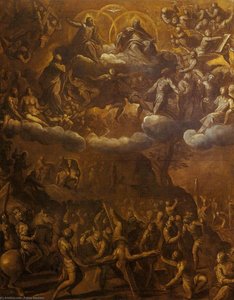
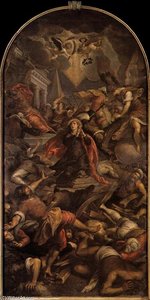
Palma il Giovane’s oeuvre is a testament to his ability to transform biblical and mythological themes into visceral human experiences. His paintings are rarely static; they pulse with a life force that draws the viewer into the heart of the drama. Whether depicting the solemnity of a religious martyrdom or the lively chaos of a tavern scene, his work utilizes light as a narrative tool, guiding the eye through complex compositions to find the emotional core of the story. His mastery is particularly evident in works such as Martyrdom of St Catherine of Alexandria, where the interplay of shadow and brilliance heightens the sense of divine struggle, and Apostles at the Virgin's Tomb, which captures a profound moment of collective grief through sweeping, energetic brushwork.
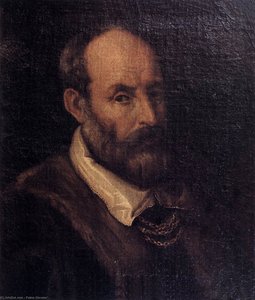
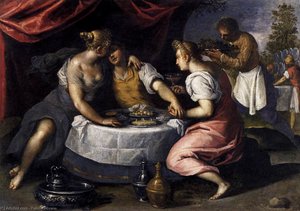
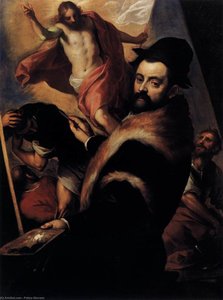
Beyond his religious commissions, Palma’s versatility allowed him to explore a wide spectrum of subject matter. His talent for capturing the human spirit is perhaps most intimately seen in his Self-Portrait, a work that reveals a soulful introspection and a technical prowess capable of rendering the subtle nuances of expression. Even in more secular or anecdotal scenes, such as the Amusements of the Prodigal Son, he maintains a vibrant, rhythmic quality that celebrates the textures and colors of Venetian life. This ability to oscillate between the profound and the playful ensured his relevance across various patronage circles, from the ecclesiastical authorities of Venice to the imperial courts of Central Europe.
Historical Significance and Enduring Influence
The historical importance of Jacopo Palma il Giovane extends far beyond the borders of the Venetian Republic. His influence radiated outward, reaching as far as Bergamo and the court of Emperor Rudolf II in Prague, marking him as an artist of international stature. He did not merely replicate the past; he evolved it, preparing the ground for the more emotive and dramatic styles that would define the 17th century. By mentoring subsequent generations, including figures who would further refine the Venetian aesthetic, he ensured that the traditions of his lineage remained vibrant and transformative.
Today, we recognize Palma il Giovane as a pivotal figure whose work serves as a bridge between eras. His legacy is found in:
- The Synthesis of Styles: The seamless integration of Titian’s coloristic brilliance with Tintoretto’s dramatic dynamism.
- Counter-Reformation Artistry: The use of powerful imagery to communicate the spiritual intensity required by the Catholic Church during a period of profound religious change.
- The Continuation of the Venetian School: Maintaining Venice's status as a global epicenter of art through his widespread commissions and pedagogical influence.
Through his expressive brush and masterful use of light, Palma il Giovane captured the very essence of a changing world, leaving behind a body of work that continues to enchant and move the modern observer.
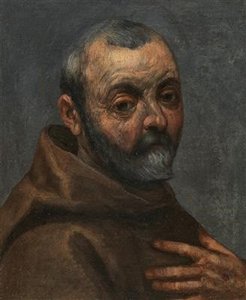
jacopo palma il giovane
1548 - 1628 , Italy
Quick Facts
- Artistic Movement Or Style: Venetian School
- Artists Or Movements Influenced By This Artist: ['Giovanni Antonio Canal']
- Artists Who Influenced This Artist:
- Titian
- Tintoretto
- Date Of Birth: Venice, Italy (1548)
- Date Of Death: 1628
- Full Name: Jacopo Palma il Giovane
- Nationality: Italian
- Notable Artworks:
- Lot and his Daughters
- Saint Justina of Padua Enthroned
- Place Of Birth: Venice
Related Articles

Jacopo Tintoretto's Masterpieces: 25 Paintings That Define Venetian Drama | ArtsDot
Explore 25 breathtaking masterpieces by Jacopo Tintoretto, the Venetian master of drama and light. Discover the stories behind iconic Renaissance paintings & find museum-quality art reproductions to elevate your home decor on ArtsDot.com.

Crimson Threads of Narrative: Exploring Symbolism & Representation in Artworks Featuring the Red Dress
Explore the rich symbolism of the red dress in art history! From ancient power displays to iconic portraits like Cézanne’s 'Madame Cezanne', discover the cultural and artistic significance behind this captivating color. Expert analysis & insights.
Dramatic Masterpieces: 10 Artworks for a Powerful Home Decor Statement |
Explore 10 dramatic artworks by masters like Caravaggio, Van Gogh & Munch. Uncover the stories behind these powerful paintings and find museum-quality reproductions to transform your home decor. Discover all masterpieces on .
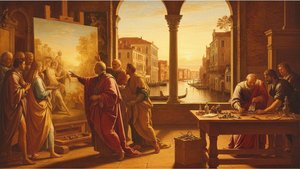
The Golden Light of Innovation: Exploring the Venetian Renaissance Art Movement (1430–1580)
Explore the Golden Age of Venetian art (1430–1580). Discover Giorgione, Titian & Tintoretto's techniques, the 'colorito' revolution, and lasting influence. Expert insights for collectors & enthusiasts.
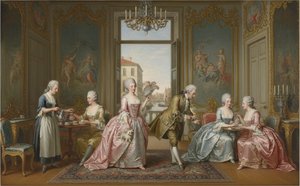
Pietro Longhi's Venetian Scenes: A Study of Rococo Society & Domestic Life
Explore the captivating world of Pietro Longhi's Venetian scenes! Discover insightful analysis of his Rococo masterpieces & social commentary on 18th-century life. Learn about this 'Venetian Hogarth' and his lasting artistic legacy.